
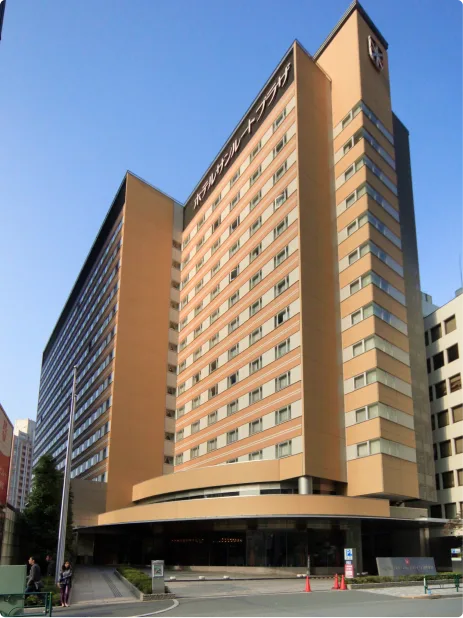
For most travellers visiting Tokyo with fit older parents, I would choose the base before the hotel and optimise the friction that repeats every day. Shinjuku South Exit is the strongest default when west-Tokyo sightseeing and airport-bus convenience matter. Ueno becomes more rational when Narita plus Asakusa/Ueno dominates the trip. Tokyo Station earns its premium when an early Shinkansen or frequent intercity travel matters more than nightlife.
The mistake is treating “closest hotel to a station” as the answer. Tokyo stations can hide long internal walks, the useful lift may be nowhere near your train, and a hotel that saves three minutes outside can still create an extra transfer twice a day. With parents, the best hotel is usually the one that removes the repeated friction that will still matter on day four.
Checked August 26, 2026. Hotel and transport access below was rechecked against official hotel and Airport Limousine sources. Timetables and operating conditions can change, so recheck the exact airport service and your travel date before booking.
Where to stay in Tokyo with parents: the 30-second decision
↔ Scroll table left or right
Your biggest friction | I would check first | What it removes | What can still go wrong |
Long-haul arrival with large luggage, west-Tokyo itinerary | Hotel Sunroute Plaza Shinjuku | Potential airport-bus-to-hotel arrival plus a short final walk from Shinjuku South Exit | The hotel bus stop is useful only when the service timing fits your flight |
Several nights in Shinjuku and you want more usable room space | JR Kyushu Hotel Blossom Shinjuku | Short South Exit/Busta walk plus a 25m² Superior Twin option | You can overpay for room space you barely use if every day runs from breakfast to late evening |
Narita plus Ueno, Asakusa and eastern Tokyo | Mitsui Garden Hotel Ueno | Easy JR/Metro access and a straightforward base for the east side | Keisei Ueno is still about a six-minute walk from the hotel |
Very early Shinkansen or stressful intercity departure | Hotel Metropolitan Tokyo Marunouchi | Direct undercover Tokyo Station access and about one minute from the Shinkansen Nihombashi Gate | Tokyo Station remains huge; the hotel removes the outdoor leg, not the station interior |
If you are still choosing the district, solve that first. The Tokyo Station vs Shinjuku decision and Ueno vs Shinjuku comparison will usually change more of the trip than a small room-size difference between two hotels in the same area.
Choose the Tokyo base before comparing individual hotels
The useful metric is not walking distance — it is repeated friction
Parents who can comfortably walk ten or fifteen minutes at home do not suddenly need a hotel attached to a station. What changes on a Tokyo trip is the accumulation: station navigation, escalators, platform changes, shopping bags, heat or rain, then another decision about which exit to use after dinner.
A simple way to think about it is to count how often the inconvenience repeats. An awkward airport transfer happens once on arrival. One unnecessary transfer on the outbound and return journey can happen twice a day. Over five sightseeing days, that is up to ten extra transfer events. This is why I would not pay a large nightly premium only to make the first airport journey easier if the cheaper hotel creates a better daily route.
The reverse is also true. If your parents arrive after a long flight with two large suitcases and you know the first evening will already be difficult, removing one train change can be worth more than saving a small amount on the room. The decision is not “walking versus no walking.” It is which friction is expensive for this itinerary.
I would eliminate three kinds of “convenient” hotel before comparing prices
1. Close to the station, but close to the wrong exit
A hotel advertised as three minutes from Shinjuku or Tokyo Station can still be much farther from the platform and exit your family will actually use. Before booking, identify the train line, the ticket gate, the exit and whether there is a lift on the route. A short outdoor walk does not compensate for a confusing internal route when everyone is tired.
2. Cheaper per night, but one extra transfer every day
Transfers are not inherently difficult in Tokyo, but they create decision points. If the hotel saves money while forcing the group to change trains for almost every major sightseeing day, the discount may simply be buying more standing, more platform navigation and more opportunities to split up in crowds.
3. A bigger room that solves the wrong problem
Room size matters most when the room will actually be used: midday rest, two open suitcases, sorting medicine, longer stays or parents who prefer quiet evenings. If everyone leaves early and returns only to sleep, paying a large premium for a bigger room can be less valuable than choosing a better base or slowing the itinerary by one attraction a day.
Sunroute vs Blossom: same part of Shinjuku, different problem
Hotel Sunroute Plaza Shinjuku and JR Kyushu Hotel Blossom Shinjuku are close enough that I would not treat this as a neighbourhood decision. It is an arrival-friction versus room-friction decision.
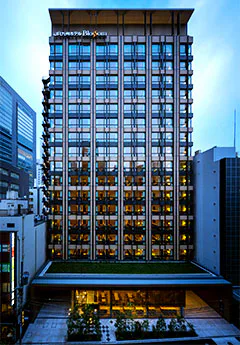
Hotel Sunroute Plaza Shinjuku is about three minutes on foot from JR Shinjuku South Exit and about one minute from Toei Oedo Line Exit A1. Airport Limousine currently lists Hotel Sunroute Plaza Shinjuku as a Shinjuku stop for applicable airport services. That can turn the first night into airport → bus → hotel instead of airport → train → station corridor → lift → exit → hotel.
The boundary condition matters: the hotel stop is not useful if your flight and the applicable bus schedule do not line up. Never book it on the assumption that “the limousine bus always goes to the hotel.” Check the exact date, airport terminal and arrival time first.
For a genuinely late flight, I would compare staying at Haneda or the Narita late-arrival decision rather than forcing the family into central Tokyo just because the room is already paid for.
The Hotel Sunroute Plaza Shinjuku review is the better next step if the airport transfer is the reason you are considering it.
Blossom becomes more rational when the room itself is part of the recovery plan
JR Kyushu Hotel Blossom Shinjuku is about three minutes from JR Shinjuku South Exit and the Shinjuku Expressway Bus Terminal. Its current Superior Twin is 25m² and includes a large table and sofa. That extra usable space can matter more than the raw square-metre number suggests when two people want to sit, unpack and move around the room without constantly rearranging luggage.
I would pay the premium when the trip is at least several nights, the parents genuinely use the room to recover, or the family is carrying large luggage. I would hesitate when the room will be empty for fourteen hours a day and the price gap is large. “Travelling with parents” is not, by itself, a reason to buy the biggest room.
If Shinjuku is already fixed, the Hotel Gracery Shinjuku vs JR Kyushu Blossom Shinjuku comparison helps decide between Kabukicho energy and South Exit efficiency. For the room trade-off itself, use the JR Kyushu Hotel Blossom Shinjuku guide.
Narita plus Asakusa/Ueno: do not drag the family across Tokyo just because Shinjuku is famous
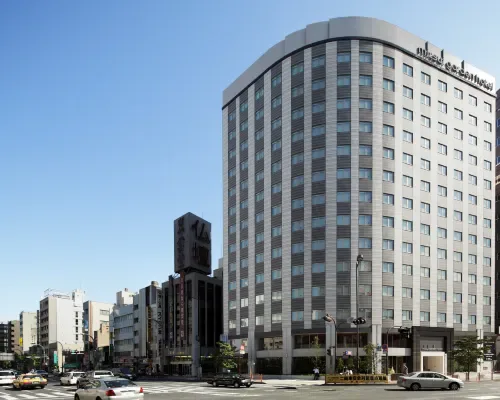
Mitsui Garden Hotel Ueno is a stronger fit when the trip naturally lives on the east side. The hotel currently lists a two-minute walk from JR Ueno Asakusa Exit, one minute from Tokyo Metro Ueno Exit 1 and six minutes from Keisei Ueno. Its own access page lists the Keisei Skyliner from Narita to Keisei Ueno at roughly 45 minutes.
That six-minute final walk from Keisei Ueno is the important number to inspect. In dry weather with manageable suitcases, it can be trivial. In heavy rain, summer heat, or with a parent who needs frequent rests, it can become the part of the route you remember. “Ueno is easiest from Narita” is only useful when the final walk is acceptable.
If your sightseeing is mainly Ueno Park, museums, Asakusa and Kappabashi, the bigger advantage is not the airport. It is that you stop paying a west-to-east transport tax every day. For that itinerary, I would rather accept a six-minute arrival walk once than add unnecessary cross-city travel repeatedly.
The Mitsui Garden Hotel Ueno guide goes deeper on exactly that final-walk trade-off.
Compare Ueno and Shinjuku if the east-versus-west base is still unresolved
Tokyo Station: pay for it when the departure morning is genuinely hard
Hotel Metropolitan Tokyo Marunouchi is directly connected to Tokyo Station’s Nihombashi Exit, about two minutes from Yaesu North Gate and about one minute from the Shinkansen Nihombashi Gate. The useful benefit with parents is not “no walking.” Tokyo Station is still enormous. The benefit is removing the outdoor segment and reducing the chance that rain, road crossings or the wrong building entrance complicates an already early morning.
I would pay more for this when three conditions overlap: the Shinkansen is genuinely early, the family has large luggage, and station navigation is a source of stress. If the train leaves close to midday, the premium is much harder to justify because you have time to recover from a slower route.
I would also be cautious about moving hotels for one night solely to be beside Tokyo Station. Packing, checking out, transporting luggage and checking in again can create more work than the early train removes. A one-night split stay makes sense only when the departure morning is important enough to outweigh the hotel move.
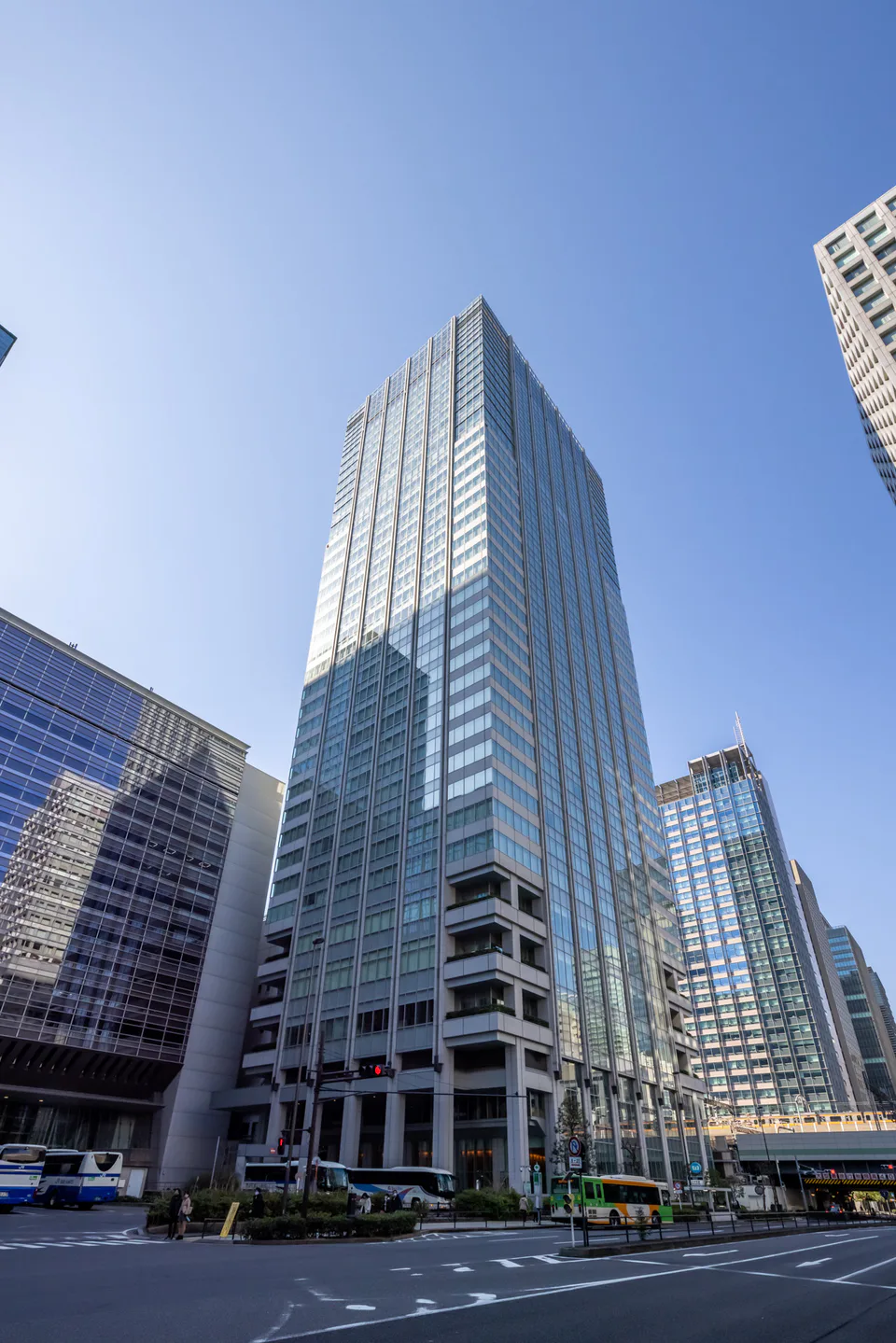
Important 2026–27 condition: Hotel Metropolitan Tokyo Marunouchi has announced guest-room renovation work from November 1, 2026 through March 31, 2027 on the 29th and 30th floors, with work scheduled from 10:00 to 17:00 and possible construction noise or vibration. The affected floors are due to be closed to guests, but if your parents expect to return to the room for a quiet midday rest during that period, I would confirm the latest situation directly with the hotel before paying a premium for the location.
Use the Hotel Metropolitan Tokyo Marunouchi Shinkansen guide when the departure morning is the deciding factor.
The hotel premium can be the wrong place to spend the money
If your parents walk comfortably and the itinerary is geographically sensible, I would not automatically spend heavily for a station-connected hotel. The same budget can sometimes buy a slower travel day, taxis for the two hardest evenings, luggage forwarding before an intercity move, or one fewer attraction per day. Those changes may protect more energy than moving every night closer to a station.
This is the red-team test I would apply to any “parent-friendly” recommendation: if the parents were ten years younger, would this still be a good base for the actual itinerary? If the answer is no, the recommendation may be compensating for a badly designed route rather than solving a hotel problem.
Do not use this guide as an accessibility guide
Wheelchairs, walkers, recent surgery, severe knee pain, heart or respiratory limitations change the decision completely. A short hotel walk does not guarantee a step-free station route, an accessible bathroom, a suitable bed height or enough turning space in the room.
For genuine mobility requirements, confirm the exact station lift route, hotel entrance, accessible-room inventory and bathroom layout directly. “Travelling with older parents” and “travelling with a mobility impairment” are not the same planning problem.
My booking test: answer these three questions before paying
1. How do you reach the hotel on arrival day? Name the airport route, the final stop and the final walk. If the answer is simply “Shinjuku Station,” you have not finished the route.
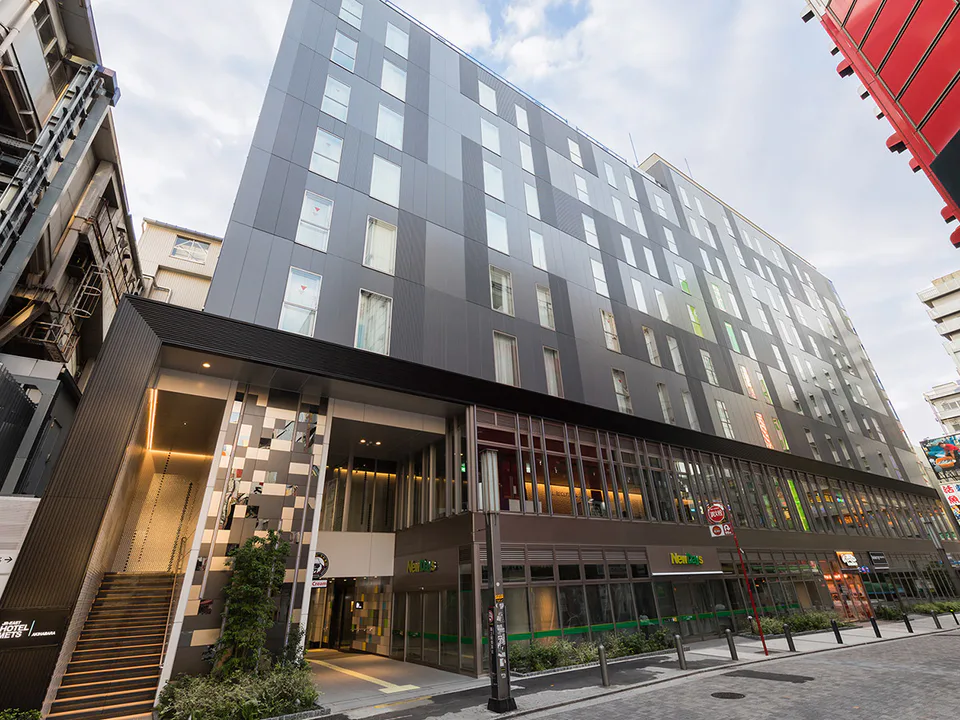
2. Which station exit will you use most nights? Check whether the useful lift and exit are actually on the route from the lines you expect to use.
3. What happens on the hardest departure morning? Early Shinkansen, airport transfer, or a long luggage move can justify paying more for one location — but only if that hard morning is not being bought at the cost of worse routes every other day.
If one hotel wins all three questions, the decision is easy. If different hotels win different questions, choose the friction that repeats most often.
Final verdict
With fit older parents, I would not minimise every metre of walking. I would minimise repeated transfers, confusing exits and the final piece of the journey when everyone is already tired. Choose Sunroute when the airport arrival is the fragile part of a west-Tokyo stay. Choose Blossom when Shinjuku is fixed and room recovery space matters. Choose Ueno when Narita and eastern Tokyo dominate. Pay for Tokyo Station when an early intercity departure is important enough to justify the premium.
The recommendation reverses when your parents are comfortable walkers, your itinerary is grouped by area and the hotel premium is large. In that case, spend less on shaving minutes from the map and more on building a trip that does not exhaust them in the first place.
Sapporo Shopping Hotels: Stay Where You Can Drop Your Bags, Not Just Where the Shops Are
Osaka Concert Hotels: Where to Stay for Kyocera Dome, Osaka-Jo Hall or Zepp Namba
Fukuoka Hotels With Parents: Reduce Repeated Walking, Transfers and Bathroom Friction
References
JR Kyushu Hotel Blossom Shinjuku — official access and guest-room pages
Mitsui Garden Hotel Ueno — official access page
Hotel Metropolitan Tokyo Marunouchi — official access page and August 20, 2026 renovation notice
Airport Limousine — official Shinjuku stop and airport-route information
Tokyo Tourist Information / Hotel Sunroute Plaza Shinjuku — current station-access information