
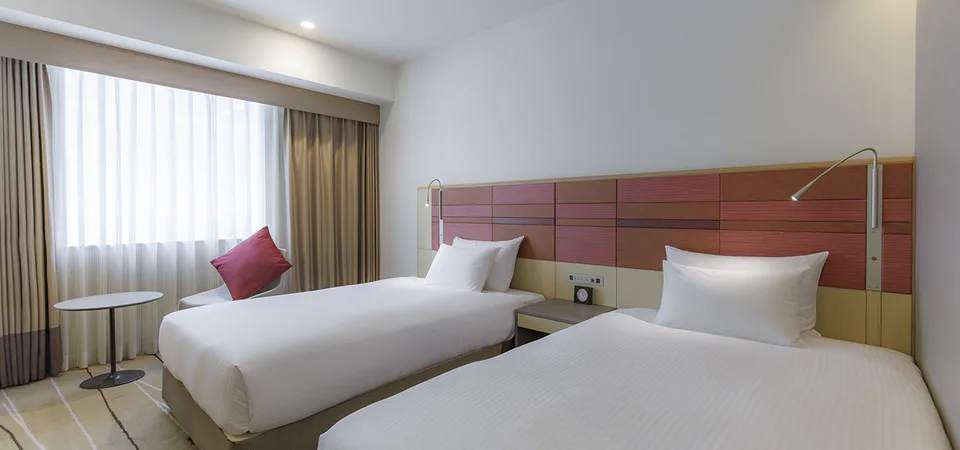
30-second answer | With parents in Fukuoka, reduce the route you repeat every day before you upgrade the room
The easiest mistake when choosing Fukuoka hotels with parents is treating a five- or seven-minute walk as a one-time cost. On a three-night trip, the same route can happen after breakfast, again when someone returns to rest in the afternoon, and again after dinner. Add station exits, platform changes, luggage and rain, and the real burden is repetition rather than a single distance. This guide does not assume that parents cannot walk, and it does not turn age into a mobility diagnosis. It asks what your own group is comfortable repeating, how easily your parents can return without everyone moving together, and whether the room layout, breakfast and transport hub actually remove friction.
If the base area is still undecided, start with Fukuoka Hakata vs Tenjin hotels. Hakata becomes more valuable when the trip has early JR departures, Yufuin or other day trips, several large bags or an early flight. Tenjin becomes more valuable when two or three days are mostly department stores, restaurants and cafés there and your parents may want to go back to the room before you do. The important question is not which district is universally better. It is which transfer or walk you will otherwise repeat several times.
↔ Scroll table left or right
What repeats most often? | Start with | What you are really buying | Trade-off to accept |
Late arrival, early JR departures and several suitcases | Miyako Hotel Hakata | Direct Hakata Station connection and one transport hub for subway, JR, Shinkansen and the trip back to the room | Usually a premium rate; if most days end in Tenjin, you still commute back to Hakata |
You want Hakata close, but do not need to pay the full direct-connection premium | JR KYUSHU HOTEL Blossom Hakata Chuo | About a 2-minute walk from Hakata Station according to JR Hotel Group; an easy route to remember for early trains and independent returns | It is still an outdoor/ground-level walk, not the same as a fully connected route |
Most days are Tenjin shopping and meals, and your parents may return alone in the afternoon | Solaria Nishitetsu Hotel Fukuoka | Direct Nishitetsu Fukuoka (Tenjin) Station access; 28.4m² Superior Twin with two beds and a separate vanity | Frequent JR day trips through Hakata can eat into the advantage |
You want more hotel downtime or a public bath and are willing to walk farther | THE BLOSSOM HAKATA Premier / Mitsui Garden Hotel Fukuoka Gion | More of the rest period happens inside the hotel rather than only in the room | A public bath has no value if your parents will not use it; the extra walk still repeats every day |
Before comparing room rates, count how often you will repeat the Hakata vs Tenjin route
Set a daily walking limit first | Do not use Day 1 energy to make the decision for Day 3
Before picking a hotel, agree on one very practical threshold: from the station to the room, how much walking still feels fine after a flight, a full sightseeing day or a rainy dinner? Some parents are completely comfortable with ten minutes. Others can walk all day but dislike hunting for elevators in underground passages. Someone may be fine at attractions yet want the simplest possible route at 9 p.m. None of those preferences means anyone is weak; they are simply trip constraints that should be priced into the hotel.
This is why 'five minutes from the station' needs to be unpacked. Does the route cross a wide road? Does the underground exit you actually need have an elevator? Is there another long walk from the platform to that exit? Hotel access pages give useful direction, but they cannot calculate your room-door-to-platform experience. If an 08:00 JR departure matters, count the elevator, lobby and station interior too—not only the map pin.
Miyako Hotel Hakata | Direct access pays off when late arrival, early departure and rain all use the same simple route
Miyako Hotel Hakata is easy to reduce to 'the expensive hotel by Hakata Station', but that misses why it can work on a trip with parents. The hotel officially describes a direct connection to Hakata Station. When you arrive late with two or three suitcases, or need to catch an early JR train the next morning, removing one exit search and one street crossing is a benefit you may use repeatedly. It also concentrates the Airport Line, JR and Shinkansen around the same base instead of asking your group to learn a new last-mile route each time.
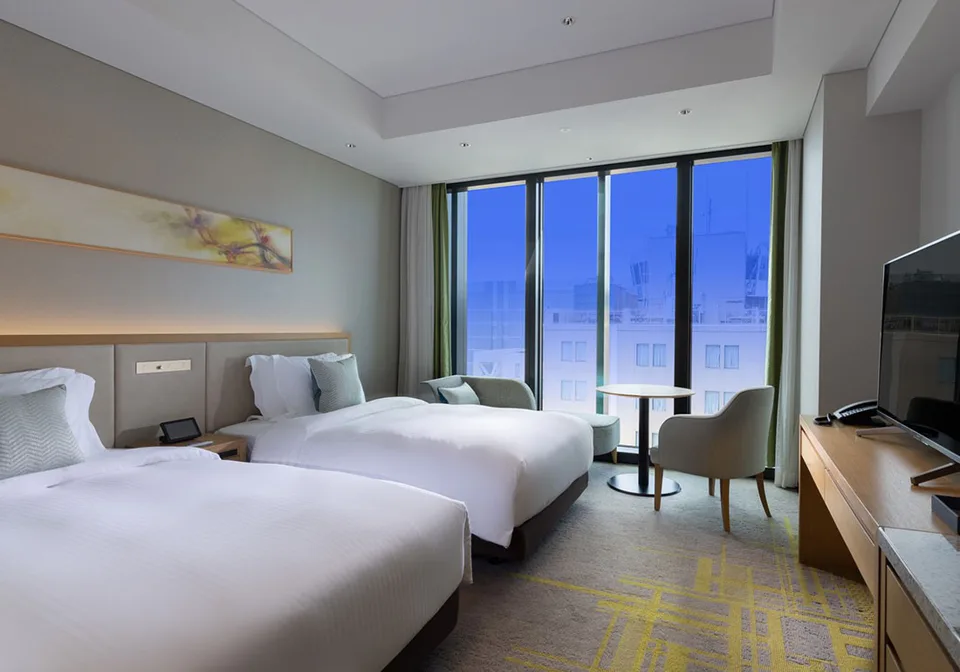
Direct access still does not make Miyako the automatic answer. If two of three evenings are in Tenjin and someone wants to return to the room in the afternoon, a daily Hakata–Tenjin commute can replace the walking you saved with more city transfers. In that case, compare the hubs rather than the brands in Miyako Hotel Hakata vs Solaria Nishitetsu Hotel Fukuoka. If you mainly want to stay near Hakata Station but are unsure whether the direct connection is worth the premium, Miyako Hotel Hakata vs JR KYUSHU HOTEL Blossom Hakata Chuo is the cleaner comparison.
Blossom Hakata Chuo | Keep Hakata Station close without automatically paying for a fully connected hotel
JR KYUSHU HOTEL Blossom Hakata Chuo is the practical middle ground. JR Hotel Group currently lists it at about a two-minute walk from JR Hakata Station’s Hakata Exit. For a trip with parents, that short and easy-to-explain route matters when someone wants to rest early, when dinner finishes at a different time for different people, or when an early JR departure is coming. It does not offer the same direct connection as Miyako, so rain, bags and any street-level movement still matter, but it can remove the awkwardness of staying ten or fifteen minutes away and debating whether to take transport for one stop.
If your parents normally walk comfortably and the goal is simply to avoid a long station approach, that two-minute class of location may already be enough. The money saved versus the most convenient option can then go toward a taxi after a tiring dinner, a better meal or a day trip—things that may improve the whole trip more than paying the same location premium every night. The detailed room-and-access trade-off is in JR KYUSHU HOTEL Blossom Hakata Chuo: 2-Minute Hakata Access and 25m² Twin and the direct comparison with Miyako is here.
Solaria | If your parents may return before you, Tenjin access can matter more than another ride back to Hakata
When the itinerary is already built around Tenjin department stores, underground shopping, restaurants, drugstores and cafés, Solaria Nishitetsu Hotel Fukuoka solves a different problem. The hotel is directly connected to Nishitetsu Fukuoka (Tenjin) Station. Its current Superior Twin is 28.4m² with two 110cm beds, a separate vanity and a bathroom with a washing area. The important point is not that those features are somehow 'for older travellers'. It is that the wash area is easier to share and the hotel can become a base that different members of the group use at different times.
Imagine your parents want to go back at 15:00 while you keep shopping for another two hours. A Tenjin-core hotel lets them return on a route they already know instead of making the entire group ride back to Hakata together. That independence can be used every day. The opposite case is just as important: if two mornings involve JR departures from Hakata, every extra Tenjin–Hakata trip has to be put back into the equation. For the single-hotel trade-off, see Solaria Nishitetsu Hotel Fukuoka; for a hub-to-hub decision, use Miyako vs Solaria.
THE BLOSSOM Premier / Mitsui Garden Gion | A public bath is a bonus only if your parents actually want to use it
Hotel searches often treat a public bath as an automatic advantage on a family trip. A better question is whether anyone will use it. JR Hotel Group currently lists THE BLOSSOM HAKATA Premier at roughly a seven-minute walk from Hakata Station and notes accessible facilities alongside its spa-related amenities. The trade is straightforward: you accept a longer approach than the closest station hotels in exchange for a more complete sense of downtime inside the property. If your parents come back every evening and prefer the bathroom in their own room, part of that trade disappears.
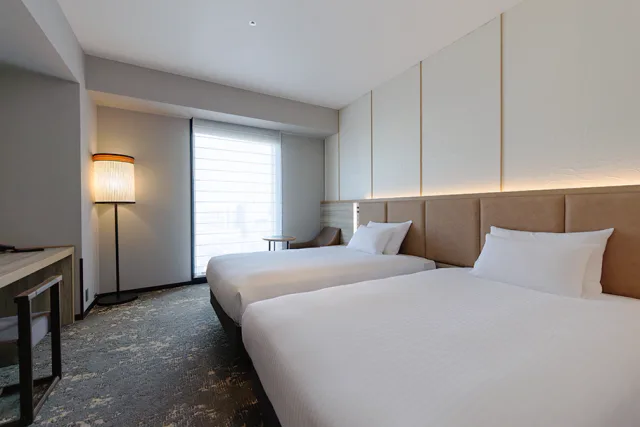
Mitsui Garden Hotel Fukuoka Gion offers another useful way to think about a public bath: as a second bathing route. The hotel currently lists its 13th-floor public bath from 15:00 to 25:00 and 05:00 to 09:00, with indoor and open-air baths plus a steam sauna. For three adults, one person using the public bath while the others use the room can reduce the bathroom queue. But if your parents do not enjoy public bathing, prefer to avoid wet shared floors, or simply want to sleep after dinner, the amenity should not be given imaginary value. The real three-adult trade-off is covered in Mitsui Garden Hotel Fukuoka Gion vs THE BLOSSOM HAKATA Premier.
Bathroom layout can matter more than room size | Check steps, vanity placement and who needs the space first
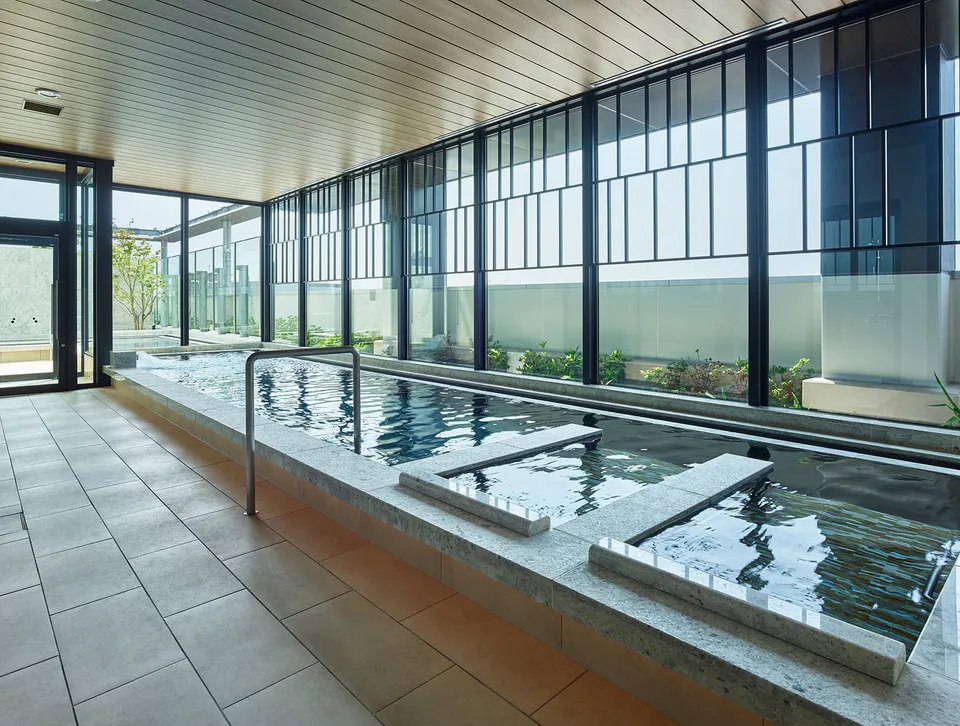
Do not stop at 25m² or 30m² when comparing Twin rooms. A larger room can still create morning friction if the vanity, toilet and bath are locked behind one door, or if the bath entrance has a step your group dislikes. A slightly smaller room with a separate vanity or split toilet and bath can let two people get ready at once. This cannot be inferred from labels such as Superior, Deluxe or Family. Before payment, inspect the photos and room-specific layout information for the exact room type you are booking.
If anyone has a specific accessibility requirement—an accessible room, grab bars, wheelchair turning space or a particular bathroom configuration—do not treat a standard Twin photo as confirmation. Check the hotel’s official description of the accessible room or contact the property for the exact feature. This guide treats repeated movement as an itinerary problem; it does not infer medical or mobility needs from age. That distinction matters because a parent who happily walks 15,000 steps can still prefer a simple station exit, while someone with a specific requirement needs much more precise verification.
Should you buy breakfast? | Ask whether it removes one morning decision, not how impressive the buffet looks
Hotel breakfast can be valuable on a parent trip for a reason that has nothing to do with buffet size. If an 08:30 train is booked, breakfast in the hotel can collapse three jobs—meeting up, finding a restaurant and waiting for a table—into one. That may be worth more than comparing the number of dishes. On the other hand, if the morning itself is for mentaiko, udon or a market breakfast, paying for breakfast can reduce flexibility rather than improve it.
Do not assume that parents want an included breakfast simply because they wake up early. Write down the first fixed time on each morning, then decide which nights need a breakfast plan. If only one day starts early, it may not make sense to force the same meal package across the whole stay. What matters is whether breakfast removes a repeated decision at a time when your group actually benefits from it.
Let your parents return without you | The best flexibility is not making the whole family move as one unit
A comfortable trip with parents often works because the group can split naturally at 15:00 or 20:00. Your parents can go back to rest while you keep shopping, have coffee or pick up something you want; everyone meets again later or simply ends the evening at a different time. That only works when the route back is simple enough that your parents remember it themselves. Hakata’s strength is a very clear transport hub. Tenjin’s strength is that, if the day already happens in Tenjin, the return may require no subway ride at all.
If the three-day plan is still vague, use the Fukuoka 3 Day Itinerary to see where each day actually concentrates before choosing the hotel. The same rule applies to transport passes: decide the route first, then check the Fukuoka Transport Guide. A pass should not become an excuse to add another transfer to your parents’ day simply because the ride is technically included.
Should you move to Hakata for the final night? | Only an actually early departure can repay the hotel change
If the first three nights are in Tenjin, do not automatically move to Hakata just because the next day involves the airport. A hotel change has its own cost: checkout, bag storage, collecting the bags and checking in again. The move starts to make sense when the flight is genuinely early, several large suitcases are involved, or the next morning begins with an early JR or Shinkansen departure. Otherwise, keeping one hotel can be the simpler trip.
Use Hakata or Tenjin for an Early Flight? to test the last-night decision against the actual departure time. If the next stop is Yufuin or Beppu, settle the transport mode first; JR, bus and rental car create different departure points and luggage problems. The Fukuoka to Yufuin transport comparison is more useful than moving to Hakata first and deciding the transport afterwards.
Does the final night really need a hotel change? Check the early-flight and early-JR trade-off first
Final verdict | With parents, buy one less repeated hassle before you buy a room upgrade
If the trip arrives late, leaves early, has several JR day trips and carries a lot of luggage, Miyako Hotel Hakata’s direct connection is the option most likely to remove a repeated hassle. If you want Hakata Station at the doorstep but do not necessarily need to pay for full direct access, JR KYUSHU HOTEL Blossom Hakata Chuo is the clearest compromise. If two or three days are fundamentally Tenjin days and your parents may return to the room before you, Solaria’s Tenjin connection and ability to split the group deserve more weight. THE BLOSSOM HAKATA Premier and Mitsui Garden Fukuoka Gion become stronger only when the extra hotel facilities are genuinely part of the rest plan rather than decorative amenities on a booking page.
Before paying, confirm six things: the route from the station you will actually use, whether your parents can remember the return route independently, the exact bed count and bed type, the bathroom and vanity layout, whether breakfast simplifies a fixed early morning, and the cancellation conditions. For three adults, also do not assume that 'sleeps 3' means three equivalent full beds; Mitsui Garden Fukuoka Gion’s triple-room analysis is a useful example of why bed and bathroom details matter. These checks tell you more than a vague 'senior-friendly' label ever could.
Fukuoka Guys’ Trip Hotels: Four Adults, Real Beds, Late Nights and Whether a Sauna Is Worth It
Osaka Attractions With Kids: Choose by Age, Rain and Stroller Friction — Not a Must-See List
Where to Stay in Osaka With Parents: Cut Transfers Before You Pay for More Luxury
Japan Autumn Leaves Without Changing Hotels: Tokyo, Sendai, Osaka and Fukuoka Bases
Sources
Information checked on August 19, 2026. Hotel connections, room layouts, bathroom details, breakfast plans and facility hours can change. Recheck the exact room and access information for your travel dates before payment.
Miyako Hotel Hakata | Official Access
Solaria Nishitetsu Hotel Fukuoka | Official Superior Twin
JR Hotel Group | JR KYUSHU HOTEL Blossom Hakata Chuo