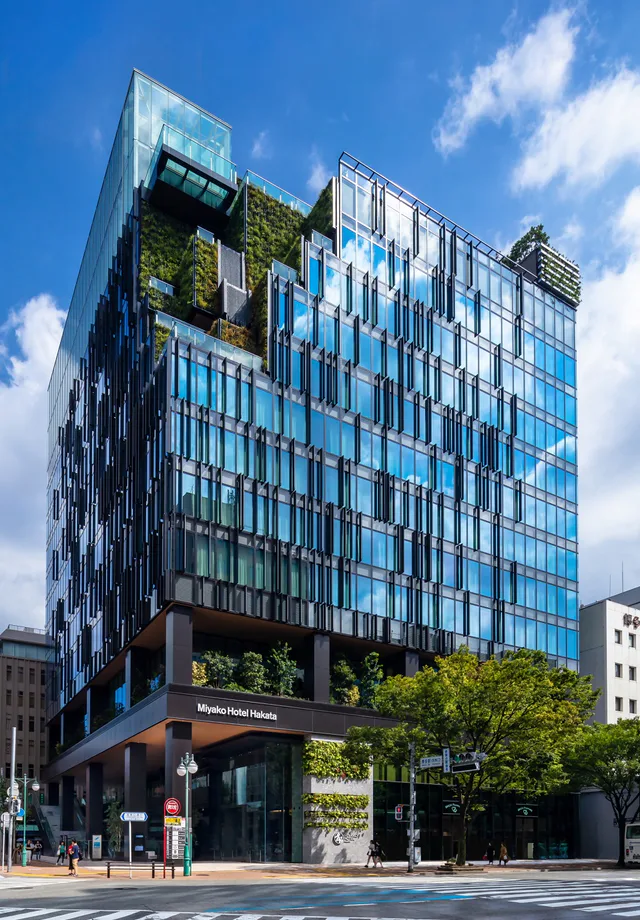
Miyako Hotel Hakata is worth a meaningful premium only when your itinerary uses more than the words “station-connected.” The hotel combines three practical advantages: direct connection to subway Hakata Station East Exit 7, a 30–31m² Superior room baseline, and guest access to Spa Lucida. I would pay more when at least two transport-heavy moments use Hakata Station and you will actually use either the room space or the spa. If the stay is one short night, every evening ends in Tenjin, and you return too late for the spa, compare again before paying a large gap.
This is the useful premium ceiling: count repeated station uses, then count usable hotel windows. A late airport arrival + early Shinkansen departure + evening spa session is three jobs in one room. A leisurely afternoon check-in followed by nightlife in Nakasu and a 07:00 checkout may use only one. The same hotel can therefore be excellent value at one itinerary and an unnecessary luxury at another, even on the same date.
↔ Scroll table left or right
Your stay pattern | Verdict | Why |
Late Fukuoka Airport arrival + luggage + Hakata departure next morning | Strong | East Exit 7 reduces the final outdoor transfer and the station is reused on departure |
Two or more Kyushu rail days from Hakata | Strong | The station connection repeats rather than being a one-time arrival benefit |
Four- or five-night stay with two large cases | Conditional strong | 30–31m² baseline room space becomes a daily benefit, not a one-night luxury |
Tenjin/Nakasu evenings every night, back after 23:00 | Compare again | You are paying for Hakata location and spa capacity you may barely use |
Early train every morning | Location strong, breakfast weak | Breakfast starts at 07:00, so do not pay for it if your departures are earlier |
What “directly connected to Hakata Station” actually removes
The official hotel site currently states that the hotel connects to subway Hakata Station East Exit 7 and is about one minute from the station. For airport arrivals, that matters because the difficult part of a luggage transfer is often the last few hundred metres: finding the correct exit, emerging in rain, crossing a road, then locating the hotel while pulling large cases.
The connection does not mean every JR or Shinkansen platform is one minute from the room. JR and Shinkansen passengers still have internal station walking to reach the Chikushi side and East Exit 7. What the hotel removes is much of the outdoor last mile and the uncertainty after you have reached the correct side of Hakata Station.
I would therefore value this feature by station-use count. Airport arrival is one use. A Yufuin, Kumamoto, Nagasaki or Shinkansen departure is another. Returning from an intercity day is another. If Hakata Station appears four or six times in a three-night itinerary, station access is doing repeated work. If you arrive once and spend the next three days in central Fukuoka, the premium has much less transport value.
The 30–31m² Superior room changes the comparison more than a star rating
The Superior room tier starts at roughly 30–31m². That is important because Miyako is not asking you to exchange room space for station convenience. For two international travellers with large luggage, a 30m²-class baseline can make packing, unpacking and sharing the bathroom materially easier than a compact station hotel.
But do not automatically upgrade again. A Deluxe or Luxury room should solve a named problem: two large hard-shell cases that need to remain open, a long stay with substantial shopping, work space, or more room time. If the Superior already solves your luggage and sleep needs, the next room category may be aesthetic rather than operational value.
A useful rule is: upgrade only when the larger room changes something you will do every day. “Nicer” is not enough. If the upgrade costs substantially more but both travellers still leave at 08:00 and return at 22:30, the larger floor plan may have very few useful hours.
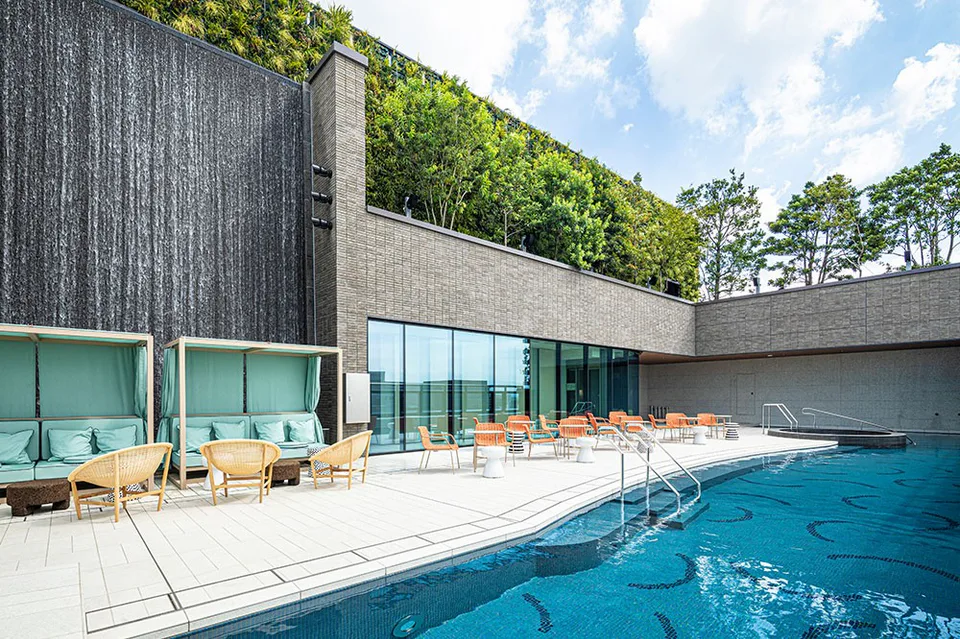
Spa Lucida is worth money only if you can name the session
The current official hours are 06:30–12:00 and 14:00–23:00 for the outdoor spa, and 06:30–12:00 and 14:00–24:00 for the indoor bath. Staying guests can use the spa without a separate admission charge. The outdoor area becomes adults-only from 19:00.
That makes the spa unusually usable for an urban hotel, but “included” is not the same as “valuable.” Before paying a premium, name the session:
arrival-evening recovery after a flight;
post-day-trip bath before dinner;
morning spa on a late-departure day;
family daytime session before the 19:00 adults-only period.
If none fits the itinerary, remove the spa from the comparison. A traveller returning after 23:00 has already lost the outdoor-spa window; a traveller leaving at 06:30 has no useful morning session. In that pattern you should compare Miyako as a large-room station hotel, not as a station hotel plus spa.
There is also a future booking boundary: the hotel has announced that the outdoor Spa Lucida area will be closed for maintenance from 14:00 on January 12 to 12:00 on January 16, 2027, with reopening scheduled for 14:00 on January 16; the indoor bath and sauna are expected to operate normally. If the outdoor spa is part of the reason you are paying more, those dates materially change the product.
Breakfast and a transport-first morning can work against each other
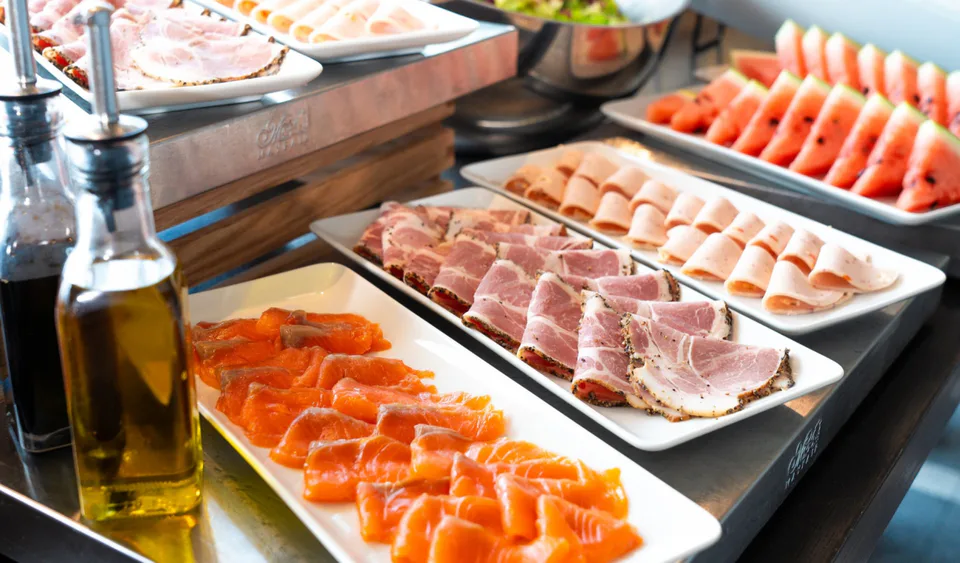
Le Ciel Bleu currently serves breakfast from 07:00 to 10:30, with last entry at 10:00. That works well on a normal Fukuoka morning. It can be poor value before an early Yufuin, Aso or Shinkansen departure—the exact trips that make the Hakata Station location most attractive.
This creates a useful contradiction: the more aggressively you use Miyako as a rail base, the less often you may use the hotel breakfast. Price breakfast separately rather than assuming a breakfast-inclusive rate is automatically the premium version of the stay.
Hakata Station itself has early food options, so the choice is not “hotel breakfast or nothing.” Use the Fukuoka breakfast guide when a 07:00 buffet conflicts with the train you actually want.
The three-use test: when is the premium defensible?
Because hotel rates move daily, a permanent yen ceiling would be false precision. Instead, I would test whether the stay produces at least three meaningful uses from the following list:
late or wet-weather arrival through Hakata Station;
early JR/Shinkansen departure;
another day trip that starts/ends at Hakata;
large-luggage unpacking value from the 30–31m² room;
one realistic Spa Lucida session;
noon checkout meaningfully improves the final day.
Three or more: Miyako’s premium has multiple jobs and is easier to justify. Two: compare the actual rate gap. Zero or one: I would normally move the money elsewhere unless the room itself is the luxury experience you want.
This is ValueNavi analysis, not a hotel rule. Its purpose is to prevent one attractive feature—usually “direct station access”—from carrying the entire price difference by itself.
When Tenjin should beat Miyako Hotel Hakata
Miyako is strongest when Hakata is your repeated transport node. If the trip is primarily Tenjin shopping, Daimyo cafés, Nakasu dining and late nightlife, repeatedly returning east to Hakata can be the wrong optimisation. The hotel may be objectively excellent while the base is wrong for your evenings.
Use Hakata vs Tenjin before comparing hotel brands. One airport transfer should not dictate four nights of accommodation. Conversely, three early Kyushu rail days should not be ignored just because Tenjin feels livelier at night.
One night versus four nights
One night: the premium needs a hard job. Late arrival + early departure is the strongest case. If you arrive at 16:00, eat out, sleep and leave, a cheaper Hakata hotel can be enough.
Two to three nights: this is the sweet spot when one or two regional trips repeat Hakata Station and you still have time to use the spa.
Four to five nights: room space becomes more valuable, but neighbourhood fit matters more too. If every evening is west of Hakata, the repeated subway return can offset some station convenience. Long-stay travellers should compare the room and laundry/storage workflow against a better-located Tenjin hotel rather than assuming bigger is always better.
Final verdict
I would pay a meaningful Miyako Hotel Hakata premium when Hakata Station appears repeatedly in the itinerary and at least one hotel-side benefit—30–31m² room space, Spa Lucida or noon checkout—will also be used. The hotel is particularly strong for late arrivals with luggage followed by early Kyushu rail, because the same location premium solves both ends of the stay.
I would compare again when direct access is the only benefit you can name. If most nights end in Tenjin/Nakasu, the spa is unused and the room is only occupied for sleep, the premium can become a collection of facilities you are not converting into trip value.
References
Miyako Hotel Hakata — official access and current hotel information · SPA lucida — current hours and use rules · 2027 SPA lucida maintenance notice. Rechecked August 25, 2026. Hotel hours, maintenance dates, room inventory and rates can change; verify the exact stay dates before payment.