
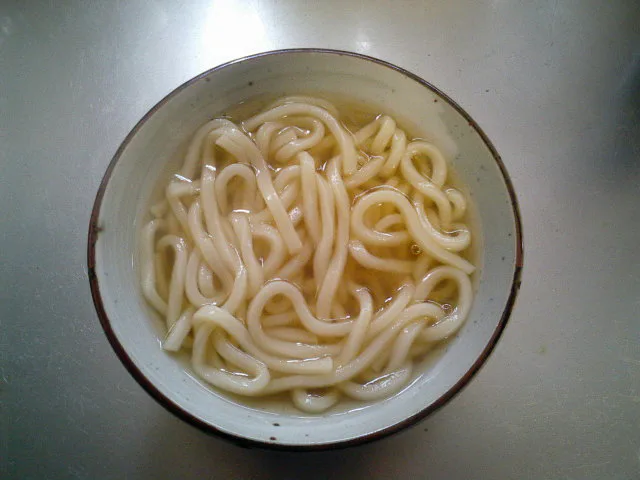
Choose breakfast in Fukuoka from the first hard departure of the day, not from a list of local foods. If you have a reserved train, airport run or highway bus in the morning, eat in the same transport hub and protect the departure. If the morning is deliberately slow, that is when a full mentaiko-and-rice breakfast becomes worth the time. Hakata udon is a genuine local speciality, but it is not automatically an early-breakfast product because opening hours vary by shop. Onigiri or another simple takeaway wins when reliability matters more than turning breakfast into an attraction.
A useful example is the current 09:17 Yufuin no Mori 1 departure from Hakata. Ganso Hakata Mentaiju in Nishinakasu currently opens at 07:00, but it does not accept seat reservations between 07:00 and 17:00. That makes a famous mentaiko breakfast possible before the train, not automatically sensible: you are adding a cross-town leg and an uncontrolled queue before a reserved departure. For that morning, I would keep breakfast around Hakata unless the restaurant itself is one of the trip priorities.
↔ Scroll table left or right
Morning pattern | Best starting choice | Why | When to change it |
Reserved JR train / Shinkansen from Hakata | Onigiri, hotel breakfast or an early option near Hakata | Breakfast stays inside the departure geography | The meal itself is the morning attraction and you have a large buffer |
Slow Fukuoka city morning | Mentaiko rice / fuller Japanese breakfast | You can use a queue and a larger meal without stealing from a transport deadline | A fixed early lunch or attraction booking follows soon afterward |
Want a local hot breakfast but not a large set | Hakata udon — only after checking the exact shop hours | Udon is a Fukuoka speciality and can be a simpler meal than a full set | The shop opens too late for your departure; do not force the category |
Early flight, bus or day trip | Onigiri / convenience-store breakfast | Predictable purchase time and easy portion control | Your hotel breakfast opens early enough and removes rather than adds friction |
Breakfast itself is part of the sightseeing day | Mentaiko, market breakfast or café | The queue and meal time now have a job in the itinerary | You are crossing the city purely for a meal before returning to the original direction |
The first question is: when do you have to leave the neighbourhood?
Breakfast decisions become much easier once you write down the first non-negotiable time. A train departure, airport check-in target, tour meeting point or timed attraction has a real failure cost. A breakfast queue usually does not.
Use this order:
Write down the transport or reservation time.
Subtract the walk, station navigation and a margin you are comfortable with.
Only consider breakfast options that fit before that leave-the-meal time.
If the famous option has an uncontrolled queue, keep a backup in the same station or neighbourhood.
This avoids a common false economy: choosing a memorable breakfast that forces a taxi, a rushed checkout or a missed reserved seat later. The meal should support the morning unless the meal is explicitly the morning's main event.
Mentaiko is the experience breakfast — so give it an experience-sized time slot
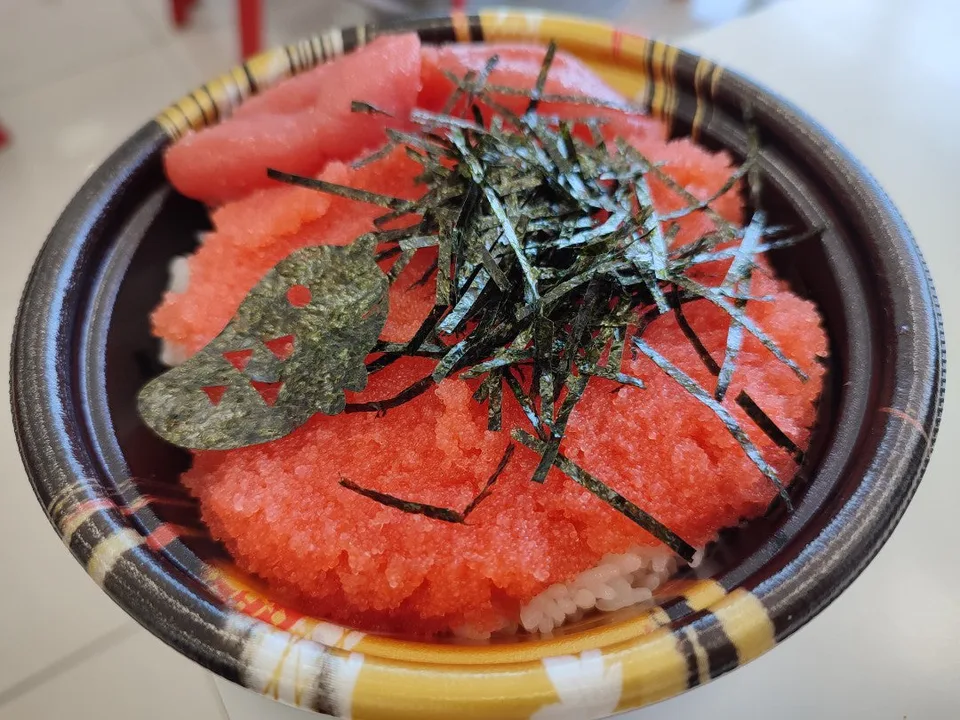
Mentaiko and rice is one of the most recognisable Fukuoka breakfast choices, but a full set has a larger opportunity cost than an onigiri or quick noodle meal. It deserves a morning when you can sit down, eat without watching the clock and still have appetite for the rest of the food day.
The current Ganso Hakata Mentaiju schedule illustrates the trade-off well. Its Nishinakasu restaurant currently opens at 07:00 and runs until late evening, but the restaurant says seat reservations are not accepted from 07:00 to 17:00. Its Hakata Station location, by contrast, currently opens at 09:00 and is a bento/souvenir shop with no dine-in space. The same brand therefore solves two very different mornings.
For a relaxed Tenjin/Nakasu morning, a 07:00 mentaiko breakfast can be a strong local start. For the 09:17 Yufuin no Mori from Hakata, the same restaurant creates a queue-and-transfer chain before a reserved train. If Yufuin is the main event, protect Yufuin. If the mentaiko meal is one of the trip's specific priorities, allocate enough time that missing one train is not the price of breakfast.
If you want to compare the dish itself rather than the morning logistics, use the Fukuoka mentaiko guide.
Hakata udon is local — but “udon” does not mean “open at breakfast”
Fukuoka City's official tourism guide treats Hakata udon as a local speciality and describes the city's characteristic soft noodles. That makes udon a useful alternative when you want a hot local meal without committing to a large breakfast set.
But do not build an early morning around the food category alone. Individual opening hours differ materially. One current official-tourism listing, Nagahama Udon, opens at 08:00 on weekends and public holidays but at 10:00 on weekdays. Other udon shops have completely different schedules.
The decision rule is therefore: choose an exact udon shop only after the departure time is fixed. If a convenient branch opens early enough on your date, great. If not, switch breakfast rather than crossing town or starting the day late just to preserve the word “udon” in the itinerary.
This is also a useful reminder for hotel planning. Staying near Hakata does not guarantee every Fukuoka speciality is available at 07:00, and staying in Tenjin does not make every café a good pre-train breakfast. Exact opening time beats neighbourhood reputation.
Onigiri is the default when the transport has a higher failure cost than the meal
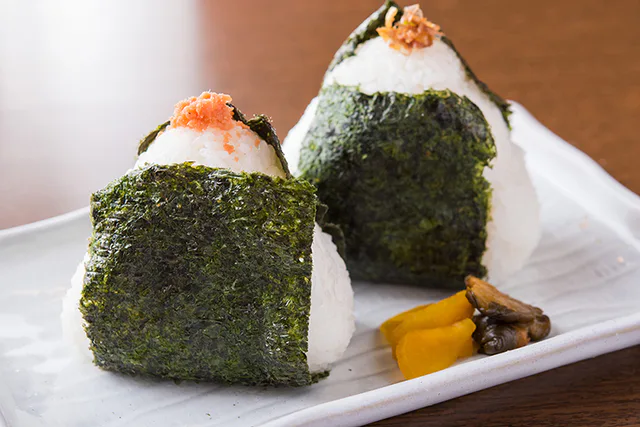
Onigiri is not the “failed to find breakfast” option. It is the rational choice when the morning has almost no tolerance for delay. The purchase takes little time, the portion is easy to control and it can be bought the previous evening when an extremely early departure makes morning shopping undesirable.
I would use this default for:
an early flight where the airport arrival target matters more than the meal;
a Shinkansen or reserved limited express where the destination lunch is more important;
a highway-bus morning with a fixed boarding time;
a family checkout where several suitcases and children already create enough moving parts.
The trade-off is obvious: you give up a sit-down Fukuoka breakfast experience. Make that sacrifice deliberately, then spend the saved time or appetite on the destination meal instead of treating the simple breakfast as a planning failure.
For a 09:17 Yufuin no Mori departure, breakfast should usually stay in Hakata
JR Kyushu's current timetable has Yufuin no Mori 1 leaving Hakata at 09:17 and reaching Yufuin at 11:31. That is late enough to tempt travellers into a special breakfast elsewhere in Fukuoka, but early enough that a queue can make the morning fragile.
From a Hakata hotel, the clean sequence is hotel → breakfast near the station → platform. From a Tenjin or Nakasu hotel, a famous 07:00 restaurant can still work, but it now has to beat the value of a direct departure morning. If the restaurant does not take reservations and the queue becomes long, switch early.
The hidden cost of a delayed breakfast is not just the train. A later Yufuin arrival can reduce the useful ryokan afternoon, baggage-delivery window or pre-dinner bathing time. Use the Fukuoka to Yufuin transport guide if the breakfast decision sits before a ryokan night.
Hotel breakfast is worth paying for when it deletes a morning task
A hotel buffet should be compared with the breakfast you would realistically buy outside, not with the number of dishes on the buffet.
Use this ValueNavi test:
usable hotel-breakfast window =
your leave-hotel deadline
- breakfast opening time
- the buffer you want for eating and checkout
If that window is short enough that everyone will rush, do not pay a breakfast premium simply because the hotel advertises a buffet. Room-only plus a simple station breakfast may fit the day better.
The answer reverses when hotel breakfast removes multiple tasks: no restaurant search, no queue uncertainty, no detour with luggage and everyone can eat before checkout. For families or older travellers, that friction reduction can be worth more than finding a more famous breakfast ten minutes away.
The important comparison is not “hotel buffet or local food?” It is “does the buffet make this specific morning easier?”
Hakata, Tenjin and Nakasu should not use the same breakfast strategy
Hakata: prioritise the departure hub when JR, Shinkansen or an intercity bus follows. Breakfast, checkout, luggage storage and boarding can live inside one compact sequence.
Tenjin / Nishinakasu: stronger for a slower city morning, a mentaiko restaurant or café that is itself part of the plan. It becomes weaker when you eat there and then immediately cross back to Hakata for a reserved train.
Nakasu: often works as part of a central-city food day, but do not assume a lively evening district automatically has the exact early breakfast you want. Verify the shop rather than the area label.
If you are still deciding which side of the city should hold the hotel, use Hakata vs Tenjin. A transport-heavy morning and a food-heavy morning can legitimately produce different answers.
A heavy breakfast has an opportunity cost when lunch is part of the trip
Fukuoka is a food destination, so breakfast should be budgeted against the rest of the eating day. If lunch is a booked sushi, seafood, ramen or specialty meal, a large breakfast can make the expensive reservation less enjoyable even when the timetable still works.
Use lunch as a boundary condition:
Fixed lunch around midday: keep breakfast smaller unless breakfast itself is the higher priority.
No lunch plan until mid-afternoon: a fuller mentaiko set or hotel buffet is easier to justify.
Destination food is the point of the day: protect appetite with onigiri, a small udon or another modest meal.
This is not a nutrition rule. It is itinerary opportunity-cost analysis: one travel meal can reduce the value of the next one.
Use a queue stop-loss instead of waiting because a restaurant is famous
Opening time does not guarantee immediate seating, and some popular breakfast restaurants do not offer morning reservations. Decide before leaving the hotel how much schedule margin the meal is allowed to consume.
A practical rule is:
If breakfast is the morning attraction, the queue can use part of the sightseeing budget.
If breakfast is fuel before transport, the queue may use only the transport buffer you can safely spare.
Once that buffer is gone, switch to the backup in the same neighbourhood instead of protecting sunk waiting time.
The backup does not need to be equally famous. Its job is to preserve the more valuable reservation later in the morning.
Three Fukuoka mornings that make the choice clear
City day with no hard start
Choose mentaiko or a café breakfast. Let the meal be part of Fukuoka rather than rushing through it. The trade-off is a later lunch or fewer morning sights.
Hakata → Yufuin / Nagasaki / Kumamoto morning
Keep breakfast around the departure hub. A local udon shop works when its opening time fits; otherwise use onigiri, hotel breakfast or another quick option. The destination earns the schedule priority.
Early flight or tight airport morning
Buy a simple breakfast the night before or use a hotel option that clearly fits the departure. Do not cross central Fukuoka to complete a food checklist before an airline deadline.
Final verdict
Mentaiko is the best Fukuoka breakfast when the morning itself is flexible. Udon is a strong local hot meal only when the exact shop opens early enough for your route. Onigiri is the best transport-day breakfast when a train, bus or flight has a higher failure cost than missing one restaurant.
The key is to choose the breakfast after the day's first hard commitment is fixed. For a slow Tenjin/Nakasu morning, spend the time. For a 09:17 Yufuin no Mori or another reserved departure from Hakata, keep the meal geographically aligned with the station. A breakfast should either add a Fukuoka experience or remove morning friction; if it does neither, it is probably in the wrong place in the itinerary.
Fukuoka Food Trip Hotels: Choose Where Dinner Ends, Not Where the Most Restaurants Are
Fukuoka Guys’ Trip Hotels: Four Adults, Real Beds, Late Nights and Whether a Sauna Is Worth It
lyf Tenjin Fukuoka Review: Is a 12m² Room Worth the Shared Kitchen and 24-Hour Lounge?
Fukuoka Private Car Charter: When Does a Driver Beat JR or Bus?
References
JR Kyushu — Yufuin no Mori timetable · Ganso Hakata Mentaiju — current restaurant and Hakata-shop hours · Fukuoka City Official Tourist Guide — Hakata udon · Fukuoka City Official Tourist Guide — Nagahama Udon current hours. Checked August 25, 2026. Restaurant hours, closures, queues and transport timetables can change; recheck the exact travel date.