
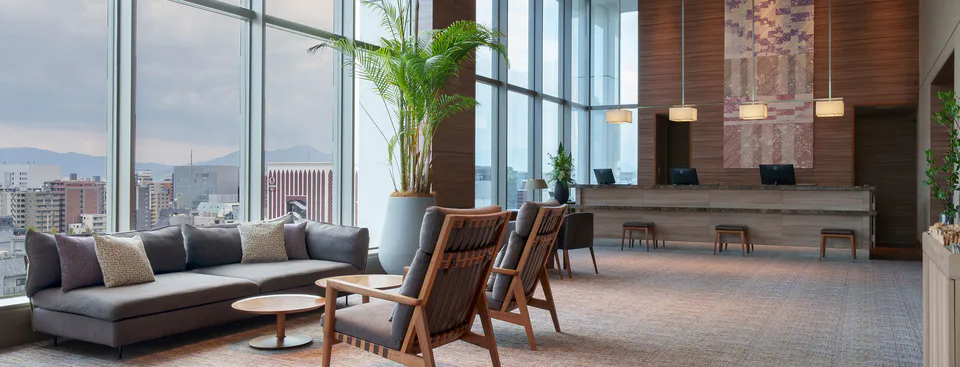
30-second answer | For a Fukuoka food trip, the best hotel is the one that makes the end of dinner easy
The easiest mistake when choosing a hotel for a Fukuoka food trip is treating “lots of restaurants nearby” as the whole answer. Central Fukuoka is compact enough that Hakata, Tenjin and Nakasu are all workable, but that does not mean they feel the same at 10:30 p.m. after a long dinner, a few drinks and a full day of walking. The useful question is not how many restaurants sit within one kilometre. It is where your day usually ends, how late dinner runs, whether you tend to keep drinking, whether hotel breakfast is actually part of your plan, and where you need to be the next morning.
If two or three dinners are in Nakasu or Haruyoshi and you expect to stay out late, a Nakasu hotel can save the most annoying trip of the day: the one after you are already finished. If your mornings start at Hakata Station for JR day trips and you only plan one night at yatai, moving your entire stay to Nakasu may over-optimize one evening. If your base is still undecided, start with Hakata vs Tenjin hotel areas and then add extra weight to where dinner ends.
↔ Scroll table left or right
Your food pattern | Best base to test first | What you are really saving | Trade-off to check |
Late dinner + drinks in Nakasu/Haruyoshi on 2–3 nights | Nakasu / Haruyoshi | The final subway ride or long walk after dinner | Morning JR departures may still pull you back to Hakata |
Cafes, department-store dining, Daimyo and Imaizumi dinners | Tenjin | Easy returns between shopping, coffee, dinner and the hotel | Not automatically best for early JR day trips |
Breakfast near the station + frequent JR day trips | Hakata | You combine food and transport around the same hub | Repeated late-night returns from Nakasu can become tedious |
One yatai night, other dinners spread across the city | Follow the overall itinerary | Avoid choosing a four-night hotel for one atmospheric evening | You may walk a little farther on the yatai night |
Hotel breakfast is a major meal, not a convenience | Hotel with a breakfast you deliberately want | One meal becomes part of the stay itself | A prepaid buffet can compete with outside food plans |
Not sure where dinner will end? Compare Hakata and Tenjin first
Choose your dinner home base first | Food trips are shaped by where you finish the day
Put the restaurants you genuinely care about on a map, then look at where the final meal lands each night. That often matters more than breakfast location. In the morning you are rested and much more willing to walk eight minutes, ride one stop or cross the station. After dinner, especially when it is raining, you have shopping bags or you have been drinking, the exact same journey feels longer.
Three questions usually reveal the right weighting. How many nights will dinner end after about 9:30 p.m.? Will you probably have another drink after the main meal? Does your group still want to take a subway ride once dinner is over? If the answers are “several nights”, “probably” and “not really”, Nakasu and Haruyoshi deserve much more weight. If dinner is only one part of the day and your daytime plans are scattered, go back to the full Fukuoka 3-day itinerary logic rather than letting one famous dinner district choose the hotel for you.
Nakasu and Haruyoshi | Best when the final meal is a nightly event, not a one-off stop
Nakasu works for food-focused travellers not because every great restaurant in Fukuoka is here, but because the nighttime density is high and Nakasu, Haruyoshi, Kawabata and Tenjin-minami can function as one broad evening zone. If your normal night is yakitori or hotpot, then ramen, then yatai or a bar, staying nearby lets the hotel become the natural final stop instead of one more piece of transport.
That does not make Nakasu universally superior. If you need to leave Hakata Station around 8 a.m. on two mornings for Yufuin, Kumamoto or another JR trip, the convenience you gain at night may reappear as morning travel. This is why the useful comparison is not “Is Nakasu lively?” but whether the late-night saving outweighs your daytime movement. The Tenjin and Nakasu hotel comparison is more helpful here than a generic nightlife ranking.
HOTEL RESOL TRINITY HAKATA | One-minute Nakasu access matters most after dinner, not at noon
HOTEL RESOL TRINITY HAKATA has a very simple food-trip case: the hotel currently states that Nakasu-Kawabata Station Exit 1 is about a one-minute walk away. At midday, one minute versus five minutes is not a life-changing difference. At 11 p.m., after dinner, in rain or after drinks, those few minutes can become a benefit you actually notice every night.
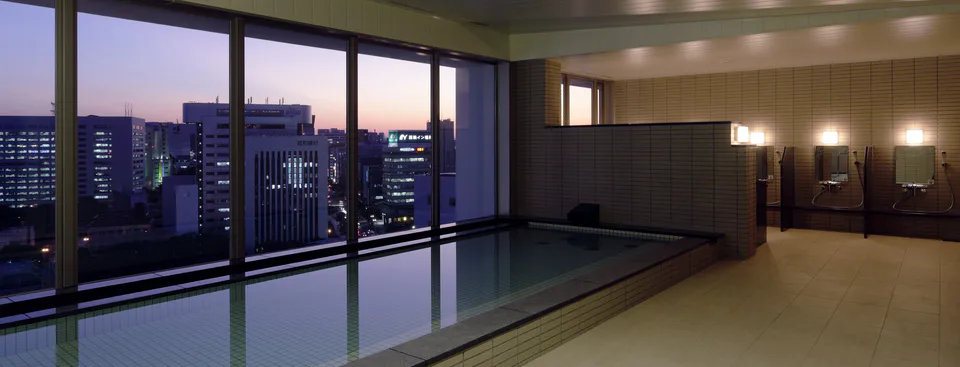
The hotel should not win just because it also has a public bath or breakfast. Its current FAQ lists breakfast from 7:00 to 10:00, with different pricing depending on whether you add it in advance or on the day. If your breakfast wishlist is already full of udon, mentaiko, coffee or market stops, a prepaid breakfast can become an obligation rather than a perk. Read the HOTEL RESOL TRINITY HAKATA room and public-bath guide to decide whether the location is worth the room-size trade-off for your dates.
If Nakasu is your late-night base, check whether Resol’s one-minute location earns its price
HOTEL IL PALAZZO | Pay for it when hotel dining is part of the food trip, not just because yatai are nearby
HOTEL IL PALAZZO is a different proposition. The hotel currently lists the Nakasu yatai area at roughly a one-minute walk and central Nakasu at around two minutes, while its basement EL DORADO lounge is itself part of the stay, covering breakfast, lunch and lounge use for guests. For a food-focused trip, that can be valuable because eating is built into both the neighbourhood and the hotel.
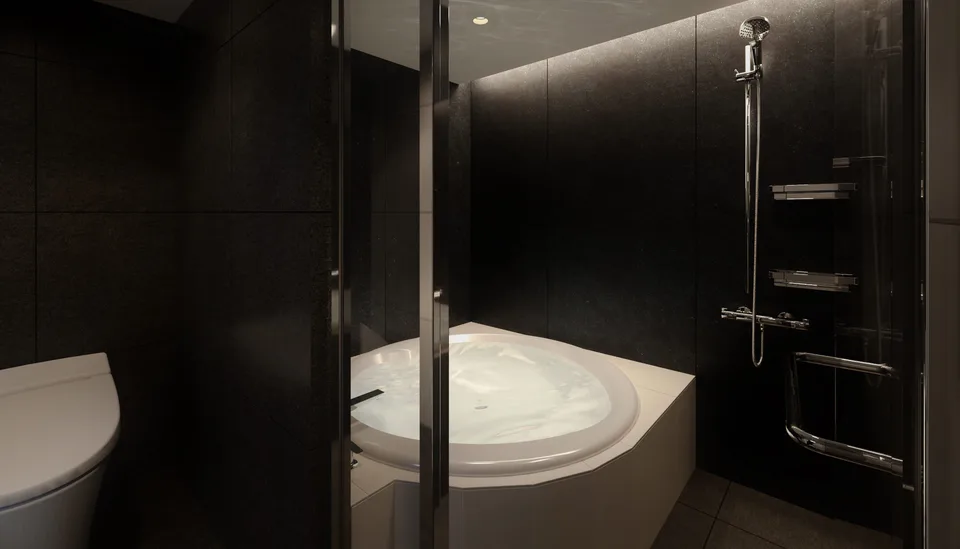
If you leave early every morning, return late every night and plan to eat every breakfast outside, the lounge should not be the reason you accept a design-hotel premium. If you deliberately want part of one day to remain inside the hotel, the same feature becomes meaningful. The fuller trade-off is in the HOTEL IL PALAZZO Fukuoka guide.
Want Nakasu nights plus hotel-lounge time? Check whether IL PALAZZO fits that plan
Mitsui Garden Hotel Fukuoka Nakasu | Treat the 6:30 a.m. breakfast as an advantage only if you actually want that breakfast
Mitsui Garden Hotel Fukuoka Nakasu currently lists Nakasu-Kawabata Station at about a two-minute walk. Its breakfast is served by Ono no Hanare Hakata Honten from 6:30 to 11:00, with last entry at 10:00, and the menu is built around seasonal seafood from the Nagahama market plus Kyushu and Hakata dishes. That is the kind of hotel breakfast that can reasonably become one of the meals you came to Fukuoka to eat, rather than a generic convenience buffet.
The catch is appetite. If you only have two mornings and you already want one market breakfast and one famous udon shop, adding a substantial hotel buffet can steal both time and stomach space. A useful rule is simple: if you read the menu and would intentionally reserve one morning for it, count breakfast as part of the room value. If you only like the reassurance of having breakfast downstairs, compare the room-only rate as well.
Tenjin and Solaria | When cafes, department-store dining and Daimyo dinners dominate, returning to the room can matter more than yatai distance
“Eating in Fukuoka” does not automatically mean Nakasu. A trip built around Tenjin Underground Mall, Iwataya, PARCO, cafe stops, Daimyo, Imaizumi and Kego dinners has a completely different centre of gravity. In that pattern, the strongest hotel benefit is often the ability to return twice in one day: drop shopping bags after lunch, rest before dinner, then walk back after the final meal.
Solaria Nishitetsu Hotel Fukuoka currently connects directly with Nishitetsu Fukuoka (Tenjin) Station, while the subway’s Tenjin and Tenjin-minami stations are around a five-minute walk. Its 17th-floor Red Flamma also serves breakfast, but again the question is whether you will use it. If both your daytime and dinner plans are concentrated in Tenjin, the Solaria Nishitetsu Hotel Fukuoka guide is the right next step. If you are deciding between a conventional Tenjin base and a more hotel-time-focused stay, the Solaria vs ONE FUKUOKA HOTEL comparison gives a different angle.
Hakata is not the “weaker food area” | It can be the most efficient base when breakfast, station dining and day trips belong together
Food travellers sometimes reduce Fukuoka to three labels: Nakasu for eating, Tenjin for shopping, Hakata for transport. That is too crude. Hakata Station itself has a dense food ecosystem, and for travellers who want breakfast near the station, a quick meal before a train, or dinner after returning from a day trip, the big advantage is that food and transport terminate in the same place.
If two of your three days involve JR trips, there is no need to commute to a nightlife district every night simply because it sounds more “foodie”. On the other hand, if you already have three late reservations in Nakasu, Hakata starts to create the same repeated return trip every evening. The Miyako Hotel Hakata vs Solaria comparison is useful if your real decision is station efficiency versus a Tenjin-centred food and shopping base. For the transport side, keep the Fukuoka JR, subway and Nishitetsu guide beside your hotel shortlist.
Hotel breakfast | The problem on a food trip is not a bad buffet; it is eating it because you already paid
On a normal trip, hotel breakfast can reduce morning decisions. On a food trip, that convenience can become sunk-cost eating. If you already have three breakfast places saved, even an excellent buffet competes with the exact restaurants you travelled to Fukuoka to try.
Before choosing a breakfast-inclusive rate, put yourself into one of three groups. First: “I definitely want the hotel breakfast.” Second: “I only want it if it rains, I have an early start or I am tired.” Third: “I want every breakfast outside.” The first group can justify a fixed breakfast plan. The second should check whether breakfast can be added later. The third should keep the breakfast budget free. This is also why a hotel with a genuinely themed breakfast can be valuable without automatically being the right choice.
Do not make yatai the centre of the entire hotel decision | One atmospheric night does not need to dictate four nights
“I want to eat at yatai, so I should stay in Nakasu” only works when yatai are genuinely a repeated part of your evenings. Many first-time visitors plan one yatai night, while the other nights become sushi, mizutaki, yakiniku, yakitori, ramen, izakaya or a restaurant with a reservation. In that case, your hotel should follow the full dinner map, not the most photogenic evening.
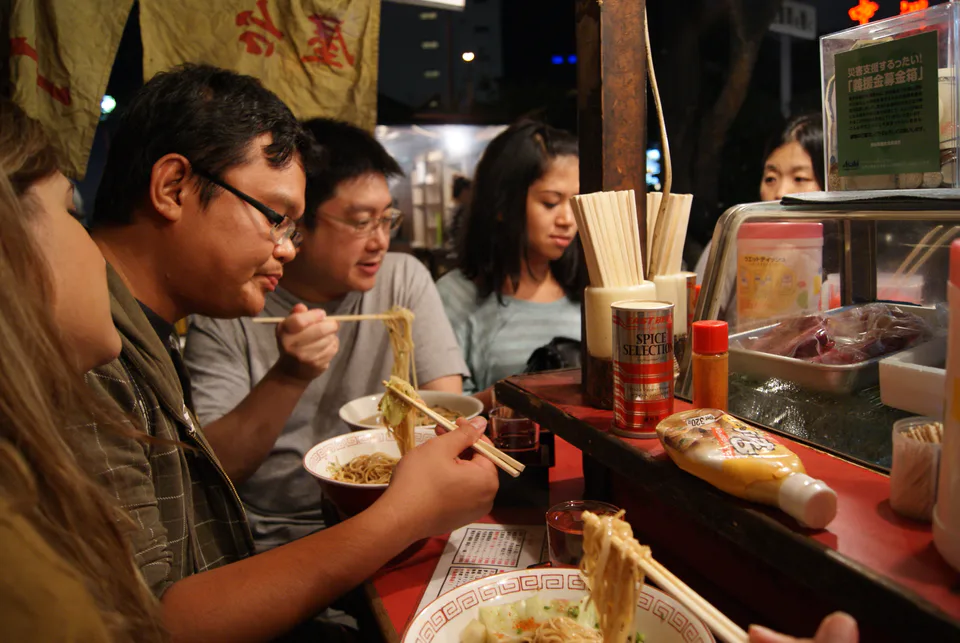
Mark confirmed reservations first, then place “maybe” yatai afterwards. If three nights all finish around Nakasu or Haruyoshi, staying nearby is logical. If only one does, do not let one atmospheric evening control four nights of hotel cost and daytime movement. The Fukuoka yatai guide is useful for choosing Nakasu, Tenjin or Nagahama without confusing “where to try yatai” with “where to sleep every night”.
After drinks, magnify the final ten minutes | A train still running is not the same as wanting to take it
Alcohol changes the hotel calculation in a very practical way. Dinner ending at 8:30 p.m. is different from dinner ending at 10:30 p.m.; 10:30 while completely sober is different again from 10:30 after several drinks. You may be nowhere near the last train, but “the subway is still running” does not mean your group wants another transfer before bed.
If two or three nights already include bars or izakaya, increase the weight of the evening location. This is one reason the Fukuoka Tenjin and Nakasu hotel comparison can be more useful than sorting hotels by nightly price. Even within the same broad area, the final walk, public bath, in-room washer-dryer and late-return pattern can change which hotel actually feels easier.
Do not make dinner easy by making every daytime trip harder | Count at least two high-frequency movements per day
A hotel that only serves dinner can quietly make the daytime inefficient. A simple check is to split each day into two anchors: the main daytime activity and the main evening activity. If five out of six anchors across three days sit in the same broad area, that area probably deserves to be your base. If all three dinners are in Nakasu but every morning starts with a JR departure from Hakata, the decision needs another pass.
That is why a Fukuoka food-trip hotel guide should not become a “best Nakasu hotels” list. The right hotel is the one that reduces movements you repeat across the whole trip, not the one that makes a single dinner walk shortest.
Reservation time matters more than the number of famous restaurants nearby | A 6 p.m. booking and a 9 p.m. booking create different hotel answers
The same restaurant can affect your hotel decision differently depending on the time you can actually reserve. With a 6 p.m. booking, you may finish dinner with enough energy to walk through Tenjin or take the subway back to Hakata. With a 9 p.m. booking followed by one drink, being able to walk to the hotel suddenly has much more value. One of the common food-trip mistakes is choosing the hotel first, then forcing every hard-to-book restaurant into that geography.
For popular mizutaki, sushi, yakitori or course-menu restaurants, the available time may not be your ideal time. If two must-do dinners only have slots after 8:30 p.m. and both are in Nakasu or Haruyoshi, the case for staying nearby becomes stronger. If your main dinners are at 5:30 or 6 p.m. and you normally continue shopping in Tenjin afterwards, follow the second activity instead. In other words, the hotel is determined less by the restaurant address than by your condition and next move when you leave.
Breakfast works the same way. If you need to board a JR train around 9 a.m., a hotel breakfast starting at 6:30 can be genuinely useful. If the morning is open, there is less reason to reserve stomach space for a buffet. Put dinner reservation times and the next morning’s first commitment on the same itinerary before paying for the hotel.
Final verdict | Decide where the last bite of each day happens, then decide which hotel deserves the nightly rate
If three nights are likely to finish in Nakasu or Haruyoshi with late meals, drinks and spontaneous second stops, Resol Trinity, IL PALAZZO or another central Nakasu hotel can give more real value than an abstract claim that Hakata is “better for transport”. If your eating pattern is Tenjin cafes, department-store restaurants and Daimyo dinners, a Tenjin base such as Solaria is more logical. If breakfast, station dining and JR day trips are the real backbone of the trip, Hakata should not be removed just because it feels less nightlife-focused.
Before paying, answer five questions: Where are your three most important dinners? What time will you probably leave them? Will you drink? Does hotel breakfast deserve one of your limited meals? Where is the first commitment the next morning? Those five answers are far more useful than knowing that a hotel has hundreds of restaurants nearby.
Still split between Nakasu and Tenjin? Compare late-night return and hotel functions side by side
Osaka Kuromon Market Food Tour 2026: You’re Paying for a Guide, Not the Food
Fukuoka Rainy-Day Hotels: Direct Access, Underground Routes and the Last 300 Metres
Where to Stay in Osaka for Couples: Choose Your Evening Before the Hotel
A Mount Fuji Day Trip from Tokyo Can Buy You Transport — Not the View
Fukuoka Guys’ Trip Hotels: Four Adults, Real Beds, Late Nights and Whether a Sauna Is Worth It
Sources
Information checked on August 19, 2026. Breakfast prices, restaurant service hours and hotel facilities can change, so verify the official hotel page and the conditions attached to your actual room plan before payment.
HOTEL RESOL TRINITY HAKATA | Official access
HOTEL RESOL TRINITY HAKATA | Official FAQ and breakfast information
Mitsui Garden Hotel Fukuoka Nakasu | Official breakfast
Mitsui Garden Hotel Fukuoka Nakasu | Official access