
30-second verdict | In Fukuoka rain, the biggest difference is usually the last 300 metres
Fukuoka is compact enough that people often compare hotels by train time and assume a one- or two-minute walk is basically the same as a direct station connection. On a dry afternoon, that can be true. In heavy rain, with two suitcases, a stroller or tired parents, it stops being true very quickly. The useful question is not simply “How close is the station?” It is “How many exposed metres, level changes and transfers remain between the platform and the hotel door?”
That does not mean you should pay a premium for a fully connected hotel just because rain is possible. A rainy-day hotel should reduce repeated friction without wrecking the rest of the trip. If most of your itinerary is in Tenjin, choosing Hakata only to avoid ten wet minutes on one day can be a poor trade. Start with Hakata vs Tenjin as a normal trip-base decision, then add rain as a weighting factor rather than letting it take over the whole decision.
↔ Scroll table left or right
What the listing says | What it really means in rain | When it matters most | What to check before paying |
Directly connected | You can usually remove most or all of the exposed final leg | Arrival/checkout with large luggage; repeated station use | Which railway/subway exit is actually connected |
1–2 minute walk | Very short, but still an outdoor segment unless the hotel states otherwise | Light rain; one suitcase; short city stay | Crossings, stairs, curb cuts and exact station exit |
Underground access nearby | A large part of the route may be covered, but not necessarily door-to-door | Tenjin shopping and repeated city movement | Which station line you arrive on and where you surface |
7-minute station walk | Manageable dry; more noticeable when wet or luggage-heavy | Longer stays where room/spa value may offset the walk | Whether the facilities will actually be used enough |
Taxi-friendly location | Can remove the exposed segment without changing hotel area | One-off storm, family luggage, late arrival | Drop-off point and whether taxi use is occasional or daily |
Start with the normal base decision: Hakata vs Tenjin
Define the words first | “Direct”, “near the station” and “underground access” are not synonyms
Hotel descriptions make rainy-day comparison harder because three very different arrangements can all sound “convenient”. A direct connection means there is a physical connection from a station or connected complex into the hotel. A one-minute or two-minute walk means you still have an outdoor segment unless the hotel explicitly says otherwise. “Near the underground mall” can be useful, but it may still involve a surface exit, escalator, road crossing or a five-minute walk from the subway platform you actually use.
This distinction matters most when you are comparing a premium hotel with a cheaper property that is “only two minutes away”. If you travel light, the cheaper hotel may be the obvious choice. If you land in a downpour with two large cases, a child and a folded stroller, those two minutes can become the only two minutes you remember. Rain is not about distance alone; it magnifies every small break in the route.
Miyako Hotel Hakata | The rainy-day premium is easy to understand because East Exit 7 connects to B1
Miyako Hotel Hakata has one of the clearest rainy-day propositions in the city. Its official access information says the hotel is directly connected to Hakata Station via Subway East Exit 7 and the B1 entrance. That is a different product from “a hotel two minutes from Hakata Station”. The value is not luxury in the abstract. It is removing the uncertain final outdoor leg when rain, luggage and fatigue all arrive at once.
The catch is repetition. If you only expect one rainy transfer but spend four days eating, shopping and going out in Tenjin, the direct-connection premium may be used once while the wrong base costs you time every day. Read the Miyako Hotel Hakata single-hotel analysis first, then compare it with Miyako vs Blossom Hakata Chuo if your real question is whether “direct” is worth more than “very close”.
Compare true direct access with a roughly 2-minute Hakata walk
JR KYUSHU HOTEL Blossom Hakata Chuo | About two minutes from Hakata Exit is still not a direct connection
JR Hotel Group currently lists Blossom Hakata Chuo at about a two-minute walk from JR Hakata Station’s Hakata Exit. That is an excellent station-side location, but rain changes the language you should use. “Two minutes” means the exposed segment is short; it does not mean you never need an umbrella. For many travellers, that distinction is not worth paying a large premium to eliminate. For others, especially with multiple cases or a stroller, it is exactly what they are paying to eliminate.
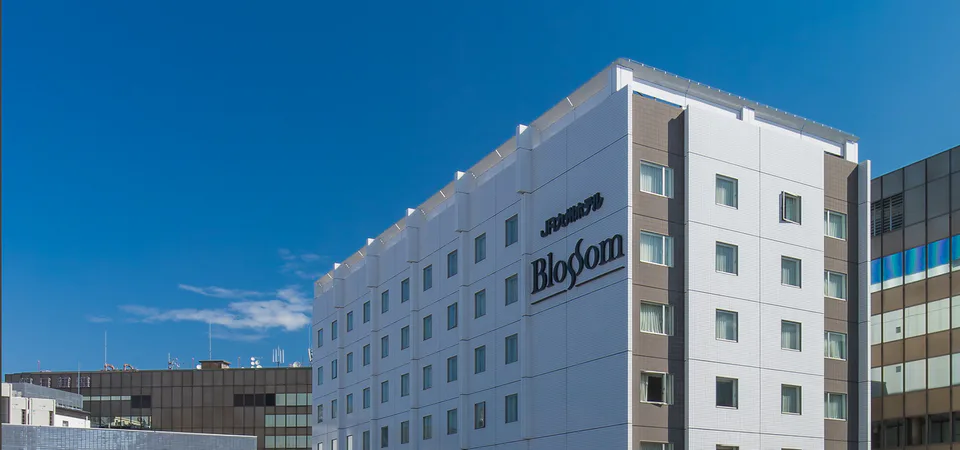
This is why Blossom Hakata Chuo often works well as the middle answer. You keep Hakata convenience, but you do not automatically buy the full direct-connection premium. The remaining question is whether the room and luggage setup also fit your trip. The Blossom Hakata Chuo room guide is more useful than treating location alone as the entire decision.
HOTEL FORZA Hakata Station Chikushi-Guchi I | A one-minute walk helps, but do not turn “one minute” into “fully covered” in your head
HOTEL FORZA Hakata Station Chikushi-Guchi I is useful for the same reason, at a different price and room-size tradeoff. The current official positioning is roughly one minute from Hakata Station’s Chikushi side. In rain, one minute is genuinely valuable. It is simply not the same as a physical station-to-hotel connection. If you are choosing it because you want the shortest possible practical walk without paying for a more premium hotel, that logic is sound.
The part people miss is that a short station walk does not erase the hotel’s other compromises. If an 18m² room feels tight with two open suitcases for four nights, the rain-friendly location will not make the room larger. The better question is whether you are buying a short outdoor segment for a one- or two-night stay, or accepting a small room for the whole trip. See the HOTEL FORZA Hakata Station Chikushi-Guchi I analysis before letting the one-minute number decide everything.
Solaria Nishitetsu Hotel Fukuoka | “Direct in Tenjin” only helps if you know which station system you are using
Solaria Nishitetsu Hotel Fukuoka is a good example of why station names can be misleading. It is directly connected to Nishitetsu Fukuoka (Tenjin) Station, which is excellent when you are using the Nishitetsu station and the connected commercial complex. But Tenjin also has subway stations, and the hotel’s own access information lists roughly five minutes from Subway Tenjin Station and Tenjin-Minami Station. Rainy-day convenience therefore depends on which transport system your day actually uses.
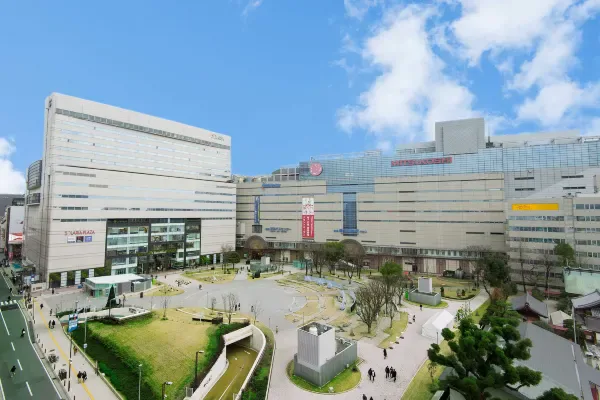
If most of your days are Tenjin shopping, department stores, Daimyo and Nishitetsu trips, this can still be a very strong rainy-day base because you can repeatedly return to the same covered commercial core. If your schedule is built around JR day trips from Hakata, the same hotel may create more transfers. Use Solaria Nishitetsu Hotel Fukuoka single-hotel analysis or Miyako vs Solaria to compare the two kinds of “easy”.
Rainy Hakata direct connection or Tenjin direct connection?
Tenjin Underground Mall | Its value is not “zero rain”; it is moving repeated high-frequency movement below ground
Tenjin’s underground network is valuable because it links shopping, subway access and large commercial buildings across a wide central area. That can turn a wet day from a sequence of umbrella openings into long indoor segments. But it should not be described as a magic tunnel from every hotel to every platform. Your exact hotel entrance, the subway line you use and the exit you need still matter.
The strongest case for Tenjin in rain is therefore frequency. If you will return to the hotel midday, shop for hours, drop bags, eat nearby and go back out, keeping those repeated movements within the Tenjin core can matter more than saving a few minutes on the airport transfer. This is also why a hotel that is perfect on one rainy shopping day can be inefficient for three JR-heavy day trips.
THE BLOSSOM HAKATA Premier | A roughly seven-minute walk needs a stronger reason when it is raining
THE BLOSSOM HAKATA Premier is currently listed by JR Hotel Group at roughly a seven-minute walk from JR Hakata Station. Seven minutes is not far in normal weather. In rain, it is long enough that the room, public bath and hotel time need to earn their keep. If you come back early, use the spa, value the larger room and actually spend downtime at the hotel, the trade can still make sense. If you leave after breakfast and return late every day, you are paying for facilities while repeating the wet walk.
This is the cleanest way to compare it with Miyako: one hotel makes the station transition easier; the other can justify a little more walking by giving more value once you are inside. The Miyako vs THE BLOSSOM HAKATA Premier comparison and THE BLOSSOM HAKATA Premier single-hotel analysis make that trade clearer than a generic star-rating comparison.
Large luggage, strollers and parents | In rain, count transfers before you count kilometres
Rain magnifies transfer friction more than map distance. One lift that is on the wrong side of the station, one staircase with a suitcase, one uncovered road crossing and one extra subway transfer can matter more than whether the hotel is 500 metres closer to a landmark. This is especially true with a stroller, three or four adults sharing luggage, or parents who simply do not want to repeat a confusing station route after dinner.
That does not mean every family or older traveller needs a “special” hotel. It means the group should count how many times the difficult route will be repeated. A slightly higher room rate can be rational if it removes friction six times over three days; it is harder to justify if it solves only the airport arrival. For four-adult layouts around Tenjin and Gion, Solaria vs Croom Hakata Gion is a useful follow-on comparison.
The umbrella is not the main problem | Wet luggage makes arrival day and checkout day different
Opening an umbrella is easy. Handling wet suitcase wheels, a damp stroller, shopping bags and hotel check-in at the same time is what makes rain annoying. That is why arrival day and checkout day deserve extra weighting. The same 300 metres that feels trivial with a small day bag can feel completely different when everything you own for the trip is rolling behind you.
If the forecast only shows one wet afternoon in the middle of a four-night stay, you can often solve it with a taxi or a route change. If the wet period overlaps arrival, departure and multiple JR day trips, a station-side or directly connected hotel starts generating repeated value. Rainy-day planning should therefore be based on when the exposed movement happens, not just the percentage icon in a weather app.
Do not sacrifice the whole trip to avoid one wet half-day
A common overcorrection is choosing Hakata purely because it looks easier in rain, even though every dinner, shopping stop and evening plan is in Tenjin. Another is choosing Tenjin for underground shopping even though the trip is built around Yufuin, Beppu and Shinkansen departures from Hakata. A hotel base should still follow the highest-frequency itinerary. Rain should break a close tie, not rewrite a clearly better base.
This is why the Hakata vs Tenjin hotel-area guide remains the first decision. Once you know which area wins on ordinary days, ask whether rain changes the margin enough to justify switching. If the answer is “only if it pours on arrival day”, that is probably a transport problem to solve, not a four-night hotel problem.
A transport pass cannot rescue a bad rainy-day base | Having unlimited rides does not mean you want extra transfers
People sometimes treat an unlimited subway or transport pass as permission to stay anywhere. Financially, that can be true. Physically, rain changes the calculation. A pass may make an extra ride free, but it does not remove stairs, station walking, waiting, wet platforms or the mental load of changing lines with luggage. “Free transport” and “low-friction transport” are different products.
The same applies to hotel price. Saving money on the room and spending it on two or three taxis during the worst weather can be a smart compromise. The point is not to minimise every transport yen. It is to make the most annoying segments predictable.
If prices are similar | In rain, predictability is worth more than another luxury feature
When two hotels cost roughly the same on your dates, rainy-day value is easiest to judge by predictability: Do you know exactly which exit to use? Is there a lift on the route? Is the exposed section one crossing or seven minutes of open street? Can you return to the hotel without changing lines? These questions often matter more than an extra lounge, a larger lobby or a view you will barely see.
For Hakata, Miyako vs Blossom Hakata Chuo is a good direct-access-versus-short-walk test. For a different tradeoff, Miyako vs Croom Hakata compares station-direct convenience with a hotel whose bath/onsen value may matter more once you are inside.
How to price the rainy-day premium | Count uses, not adjectives
Instead of asking “Is direct access worth an extra ¥X?”, count how often you will use the advantage. Arrival with luggage is one use. A JR day trip out and back is two more. Returning midday to drop shopping is another. Checkout with luggage is another. A premium that looks large for one use can look reasonable over six repeated uses; a premium that looks small can still be wasteful if the advantage appears only once.
Use the same logic for Tenjin underground convenience. If you will shop, eat and return to the room repeatedly, the covered network can generate value several times a day. If you leave Tenjin at 08:00 and return at 22:00, you are not really buying an underground lifestyle—you are buying one departure and one return.
Rain is also a room-use question | Bad weather can increase the value of hotel downtime
There is one reason rain can legitimately push you toward a hotel with better rooms, a public bath or stronger common spaces: you may spend more time inside than planned. A hotel like THE BLOSSOM HAKATA Premier can become more attractive if a wet afternoon turns into an intentional bath-and-rest block. The logic fails if you know you will simply put on a raincoat and stay out all day.
This is the part that prevents “station direct” from becoming the automatic winner. Weather changes both movement cost and hotel-use probability. The right hotel is the one that benefits from the part of rain you actually expect to experience.
Final verdict | Remove the worst exposed segment first, then decide whether direct access deserves a premium
For rain-sensitive Hakata stays, Miyako has the clearest direct-connection case; Blossom Hakata Chuo and HOTEL FORZA are strong compromises when a very short outdoor walk is acceptable. In Tenjin, Solaria can be excellent if your daily life is built around Nishitetsu Fukuoka (Tenjin), shopping and the connected commercial core—but its “direct” advantage should not be casually extended to every Tenjin subway platform. THE BLOSSOM HAKATA Premier makes more sense when the larger-room/public-bath value is genuinely used enough to compensate for the longer station walk.
Before paying, check six things: the exact station/line you will use, the hotel exit named by the official site, whether the final segment is truly covered, how much luggage you have on arrival and departure, how many times you will repeat the route, and whether rain would make you spend more time inside the hotel. Once those are clear, “rainy-day hotel” stops being a vague label and becomes a measurable decision.
Still deciding between Hakata and Tenjin? Compare the two base types
5- or 7-Day Kyushu Autumn Leaves Itinerary: Fukuoka, Yufuin, Beppu and Mountain Routes
Japan July Weather: Kyoto Hits 32°C, Fukuoka Stays Rainy, and Hokkaido Is the Exception
USJ Halloween with Kids 2026: Day Plan, Safe Routes and Age Limits
Fukuoka Two-Night Hotels: Do Not Waste a Three-Day Trip Moving Hotels
Sources
Access details checked on August 19, 2026. Hotel entrances, station construction, underground routes and walking guidance can change, so recheck the official access page for your travel dates—especially when rain is likely.
Miyako Hotel Hakata — official access
JR Hotel Group — JR KYUSHU HOTEL Blossom Hakata Chuo
Solaria Nishitetsu Hotel Fukuoka — official access
Tenjin Chikagai — official site