
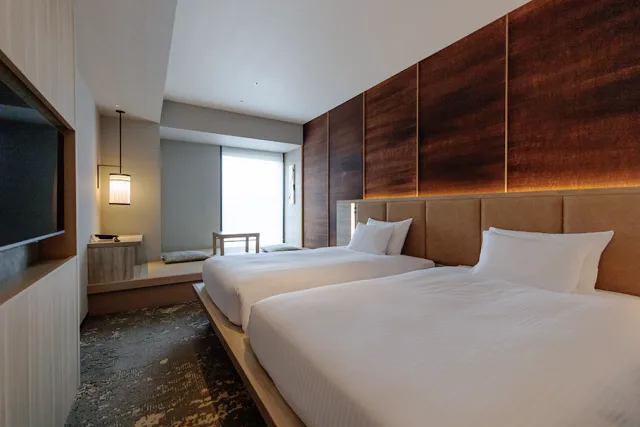
With only two nights in Fukuoka, choose the hotel that returns usable hours on arrival day, the one full middle day and the final half-day—not the property with the longest amenity list. Hakata is the safer default when your trip enters and leaves through the station or includes a JR day trip. Tenjin becomes the stronger base when the middle day is genuinely built around Tenjin, Daimyo, Akasaka and shopping, because one useful mid-day room return can matter more than shaving a few minutes from a one-time airport transfer.
The most common mistake is splitting one night in Hakata and one in Tenjin. On a two-night stay, that puts checkout, luggage movement and a second check-in inside the only full day. Unless the two nights solve completely different transport problems, keep one base.
Fact-checked August 27, 2026 against current first-party hotel pages. Hotel room rates are deliberately excluded from the ValueNavi score below because they change by date; compare the live premium only after the time-use pattern fits.
Two-night Fukuoka hotels in 30 seconds
↔ Scroll table left or right
Your actual trip pattern | Start with | What you are buying | Main trade-off |
Late arrival + early or simple departure | Miyako Hotel Hakata / Blossom Hakata Chuo | Station access works at both edges of the stay | You may pay more for transport convenience than for room features |
Only full day is Tenjin, Daimyo and shopping | Solaria Nishitetsu Hotel Fukuoka | The room can be reused during the longest day | Hakata/JR departure is less clean than sleeping at Hakata |
Arrive around lunch or early afternoon | Blossom Hakata Chuo | Current 14:00 check-in + roughly two-minute Hakata walk | Surface access is still different from Miyako’s direct station connection in rain or with large luggage |
Want one deliberately slow hotel evening | THE BLOSSOM HAKATA Premier | Facilities and spa time become part of the itinerary | Roughly seven minutes from JR Hakata only pays back if you actually use the hotel |
Thinking of moving hotels after Night 1 | Usually do not split | You protect the only full day from hotel admin | Split only for a genuinely different event/transport job |
Compare Hakata vs Tenjin for the whole two-night pattern
ValueNavi Short-Stay Time Yield Score: rate the hours you recover, not the hotel star level
For two-night hotel decisions, ValueNavi uses five fixed dimensions: arrival/departure reuse 30%, full-day route fit 25%, luggage friction 20%, check-in/checkout leverage 15% and facility-use realism 10%. The score measures how well a hotel fits a stated short-stay pattern. It is not a hotel-quality score and deliberately excludes the live room price, which can reverse the final booking decision on your dates.
Scenario | Best fit | ValueNavi time-yield fit | Runner-up | What can reverse it |
|---|---|---|---|---|
Land late, leave early, or use Hakata on both edges | Miyako Hotel Hakata | Blossom Hakata Chuo | Miyako carries a large live-rate premium and you will not use the 12:00 checkout or direct East 7 connection | |
Arrive around lunch and want to finish the luggage problem early | Blossom Hakata Chuo | Miyako Hotel Hakata | Heavy luggage, bad weather or mobility needs make direct station access more valuable than the 14:00 check-in | |
The only full day is mostly Tenjin/Daimyo | Solaria Nishitetsu Hotel Fukuoka | Miyako Hotel Hakata | Your middle day becomes a JR day trip or the final morning ends around Hakata Station | |
You deliberately schedule one slow evening for hotel/spa time | THE BLOSSOM HAKATA Premier | Miyako Hotel Hakata | You actually return late both nights, turning the facilities into unused optionality |
The score is intentionally conditional. Solaria’s 9.2 does not mean it is “better” than Miyako; it means a Tenjin-heavy middle day can reuse that location repeatedly. Change Day 2 into Yufuin or Kumamoto and the answer can flip immediately.
Count usable hotel hours before comparing amenities
A two-night booking can sound like plenty of hotel time while giving you very little waking time in the building. If you reach the room at 20:00 on Night 1, leave at 08:00 on Day 2, return after dinner and check out at 11:00, a public bath, lounge, washer-dryer or oversized room may only get one realistic use.
Write down four times before comparing rates: realistic arrival at the hotel, Day 2 departure, Night 2 return and checkout. Then ask which paid feature has a specific slot. “Might use the spa” is not the same as “I will be back by 20:30 and use it before dinner.” Short stays punish optionality that never becomes an action.
Do not split Hakata and Tenjin unless Night 2 has a different job
On a five-night stay, changing areas can create two useful experiences. On a two-night stay, it usually creates admin in the middle of the only full day: checkout, luggage storage or transfer, transport to the next hotel, a second check-in window, then unpacking again.
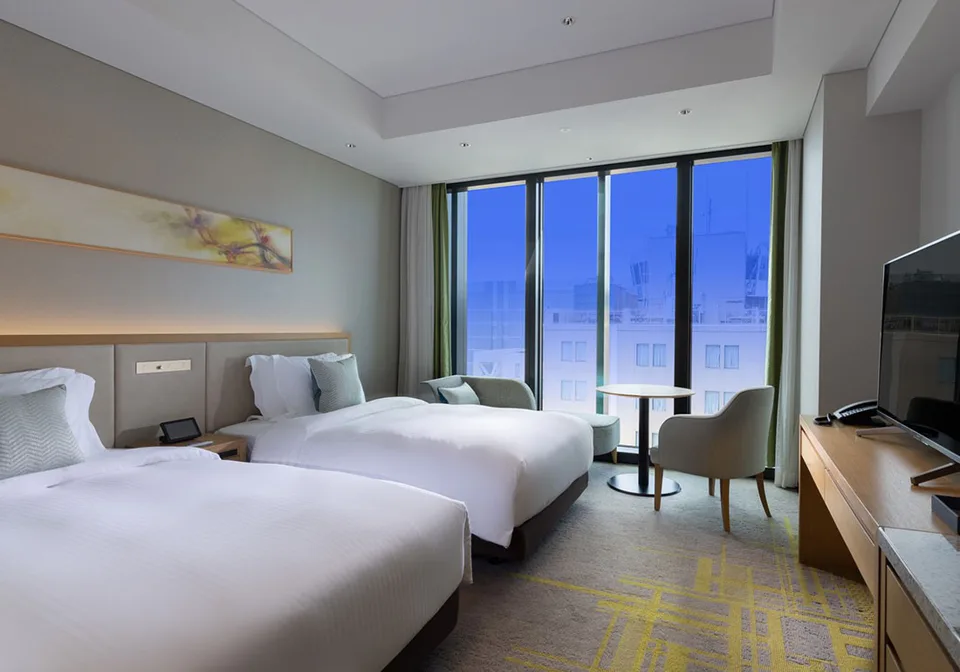
A split can still work if Night 1 is purely a very late Hakata arrival and Night 2 must position you for a specific Tenjin event or departure. But “Hakata is convenient and Tenjin is fun” is not enough. Choose one base that serves the greatest number of time blocks.
Hakata wins when the same location helps twice
Hakata has unusual leverage on a compressed trip because the same base can solve both arrival and departure. You can drop bags after the airport transfer, start sightseeing, then on Day 3 check out, leave luggage, eat or shop around the station and collect everything before leaving. One location is earning its premium more than once.
If your only full day is a rail day trip, the leverage becomes stronger again. That is why the hotel decision should follow the route, not precede it. Use the Fukuoka 3 Day Itinerary before paying extra for a base whose main advantage you may not repeat.
Miyako Hotel Hakata: best when direct access and the noon checkout both get used
Miyako Hotel Hakata’s current official page lists 15:00 check-in, 12:00 checkout and a direct connection to Hakata Station’s East 7 exit, with the hotel describing the station walk as roughly one minute. On a short trip, that 12:00 checkout is more useful than it looks because the final morning is a meaningful share of the entire stay.
The trade-off is the live room premium. If you arrive early, travel light, spend Day 2 entirely in Tenjin and leave late on Day 3, you may not use the direct connection enough to justify paying more. Compare Miyako vs Blossom Hakata Chuo by the actual arrival/departure pattern, not hotel category.
Compare Miyako vs Blossom by usable hours
Blossom Hakata Chuo: the 14:00 check-in is a real short-stay advantage
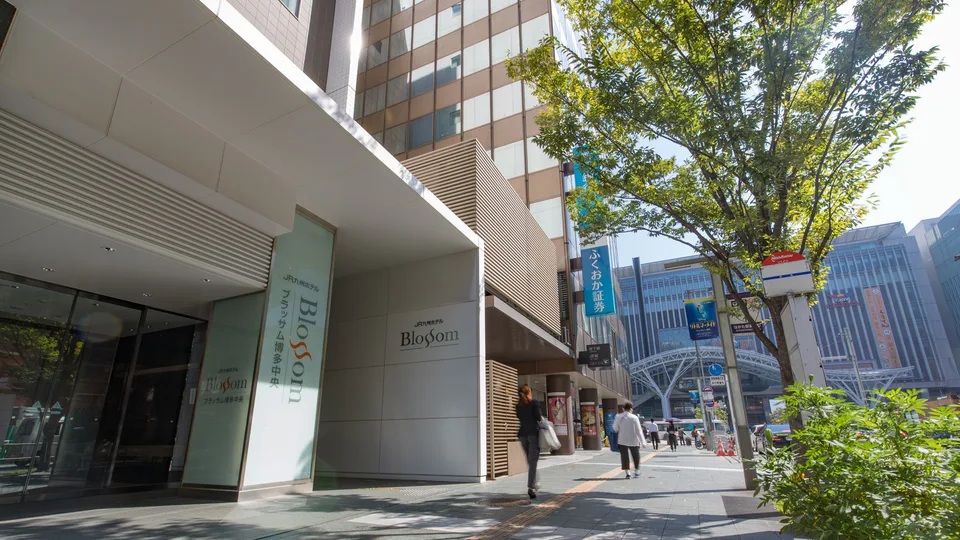
JR KYUSHU HOTEL Blossom Hakata Chuo currently lists 14:00 check-in, 11:00 checkout and roughly a two-minute walk from Hakata Station’s Hakata Exit. That one-hour earlier check-in is most valuable when you arrive around lunch or early afternoon and want to close the luggage loop before using Day 1.
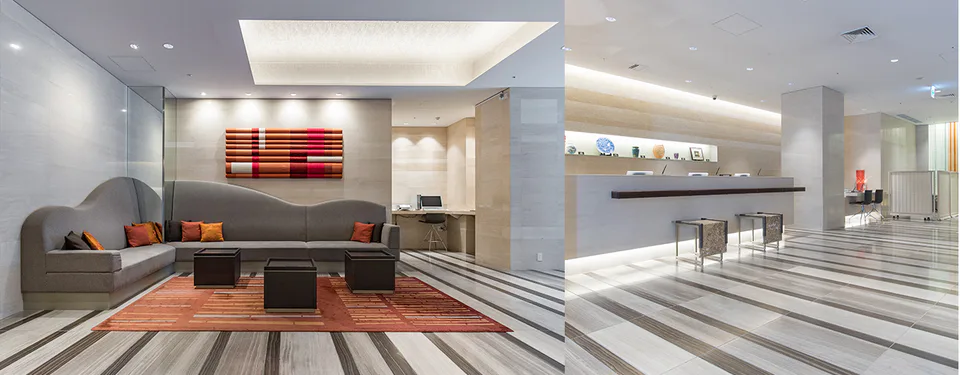
It does not automatically beat Miyako. A two-minute surface walk is still different from a direct station connection when it rains or when two large suitcases are involved. But if the live rate gap is meaningful and you mainly need fast Hakata access rather than the most weather-protected connection, Blossom can return more value per paid hotel feature.
The Blossom Hakata Chuo room guide is the next check if twin-room layout and luggage space are the real constraints.
Solaria Nishitetsu Hotel Fukuoka: choose it when Day 2 is the trip’s main event
Solaria Nishitetsu Hotel Fukuoka currently lists 15:00 check-in and 11:00 checkout, and its official pages describe direct access to Nishitetsu Fukuoka (Tenjin) Station. The value is not simply “Tenjin nightlife.” It is the ability to reuse the room during the longest day: drop shopping bags, take a rest, change before dinner or let one traveler return earlier.
If Day 2 is built around Tenjin, Daimyo, Akasaka and nearby shopping, that repeated utility can outweigh Hakata’s cleaner airport/JR geometry. If Day 2 becomes Yufuin, Kumamoto or another rail trip, the logic reverses. Compare Miyako vs Solaria after the full-day route is fixed.
THE BLOSSOM HAKATA Premier: the seven-minute walk needs a scheduled payoff
JR Hotel Group currently lists THE BLOSSOM HAKATA Premier at roughly seven minutes on foot from JR Hakata Station, with 15:00 check-in and 11:00 checkout. Its spa/public-bath and more substantial hotel feel can justify that extra walk—but only if one evening is deliberately left for the property.
If you arrive at 21:00, leave early, return late on Night 2 and check out after breakfast, the extra facilities may have almost no time to repay you. If you plan a slower evening, the trade changes. Use the THE BLOSSOM HAKATA Premier review to decide whether the hotel itself is part of the trip.
Test station convenience against actual hotel time
Short stays let you compromise on room size—but not on whether luggage can function
Two nights reduce the need for wardrobes, laundry and long-stay storage. That makes smaller station-side rooms easier to accept. But “only two nights” does not fix a room where two large suitcases cannot open without blocking the path, two adults cannot pack at the same time, or the bathroom arrangement creates a queue every morning.
The hidden cost is repeated friction. A small inconvenience happens on both arrival and departure, which are already the most compressed parts of the stay. If room function is the deciding issue, check the HOTEL FORZA Hakata Station review rather than using floor area alone.
Luggage policy can create more usable city time than another amenity
A two-night traveler may reach the hotel hours before check-in and still want four or five hours in the city after checkout. That makes pre-check-in and post-checkout luggage handling operationally important. Do not assume every property handles every bag, delivery or unusually large item under identical rules just because hotel luggage storage is common in Japan.
Verify the current rule for the actual hotel and rate plan, especially if you are arriving very early, leaving late or shipping luggage onward. On a compressed trip, a clean luggage handoff can recover more useful time than a feature you use once.
The final half-day should influence the hotel almost as much as arrival day
If Day 3 is Hakata Station lunch, souvenir shopping and then the airport, a Hakata hotel creates a clean ending: checkout, store bags, use the station area, collect luggage and leave. If the final morning is Tenjin shopping before an evening flight, a Tenjin base can keep those hours more useful.
The failure mode is ending sightseeing on one side of the city, travelling back only to collect bags, then reversing direction again toward the airport. Door-to-door movement matters more than the map distance between hotel and attraction.
Final verdict
For most two-night Fukuoka trips, choose one hotel and make it serve the greatest number of time blocks. Hakata is the default when arrival, departure and/or a JR day trip reuse the station. Tenjin wins when the only full day is concentrated there and you will realistically use the room during that day.
Miyako is strongest when direct East 7 access and the 12:00 checkout both earn their keep. Blossom Hakata Chuo is the sharper compromise for an early-afternoon arrival and simple Hakata access. Solaria is the best time-yield choice for a genuinely Tenjin-centered full day. THE BLOSSOM HAKATA Premier only deserves the extra walk when hotel/spa time has a real place in the schedule.
Do not split the stay unless Night 2 solves a different transport problem. And do not pay for a hotel feature because you might use it: on two nights, every premium should have an hour attached to it.
Okayama Korakuen and Kurashiki Day Trip: Foliage, Lights and Hotels
Fukuoka Girls’ Trip Hotels: Twin Beds, Bathroom Queues, Shopping Bags and Late Nights
Nagasaki Day Trip or Overnight from Fukuoka: 4-Day Trip Guide
Fukuoka Rainy-Day Hotels: Direct Access, Underground Routes and the Last 300 Metres
Fukuoka Hotels for Day Trips: Choose Hakata or Tenjin by Where Your Mornings Start
Sources
Miyako Hotel Hakata — official access, check-in and checkout information
JR KYUSHU HOTEL Blossom Hakata Chuo — official access and hotel information
Solaria Nishitetsu Hotel Fukuoka — official hotel information
JR Hotel Group — THE BLOSSOM HAKATA Premier access, check-in and checkout
Information checked August 27, 2026. Check-in, checkout, luggage policies, station access and hotel facilities can change; verify the rules for your actual stay date and rate plan before booking.