
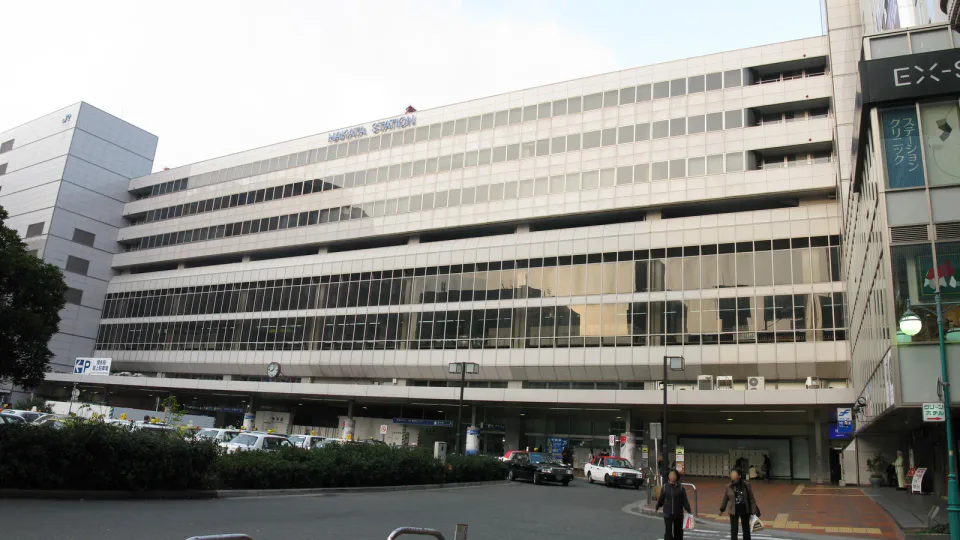
For a four-day Fukuoka trip, I would not add Nagasaki just because the railway connection is easy. If Day 1 is arrival and Day 4 is departure, you may have only two complete sightseeing days. Nagasaki then takes half of the usable core of the trip. The excursion earns that cost when Peace Park, Dejima, Minamiyamate, the harbor cityscape or the Mt. Inasa night view are already high priorities; it does not earn it simply because “Nagasaki is also in Kyushu.”
JR Kyushu’s current 2026 timetable still uses the Relay KAMOME between Hakata and Takeo-Onsen, with a same-platform connection to the Nishi Kyushu Shinkansen KAMOME for Nagasaki. The transfer is designed to be simple. That solves transfer friction; it does not solve Nagasaki’s dispersed geography, slopes, tram/bus movement or the cost of returning to Fukuoka after dark.
The four-day payoff test: when does Nagasaki earn the day?
↔ Scroll table left or right
| Your trip | ValueNavi call | Reason |
|---|---|---|
| First Fukuoka visit, only two full days | Usually skip | Fukuoka city + one local excursion already uses the trip well. |
| Nagasaki history is a top-three priority | Add it | The city offers a different historical and geographic experience from Fukuoka. |
| Mt. Inasa night view is non-negotiable | Prefer one night | Waiting for darkness plus the return to Fukuoka turns a day trip into a late finish. |
| Dazaifu and Itoshima are both fixed | Skip Nagasaki or lengthen the trip | Three full-day priorities are competing for two complete days. |
| Young children, older travelers or large luggage | Overnight or skip | Slopes, city transfers and the intercity return amplify fatigue. |
| Trip can become five days | Nagasaki becomes much easier to justify | You stop forcing Fukuoka and Nagasaki to share the same two-day core. |
ValueNavi Score: Nagasaki as a same-day return from a first four-day Fukuoka trip
This score measures fit for this exact itinerary, not the quality of Nagasaki itself. Higher is more favorable.
| Dimension | Score /10 | What it means here |
|---|---|---|
| Cost efficiency | No hotel move is required, but intercity rail is a meaningful additional cost. | |
| Time efficiency | You spend substantial time reaching another city before local sightseeing even starts. | |
| Booking flexibility | The rail structure is straightforward; the day is not dominated by scarce timed-entry attractions. | |
| Weather resilience | History-focused sights remain viable in mixed weather; the night view is more weather-sensitive. | |
| Crowd resilience | The bigger constraint is route spread and fatigue rather than one single crowd bottleneck. | |
| Route fit | A long branch from a short Fukuoka itinerary unless Nagasaki is already a major priority. | |
| Uniqueness | The harbor topography, modern history and night-view layer are difficult to replace with another Fukuoka day. |
Composite: 6.4/10. Staying one night does not automatically make the trip “more efficient,” but it improves the value extracted from the travel already spent getting there—especially if the night view matters.
The hidden time cost starts at Nagasaki Station, not ends there
The Hakata → Takeo-Onsen → Nagasaki rail chain can look neat on a timetable. Once you arrive, however, Peace Park and the Atomic Bomb Museum are north of the station area; Dejima and the harbor are farther south; Minamiyamate and Glover Garden add slopes; Mt. Inasa creates another direction. Nagasaki is not a one-center city where the train deposits you beside every headline sight.
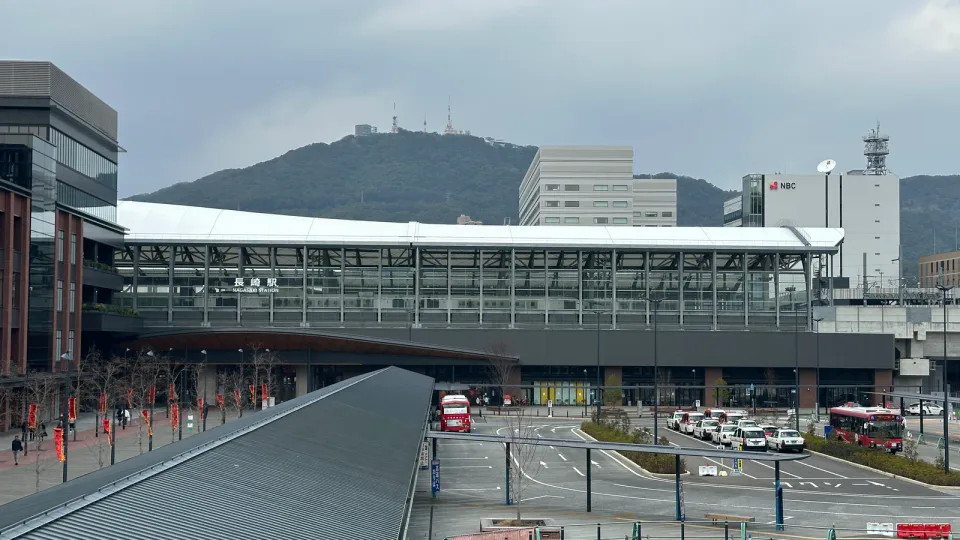
The planning metric should be Fukuoka hotel door → first Nagasaki sight → last Nagasaki sight → Fukuoka hotel door. That makes it clear why “the transfer is easy” and “the day is cheap in time” are two different claims.
The night view is the decision boundary
If you only want a daytime history route, a long day trip is defendable. If Mt. Inasa after dark is one of the reasons you are going, the structure changes. You now need to preserve energy until evening, wait for darkness, get back down, return to Nagasaki Station and then travel to Fukuoka. The question is not whether the timetable permits it. It is whether the day is still a good use of a four-day trip.
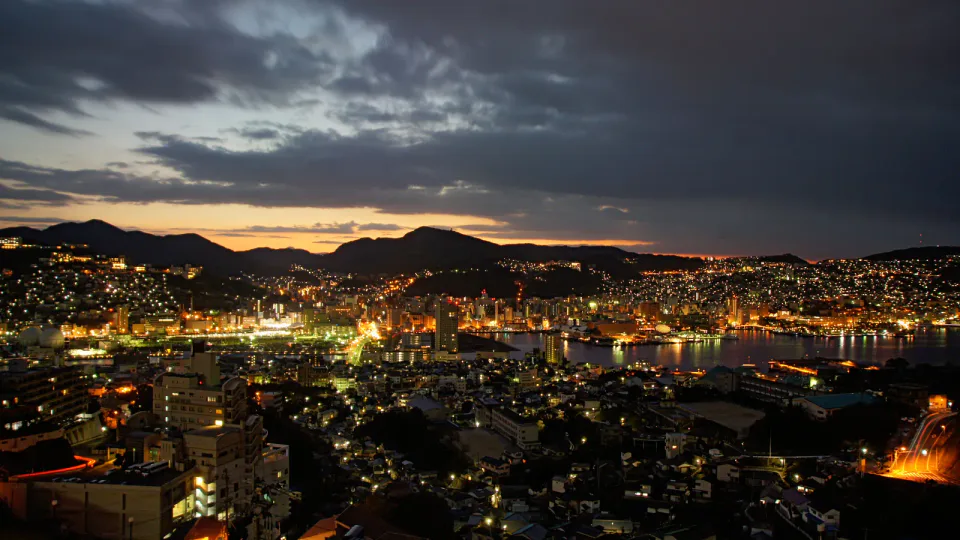
For that version, one night usually buys more than a bed: it buys an evening without a Fukuoka return deadline and a second morning that can absorb a sight you deliberately removed from Day 1.
What one night buys: two useful time windows
A sensible overnight can use Day 1 for Minamiyamate, Glover Garden, Dejima or the harbor plus Mt. Inasa, then Day 2 morning for Peace Park, Meganebashi or another compact area before leaving. That is different from trying to cram six famous pins into a single day. You are using the hotel to create an evening window and a morning window.
If Day 2 starts with an early return to Fukuoka, staying near Nagasaki Station has a clear job. If the night is mainly about the harbor, Minamiyamate and dinner, a more central/harbor-side base may be worth the extra departure movement. Choose the hotel for the evening and the next morning, not just because “near the station” sounds safe.
The route failure mode is zigzagging across Nagasaki
Glover Garden, Minamiyamate and the harbor belong naturally in one southern cluster. Peace Park and the museum form another northern theme. A same-day visitor who repeatedly crosses between north, south and Mt. Inasa can technically visit more places, but each tram, wait, hill and transfer reduces actual time at the sights.
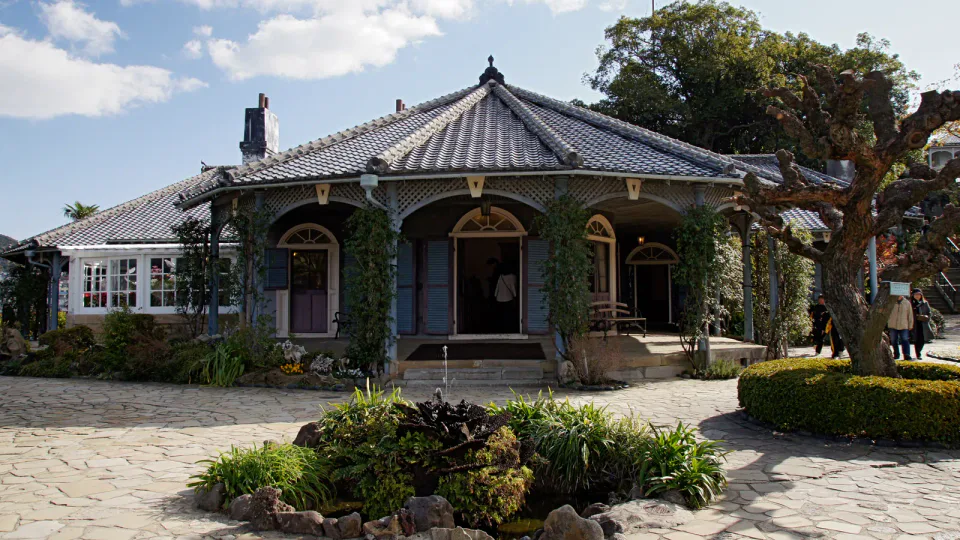
With one day, I would choose two themes rather than six attractions: for example, Peace/modern history + Dejima; or Minamiyamate/harbor + a lighter evening. The point is not to maximize attraction count. It is to keep enough time for Nagasaki to feel different from a sequence of tram stops.
Before adding Nagasaki, solve Fukuoka’s own second day
Hakata, Tenjin, Nakasu, the waterfront, Dazaifu and Itoshima can already compete for a short trip. If Dazaifu and Itoshima are both non-negotiable, Nagasaki is the third full-day priority fighting for two slots. Compare Dazaifu vs Itoshima before assuming a spare day exists.
The clean rule is simple: assign the complete days first. If Nagasaki clearly beats one Fukuoka excursion, replace it. Do not add Nagasaki and then compress Fukuoka into breakfasts, dinners and station gaps.
Family and luggage boundary: the train is the easy part
With young children, older travelers or heavy luggage, the hills and local transfers matter more. If staying one night, use luggage forwarding or leave unnecessary bags at the Fukuoka base rather than treating every city move as a luggage move. If the entire group is only mildly interested in Nagasaki, the same-day marathon is especially hard to justify.
Do not keep the final night in Nagasaki before an early Fukuoka flight
This is the clearest boundary condition. If Day 4 begins with an early departure from Fukuoka Airport, return to Fukuoka the previous evening and use an airport-convenient base. The Hakata vs Tenjin early-flight guide is the next decision. Keeping the Nagasaki night and then forcing a dawn luggage transfer back to Fukuoka cancels much of the comfort the overnight was meant to buy.
Three four-day structures
Fukuoka-first: arrival + Fukuoka city + Dazaifu or Itoshima + departure. No Nagasaki.
Nagasaki as the one big branch: one complete day goes to Nagasaki, while the other remains Fukuoka or one local excursion. Skip the night view if you want a cleaner return.
Nagasaki is a trip segment: move to Nagasaki, use the evening for the night view, stay one night, use the next morning, then return to Fukuoka or continue. Deliberately delete another excursion.
Final verdict: Nagasaki is easy to reach, but expensive to compress
For a first four-day Fukuoka trip with only two complete days, I would usually keep Nagasaki out unless it is already one of the trip’s strongest priorities. If the history is the main draw, a focused day trip can work. If the Mt. Inasa night view matters, one night is usually the stronger version. The Relay KAMOME/KAMOME connection reduces transfer friction; it does not turn Nagasaki into a casual half-day add-on.
Your next decision
If you keep a Nagasaki night, next decide where to stay in Nagasaki, Huis Ten Bosch or Unzen based on what the next day needs to do.
Nikko vs Okunikko in Autumn: Day Trip, Overnight and Where to Stay
Fukuoka Two-Night Hotels: Do Not Waste a Three-Day Trip Moving Hotels
Sources
JR Kyushu: current Relay KAMOME routing, 2026 timetable period and same-platform transfer to the Nishi Kyushu Shinkansen KAMOME at Takeo-Onsen. Nagasaki official tourism information for city transport and major areas. Information rechecked August 27, 2026. Rail schedules, attraction operations and night-view access can change. ValueNavi scores are editorial analysis derived from the trip structure and are not official ratings.