A good Fukuoka rainy day should still feel like Fukuoka, not like an emergency shopping-mall retreat. The strongest current route starts at Fukuoka Asian Art Museum for the 2026 House of the Great Thief exhibition, uses the direct Nakasu-Kawabata connection to keep the first transfer dry, then moves one subway stop to Tenjin for lunch, underground shopping and a weather-safe dinner. The trade-off is simple: keep one indoor experience worth traveling for, but leave enough slack that the day still works if the rain weakens and you want a short street walk.
If Fukuoka has only two or three nights, protect the city time first with How Many Days in Fukuoka? and the Fukuoka 3-day itinerary. A rainy-day plan should replace an exposed branch of the itinerary, not consume an extra day on top of it.
Fukuoka rainy-day itinerary: the 30-second route
↔ Scroll table left or right
Weather / traveler | Best route | What to cut |
Heavy rain all day | Asian Art Museum → subway → Tenjin Underground | Kawabata arcade and yatai |
Showers with dry gaps | Museum + short Kawabata walk + Tenjin | Long outdoor detours |
Family / stroller / slower walker | Museum + seated lunch + one Tenjin building | Second gallery and multi-building shopping loop |
Late arrival after lunch | Choose museum or Tenjin, not both at full depth | Trying to finish the morning plan after 15:00 |
The House of the Great Thief is the reason to start at Nakasu-Kawabata
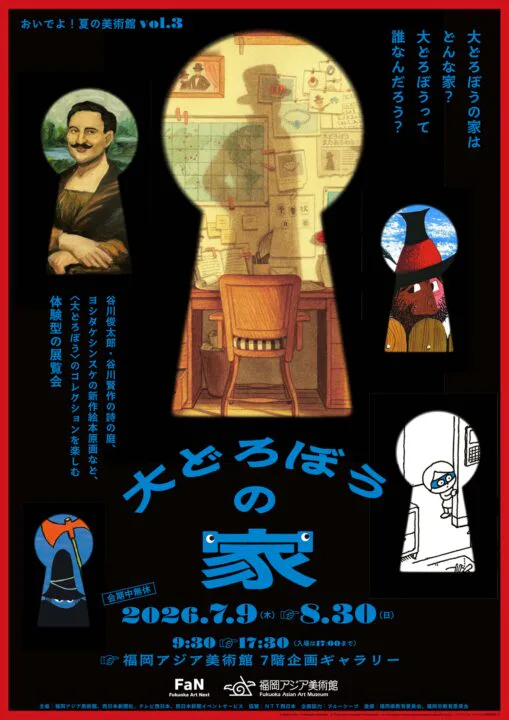
The House of the Great Thief runs from July 9 through August 30, 2026 at Fukuoka Asian Art Museum. The exhibition turns the gallery into eight rooms inside the absent thief’s house, so the visitor follows a narrative rather than a standard line of labels. Current admission is ¥1,800 for adults, ¥1,100 for junior-high and high-school students and ¥600 for elementary-school students, with lower advance/group rates. The special exhibition operates 09:30–17:30 with final entry at 17:00 and no closed day during the exhibition period.
That special-exhibition timetable matters because the museum’s general gallery hours can run later on Friday and Saturday. Do not assume a 19:00 arrival can still enter the ticketed show. If the exhibition is not interesting enough to justify the morning, use the broader Japan rainy-day backup framework and build the day around your own indoor anchor instead.
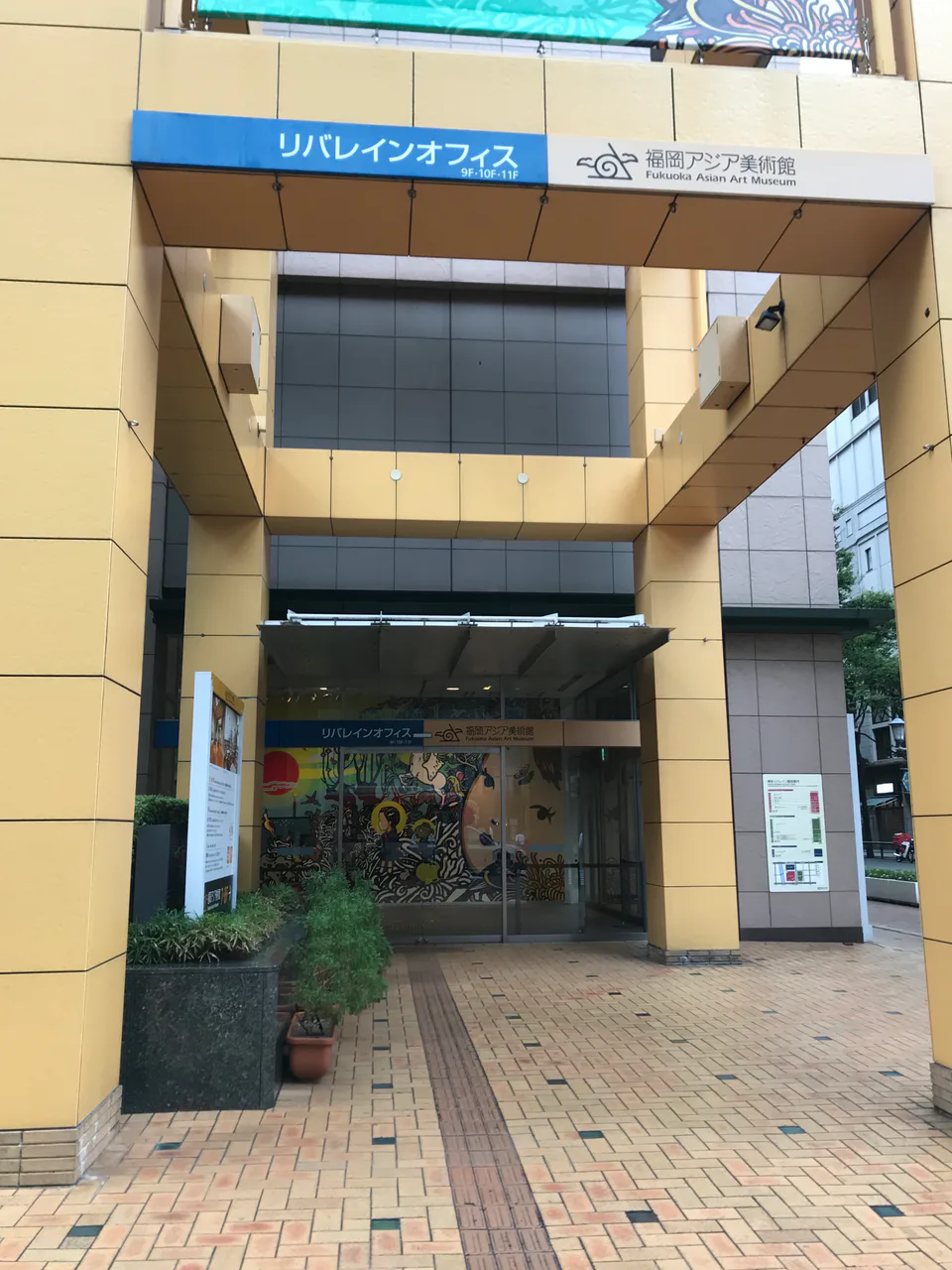
Fukuoka Asian Art Museum occupies the upper floors of Hakata Riverain, directly above Nakasu-Kawabata Station Exit 6.
Exit 6 is what makes the museum a good heavy-rain anchor
Hakata Riverain sits directly above Nakasu-Kawabata Station Exit 6, which keeps the final uncovered distance very short. From Hakata or the airport, the subway is the natural approach; after the museum, Tenjin is one station away. If the city rail system is still unfamiliar, the Fukuoka transport guide is more useful than trying to solve every rainy transfer with taxis.
If the rain becomes drizzle, a short walk through Kawabata can add old-Hakata texture before lunch. Treat it as optional. Wet shoes, a stroller, shopping bags or an older companion are all valid reasons to skip the street section and stay on the subway. If the hotel base itself is still undecided, use Hakata vs Tenjin before choosing a room simply because this rainy-day route passes through Tenjin.
A seated lunch is part of the weather strategy
After 90–120 minutes in the special exhibition, lunch should reset the group before shopping. Eat in Riverain, Kawabata or after the one-stop ride to Tenjin, but avoid remaining hungry because another district has a more famous restaurant. Rain fatigue is often a combination of damp clothing, cold air-conditioning, umbrellas and nowhere to sit. A proper meal solves more than another indoor attraction.
If the wider trip is already food-heavy, use the Fukuoka breakfast guide and the Fukuoka coffee and dessert walk to place those experiences on another day rather than turning this afternoon into a food checklist.
Tenjin Underground works best when shopping has one purpose
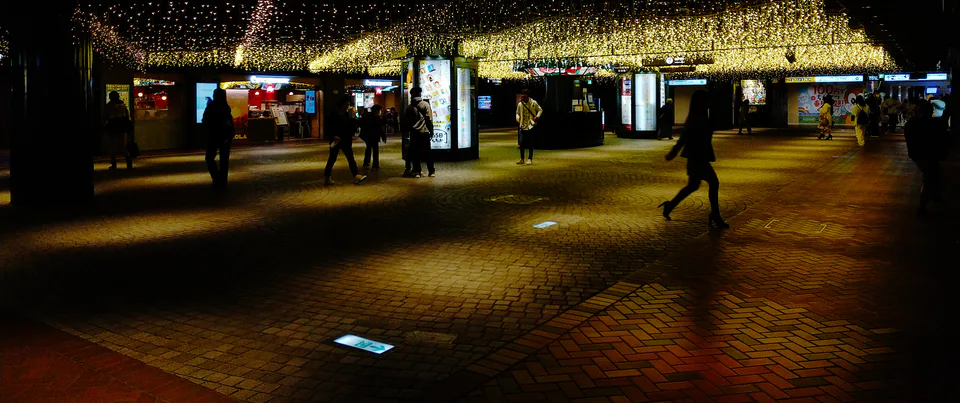
Tenjin Underground connects the subway, Nishitetsu Fukuoka (Tenjin), Tenjin-Minami and several department-store complexes. The advantage on a wet day is not that you can shop everywhere; it is that you can move between a few chosen stops with much less exposure. Choose one category—clothing, cosmetics, gifts or coffee—and give it a time limit. Food souvenirs and refrigerated items belong near the end so they spend less time in warm trains or hotel lobbies.
Pair this with
If the rain has replaced a side trip, pair this route with Dazaifu vs Itoshima and the Itoshima day trip or overnight guide so the outdoor day can move rather than disappear. If Fukuoka itself is still competing with another city for the nights, compare whether Fukuoka is worth visiting on a first Japan trip
Families and slower walkers should reduce the number of buildings, not the quality of the day
The museum has accessible routes and family facilities, while Tenjin Underground and connected buildings have lifts and accessible restrooms. The challenge is navigation rather than lack of facilities. Pick the exact department-store entrance before moving with a stroller, child and shopping bags. A family version of this day should normally drop the optional second gallery or one shopping complex rather than rush every transfer.
For three or four adults sharing the wider Fukuoka stay, room logistics can matter on a wet trip because everyone returns with damp clothes and shopping. The Fukuoka hotels for 3 or 4 adults guide is the next decision if room layout, not sightseeing, is the real source of friction.
Do not turn the museum into a luggage-storage stop
Leave a large suitcase at the hotel or station rather than assuming a museum locker will solve every bag. If this is a transfer day, send bulky luggage ahead with the Japan luggage-forwarding guide. A rainy gallery day becomes much worse when every indoor transition includes a suitcase, umbrella and paper shopping bags.
Yatai is a bonus after the rain eases; dinner should already have an indoor answer
If the weather stabilizes and the group has dropped shopping bags at the hotel, a yatai can be a strong ending. If rain continues, stay indoors and eat around Tenjin or Hakata instead. The Fukuoka yatai guide explains why one or two people with flexible timing fit stalls better than a large group needing a predictable table.
A Tenjin guest can drop bags quickly before dinner. A Hakata guest can simply return by subway and eat near the station. If direct station access matters more than nightlife, the Miyako Hotel Hakata guide is the relevant hotel decision; if a Daimyo/Tenjin atmosphere matters more, compare the LAMP LIGHT BOOKS HOTEL Fukuoka guide
A realistic 09:30–19:30 version leaves empty space on purpose
Enter the special exhibition near opening and give it roughly two hours. Add the East Asia collection only if attention remains. Eat around noon, then move to Tenjin around 13:30. Shop one category, sit for coffee and finish final purchases by late afternoon. After a hotel bag drop, choose an indoor dinner or yatai only if the weather has genuinely improved. The route feels generous because it avoids filling every dry minute with another indoor attraction.
If the whole national route is still being edited, the 10-, 12- or 14-day Japan itinerary and How to Plan a Trip to Japan should decide whether Fukuoka keeps its nights after a bad-weather forecast rather than deleting the city reactively.
Final verdict: keep one real reason to go out
Use the 2026 House of the Great Thief as the morning anchor while it is running, then let Tenjin solve lunch, shopping and dinner with minimal weather exposure. Keep Kawabata and yatai optional, not mandatory. A rainy day feels successful when it preserves the trip’s decision quality—art, food and a little Fukuoka atmosphere—without turning every covered corridor into something that must be completed.
Japan July Weather: Kyoto Hits 32°C, Fukuoka Stays Rainy, and Hokkaido Is the Exception
One Day in Kyoto: Choose Fushimi Inari or Arashiyama Before You Build the Route
Fukuoka Tower: Is the ¥1,000 Ticket Worth the Detour? Timing Changes the Answer
Fukuoka Hotels for Day Trips: Choose Hakata or Tenjin by Where Your Mornings Start
Fukuoka Late-Arrival Hotels: Make the First Night Easy Before You Chase Tenjin