
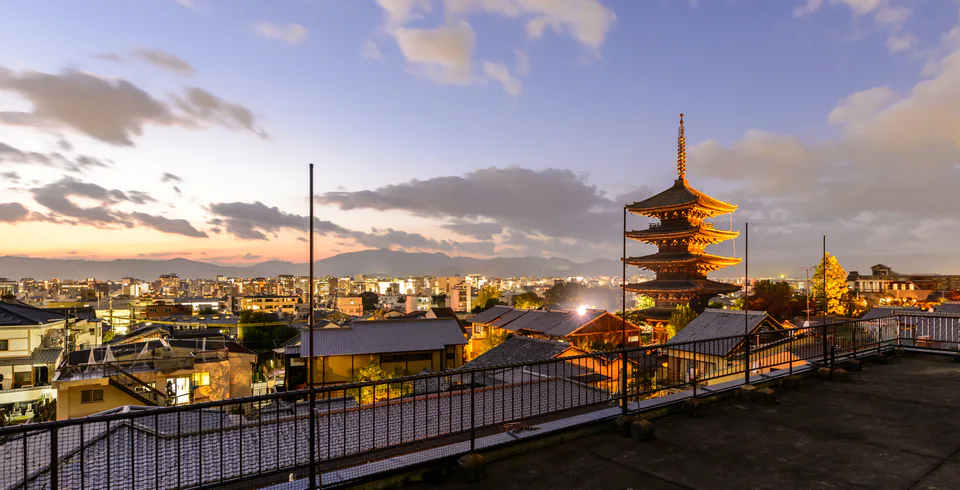
If you only have one day in Kyoto, do not try to force Fushimi Inari, Kiyomizu-dera, Gion and Arashiyama into the same route. For a first visit, the most reliable plan is Fushimi Inari → Kiyomizu-dera and Higashiyama → Gion. If the bamboo grove and Togetsukyo Bridge are non-negotiable, replace Fushimi Inari with Arashiyama instead. The real gain is not “seeing one fewer attraction.” It is avoiding one cross-city transfer and getting back two or three hours for walking, food and the part of Kyoto you actually came to experience.
This is not a list of the best attractions in Kyoto. It is a decision guide for a one-day itinerary: which three zones can realistically fit, which fourth zone should be deleted, and how to stop a day trip from Osaka turning into a sequence of stations and buses.
30-second decision: first-time visitors should usually choose Route A
↔ Scroll table left or right
Your priority | Recommended route | What to remove |
Classic first Kyoto visit | A | Fushimi Inari → Kiyomizu/Higashiyama → Gion | Arashiyama |
Bamboo grove and Togetsukyo are must-sees | B | Arashiyama → Kiyomizu/Higashiyama → Gion | Fushimi Inari |
Parents, young children or low walking tolerance | Higashiyama half-day + Gion | Do not force three zones |
You insist on all four areas | Compare a private car, then decide if the trade-off is worth it | Do not assume a car removes traffic |
If the real question is whether you should sleep in Kyoto instead of commuting from Osaka, compare Kyoto vs Osaka: Where Should First-Time Visitors Stay?
Route A | Fushimi Inari → Kiyomizu-dera → Gion: the strongest first Kyoto day
This route works because the day changes character without repeatedly crossing the city. The morning is Fushimi Inari and its torii gates. Late morning and afternoon become one continuous Higashiyama walking zone. The evening naturally ends around Yasaka Shrine, Gion and Shijo-Kawaramachi. There is one meaningful area change, then most of the day is on foot.
Morning | Do not turn Fushimi Inari into a full mountain hike
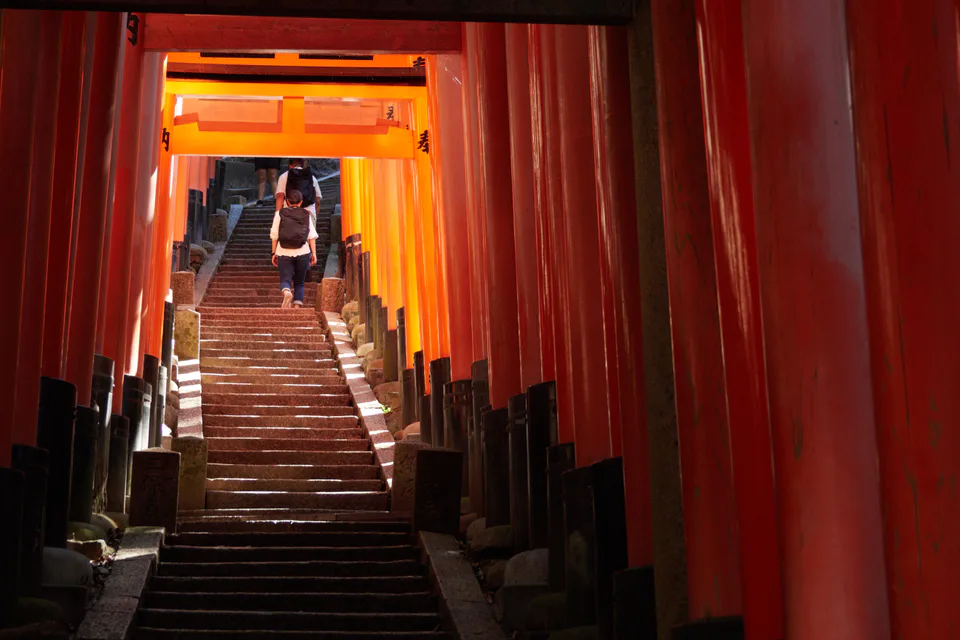
From Kyoto Station, JR’s Nara Line reaches Inari Station in roughly two stops and about five minutes according to the shrine’s access guidance. That makes Fushimi Inari unusually easy to use as an early anchor. But if this is a one-day Kyoto itinerary, there is no need to climb the entire mountain just because the trail continues.
Spend the early block around the main shrine and the Senbon Torii section, then leave while the day still has enough walking capacity for Higashiyama. The decision is especially important with parents or children: every extra uphill section in the morning has to be paid for again in the afternoon with slower walking, more rests or an earlier finish.
Late morning | Move toward Kiyomizu with rail first, not a Kyoto Station bus gamble
Kyoto’s tourism guidance continues to encourage rail or subway first, then walking or a short bus segment for heavily visited areas. From Kyoto Station toward Kiyomizu-dera and Gion, one practical pattern is JR Nara Line to Tofukuji, then Keihan toward Kiyomizu-Gojo or Gion-Shijo. The point is not that buses are unusable. The point is that busy-season road congestion can turn a simple transfer into the least predictable part of the day.
Kiyomizu-dera opens from 6:00, while closing time changes by season and special evening openings. That is why a must-see Kiyomizu visit belongs in the earlier half of the day rather than being left as the final “if there is time” stop.
Afternoon | After Kiyomizu, stop taking transport and walk the Higashiyama corridor
Treat Kiyomizu-dera, Ninenzaka, Sannenzaka, the Yasaka Pagoda area, the outer lanes around Kodai-ji, Maruyama Park and Yasaka Shrine as one walking band rather than six separate attractions. That change in mindset is what gives the route resilience. If the day runs late, skip a lane or a temple without breaking the route. If energy is good, add a café, small temple or side street without creating another transfer.
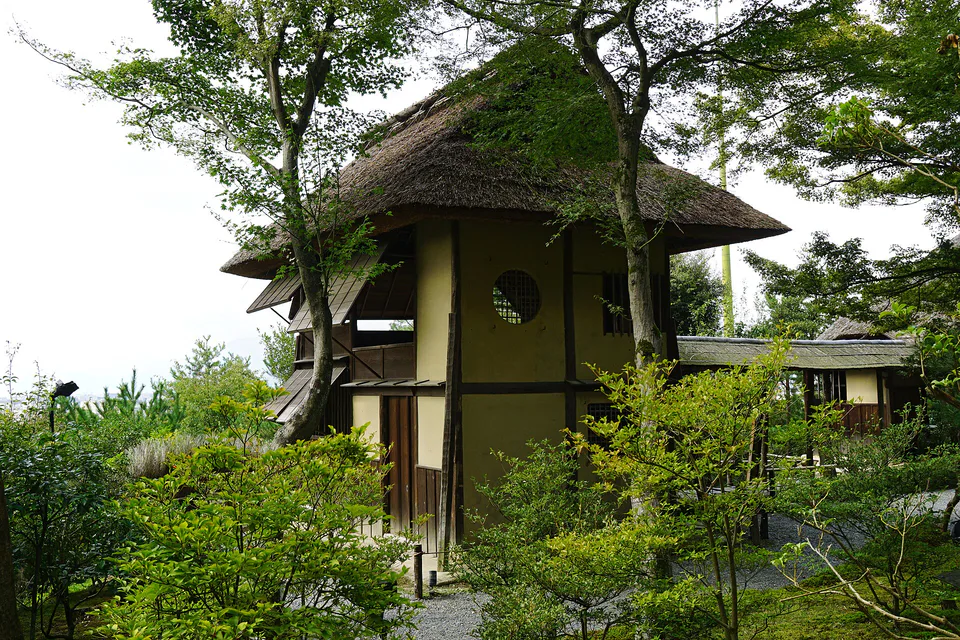
Seasonal trips need their own version. Autumn foliage, summer heat and heavy rain can change the walking tolerance and transport risk enough that a normal-year itinerary should be shortened rather than copied unchanged.
Route B | If Arashiyama is non-negotiable, go early and delete Fushimi Inari
Arashiyama’s real cost is its position on the northwest side of Kyoto. From Kyoto Station, the JR Sagano Line reaches Saga-Arashiyama quickly — the city’s guidance gives a rapid-train benchmark of about 11 minutes, followed by a walk of roughly eight minutes toward the Togetsukyo area. The train itself is not the problem. The problem begins when you then go south to Fushimi Inari and later back east to Higashiyama.
So Route B has a clear rule: Arashiyama in the morning, then one cross-city transfer to Higashiyama, then stay there through Gion. Do not add Fushimi Inari between them. The route is still ambitious, but it avoids a third major directional change.
Morning | Arashiyama needs a time cap, not a bigger checklist
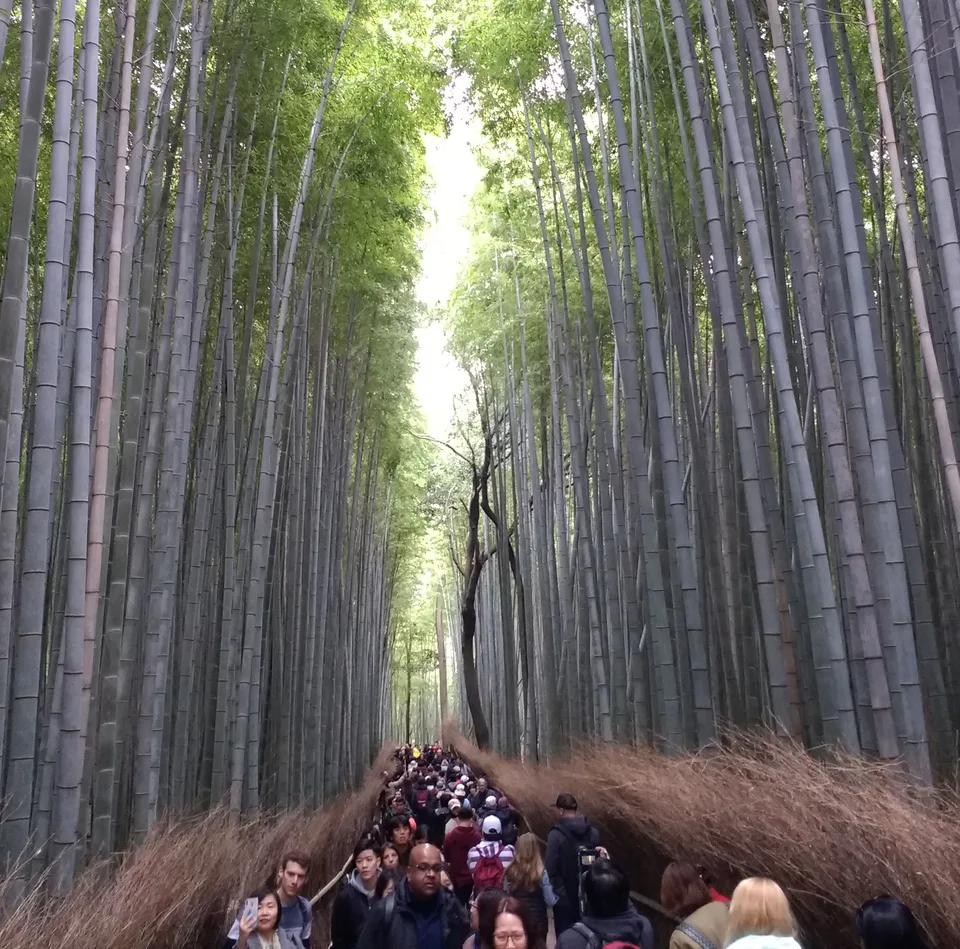
Use the early block for the bamboo grove, Togetsukyo Bridge and one temple you genuinely want to enter. Do not interpret “I came all the way here” as a reason to add every garden and temple in the district. One-day itineraries fail when a morning area consumes the time reserved for the only other major area.
Coming from Osaka? Removing one district is more useful than waking up 30 minutes earlier
A day trip from Osaka does not give you a full twelve hours in Kyoto. You still have the hotel-to-station walk, the intercity ride, the last local transfer into the first sightseeing district, and the return journey after dinner. Adding Arashiyama + Fushimi Inari + Higashiyama makes every queue, wrong exit, meal and rest break a threat to the next reservation.
If Kyoto is competing with Nara, Kobe or Himeji rather than being fixed already, use Best Day Trips from Osaka: Kyoto, Nara, Kobe or Himeji
Can a private car make all four areas work? It removes transfers, not Kyoto traffic
A private car can reduce station changes and help groups with mobility constraints, but it cannot remove congestion, parking access or the walking zones around major sights. If the entire reason for the car is to keep four distant zones, compare the cost with the simpler solution: delete one zone and keep the day flexible.
Add one paid experience only by replacing an attraction block
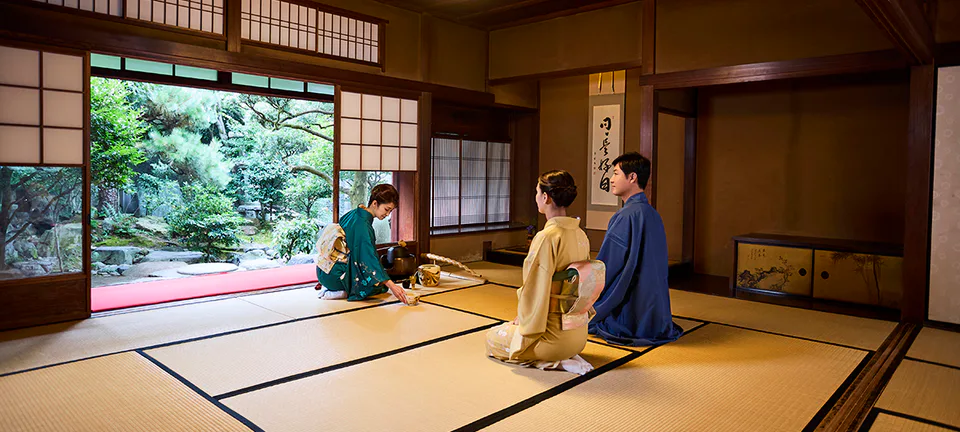
A tea ceremony, kimono session or other fixed-time experience can be worth more than another temple if that is the reason you wanted Kyoto. The correct way to add it is substitution. Remove a chunk of sightseeing and let the experience become the anchor. Do not stack it on top of the existing route and assume the same walking time will still exist.
Five ways a Kyoto one-day itinerary usually fails
↔ Scroll table left or right
Mistake | Why it fails | Fix |
Arashiyama + Fushimi + Kiyomizu all in one day | Three directions consume walking and rest time | Choose Arashiyama or Fushimi Inari |
Relying on buses for the entire day | Busy roads and crowded stops add variance | Use JR/Keihan/subway first, bus for the final segment |
Entering every temple in one district | One area quietly expands by hours | Pick one paid or must-enter anchor per area |
Carrying large luggage all day | Stairs, crowds and buses magnify the friction | Store or forward luggage before sightseeing |
Adding a paid experience as a bonus | Fixed time compresses the route before and after | Replace a sightseeing block |
Route A by time: the Fushimi Inari version
↔ Scroll table left or right
Time | Plan | Why it works |
07:30–09:00 | Fushimi Inari | Use the early atmosphere; do not chase the summit |
09:00–10:00 | Transfer toward Higashiyama | Rail-led transfer keeps the day predictable |
10:00–13:00 | Kiyomizu-dera + Ninenzaka/Sannenzaka | Put the must-see temple while time and energy are still strong |
13:00–16:00 | Yasaka Pagoda area, Kodai-ji surroundings, Maruyama Park | One walking corridor; cut small stops if behind |
16:00 onward | Gion, Shijo, dinner | No distant timed attraction left to miss |
Route B by time: the Arashiyama version
↔ Scroll table left or right
Time | Plan | Why it works |
07:30–10:30 | Bamboo grove, Togetsukyo + one temple | Complete the west-side block once; do not add Fushimi |
10:30–12:00 | Cross Kyoto to Higashiyama | This is the day’s biggest move, so do not add another |
12:00–15:00 | Kiyomizu-dera + Higashiyama | Eat nearby instead of chasing a famous restaurant across town |
15:00 onward | Yasaka Shrine, Gion, Shijo | The route can finish early without “losing” a distant attraction |
Should you buy a Kyoto transport pass? Count the rides after choosing the route
Neither Route A nor Route B should be redesigned around an unlimited ticket. Once the route is fixed, count the actual JR, Keihan, subway and bus segments you will use, then compare the product. A pass that encourages an extra cross-city ride is not saving money if it makes the itinerary worse.
Busy season, rain and summer heat: shorten the same route instead of adding indoor detours
In peak foliage or cherry-blossom periods, station queues and road traffic reduce your margin. In heavy summer heat, the same number of walking kilometres costs more energy. In sustained rain, slippery slopes and umbrellas slow Higashiyama. The safe response is not to replace every outdoor stop with a distant indoor attraction. Keep the same geographic corridor and remove one block.
Who should not do Kyoto as a day trip
Stay overnight if sunrise or early-morning Kyoto is a core goal, if you want both Arashiyama and Fushimi without rushing, if you are travelling with people who need long rests, or if dinner and evening Gion are part of the reason for the trip. A better one-day route cannot reproduce the flexibility of waking up in Kyoto.
For the practical hotel-location trade-off inside Kyoto, compare Kyoto Station vs Gion: Where Should You Stay in Kyoto?
A simple deletion rule: if you are still in the first remote district after 2 p.m., cut the next one
A one-day route becomes unrecoverable when you keep chasing the original checklist after the morning has overrun. If Arashiyama or Fushimi Inari has already consumed most of the day, do not “make up time” by skipping meals and sprinting through Higashiyama. Delete the next district, protect the evening and let the trip finish well.
Final verdict: one day in Kyoto needs one western or southern anchor, then Higashiyama and Gion
For most first-time visitors, Route A — Fushimi Inari → Kiyomizu/Higashiyama → Gion — is the cleaner answer. Choose Route B only when Arashiyama is truly more important than Fushimi Inari. If the group is slow-moving, reduce the plan to Higashiyama + Gion. The wrong goal is “fit Kyoto into one day.” The useful goal is to make one day feel like Kyoto rather than a collection of transfers.
From Osaka, count the time before your first Kyoto sight and after your last one
The intercity train is only part of the commute. Add the walk from your Osaka hotel to the station, platform-finding inside a large terminal, the transfer from Kyoto Station to the first district, and the final trip from Gion or Arashiyama back to your Osaka room. Once those pieces are included, the “full day in Kyoto” is shorter than it looks on paper.
That is why the last remote district should not sit in the evening. Route A naturally ends around Gion and Shijo, where food and rail options remain broad. If Arashiyama is left until the end, dinner and the return to Osaka become another transport task.
If you actually have two Kyoto days, stop making Arashiyama compete with Kiyomizu-dera
With an overnight or a second Kyoto day, split west and east instead of compressing them. Arashiyama can own one morning and Higashiyama another, which is far more valuable than proving that both can technically fit into one long day.
If the goal is an early Higashiyama morning or a late Gion evening, compare Kyoto Station vs Gion as a hotel base. The station simplifies luggage and intercity travel; Gion buys proximity to the part of Kyoto that is hardest to reproduce on a day trip.
Parents, children and summer heat raise the cost of every cross-city transfer
For older travelers or young children, success should be measured by fewer transfers and easy rest stops, not by attraction count. In summer, an extra short ride can be worth more than saving a fare if the alternative is a long uphill walk in severe heat.
In heavy rain, strong wind or extreme heat, shrink the day to one core temple, one indoor or timed experience, and Gion or Kawaramachi. Do not replace every deleted outdoor stop with another paid indoor ticket.
Source check and date-sensitive details
This route logic follows current Kyoto City travel guidance plus access information from Fushimi Inari Taisha and Kiyomizu-dera. Closing times, seasonal evening openings, rail schedules and event-day traffic can change, so recheck the exact date before travel.