
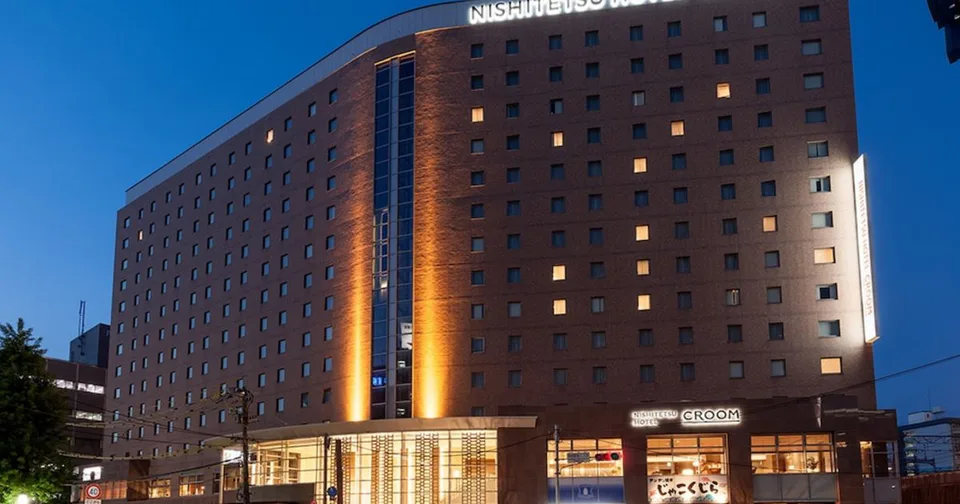
Choose Miyako Hotel Hakata when you are willing to pay for a much larger two-person room, Hakata Station East 7 integration, a 12:00 checkout and Spa Lucida. Choose Nishitetsu Hotel Croom Hakata when the room is mainly for sleeping, Hakata Bus Terminal is part of the itinerary, and a compact 20.7 m² twin plus a natural hot-spring bath is enough. Because both hotels are in Hakata, this is a cleaner comparison than Hakata versus Tenjin: the premium is mostly about which side of the station you reuse, how much private room space you need and which bathing product you will actually use.
The biggest numerical difference is not the walk. Miyako's Superior Twin is 30–31 m²; Croom's Comfort Twin is 20.7 m². That makes Miyako roughly 45–50% larger by published floor area, depending on the assigned Superior room size. This is not a measure of free suitcase floor space, but it explains why the answer can reverse between a one-night stop and a four-night Kyushu base.
↔ Scroll table left or right
Your actual stay | Start with | What you are buying | Main reason to reverse |
Late arrival + two large suitcases + JR/Shinkansen next morning | Miyako | East 7 direct connection, larger room and fewer station-side decisions | The room is only for a few sleeping hours and the rate gap is large |
Highway bus departure from Hakata Bus Terminal | Croom | Official hotel access puts the bus terminal about one minute away | Your other mornings are JR-heavy and the bus is a one-off |
3–4 nights with two large cases or shopping | Miyako | 30–31 m² private room space repeats every night | You spend almost no waking time in the room |
One-night sleep-and-depart stay | Croom if materially cheaper | You avoid paying repeatedly for floor area you barely use | Arrival/departure geometry strongly favours Miyako |
Traditional communal bath + sauna is enough | Croom | Natural hot-spring indoor/outdoor bath and sauna within a simpler hotel product | You want Miyako's broader rooftop spa programme |
Pool/outdoor-spa time is part of the stay | Miyako | Spa Lucida is a materially different leisure product | Your timetable or family composition makes the outdoor-spa sessions unusable |
This is really East Hakata vs Hakata Exit / Bus Terminal
Miyako's official access route places its B1 entrance directly at Hakata subway East Exit 7. For JR and Shinkansen passengers, the hotel also describes the Chikushi Exit side as about a one-minute walk. Croom is on the opposite operating logic: its official site places it about four minutes from JR Hakata Station's Hakata Exit and about one minute across from Hakata Bus Terminal.
Those are both “Hakata Station hotels,” but they are not the same last mile. If you repeatedly use Shinkansen/JR and the East/Chikushi side, Miyako's premium can be reused. If an early highway bus or bus-terminal arrival is the hard event, Croom may be better positioned even though it is not station-connected.
Before booking, write the exact terminal or exit beside each fixed departure. “Hakata” is too broad to decide a premium hotel.
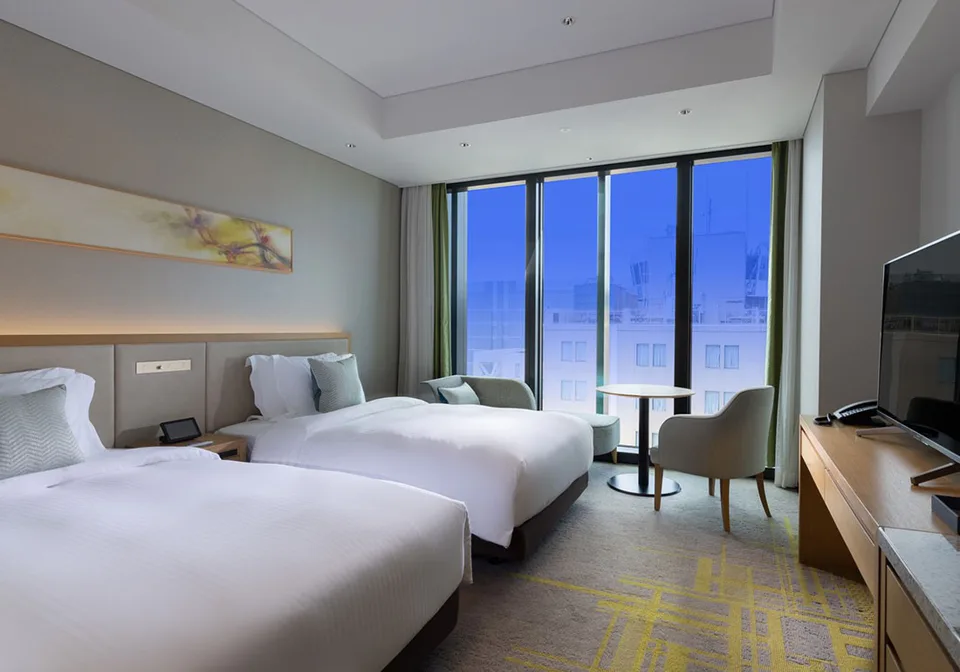
The room-size gap becomes more important every night you add
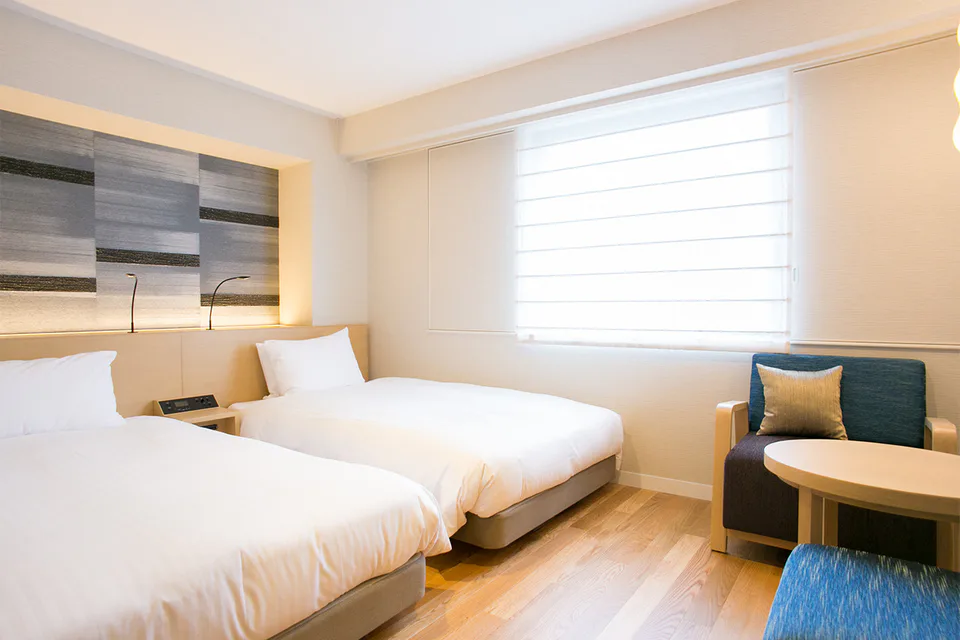
Miyako currently publishes its Superior Twin at 30–31 m² with two 120 × 205 cm beds. Croom publishes the Comfort Twin at 20.7 m² with two single beds and a separate shower, toilet and washbasin arrangement.
The raw difference is 9.3–10.3 m². Relative to Croom's 20.7 m² figure, Miyako has roughly 45–50% more published area. That does not mean 45–50% more empty floor—the two hotels use furniture and bathrooms differently—but it is too large to dismiss as a cosmetic upgrade.
One night: Croom can absorb the compromise. Open one suitcase at a time, sleep and leave. Paying a large premium for unused room area may be irrational.
Three or four nights: the same floor plan has to absorb dirty clothes, shopping, chargers, coats, open luggage and repeated packing. Miyako's larger room becomes a daily utility rather than a one-time luxury.
This is why “Miyako is more expensive” needs a duration attached to it. Divide the total-stay premium by the number of nights you will actually live in the room, not just sleep in it.
Croom is not “the onsen hotel” and Miyako is not “the spa hotel” in the same sense
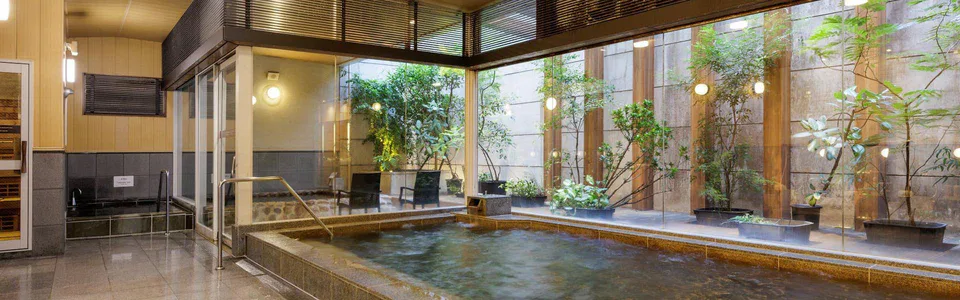
Both properties have bathing facilities, but they solve different needs. Croom's official hotel information describes a natural hot-spring large bath with an indoor bath, outdoor bath and sauna. Its value proposition is straightforward: a compact city hotel can move bathing out of the private room and into a dedicated communal facility.
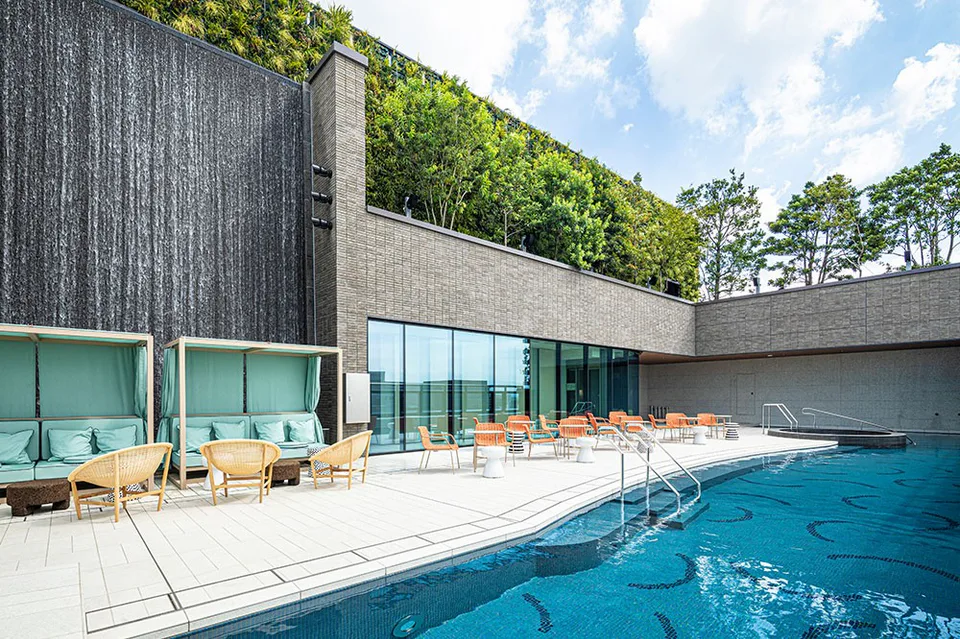
Miyako's Spa Lucida is a broader leisure product. The hotel currently publishes an indoor bath from 06:30–12:00 and 14:00–24:00, plus an outdoor spa from 06:30–12:00 and 14:00–23:00. The outdoor area becomes adults-only from 19:00.
So do not compare them with a single checkbox marked “has bath.” Ask what session you want:
Simple hot bath/sauna after a city or rail day: Croom can solve the problem without making the hotel itself a major leisure block.
Rooftop pool/outdoor-spa time as part of the hotel stay: Miyako has the stronger product.
Family with younger children returning after 19:00: remove Miyako's outdoor evening session from the family value calculation because that period is adults-only.
Traveller who dislikes communal bathing: reduce the bath premium for both and let room/transport geometry dominate.
A feature only counts if the people in the room can and want to use it.
The bus-terminal advantage can be worth more than direct station access
Croom's one-minute relationship with Hakata Bus Terminal is the comparison's cleanest reversal condition. If the next morning begins with a highway bus, the useful destination is not a JR platform. Paying Miyako for a direct subway/JR-side connection can solve the wrong transport problem.
This matters for Kyushu itineraries where bus and rail alternatives coexist. If you are going to Yufuin, for example, choose the transport first using the Fukuoka–Yufuin transport comparison; then choose the hotel that sits near the departure you actually booked. Do not choose Miyako first and then force a JR itinerary, or choose Croom first and force a bus itinerary.
One bus departure should not dictate four hotel nights, however. If the other three mornings use JR and Shinkansen, accept one short walk to the bus terminal rather than moving the whole stay around one event.
International airport arrivals narrow Miyako's advantage less than you might expect—but do not use the five-minute headline
Fukuoka Airport's subway ride from the Domestic Terminal side to Hakata is about five minutes. International passengers currently need the free terminal shuttle between the International and Domestic terminal buildings first; the airport gives roughly ten minutes for that transfer, subject to traffic.
That means neither hotel is literally “five minutes from an international arrival.” Miyako's real advantage starts after the subway reaches Hakata: East Exit 7 is directly connected to the hotel. Croom still requires the Hakata Exit-side walk.
At 15:00 with carry-on luggage, that difference is modest. After a long-haul arrival, two large suitcases and rain, it can be worth more. This is a last-mile premium, not an airport-train-speed premium.
Checkout time is a one-day benefit; room size is a multi-day benefit
Miyako lists checkout at 12:00. Croom lists 11:00 as its standard checkout. Do not multiply that one-hour difference by four nights—you only check out once.
Use the distinction properly:
12:00 checkout: valuable on one final morning when you want a slow breakfast, late train or extra repacking time.
Extra room area: valuable every night that luggage, shopping and daily routines stay in the room.
Bus-terminal proximity: valuable on every bus departure/arrival that actually uses the terminal.
Bath/spa: valuable once per session actually used.
This prevents one highly visible perk from being overcounted.
Use a three-layer premium test
When the rate gap is meaningful, test Miyako's premium in this order:
Transport layer: how many station-side hand-offs does East 7 eliminate compared with Croom?
Space layer: will the extra roughly 9–10 m² change how two people and their luggage use the room for the length of the stay?
Spa/time layer: how many Spa Lucida sessions and how much of the 12:00 checkout will you genuinely use?
If Miyako wins only the first arrival, the premium has weak support. If it wins two rail mornings, three nights of room circulation, one spa evening and the departure morning, the same rate gap is buying several distinct benefits.
Run the reverse test for Croom. If its bus-terminal position is used twice, the hot-spring bath is used nightly and the room is only for sleeping, compactness may be a rational trade rather than a flaw.
Four scenarios
One night, late arrival, 08:00 Shinkansen
Miyako first. Arrival and departure both reuse the station connection. Croom can still win if the total rate difference is so large that four minutes of walking is an easy saving.
One night, early highway bus next morning
Croom first. The bus terminal is the hard morning endpoint. A larger room you use for eight sleeping hours may not justify paying more.
Four nights, two large suitcases, two JR day trips
Miyako first. Room area and station geometry both repeat. This is where the 30–31 m² versus 20.7 m² difference is most likely to change daily comfort.
Two nights, light luggage, bath every evening, mostly local Fukuoka
Price Croom first. If the compact twin is acceptable and the bath is genuinely part of the routine, a lower rate can be more rational than paying for room space and a more elaborate spa product.
What would reverse the recommendation?
Miyako stops being the obvious premium choice when its rate gap becomes large and you do not reuse East 7, the larger room or Spa Lucida. Croom stops being the obvious value choice when two large suitcases make 20.7 m² frustrating for several nights, or when the Bus Terminal/bath advantages are barely used.
Most importantly, neither hotel should be selected from the phrase “near Hakata Station.” The station has sides, exits and different transport terminals. The correct hotel is the one closest to the specific repeated movement your itinerary creates.
Final verdict
Miyako Hotel Hakata is the stronger multi-use premium: direct East 7 access, 30–31 m² twin rooms, a 12:00 checkout and Spa Lucida can all pay back across a longer JR-heavy stay. Nishitetsu Hotel Croom Hakata is the stronger compact-value product when Hakata Bus Terminal matters, the room is mainly for sleeping and a natural hot-spring bath/sauna gives you enough hotel value without paying for extra private space.
For one night, let the next morning's terminal decide. For three or four nights, let repeated room and station use decide. If you cannot name at least two Miyako advantages you will reuse, do not pay a large premium merely because it is directly connected. If Croom's 20.7 m² room will be a daily luggage problem, do not let a bath or lower rate hide that cost.
Compare Miyako Hotel Hakata rates
Compare Nishitetsu Hotel Croom Hakata rates
Miyako Hotel Hakata vs THE BLOSSOM HAKATA Premier: Direct Station Access or Public Bath?
MiraCosta Harbor Room: Harbor View vs Piazza View — Which Is Worth It?
Kinosaki Ryokan Dinner Included or Room Only: Which Is Worth It?
Tokyu Stay Fukuoka Tenjin: Is an In-Room Washer-Dryer Worth Leaving Hakata Station?
WeBase Hakata vs UNPLAN Fukuoka: Which Is Better for Remote Work?
References
Miyako Hotel Hakata — access and check-in/out · Miyako Hotel Hakata — Superior Twin · Miyako Hotel Hakata — Spa Lucida · Nishitetsu Hotel Croom Hakata — official hotel, access and natural hot-spring information · Croom Hakata — Comfort Twin · Fukuoka Airport — international/domestic terminal transfer. Checked August 25, 2026. Room inventory, transport and facility operations can change; verify the exact dates before payment.