For a first one-night stay in Kinosaki Onsen, I would usually book dinner and breakfast at the ryokan if you can reach the property comfortably before its dinner deadline. Choose room-only or breakfast-only when you have a real flexibility problem: a late or delay-prone arrival, a restaurant you specifically want to visit, dietary requirements the ryokan cannot accommodate, or a second night when another full kaiseki adds less value.
The key correction is that the meal plan should be judged on the meals and the evening rhythm it buys. Do not count Kinosaki’s public-bath pass as a dinner-plan benefit. The town’s official ryokan guidance says overnight ryokan guests receive a Yumepa pass at check-in, and current room-only plans also explicitly include public-bath access. The meal premium is therefore buying dinner, breakfast, convenience and a coordinated ryokan evening—not permission to bath-hop.
Checked August 25, 2026. Bathhouse availability is also temporarily reduced: Satono-yu remains closed for renovation, while Kono-yu is closed from May 11 through October 30, 2026. Public-bath schedules and ryokan meal rules can change, so check the actual stay date.
↔ Scroll table left or right
Your real situation | Start with | Why | Main catch |
First Kinosaki night, arrival by mid-afternoon | Dinner + breakfast | The meal gives the one-night stay a complete ryokan rhythm | You accept a fixed arrival/dinner window |
Arrival could slip past 18:00 | Room-only or breakfast-only | You remove the most expensive deadline from the travel day | Dinner in town must still be solved |
You specifically want Matsuba crab / Tajima beef | Exact meal plan | The menu itself becomes part of the destination | Do not assume every half-board plan contains the premium seasonal course |
Serious allergy / vegan / religious restriction | Only buy meals after written confirmation | Some ryokan state that they cannot accommodate allergies or food preferences | Traditional hospitality is not a guarantee of menu flexibility |
Two-night stay and you want food variety | Consider one meal night + one outside dinner | You keep one full ryokan evening without repeating the same structure twice | Confirm that the property will sell different plans across consecutive nights |
Separate three products before comparing prices: room, meals and onsen access
Kinosaki makes it easy to bundle everything mentally into “the ryokan experience.” That is useful emotionally but poor for price comparison. Split the booking into three products.
The room: bedding, bathroom, location, check-in rules and the ryokan itself.
The meal plan: dinner, breakfast, dining location, serving time and menu.
The town bath circuit: the Yumepa access that ryokan guests generally receive for public bath-hopping during the stay.
Current official accommodation pages show why this matters. Tsukimotoya lists dinner-and-breakfast, breakfast-only and room-only products, and the room-only plan still includes a public-onsen pass. Ichidaya likewise sells room-only and breakfast-only plans while providing its staying guests with Yumepa access. So when half-board costs more, do not tell yourself the extra money is buying the bathhouses too.
The correct question is: Would I pay this incremental amount for the dinner, breakfast and convenience even if public-bath access were identical?
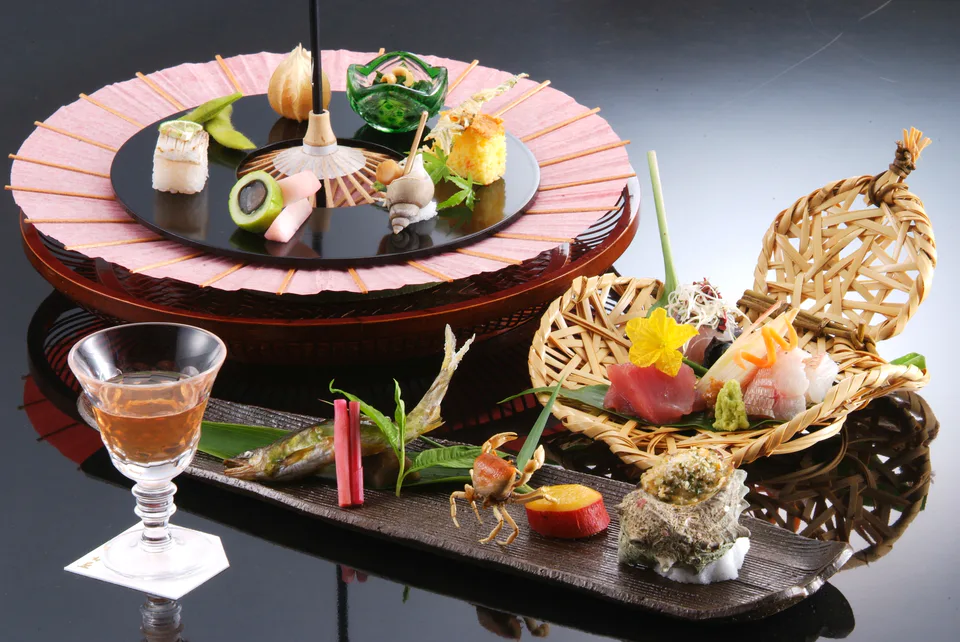
For one night, dinner is usually worth more because it prevents the evening from fragmenting
A one-night Kinosaki stay has a narrow useful window. You arrive, leave luggage, change into yukata, fit in bathhouses, eat and then decide whether to bath-hop again. A ryokan dinner can make that sequence easier because food no longer requires another reservation, walk and decision.
The trade-off is the hard clock. Current official ryokan plans illustrate how strict this can be. Tsuchiya’s current premium dinner plan starts dinner at 18:00 and warns that guests arriving after 18:00 may not be served. Other Kinosaki plans similarly use fixed dinner starts or require check-in in the late afternoon.
This is why the strongest half-board booking is not the most luxurious room. It is the one attached to an arrival you can protect. If your Kyoto/Osaka transfer reaches Kinosaki with only a few minutes of theoretical margin before dinner, the booking is fragile even if the train timetable looks legal.
Use Kinosaki Onsen: 1 Night or 2 Nights? first if the stay length itself is still unsettled.
Room-only is a flexibility product, not automatically the budget product
Room-only wins when the cost of a fixed meal schedule is higher than the benefit of the meal. The cleanest cases are a late arrival, a delayed-flight connection, a restaurant you already want, or a diet the ryokan cannot confidently serve.
But room-only only works when dinner has been solved before arrival. Kinosaki has restaurants and the official tourism site promotes town dining for guests without meals, but this is still a compact onsen town with limited seats, weekly closures and seasonal demand. “We will find something after the baths” is a weak plan on weekends and during winter crab season.
If outside dining is the reason to skip half-board, choose the restaurant first. Confirm its opening day, reservation policy and last order, then make sure the ryokan location and bath plan still work around it. Otherwise the flexibility you bought can become an accidental convenience-store dinner.
Breakfast deserves its own decision
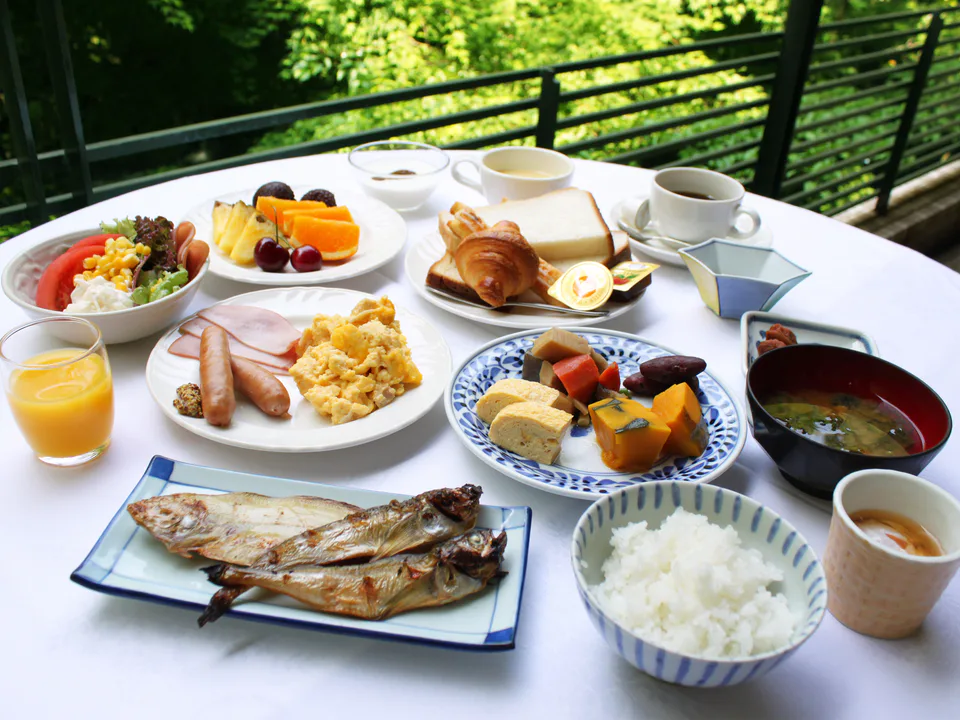
The useful middle product is breakfast-only. It removes the evening deadline while preserving a structured ryokan morning. That can be ideal after a long transfer day: arrive when you arrive, eat a pre-arranged town dinner, bath-hop, then wake up to a breakfast that is already solved.
Current official plans demonstrate that this is not theoretical. Ichidaya and Tsukimotoya both publish breakfast-only options alongside room-only and half-board products.
For a two-night stay, a mixed strategy can also make sense: one full kaiseki night, one outside dinner, breakfast on one or both mornings. Do not assume the booking system automatically allows different meal plans across consecutive nights; confirm before paying.
The 2026 bathhouse closures reduce bath-hopping capacity—but do not change the meal decision
Kinosaki is famous for seven public bathhouses, but seven historic bathhouses does not mean seven are operating on every 2026 date. Satono-yu has been closed for renovation since April 2024. Kono-yu is additionally closed from May 11 through October 30, 2026 for renovation.
That means an August or September 2026 stay has less public-bath capacity than an old “seven baths in one night” guide suggests. It may also concentrate guests into the operating bathhouses.
This should change how aggressively you schedule the evening, but it should not make you pay extra for a dinner plan under the mistaken belief that half-board restores public-bath access. Yumepa is an accommodation benefit; the meal plan is a separate purchase.
Also check each bathhouse’s weekly closing day. A one-night visit cannot assume every operating bathhouse is open on both sides of the stay.
Matsuba crab can make dinner the main reason for the ryokan—but only on the exact plan
Kinosaki’s winter dining changes the economics. The official tourism site notes that Matsuba crab season begins when the fishing season opens in early November, and current restaurant examples run premium Matsuba crab menus from November into March. One current Sanpou Nishimuraya menu, for example, lists crab courses from November 7 through March 31.
If crab is the reason for the trip, compare the exact course. A generic “dinner included” rate may be seasonal kaiseki, a Tajima beef course, half a crab, or a full Matsuba crab course. Those are different products and should not be price-compared as though the meal inclusion itself were enough.
The same logic applies outside winter. If Tajima beef is important, verify the stated menu rather than assuming the more expensive room automatically includes the better dinner.
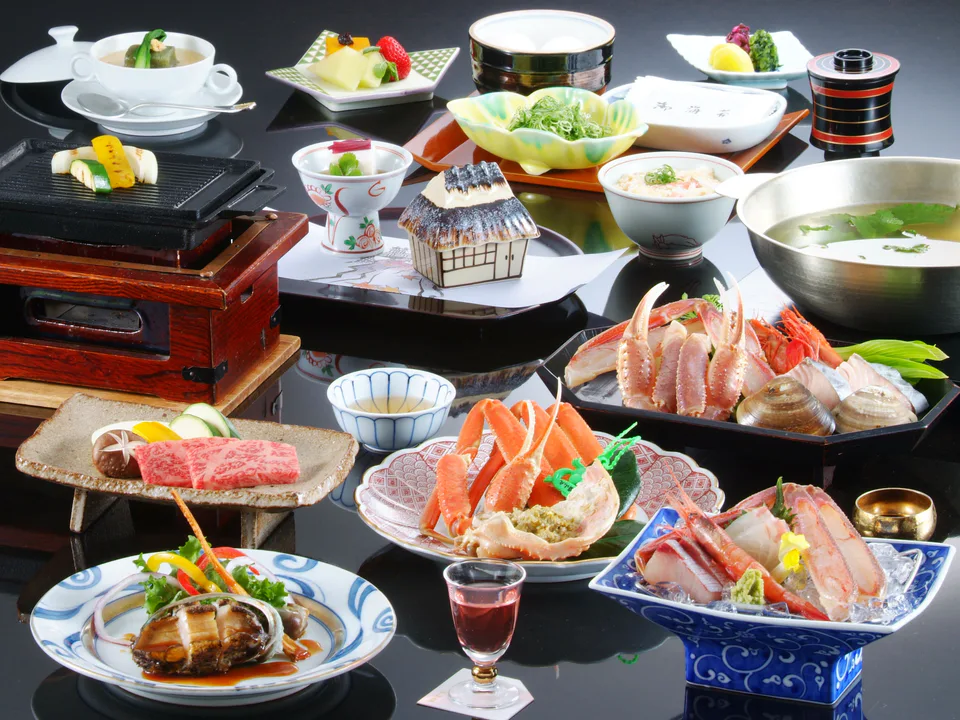
Dietary restrictions can turn the default recommendation upside down
Do not book a traditional meal assuming every ingredient can be swapped after check-in. Current Kinosaki accommodation pages include properties that explicitly say they cannot cater for allergies or food preferences. Others may accommodate some requests only with advance notice.
For a serious allergy, vegan diet, religious restriction or very selective child, the safe sequence is:
send the exact dietary requirement to the ryokan;
obtain a clear answer for the exact meal plan;
if the answer is insufficient, identify a restaurant that can handle it;
then choose room-only or breakfast-only accordingly.
Room-only is not inherently more inclusive, but it gives you the freedom to put the food problem in the hands of a restaurant you have already verified.
Families should price the food the children will actually receive
A child rate is not automatically a smaller adult kaiseki. Properties can use children’s plates, simplified meals, age-based bedding rules or adult-style courses depending on the plan. For a family, the dinner premium should be judged on the meals that will actually be served to each child.
If the children will eat almost none of the included dinner, the family may get more value from room-only plus a restaurant chosen around the child’s diet. The opposite is also true: a ryokan with a suitable children’s meal can remove the hardest dining decision of the evening and make half-board more valuable than it is for two adults.
Do not upgrade the meal and the private bath automatically at the same time
Kinosaki’s public bath circuit means an in-room private bath and a premium dinner solve different problems. For many first-time visitors, the meal changes the one-night experience more than a private bath because the town itself already provides the onsen-hopping ritual.
The recommendation reverses when privacy is the hard requirement: a tattoo concern inside the ryokan, a couple who specifically wants to bathe together, mobility constraints or a family schedule that makes public bathing impractical. Use the Kinosaki private bath vs public onsen guide before paying both premiums by default.
Final verdict
For a first one-night Kinosaki stay with a reliable afternoon arrival, dinner and breakfast remain the strongest default. The premium buys a complete ryokan evening, removes restaurant hunting and gives the stay a coherent sequence.
Choose room-only or breakfast-only only when you can name the flexibility it buys: late arrival, a specific restaurant, dietary control, lighter eating or a second night where another full kaiseki is redundant. Do not choose half-board to get the public bathhouses—you receive Yumepa as a ryokan guest even on eligible room-only plans.
Hotel Gracery Sapporo: Is a 1-Minute Station Walk Worth a 15 m² Room?
ONSEN RYOKAN YUEN SHINJUKU: Is Hakone Onsen Worth a 16-Minute JR Walk?
Southwest Grand Hotel Okinawa Review: Is a 45 m² Room and Pool Worth the Urban-Resort Premium?
Fujiya Hotel Hakone: Which Building and Room Should You Choose?
References
Visit Kinosaki — ryokan etiquette, shuttle, luggage and Yumepa · Visit Kinosaki — room-only, breakfast and half-board examples · Visit Kinosaki — dinner timing and room-only examples · Visit Kinosaki — Kono-yu 2026 renovation closure · Visit Kinosaki — Satono-yu closure. Checked August 25, 2026.