Choose Solaria Nishitetsu Hotel Fukuoka when your Tenjin stay repeatedly uses Nishitetsu, Tenjin Bus Center, Dazaifu-side travel, or you need its straightforward four-person room. Choose ONE FUKUOKA HOTEL when one or two guests want more room, direct access to subway Tenjin Station and enough hotel time to use the public bath, sauna and Library Lounge. For domestic-airport arrivals, ONE has the cleaner Airport Line finish. For international arrivals, do not apply its “11 minutes from Fukuoka Airport” headline literally to the aircraft terminal: the subway station is at the Domestic Terminal, so another airport transfer or a different city bus/taxi route enters the calculation.
The useful comparison is therefore not “established hotel versus new luxury hotel.” It is which transport network repeats, which airport terminal you actually use, how many people sleep in the room, and how many awake hotel sessions you will really use. If several mornings begin at JR Hakata Station, reopen the Hakata-versus-Tenjin decision before paying a premium for either.
↔ Scroll table left or right
Your trip pattern | Start with | Why |
Domestic flight arrival, two guests, luggage, rain | ONE | Fukuoka Airport Station → Tenjin is about 11 minutes and ONE is directly connected from Tenjin’s East ticket gate |
International flight arrival | Recalculate both | The subway is on the Domestic Terminal side; International has direct Tenjin buses as well as the free inter-terminal shuttle |
Dazaifu / repeated Nishitetsu use | Solaria | Direct Nishitetsu Fukuoka (Tenjin) Station access; subway Tenjin is about a 5-minute walk |
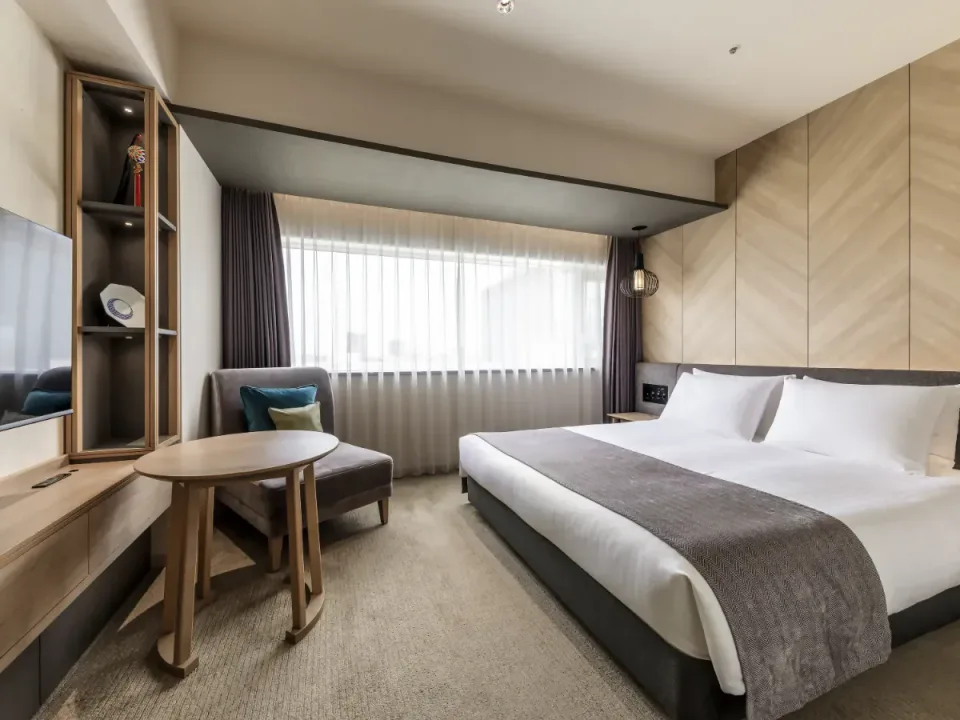
Two guests prioritising room and hotel time | ONE | Its rooms begin at 35 m² and the bath/sauna/lounge can become part of the stay |
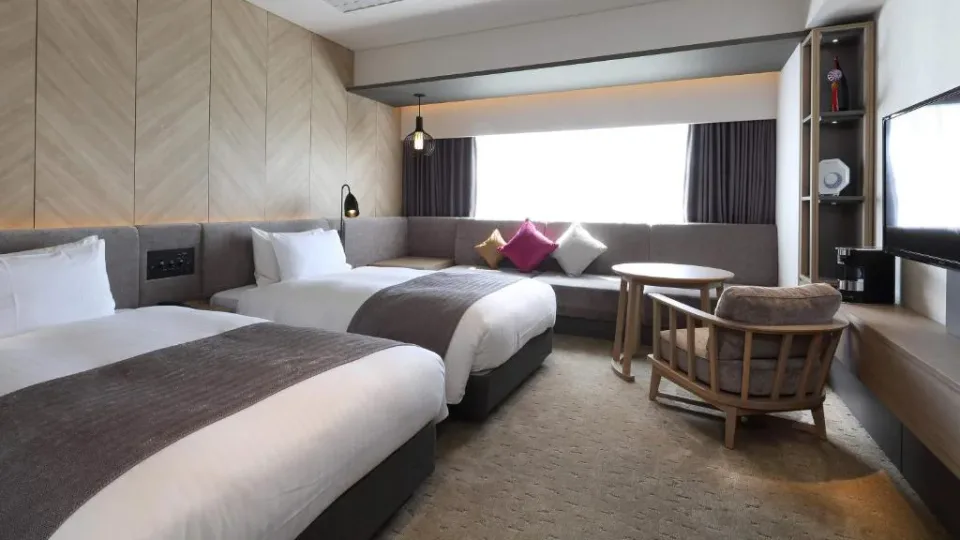
Four adults want one clear room | Solaria | Deluxe Quad is 41.8 m² with three regular beds plus one daybed |
Child under 2 or still in diapers | ONE loses some premium value | The child cannot use ONE’s public bath, so do not price the bath as a family benefit |
Driving into Tenjin | Solaria gets stronger | It currently offers affiliated guest parking at JPY 2,000 per night; ONE has no dedicated hotel parking |
Repeated early Shinkansen / JR mornings | Neither automatically | A Hakata Station hotel may remove more repeated friction than either Tenjin option |
The first decision is not “airport vs Nishitetsu” until you name the terminal
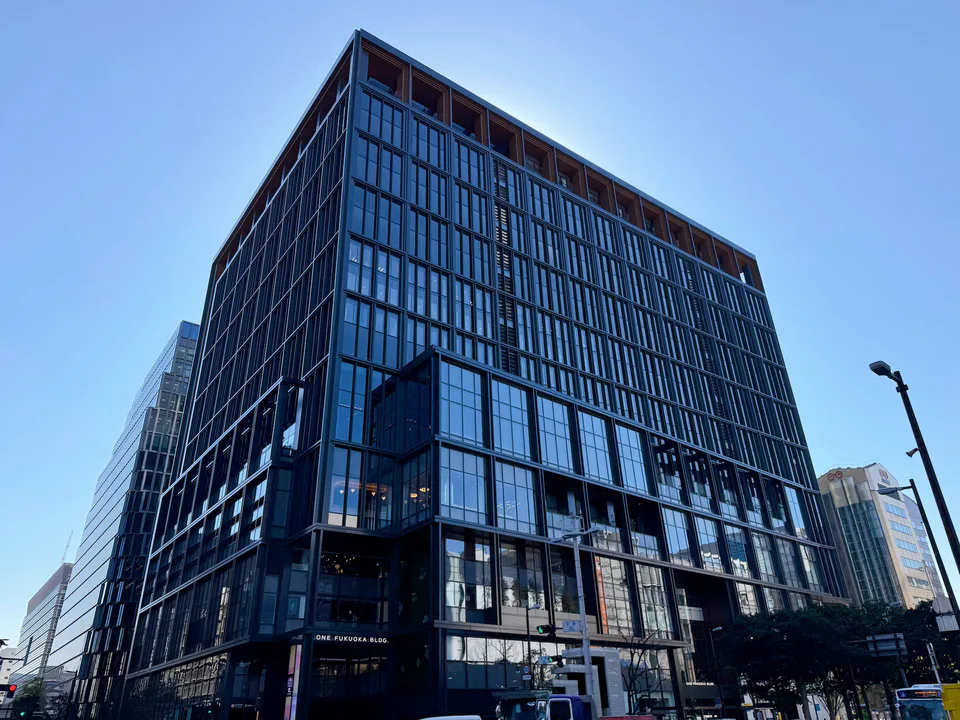
ONE FUKUOKA HOTEL sits in ONE FUKUOKA BLDG. and is directly connected to Fukuoka City Subway Tenjin Station. Its official access page gives about 11 minutes from Fukuoka Airport Station to Tenjin and about six minutes from Hakata Station, with the hotel directly connected from Tenjin’s East ticket gate. For a domestic passenger, that is a strong arrival chain because Fukuoka Airport Station is connected to the Domestic Terminal.
International passengers have a different chain. Fukuoka Airport’s current access guidance states that the subway serves the Domestic Terminal; moving between Domestic and International terminals uses the free shuttle, with an estimated journey of about 10 minutes and possible road delays. The airport also currently lists direct local buses from the International Terminal to Tenjin. A taxi is another possible direct-to-city option.
That creates an important correction to the usual hotel comparison: ONE’s 11-minute Airport Line headline is a domestic-terminal advantage, not an 11-minute international-terminal-to-hotel guarantee. For an international arrival, compare International Terminal → direct Tenjin bus/taxi with International → terminal shuttle → subway → ONE. Once that extra airport leg is included, ONE may still win, but its advantage is smaller and more itinerary-specific.
Solaria solves a different network. Its current official site lists direct access to Nishitetsu Fukuoka (Tenjin) Station and about five minutes on foot from subway Tenjin Station. If your stay includes Dazaifu, repeated Nishitetsu use, buses, or shopping and dining around the Solaria complex, that external-network advantage can repeat every day.
This leads to the strongest ValueNavi rule for the pair: weight the network you use repeatedly more heavily than the connection you use once on arrival. If you have not yet decided whether Tenjin itself is the correct district, use Hakata vs Tenjin first.
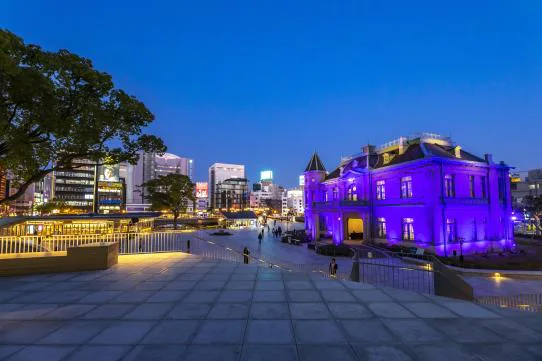
For two guests, ONE’s 35 m² baseline is a genuine room-space advantage
ONE’s current hotel brochure states that its 41 guest rooms range from 35 to 64 m². Its Superior King sits at the 35 m² entry level for one or two guests. That is a materially different baseline from Solaria’s common twin categories around 28.4 m².
For a couple with two large suitcases, shopping bags or a three-night stay, the extra room can be used every evening rather than admired once. But bed arrangement still matters. A 35 m² king is not automatically better for two friends who need separate beds. Compare the actual eligible twin category rather than using square metres as a proxy for sleep comfort.
The useful calculation remains:
usable room premium =
extra floor space you will actually use
+ preferred bed arrangement
+ hotel facilities you will actually use
- price premium
- repeated transport advantage you give up
If the room is only a place to sleep after late Tenjin dinners, another 6–7 m² has less value. If you return in the afternoon, open two cases, use the bath and spend time in the lounge, it has much more.
For four adults, Solaria still has the clearer reference product
Solaria’s current Deluxe Quad is 41.8 m² and accepts four guests. The bed layout matters: three regular beds are listed at 120 × 205 cm, while the fourth sleeping surface is a 100 × 195 cm daybed. “Four-person room” therefore does not mean four identical beds.
That is still a more direct four-adult starting point than ONE’s 35 m² Superior King, which is a one- or two-person reference room. ONE has larger room categories, but four adults need to compare the exact eligible category and final price rather than scale up the two-person product in their heads.
For four adults, I would begin with Solaria and only move to ONE when a specific ONE room solves another problem—more equal beds, much more space, terrace value or a hotel-time experience that the group will actually use. If group occupancy is the real decision, continue to Fukuoka Hotels for Three or Four Adults.
ONE’s premium should be counted in usable hotel sessions
ONE’s public bath and sauna currently operate from 06:00–12:00 and 15:00–25:00. Its guest-only Library Lounge runs 06:00–22:00 with self-service coffee, tea, ice cream and light snacks. The Garden Terrace is listed as open 24 hours, subject to weather.
Count the sessions you will really use:
arrival-afternoon room or lounge time;
post-dinner bath/sauna;
morning bath before sightseeing;
midday reset between activities;
slow departure morning before 12:00 checkout.
If a two-night stay gives you three or four of those sessions, ONE’s premium has a job. If you leave at 07:00 every morning and return close to midnight, much of the facility premium becomes brochure value.
There is also a family veto that belongs in the price comparison. ONE currently states that children under two and children wearing diapers cannot use the public bath. Children under 13 need an accompanying adult, and under Fukuoka City rules mixed bathing with children aged seven and over is generally prohibited. A family with a diapered toddler should therefore remove “everyone can use the bath” from ONE’s benefit list before comparing rates.
Tattoos are another boundary: ONE currently allows bath use only when the tattoo can be covered with a sticker or similar covering. If this cannot be done, the bath premium again needs to be discounted.
Checkout gives ONE one extra hour; breakfast does not create the same advantage
ONE’s standard checkout is currently 12:00, while Solaria lists 11:00. That extra hour can be useful on a slow final morning, but only if you are still in the room. It has no value on a 08:00 Shinkansen day.
Breakfast timing is slightly different but not enough to choose the hotel by itself. ONE currently serves breakfast 07:00–10:30 with last entry at 09:30. Solaria currently lists breakfast at Red Flamma from 07:00–10:00, last order 09:30. ONE therefore gives a later end to breakfast, not an earlier start.
For Dazaifu, Yufuin or an early Shinkansen morning, both breakfasts compete with departure time. Count breakfast as value only when it fits the first fixed task of the day.
A domestic late arrival is ONE’s cleanest one-night use case; international is conditional
For a domestic flight landing at Fukuoka, ONE’s route is unusually clean: airport subway station → Tenjin → direct East-ticket-gate building connection. In rain or with luggage, that can justify ONE for a one-night Tenjin stay.
For an international arrival, the route needs a second decision. Fukuoka Airport currently lists Tenjin among the destinations served directly by local buses from the International Terminal. Alternatively, you can use the free inter-terminal shuttle to the Domestic side and then take the subway, or use a taxi. The best option depends on arrival time, luggage, traffic and the exact Tenjin stop.
This is a good example of why hotel marketing distance should not become door-to-door travel time. ONE can still be the better hotel, but the international traveller should not pay a premium solely because “the airport is 11 minutes away.”
The next morning can reverse the choice again. If the first job is Nishitetsu travel, Solaria’s direct station integration can be more valuable. If the first job is a Shinkansen from Hakata, neither hotel owns the morning; a Hakata Station hotel may have been the better one-night product from the start.
Dazaifu strengthens Solaria only when the Nishitetsu advantage repeats
Solaria’s direct Nishitetsu connection is genuinely useful for Dazaifu. But one Dazaifu morning is still one use of the advantage. Do not choose a three-night hotel solely for one outbound train.
Solaria becomes more convincing when the same geometry repeats: Dazaifu one morning, Tenjin shopping twice, bus departures, late food around Tenjin and frequent movement through the Nishitetsu complex. ONE can still win if you value larger room space and hotel facilities more; its official access page places Nishitetsu Fukuoka (Tenjin) Station about three minutes away.
Driving is a clearer Solaria reversal—and the current parking price is JPY 2,000
ONE currently states that it has no dedicated hotel parking. Its access page points drivers to nearby paid parking, including Tenjin Underground Mall South Parking, whose published entry/exit window is 06:30–24:00.
Solaria currently publishes two affiliated parking options for hotel guests at JPY 2,000 per car per night, first come rather than reservable. That corrects the older JPY 1,500 figure.
This does not make Solaria a suburban car hotel; Tenjin is still dense central Fukuoka. But if a rental car genuinely needs to sleep with you, Solaria has a clearer hotel-integrated process. ONE’s strongest access case is subway-first, not car-first.
Rain helps ONE most on Domestic-Airport/Hakata subway days; Solaria on Nishitetsu days
ONE’s direct subway connection is exceptionally weather-resilient when your movement is Airport Line or Hakata-to-Tenjin subway. Solaria is directly tied into Nishitetsu Fukuoka (Tenjin) Station and the Solaria/Tenjin complex, while subway Tenjin is currently described by the hotel as about a five-minute walk.
For an international airport arrival, rain does not automatically strengthen ONE by the same amount because you still need to choose the airport-to-city mode first. A direct International-Terminal bus to Tenjin may be cleaner than transferring terminals for the subway. “ONE is better in rain” is therefore true only after the transport network is fixed.
Three-night stays should be decided by repeated behaviour
Solaria pattern: Dazaifu morning, repeated Nishitetsu/bus use, Tenjin shopping and late food, four adults in one room, or a car that needs affiliated parking.
ONE pattern: one or two guests, domestic-airport or Hakata subway arrival, afternoon hotel reset, bath/sauna sessions, lounge use and a slower 12:00 checkout.
Hakata pattern: Yufuin departure, Kumamoto day, Shinkansen mornings and repeated JR use. In this case, reopen the district decision instead of forcing a winner between two Tenjin hotels.
This is the deletion test for the premium: if you remove the hotel’s special advantage from the itinerary and nothing meaningful changes, do not pay for it.
Who should choose Solaria Nishitetsu Hotel Fukuoka?
I would choose Solaria when at least two of these are true:
Nishitetsu or Tenjin Bus Center appears repeatedly.
Dazaifu is fixed and Tenjin is also the evening base.
Four adults want the known 41.8 m² Deluxe Quad layout.
The hotel is mainly a movement-and-sleep base rather than a place to spend long afternoons.
You are driving and value affiliated guest parking.
The trade-off is that the common two-person room baseline is smaller than ONE’s 35 m² starting point, and you are not buying ONE’s bath/sauna/lounge package.
Who should choose ONE FUKUOKA HOTEL?
I would choose ONE when at least two of these are true:
You are one or two guests and 35 m²-plus room space will be used.
Your arrival is domestic by air or from Hakata and the direct subway-to-building finish matters.
You will actually use the public bath and sauna and everyone in the party is eligible to use them.
The Library Lounge, terrace or midday hotel reset is part of the stay.
A 12:00 checkout materially improves the final morning.
The trade-off is that an international-airport arrival requires another transport decision before the subway advantage starts, there is no dedicated hotel parking, and a family unable to use the public bath loses part of the premium.
Final verdict
For two adults on a slower Tenjin stay, ONE FUKUOKA HOTEL is still the more distinctive premium: larger baseline room space, direct subway-Tenjin connection, public bath, sauna and lounge. It is worth paying more only when those features receive real use.
For movement-heavy Tenjin, Dazaifu/Nishitetsu days, four adults in one room or a car that needs a clearer parking arrangement, Solaria Nishitetsu Hotel Fukuoka is the more rational default. Its premium is less about staying inside the hotel and more about reducing repeated city friction.
For an international arrival, do not let the “11 minutes from Fukuoka Airport” line decide between them. First choose International Terminal → Tenjin by direct bus/taxi or shuttle-to-Domestic + subway; then compare the hotel-side finish. If two or more mornings are really JR/Shinkansen mornings from Hakata, the correct answer may be neither.
Check the exact room, not just the hotel name
ONE FUKUOKA HOTEL
Booking.com — compare ONE FUKUOKA HOTEL rooms
Trip.com — compare ONE FUKUOKA HOTEL rooms
Agoda — compare ONE FUKUOKA HOTEL rooms
Solaria Nishitetsu Hotel Fukuoka
Booking.com — compare Solaria rooms
Trip.com — compare Solaria rooms
Sources and verification date
ONE FUKUOKA HOTEL — access · ONE FUKUOKA HOTEL — rooms and guest facilities · ONE FUKUOKA HOTEL — guest and bath rules · ONE FUKUOKA HOTEL — breakfast · Solaria Nishitetsu Hotel Fukuoka — current access, breakfast and parking · Solaria Nishitetsu Hotel Fukuoka — Deluxe Quad · Fukuoka Airport — terminal access · Fukuoka Airport — International Terminal buses. Checked August 25, 2026. Room inventory, parking prices, access routes and facility hours can change; verify the exact stay date before payment.
Is Fukuoka Good for Digital Nomads? Who It Fits—and When It Doesn't
Hotel JAL City Fukuoka Tenjin: Is a 1-Minute Akasaka Walk Worth Choosing Over Tenjin Station?
Fukuoka Tower: Is the ¥1,000 Ticket Worth the Detour? Timing Changes the Answer
Sapporo Hotel Comparison: Tokyu Stay vs Solaria vs GRANBELL for a Four-Night Winter Stay