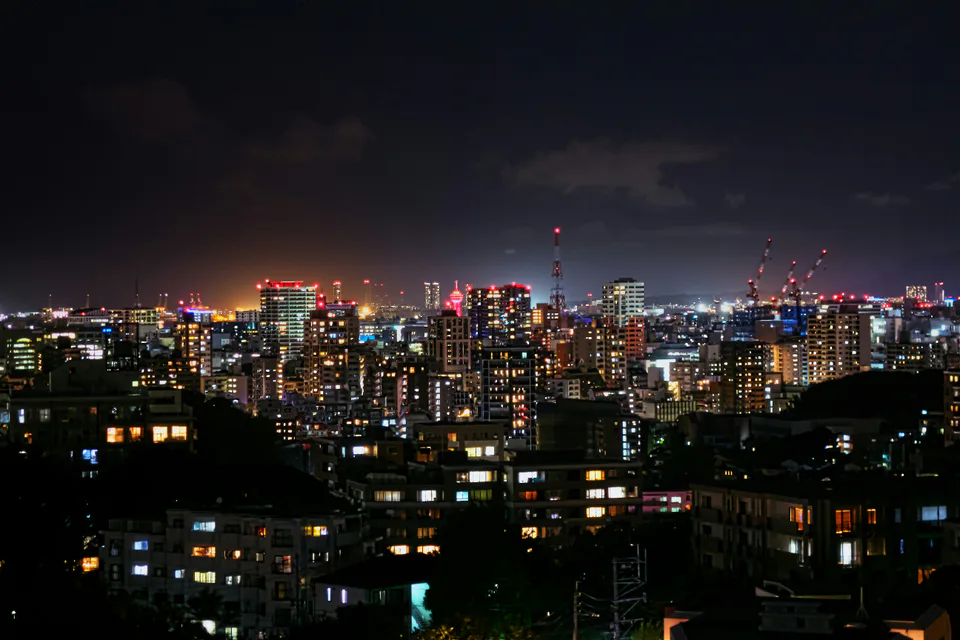
Fukuoka is a strong Japanese base for remote workers whose clients and income are already online, especially when they value short airport transfers, a compact central area and easy access to Kyushu on days off. It is a weaker choice when the trip depends on frequent in-person meetings in another city, guaranteed private call rooms, or a visa/residence setup that does not match Japan's rules.
The first mistake is treating “digital nomad” as a city-lifestyle label. There are two separate decisions: Are you legally able to do the planned work while in Japan? Then, if yes, does Fukuoka's daily geometry fit the work? A pleasant neighbourhood, cheap hostel or fast airport train cannot repair the first problem, and visa eligibility does not automatically make the city a good work base.
The 30-second decision
↔ Scroll table left or right
Your situation | Fukuoka fit | Why | Main boundary |
Foreign clients/employer, mostly asynchronous online work | Strong | Compact city + very short domestic-airport connection + several workable neighbourhood types | Your immigration status must actually permit the activity |
Regular video calls but no need for local clients | Strong with planning | Hostels, hotels and coworking options exist | A café/shared lounge is not a guaranteed private call room |
Frequent Shinkansen / Kyushu trips around work | Strong around Hakata | Hakata is the rail hub and Fukuoka Airport is minutes away by subway on the Domestic Terminal side | A quieter Ohori base creates more repeated station movement |
Long deep-work days + exercise / slower routine | Strong around Akasaka / Ohori | Lower-density daily routine and park access | You give up some Nakasu/Hakata/Tenjin convenience |
Business depends on daily in-person network building elsewhere | Conditional | Fukuoka has a real startup ecosystem, but geography still wins | Do not base in Fukuoka if your required meetings keep happening in Tokyo/Osaka |
Plan to work for a Japanese company under a Japanese employment contract using the Digital Nomad status | No | The current Digital Nomad status does not permit that activity | Get immigration advice for the correct status instead |
Before choosing Fukuoka, verify that your work fits Japan's current Digital Nomad status
Japan's Immigration Services Agency currently defines the Digital Nomad Designated Activities status for international remote work during a stay of no more than six months. The permitted activity includes remote work for a foreign organisation or providing services/selling goods to people outside Japan using information and communication technology, under the published conditions.
The current hard requirements include:
a six-month period of stay with no extension;
nationality/citizenship from an eligible country or region;
annual income of at least JPY 10 million at the time of application;
private medical travel insurance covering the stay, with at least JPY 10 million of treatment coverage for injury/illness;
no work based on an employment contract with a Japanese public or private organisation under this status.
The Immigration Services Agency also says no residence card is issued for this status. After reaching the six-month maximum, an applicant must wait six months before applying for the same status again.
This article is not immigration or tax advice. Other statuses—including working holiday and ordinary work/residence statuses—have different rights and conditions. Use the status that actually matches your nationality, contracts and planned activity rather than treating “digital nomad” as permission to work from Japan.
Why Fukuoka's airport changes the remote-work calculation
Fukuoka Airport's domestic terminal is directly connected to the subway. The airport currently gives about five minutes by subway from Hakata Station and about ten to eleven minutes from Tenjin. That is an unusually small airport-city penalty for a Japanese urban base.
The practical value is not just arrival day. A remote worker can finish a work block in the city and still make a domestic flight without spending an hour crossing a metropolitan area first. That makes weekend/short-trip travel easier to combine with fixed work hours.
There is an important international-terminal boundary. Fukuoka Airport states that the subway is directly connected to the Domestic Terminal, not the International Terminal; the terminals are connected by a free shuttle bus, and international passengers can also use buses or taxis. Do not turn the five-minute Hakata-to-airport figure into a five-minute hotel-to-international-check-in assumption.
The best Fukuoka area depends on what happens during the workday
Hakata: best when transport is part of the job or the weekends
Choose Hakata when your stay includes early Shinkansen departures, frequent Kyushu rail trips, domestic flights or several hotel changes. The area converts transport time into work/recovery time because the station and airport connection repeat.
The trade-off is that a transport hub is not automatically the best place for a slow daily routine. If you work from the same desk six hours a day and rarely use JR, paying a Hakata-station premium can solve a problem you do not have.
Tenjin / Daimyo: best when work and evening life need to coexist
Tenjin and Daimyo make sense when you want restaurants, shopping, cafés, events and central-city movement around the workday. Fukuoka City also operates and supports startup infrastructure in central Fukuoka, including Fukuoka Growth Next and Startup Café, so the city should not be described as having no professional ecosystem.
But do not confuse a startup ecosystem with a guaranteed client network. If your own business needs specific people in another city several times a week, live where those meetings happen rather than where the general startup narrative sounds attractive.
Nakasu-Kawabata: best for a short work + sightseeing hybrid
Nakasu-Kawabata sits between Hakata and Tenjin and can work especially well for a short stay where you still want Hakata Old Town, Nakasu evenings and quick subway access. The newly rebuilt WeBase Hakata vs UNPLAN Fukuoka remote-work comparison shows the practical version: WeBase is three minutes from Nakasu-Kawabata and two subway stops from Hakata, which is useful when work is only one part of the trip.
Akasaka / Ohori Park: best when the daily routine matters more than centrality
Move west when the stay becomes more residential in rhythm: longer work blocks, running/walking, fewer late Nakasu nights and less dependence on Hakata Station. Ohori Park can become a repeatable work break rather than a sightseeing destination.
The hidden cost is repeated transport back to Hakata/Tenjin. One extra subway ride is small; two journeys every day for a month are a different product. Choose the quieter base only if the routine actually uses it.
Remote work has three modes; Fukuoka does not solve all three the same way
1. Asynchronous laptop work
This is where Fukuoka is easiest to recommend. Writing, coding, design, research, email and other tasks that tolerate a shared lounge or coworking desk fit the city's compact geography well. You can optimise for neighbourhood and accommodation rather than acoustic isolation.
2. Scheduled calls
Calls make accommodation design more important. A hostel lounge may have Wi-Fi and power but still contain kitchens, laundry, music or conversation. A café can be even less appropriate. If calls are frequent, prioritise a private room with a usable desk or a coworking product that explicitly supports calls.
3. Confidential or client-critical calls
This is the hard boundary. Do not use “good Wi-Fi” as proof that a space is suitable for an interview, therapy session, legal/financial discussion or confidential client meeting. Reserve a private meeting room or choose accommodation where the in-room work setup is sufficient.
This distinction can reverse a budget decision. A hostel that is JPY 2,000 cheaper per night stops being cheaper if you need to rent private rooms for meetings every day.
Time zones can be a benefit or the reason the city fails
Japan operates on JST (UTC+9). The right base therefore depends on where the remote team lives.
Asia-Pacific work can fit ordinary daytime or evening hours. European teams often push calls into late afternoon/evening in Fukuoka. North American teams can push important meetings into late evening, night or early morning depending on location and daylight-saving season.
Do the call-window calculation before booking the neighbourhood. A lively Nakasu base may be excellent after work but poor if your job requires repeated 01:00 calls and the room is acoustically weak. A quieter Ohori room can be worth more than restaurant proximity in that scenario.
Housing: “monthly stay” is not one product
For one or two weeks, a hostel/hotel can be rational because reception, furniture, utilities and flexible checkout remove setup work. At one to three months, room size, laundry, kitchen access, cleaning cadence, desk ergonomics and cancellation terms become much more important than the nightly tourism location.
Do not assume that a cheap private hostel room is a private apartment. For example, WeBase Hakata's current private Twin is only 6.98 m² and still uses shared showers/toilets. UNPLAN Fukuoka's private rooms include folding tables and chairs but also use shared bathroom facilities. Those can be excellent budget products when you plan to work in the lounge; they are weaker if the room must function as your office, dining space and private call room for a month.
For longer stays, compare the whole living system:
private vs shared bathroom;
desk/chair and call privacy;
kitchen or microwave access;
laundry hours and cost;
luggage/storage;
cleaning/linen policy;
transport you repeat on workdays;
what happens if you need to leave early.
Fukuoka has startup infrastructure, but choose it for your network—not the city's branding
Fukuoka City actively supports a startup ecosystem. Its current official business pages list Fukuoka Growth Next, Startup Café and other entrepreneurship support, and the city has expanded international startup links. That makes Fukuoka more credible for founders and people who want some local business community than a simple “beach-and-food remote-work city” description suggests.
The red-team question is whether that ecosystem contains the people you actually need. A software founder with fully remote investors and clients may value Fukuoka's daily efficiency. Someone whose sales pipeline depends on weekly face-to-face meetings in Tokyo should not move south merely because Fukuoka has coworking and startup programmes.
Network value is specific, not generic. Check the events, companies and communities relevant to your field before using “professional network” as a city-selection criterion.
Days off are where Fukuoka becomes a regional base rather than just a city
Hakata's rail connections and the airport make Fukuoka useful for a remote worker who wants Kyushu weekends without changing accommodation every few days. Dazaifu, Itoshima and other Fukuoka-area outings can fit shorter breaks, while longer rail or flight trips can use the same hub.
That does not mean you should schedule a major excursion after every workday. The value is optionality: regional travel is available without making the ordinary Monday–Friday routine difficult.
Use the Dazaifu vs Itoshima decision for a short day off, and the Fukuoka first-visit itinerary if sightseeing—not work—is still the main purpose of the stay.
Who should choose Fukuoka over a larger Japanese city?
I would choose Fukuoka when all or most of these are true:
income and core clients/employer are already outside Japan and online;
you value a short airport transfer and easy regional travel;
you do not need a huge local in-person network every week;
your work can be done from accommodation/coworking rather than specialised corporate facilities;
a compact day—work, food, exercise, short transport—matters more than maximum-city variety.
I would choose another base when repeated in-person obligations, specialist events or industry relationships are geographically concentrated elsewhere. The strongest remote-work city is the one that reduces the travel between you and your work, not the one with the longest list of cafés.
How long makes sense?
One week: Fukuoka works as a workcation, but centrality matters more because there is little time to build a routine. Hakata, Nakasu-Kawabata or Tenjin are the safest starting points.
Two to four weeks: area choice becomes more important. If the workday is long, Akasaka/Ohori can justify the extra subway rides. Laundry, kitchen and room ergonomics begin to matter more than sightseeing access.
One to six months: immigration status, insurance, housing terms, privacy, cleaning, storage and time-zone sustainability dominate. Do not extrapolate a pleasant three-night hotel stay into a six-month living decision.
For travellers using Japan's Digital Nomad status, six months is the current maximum and cannot be extended under that status. Other legal statuses have different rules.
Final verdict
Fukuoka is a good digital-nomad base when you are already remote first and Japan second: the work travels with you, the city does not need to generate the job, and a compact airport/rail/food/exercise routine gives you back usable hours. I would favour Hakata or Nakasu-Kawabata for a short hybrid trip, Tenjin/Daimyo when central social/business life matters, and Akasaka/Ohori when the workday itself dominates the stay.
The recommendation reverses when legal eligibility is unclear, work for a Japanese organisation requires another status, confidential calls need facilities you have not booked, or your in-person network is concentrated in another city. Solve those constraints before optimising cafés and rent.
Related planning
Fukuoka Long-Stay Hotels
References
Immigration Services Agency of Japan — Digital Nomad Designated Activities status · Ministry of Foreign Affairs — Digital Nomad visa documents and requirements · Fukuoka Airport — current subway access · Fukuoka City — startup support and Fukuoka Growth Next. Checked August 25, 2026. Immigration, insurance and entry requirements can change; verify the current official rules for your nationality and planned activity before relying on this article.