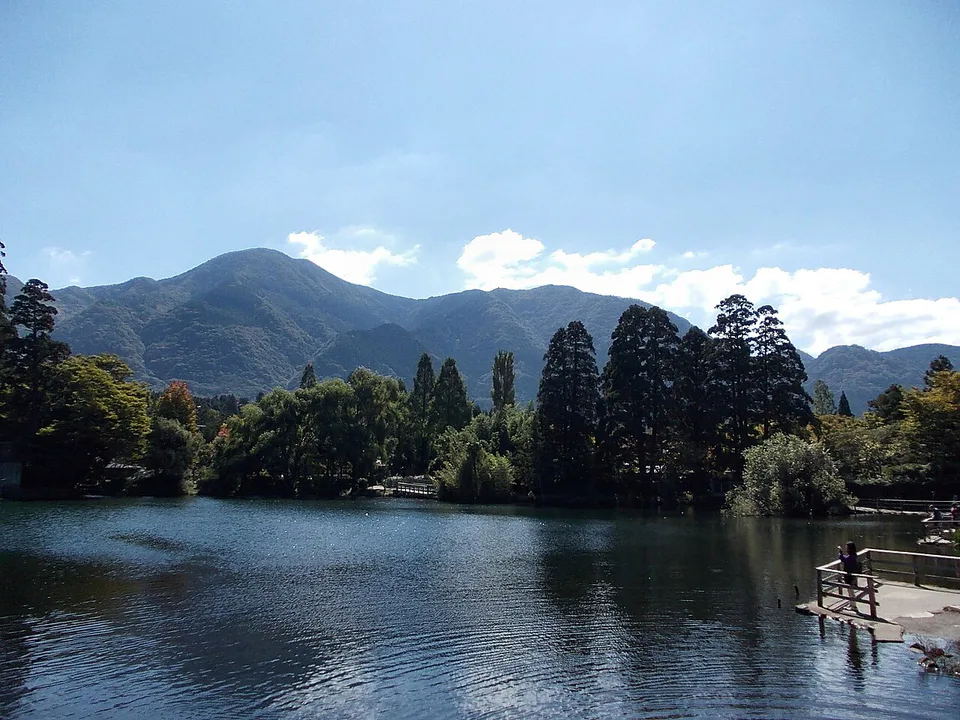
A Fukuoka private car charter starts to make financial sense much later than most groups assume. For a simple Hakata ↔ Yufuin trip, JR Kyushu currently lists a ¥5,600 (~US$35) Kyushu Net Ticket per adult each way. Two adults therefore spend about ¥22,400 (~US$141) return; even six adults are about ¥67,200 (~US$422). One current Kyushu operator publishes a reference 10-hour Alphard charter at about ¥70,000 (~US$440), with a HiAce around ¥75,000 (~US$471).
That does not mean “six people = always charter.” The JR comparison is a clean direct Yufuin journey; the vehicle quote buys door-to-door movement, waiting time and the ability to add places such as Beppu. The useful conclusion is narrower: for one direct destination, two to four travellers are nowhere near a cash break-even. Around five to six travellers, the gap becomes small enough that luggage, mobility and extra stops can legitimately reverse the answer.
There is also an important August 2026 update. The temporary earthquake-related reduction on the Kyushu Odan Bus ends August 31; Sanko Bus now says all services resume on September 1, 2026. A private driver therefore loses one temporary advantage from September. At the same time, Mount Aso remains under Volcanic Alert Level 3: public transport to Kusasenri can operate, but normal crater access does not. A charter removes transfer friction; it does not buy access through a volcanic restriction.
Checked August 26, 2026. JPY is the real price. Approximate USD figures use a late-August reference rate of ¥10,000 ≈ US$62.83 and are only for scale.
The 30-second decision
↔ Scroll table left or right
Your route | Start with | Why |
2 adults, Hakata → Yufuin and stay overnight | JR / highway bus | Direct public transport already solves the movement for a fraction of a full-day charter |
4 adults, Yufuin only | Public transport first | The cash gap is still large unless luggage or mobility has a high cost |
5–6 adults, Yufuin + Beppu, same-day return | Price a charter seriously | Fixed vehicle cost is spread while several local/intercity hand-offs disappear |
Family with children + stroller + several large bags | Charter gets stronger earlier | The premium buys synchronized movement, not just minutes |
Aso / Takachiho / dispersed rural stops | Charter or self-drive gets stronger | Road transport can link places whose public-transport clocks are sparse |
Dazaifu or central Fukuoka only | Public transport | A 10-hour vehicle is solving a problem the rail/bus network already handles |
Fukuoka hotel → Yufuin ryokan with no sightseeing | Compare private transfer, not full charter | You need one A-to-B movement, not ten hours of waiting rights |
The break-even test: price the route you would actually take without the car
The most useful charter comparison is not “car price ÷ number of people.” It is:
charter total − public-transport total = convenience premium the group is paying to remove transfers.
For a clean Yufuin benchmark, JR Kyushu currently lists:
standard Hakata–Yufuin adult one-way fare: ¥6,130 (~US$39), including ordinary fare and reserved-seat limited-express charge;
current Kyushu Net Ticket: ¥5,600 (~US$35) adult one way for the designated limited-express seat product.
Using the ¥5,600 network fare as a simple return benchmark:
↔ Scroll table left or right
Group | JR return total | Gap vs ¥70,000 charter reference | Initial verdict |
2 adults | ¥22,400 (~US$141) | ¥47,600 (~US$299) | Train wins easily |
4 adults | ¥44,800 (~US$281) | ¥25,200 (~US$158) | Train still materially cheaper |
5 adults | ¥56,000 (~US$352) | ¥14,000 (~US$88) | Convenience can start to matter |
6 adults | ¥67,200 (~US$422) | ¥2,800 (~US$18) | Cash difference is nearly gone |
This is deliberately a pure Yufuin transport benchmark, not a claim that the products are identical. The charter reference is a whole vehicle for around ten hours; JR is one rail journey. Once you add Beppu, a hotel pickup, several suitcases or local taxis, the vehicle can begin buying more than transport to one station.
The opposite is also true. If you are sleeping in Yufuin, a full-day return charter may be the wrong product even for six people. A one-way private transfer or the train plus a taxi can solve the route without paying for a driver to wait all day.
Use Fukuoka to Yufuin by train, bus or car before upgrading a simple hotel transfer into a sightseeing charter.
Count hand-offs: this is where a charter earns its premium
For a group, a hand-off is any moment when everyone and every bag has to successfully change transport or location together.
Hakata → Yufuin hotel can be as simple as hotel → Hakata Station → one reserved train → taxi/walk to ryokan. A private car deletes little.
Fukuoka → Yufuin → Beppu / Kannawa → Fukuoka can involve intercity rail or bus, station exits, local buses/taxis, luggage storage and another return connection. A charter deletes several synchronized movements.
I would start pricing a driver seriously when the itinerary contains three or more meaningful group hand-offs, especially when one missed connection would collapse the next reservation.
↔ Scroll table left or right
What the vehicle removes | Value for 2 adults | Value for 6-person family/group |
Station navigation | Low | Moderate |
Moving several large cases | Low–moderate | High |
Keeping children / older relatives synchronized | Usually low | High |
Waiting for rural local bus | Moderate | High when it affects everyone |
Changing the stop duration | Useful | Very useful |
Yufuin + Beppu is a much stronger charter case than Yufuin alone
Yufuin and Beppu are both accessible without a private car. The friction comes from combining them in one Fukuoka-based day.
One current Fukuoka charter listing explicitly treats Yufuin + Beppu as a roughly 350 km round-trip route inside a 400 km product. Another current operator recommends about ten hours for the same general combination and warns that a relaxed version should choose Yufuin plus only one or two main Beppu stops.
That is useful because it exposes the hidden cost: the car removes transfer friction, not driving time.
A good 10-hour charter is not permission to do Lake Kinrin, every shop on Yunotsubo Street, a slow ryokan lunch, all seven Hells, Kannawa, sand bathing and an unhurried Fukuoka dinner. The stronger use of the premium is to remove logistics while keeping the attraction list conservative.
If the real goal is onsen time rather than attraction count, compare Beppu vs Yufuin for an overnight. The hotel night can solve the timetable more effectively than a faster car.
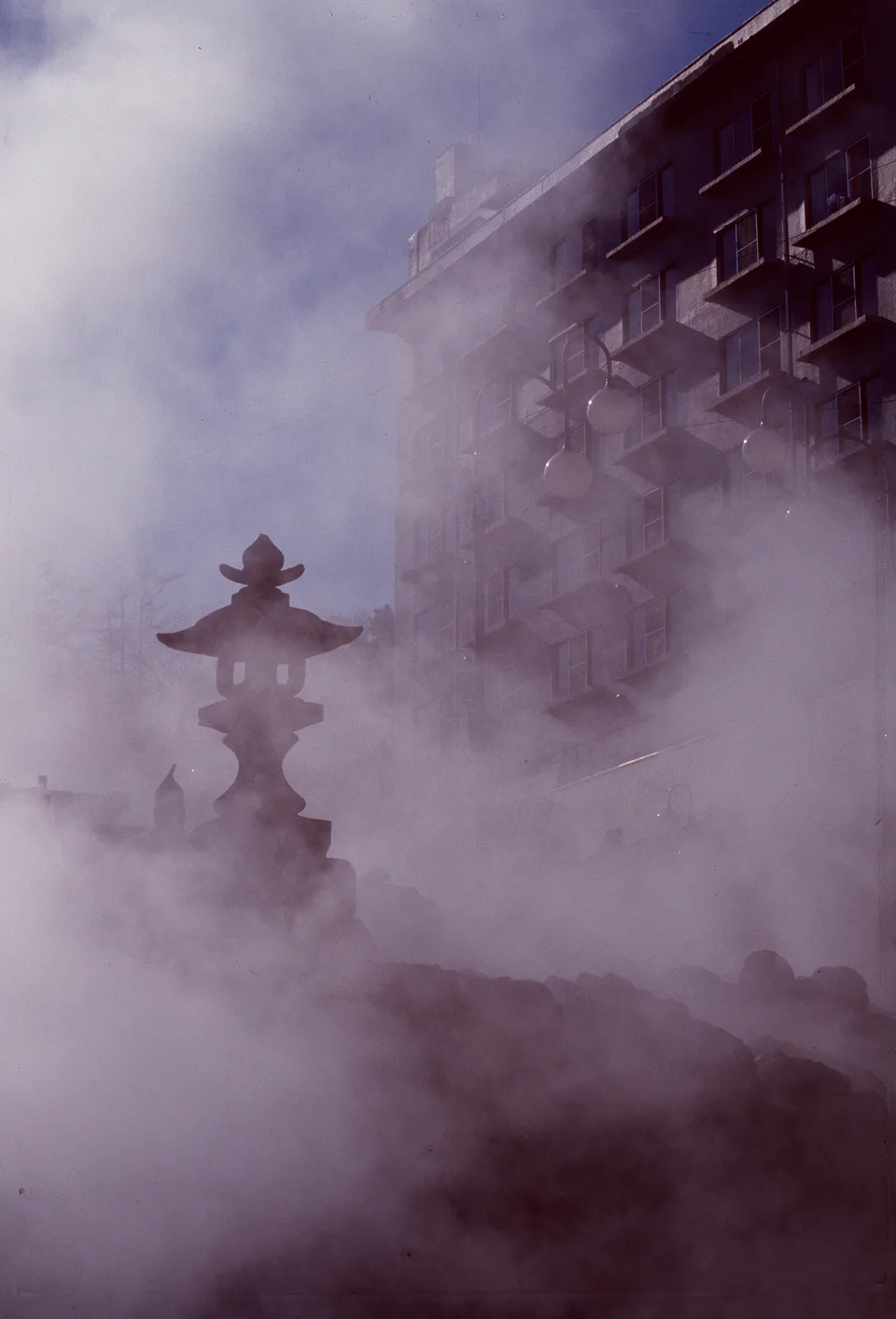
A private vehicle is most valuable when it removes several local and intercity hand-offs, not when it duplicates one clean train.
September 2026 changes the public-transport baseline
After the August Kumamoto-area earthquake, the Kyushu Odan Bus temporarily ran only part of its normal pattern. Sanko Bus now states that all Odan Bus services resume September 1, 2026.
This matters to charter economics. A disrupted bus network makes private transport look unusually attractive. Once the scheduled network returns, that temporary premium should be removed from the calculation.
The Odan Bus is still not high-frequency hop-on/hop-off transport: the current route remains capacity-limited and some sectors require reservations. But a group moving Kumamoto → Kurokawa → Yufuin / Beppu again has a real public-transport spine to compare before paying for a vehicle.
Use the current Kyushu Odan Bus guide if that corridor is the actual itinerary. Do not let an August disruption become a permanent reason to charter in September or later.
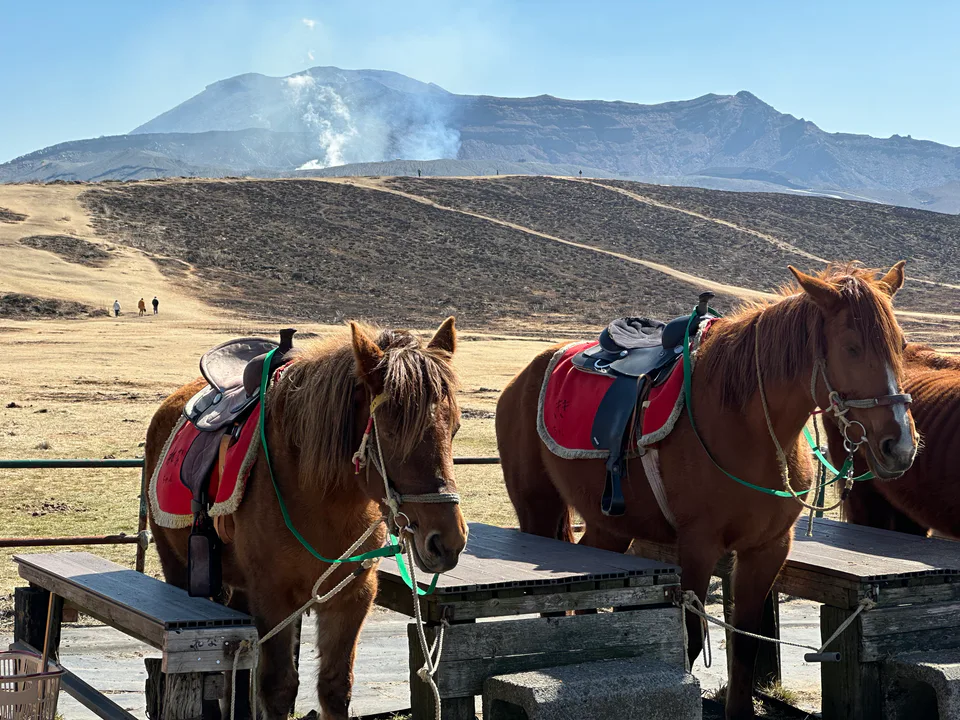
Aso: a charter solves geography, not the volcano
Aso is one of the strongest reasons to consider private road transport because attractions are dispersed. It is also the easiest place to overvalue a driver.
As of August 26, Mount Aso remains under Volcanic Alert Level 3. Sanko’s current rules say the Aso Tozan bus operates between Aso Station and Kusasenri, while Aso Sanjo Terminal and Heliport-mae are not served; the crater shuttle is suspended. The separate Kumamoto–Aso mountain bus is scheduled to resume September 1 but also terminates at Kusasenri while the restriction remains.
A private car cannot convert that into normal crater access. If your charter itinerary advertises “Aso crater,” ask what the replacement route becomes under the current restriction.
A robust Aso charter has two versions before departure:
Version A: the high-mountain access you want is legally and operationally open.
Version B: Kusasenri / basin / other permitted stops still create a day worth the vehicle price if the crater remains unavailable.
If Version B feels like a consolation prize you would not buy voluntarily, do not pay for a 10-hour charter whose value depends on one restricted zone.
The 10-hour label hides two different clocks
A charter day has a customer clock and a vehicle-contract clock. Current products show why you need both.
One live Fukuoka listing sells 10 continuous hours and two mileage packages: 100 km round trip or 400 km round trip. Its current terms add ¥8,800 (~US$55) per overtime hour and ¥200 (~US$1.26) per excess kilometre. Another product shortens a nominal 10-hour Fukuoka service to eight hours when the trip ends in Beppu rather than returning to Fukuoka.
Those are product-specific rules, not universal Kyushu law. The lesson is universal: “10-hour charter” is not a standardized product.
↔ Scroll table left or right
Contract question | Why it matters |
When does the 10-hour clock start? | Garage/deadhead time can reduce the sightseeing block on some products |
Must pickup and drop-off both be in Fukuoka? | Ending in Yufuin/Beppu may change hours or add a fee |
What is the mileage cap? | Aso, Takachiho and Nagasaki routes can approach 400 km |
Are tolls and parking included? | One quote may be genuinely all-in while another shifts those costs to the day |
How is overtime rounded? | A 20-minute overrun can be charged as a full hour on some products |
Freeze the route before comparing prices
Never compare two charter headlines while giving them different jobs. Write one route first:
pickup address → stops → planned minutes at each → drop-off address → passenger count → luggage → child seats → language need.
Then ask each supplier for the final payable price under exactly that geometry.
Otherwise it is easy to combine the lower base price from one listing, the generous 400 km allowance from another, free child seat from a third and included tolls from a fourth into a fictional charter that nobody actually sells.
Vehicle capacity is a luggage equation, not a seat-count equation
“Up to 9” or “up to 13 passengers” tells you how many seats exist. It does not tell you whether six adults, six large suitcases, a stroller and child seats all fit comfortably.
One current operator publishes a HiAce reference capacity of up to nine passengers with up to eight large suitcases. Another listing offers a 14-seat HiAce for larger groups. Those differences are exactly why vehicle class has to be confirmed with the actual load.
Send the supplier:
number of adults and children;
large / cabin-bag count and approximate sizes;
stroller or wheelchair;
child-seat requirement;
ski, golf or other oversized equipment.
If the vehicle has to step up one class to carry the luggage, that is part of the real trip price.
Private transfer vs full-day charter: do not buy waiting time you do not need
Fukuoka Airport → Yufuin ryokan is mostly an A-to-B problem. A full-day charter sells something extra: the driver waits while you sightsee and the route can contain several stops.
If you only want hotel-to-hotel movement, compare:
JR/highway bus + taxi at the final mile;
a one-way private transfer;
a full-day charter only if you genuinely want sightseeing before check-in.
This distinction matters most for ryokan days. Arriving at 15:00–16:00 and protecting dinner can be more valuable than spending ten purchased vehicle hours chasing another attraction.
Children and older travellers can move the break-even before the cash does
Suppose four adults spend roughly ¥44,800 (~US$281) on the simple JR Yufuin return benchmark. A ¥70,000 (~US$440) vehicle still carries a roughly ¥25,200 (~US$158) premium.
For four fit adults with small bags, that premium is hard to justify for Yufuin alone. For two grandparents, two parents, a toddler, stroller and luggage, the same premium can buy:
door-to-door pickup;
no platform changes;
rest breaks on the group’s clock;
no luggage handling at every transfer;
and one shared transport environment all day.
That is why there is no single passenger-count rule. Cash break-even is only the first threshold; friction break-even can happen earlier.
Driver language is not the same as guide service
Current listings use phrases such as Chinese-speaking driver, trilingual service or driver-guide. Do not assume those labels all mean licensed historical guiding, attraction interpretation or restaurant concierge service.
If interpretation is one reason for the premium, get written confirmation of:
driver language;
whether the driver accompanies you inside attractions;
whether guiding is included or only transport communication;
what happens if the named-language driver changes.
A transport charter can still be excellent without guide service. The mistake is paying a guide-level premium for a product that only guarantees basic driver communication.
When public transport is the better product
Keep JR or buses as the default when most of these are true:
one or two destinations;
one to four fit travellers;
light luggage;
a direct train/bus already exists;
the destination is compact after arrival;
the train itself is part of the experience, as with Yufuin no Mori;
you would rather spend the charter premium on an overnight or better room.
When I would price a charter seriously
I would move from “maybe” to an actual quote when at least three of these are true:
five or more people share the fixed vehicle cost;
children, older relatives or mobility limits make transfers expensive;
the route contains three or more meaningful hand-offs;
large luggage is travelling between hotels;
two or more dispersed rural stops matter;
stop duration needs to stay flexible;
one missed public-transport connection has a high failure cost;
you have a backup route for weather / volcano restrictions.
If only “we are six people” is true, the charter has not automatically won. If the other seven conditions are mostly true, the vehicle can be rational before a spreadsheet shows a perfect fare break-even.
Final verdict
For two adults going directly from Fukuoka to Yufuin, start with JR or the highway bus. For five to six adults, the public-transport fare gap narrows enough that a real 10-hour charter quote deserves comparison. For a mixed-age family or group adding Yufuin + Beppu, Aso or several hotel-to-hotel movements, the value can arrive even earlier because one vehicle deletes repeated hand-offs.
Do not buy a charter because “Kyushu public transport is difficult.” From September 1, the Kyushu Odan Bus is scheduled to return to full service, so one temporary August disruption should no longer inflate the private-car case. And do not buy an Aso charter as a workaround for Volcanic Alert Level 3: the car cannot reopen a restricted crater.
The strongest buying sequence is: freeze the route → price the public-transport alternative → count group hand-offs → request an all-in charter quote → compare the remaining convenience premium. That gives the driver a real job instead of making the most expensive transport option the default.
Sources and verification
JR Kyushu — Yufuin no Mori timetable and fares · Sanko Bus — Kyushu Odan Bus current operation · Sanko Bus — current Mount Aso Level 3 transport restrictions. Charter examples checked against current live Fukuoka/Kyushu operator and marketplace listings on August 26, 2026; specific mileage, overtime, toll, parking, language and cancellation terms belong to the exact product and must be reconfirmed before payment.
Fukuoka Tower: Is the ¥1,000 Ticket Worth the Detour? Timing Changes the Answer
Best Day Trips from Osaka: Kyoto, Nara, Kobe or Himeji — When Does a Tour Actually Save Time?
Fukuoka Self-Drive Hotels: Choose Your Car Days Before You Choose Hakata, Tenjin or Uminonakamichi
Okinawa Fishing 2026: Shared Boat, Private Charter or Big-Game Trolling?