
For one Osaka concert, the best hotel is usually not the hotel closest to the venue. The better question is what happens in the first 60–90 minutes after the encore: how long the controlled exit takes, whether you are standing with merchandise, how many transfers remain, and whether the same hotel location helps or hurts the next morning.
For most four- or five-night Osaka trips, keep the base that serves the whole itinerary, then let the concert adjust the weighting. A venue-side stay becomes much more valuable when the concert repeats for two nights, the show is standing-only or physically demanding, a child or older traveller is involved, merchandise is bulky, or the next morning has a fixed early departure.
30-second answer: choose the city base first, then apply the concert penalty
↔ Scroll table left or right
Concert situation | Base to test first | When to override it |
One night at Kyocera Dome + several Minami evenings | Namba | Two or more dome nights, mobility limits, or very heavy merchandise load |
One night at Osaka-Jo Hall + JR-heavy next days | Umeda / Osaka Station | Trip is already concentrated around Kyobashi / Osaka Castle |
One standing show at Zepp Namba + Minami trip | South Namba | Most other days begin north of central Osaka |
Concert is the main reason for the trip | Venue direction gets much more weight | Only one seated show and light luggage |
Two venues on two nights | Find a shared return direction | Do not switch hotels twice just to chase venue proximity |
If Namba versus Umeda is still unresolved, settle that first with Namba vs Umeda. A single concert night should not automatically overrule four other mornings and evenings.
ValueNavi’s After-Show Friction Score
The useful unit is not “minutes from venue to hotel.” ValueNavi uses an editorial After-Show Friction Score:
exit crowd + standing fatigue + merchandise load + outdoor walk + transfers + station complexity + next-morning penalty.
A 15-minute route can feel worse than a 30-minute route if the shorter one requires a crowded interchange while carrying bags. The same route can also feel completely different after a seated arena show versus a standing Zepp show.
This is why venue-side accommodation should be treated as a friction purchase, not a distance purchase.
Hard gate first: confirm that the venue itself is valid for your date
Before paying a non-refundable “concert hotel” premium, verify the exact venue name and event date on the organiser or venue site. This matters more than any hotel recommendation.
Osaka-Jo Hall has officially announced a closure from January 12 to March 10, 2027 for major renovation work. If an old event page, resale listing or copied itinerary still shows Osaka-Jo Hall during that period, stop the hotel comparison and confirm whether the event moved, changed date or was cancelled.
Zepp is another naming trap: Zepp Namba (OSAKA) and Zepp Osaka Bayside are different venues. Zepp Namba is in Shikitsuhigashi, while Zepp Osaka Bayside is near Sakurajima. Booking a hotel around the wrong Zepp can reverse the entire transport decision.
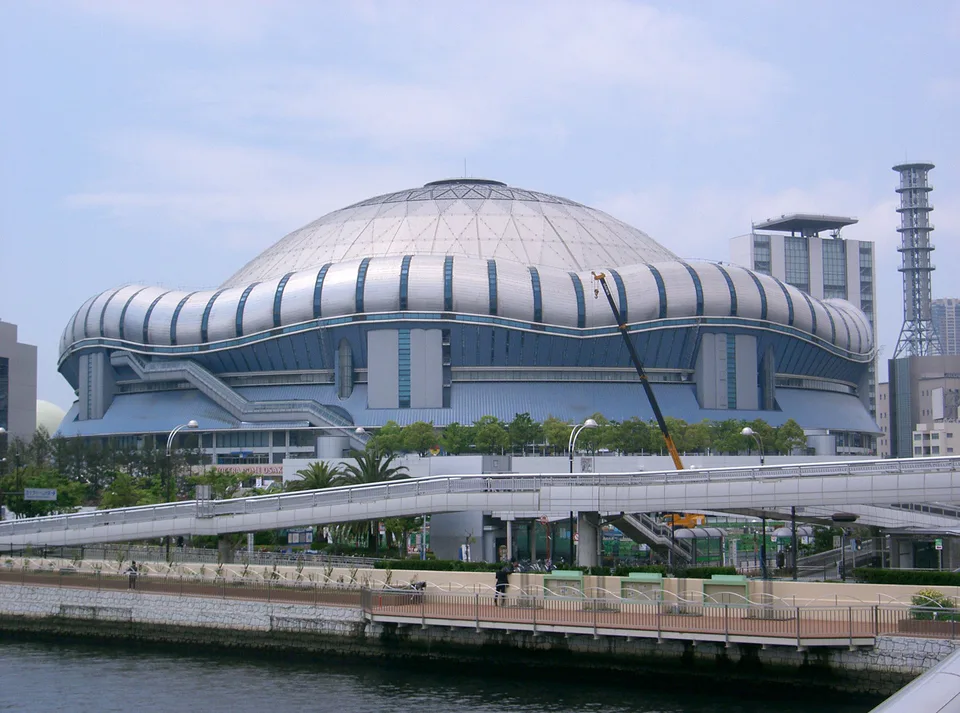
Kyocera Dome Osaka: one show usually does not justify moving the whole trip
Kyocera Dome’s official access information includes Osaka Metro Dome-mae Chiyozaki, Hanshin Dome-mae and JR Taisho as practical rail approaches. That gives visitors several ways to disperse after an event; it also means you do not have to sleep beside the dome to make the evening workable.
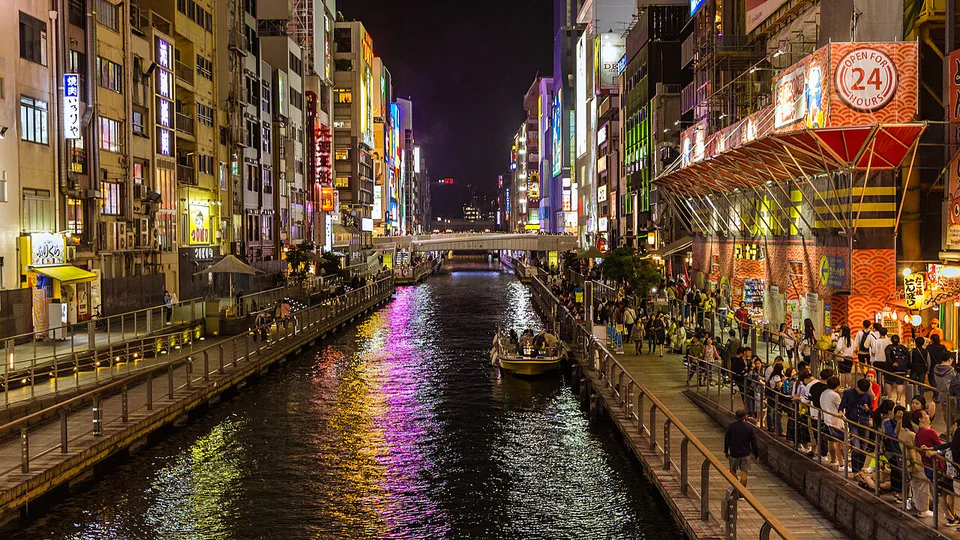
If the rest of the trip is built around Dotonbori, Shinsaibashi, Minami dining or a later KIX departure, Namba usually keeps the stronger Repeat-Use Value. The concert route is used once; the hotel base may be used eight or ten times across mornings and evenings.
Use the Osaka stay-area guide for that first decision rather than treating “Kyocera Dome” as a hotel district.
Repeat Night Multiplier: two dome shows can flip the answer
One crowded return is a one-off cost. Two consecutive shows create the same fatigue, merchandise handling and post-show transfer twice. That is where the Repeat Night Multiplier matters:
post-show friction × number of concert nights.
If the same unpleasant return happens twice or three times, a nearer base can become rational even when it is worse for normal sightseeing. The answer can also flip for families or travellers with reduced walking tolerance because the physical cost is larger even when the map is identical.
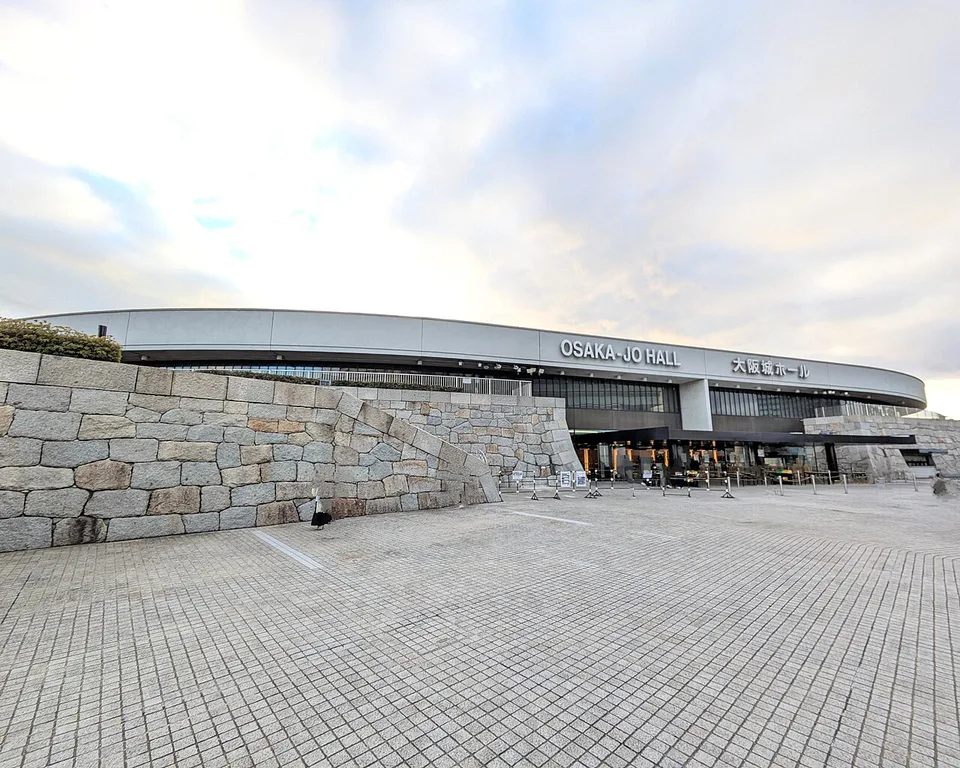
Osaka-Jo Hall: Umeda often wins when the next morning is also JR-heavy
Osaka-Jo Hall officially lists both JR Osakajokoen Station and Osaka Metro Osaka Business Park Station at about a five-minute walk. It also lists Morinomiya and Osaka-jo Kitazume at longer walking distances, and the hall has no on-site parking; event visitors are advised to use public transport.
The hotel decision becomes especially strong for Umeda when the next day heads toward Kyoto, Kobe, Shin-Osaka or another JR-heavy route. Returning to Osaka Station after the concert is not just “going back to the hotel”; it places you at the base you will use again the next morning.
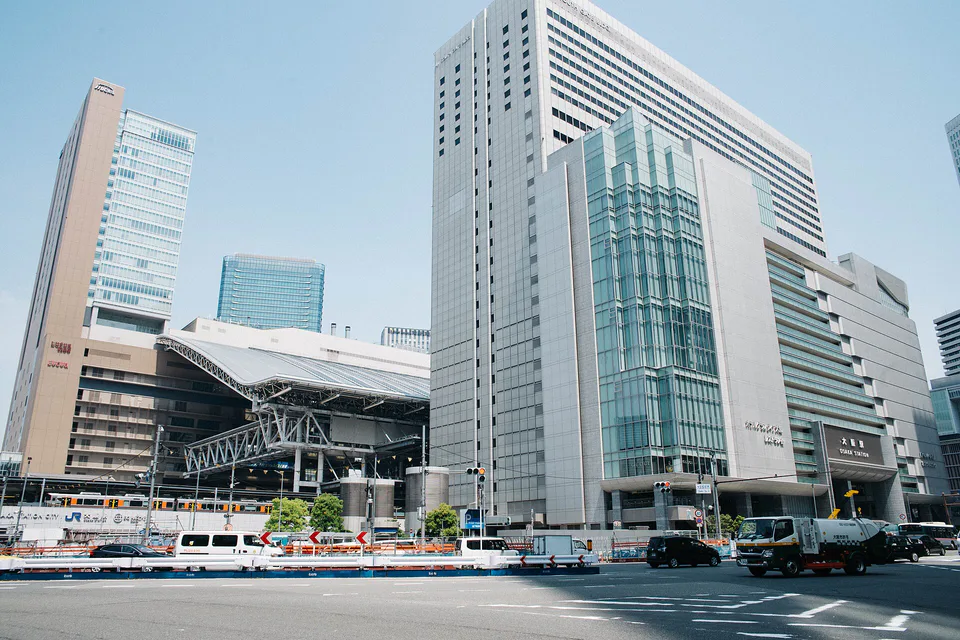
When the post-concert return and the next morning point in the same direction, the hotel base earns value twice.
If you are comparing station-connected options, use the Osaka Station hotel comparison rather than selecting purely by map distance from the hall.
Next-Morning Coupling: tonight and tomorrow should be one decision
ValueNavi calls this Next-Morning Coupling. Add the post-show return and the first trip the next morning before deciding where to sleep.
↔ Scroll table left or right
After the show | Next morning | Hotel logic |
Osaka-Jo Hall | Kyoto / Kobe / Shin-Osaka | Umeda gets stronger |
Kyocera Dome | Minami / KIX direction | Namba gets stronger |
Zepp Namba | Another Minami day | South Namba gets stronger |
Any venue | Very early Shinkansen / flight | Departure friction may override concert convenience |
A hotel that saves 15 minutes tonight but costs 45 extra minutes tomorrow is not a net win.
Zepp Namba: standing fatigue makes the final walk more expensive
Zepp Namba’s official access page currently lists roughly 12 minutes on foot from Namba Station, 10 minutes from Ebisucho and seven minutes from Daikokucho. Those are normal walking estimates, not “after two hours standing with merchandise” estimates.
For a standing show, the hotel should therefore be judged on post-show leg cost. If the rest of the trip already belongs in Minami, a south-Namba hotel can be a coherent answer because the venue, food, shopping and room all remain in the same part of the city.
But one Zepp night should not move a five-night JR-heavy trip south. If Kyoto, Kobe or Shin-Osaka dominate the other days, accepting one longer concert return may still be the lower total-friction plan.
Locker reality at Zepp Namba: do not build the hotel plan around a guaranteed locker
Zepp Namba currently lists 480 indoor lockers and 690 outdoor lockers. Each is ¥500 (about US$3.14 at the August 27, 2026 reference rate). The indoor lockers cannot be used before doors open, and the outdoor lockers may not be opened for every event.
That creates a useful planning rule: “There are lockers” is not the same as “your merchandise strategy is solved.” If you plan to buy a large amount of merchandise, a hotel within a practical reset loop can be more valuable than a slightly shorter final ride.
Merch Reset Value: the hidden reason a hotel can matter before the show
Concert hotels are usually evaluated only for the route after the show. Merchandise creates a second use case: the ability to return to the room before doors open, unload shopping and go back out carrying only what you need.
ValueNavi calls this Merch Reset Value. It becomes high when:
merchandise sales open hours before the show;
you plan to buy bulky towels, bags, light sticks or multiple items;
venue lockers are limited or conditional;
the show is standing and you want the smallest possible bag.
This can make a Namba or south-Namba base more useful for Zepp even when a different district looks equally convenient on the train map.
One concert trip and a trip built around the concert are not the same
If the show is one evening inside a normal Osaka holiday, the hotel should mostly serve the holiday. If the flights, leave dates and sightseeing schedule exist because of the artist, the concert can legitimately dominate the hotel decision.
A concert-first trip often includes merchandise queues, fan events, early venue arrival, physical fatigue and a late exit. In that case, paying more for fewer transfers can be rational. The premium is not buying “a better neighbourhood”; it is buying back energy around the event that matters most.
Two-concert trip: do not chase both venues with two hotel moves
When two different Osaka venues appear on the same trip, look for a Shared Return Direction before splitting hotels.
Kyocera Dome + Zepp Namba: Namba gets stronger because both evenings lean toward Minami.
Osaka-Jo Hall + JR day trips: Umeda gets stronger because the hotel keeps paying you back outside the concert.
Kyocera Dome + Osaka-Jo Hall: neither venue should automatically force a hotel move; choose by the rest of the trip.
Switching hotels twice to save post-show minutes usually creates more packing and luggage friction than it removes.
Last-Train Irrelevance: the final train is not your target train
A concert can finish later than expected. Encores, controlled exits, merchandise pickup, toilet queues and platform crowd management can all delay departure. The robust plan is therefore not “the last train leaves at X, so the hotel is fine.”
The Last-Train Irrelevance rule is simple: plan around a comfortable post-show route with margin, not the final theoretical connection of the night. If your hotel choice only works when everything ends exactly on time, the route is fragile.
For large venues, public transport is normally the more predictable framework than assuming a taxi will be immediately available after thousands of people leave together.
Room design matters after the show
After a concert, the room becomes a recovery and sorting space. For two or more travellers, practical value often comes from:
enough floor area for merchandise and bags;
proper beds rather than awkward temporary sleeping arrangements;
a bathroom layout that lets people shower and get ready without bottlenecks;
enough charging points for phones, batteries and light sticks;
easy luggage handling if the next morning is an early departure.
A skyline view that is used for five minutes should not outrank a room layout that saves 30 minutes of post-show friction.
ValueNavi scenario tests
Scenario 1: one Kyocera Dome show inside a five-night Osaka trip
The trip has three Minami evenings and a KIX departure. Verdict: keep Namba. The concert happens once; the base value repeats.
Scenario 2: two consecutive Kyocera Dome shows with a child and heavy merchandise
Verdict: venue direction or a shorter return becomes much more defensible. Repeat Night Multiplier and merchandise friction now outweigh more of the city-base benefit.
Scenario 3: Osaka-Jo Hall concert followed by Kyoto the next morning
Verdict: Umeda / Osaka Station is strong. The same return direction serves both tonight and tomorrow.
Scenario 4: Zepp Namba standing show, four other days based around Kyoto and Shin-Osaka
Verdict: do not move the whole stay south for one show. Accept one longer return unless standing fatigue or mobility constraints materially change the calculation.
ValueNavi scorecard
Hotel strategy | Concert-night comfort | Whole-trip efficiency | Move friction | Best use |
|---|---|---|---|---|
Keep Namba/Umeda city base | 7–8/10 | 10/10 | One concert inside a wider Osaka trip | |
Move closer for one concert night | 9/10 | 6–8/10 | High fatigue, merchandise, family/mobility needs | |
Stay venue-side for multiple nights | 9–10/10 | Variable | Concert-first trips or repeat venue nights |
These are editorial scores, not venue or hotel ratings. Their purpose is to show why one concert and three concerts should not produce the same accommodation answer.
When the default verdict is wrong
“Keep your normal Osaka base” becomes a bad recommendation when the event is the main purpose of the trip, the post-show route repeats, standing fatigue is high, mobility is limited or the group is carrying significant merchandise.
“Stay near the venue” becomes a bad recommendation when the concert is one night, the rest of the trip points elsewhere, and moving hotels creates more luggage friction than the show removes.
Final verdict
For one Osaka concert, choose the hotel base for the whole trip and then price in the after-show penalty. Namba is a strong first check for Kyocera Dome and Zepp Namba when Minami already matters; Umeda is a strong first check for Osaka-Jo Hall when the next days are JR-heavy.
Let the venue take over the hotel decision only when the concert friction repeats or becomes expensive: multiple shows, standing fatigue, children, older travellers, merchandise, mobility limits or a tightly timed next morning.
Official venue references
Venue details checked on August 27, 2026. Confirm the exact event venue, timetable and organiser notices before booking a non-refundable hotel.