
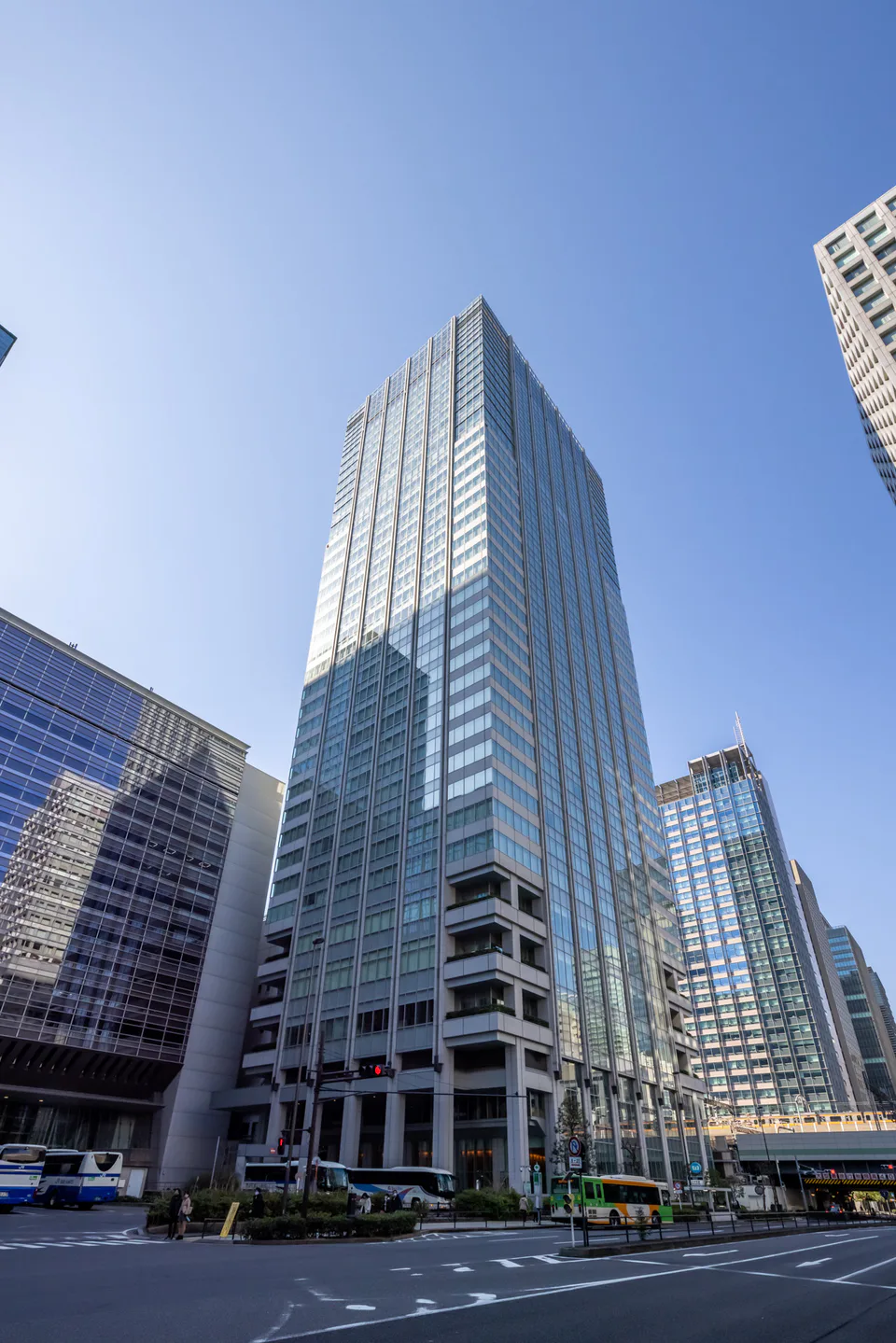
Hotel Metropolitan Tokyo Marunouchi occupies floors 27–34 of Sapia Tower and is directly connected to JR Tokyo Station’s Nihombashi Exit. The hotel’s access information separately lists the Shinkansen Nihombashi Exit at about one minute on foot. That makes the property most interesting not as a generic “Tokyo Station hotel,” but as a way to reduce the final hotel-to-station uncertainty before an early Shinkansen with large luggage.
The location is strong enough that it is easy to ignore the room trade-off. Current room choices range from roughly 17m² no-view rooms to 20m² Station Side Queen, 25m² Train View Twin and 30m² Executive Corner Twin options. Staying above Tokyo Station does not mean the base room is large, and a high floor does not mean every room sees trains. This guide asks one question: when the next stage of the trip leaves from Tokyo Station, is the direct Nihombashi Exit position worth exchanging room space and a Tokyo Station-area room rate for departure certainty?
Hotel Metropolitan Tokyo Marunouchi: the 30-second decision
↔ Scroll table left or right
Decision | When it applies | Why |
I would book | Early Shinkansen next morning, first time using Tokyo Station, older travellers or large luggage | Direct Nihombashi Exit access lets you solve the hotel-to-station route the night before; the hotel lists the Shinkansen Nihombashi Exit at about one minute from the hotel connection |
I would reconsider | Two people staying several nights, mostly sightseeing inside Tokyo | The 17–20m² room pressure can accumulate; compare the 25m² tier and other Tokyo bases before paying for Shinkansen convenience you use only once |
I would skip | The trip is centred on Shinjuku, Shibuya or Ikebukuro with no intercity transfer | You may be paying for Nihombashi/Shinkansen convenience while creating repeated cross-city travel in the parts of Tokyo you actually use |
This hotel’s strongest product is not a large room. It is the ability to move tomorrow morning’s hardest navigation problem into tonight. If your next task is an early Shinkansen, that advantage is immediate. If the whole trip remains inside Tokyo, compare the same budget with a base that matches the repeated daily direction, such as Hotel Century Southern Tower in Shinjuku or lyf Shibuya Tokyo.
Quick facts that actually change the stay
↔ Scroll table left or right
Item | Verified condition | Trip impact |
Tokyo Station access | Direct JR Nihombashi Exit connection; Shinkansen Nihombashi Exit about 1 min, Yaesu North about 2 min | Highest value for early departures, rain and large luggage; hotel elevators and station/platform movement still need time |
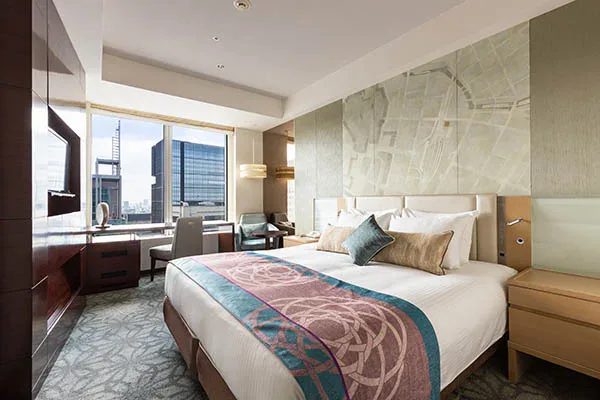
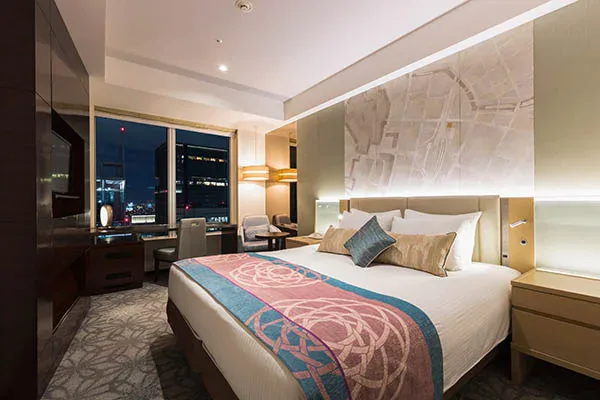
Rooms | Roughly 17m² no-view, 20m² Queen, 25m² Twin, 30m² Executive Corner Twin | Solo transfer night can prioritise location; two people and large luggage should raise room area on the priority list |
View | No View, Station Side and Train View are separate named room outcomes | High floor does not guarantee rail views; book the named view category |
Breakfast | TENQOO 06:00–10:30; last entry 10:00 | Work backward from the real train departure; an early opening does not mean breakfast should be forced into every Shinkansen morning |
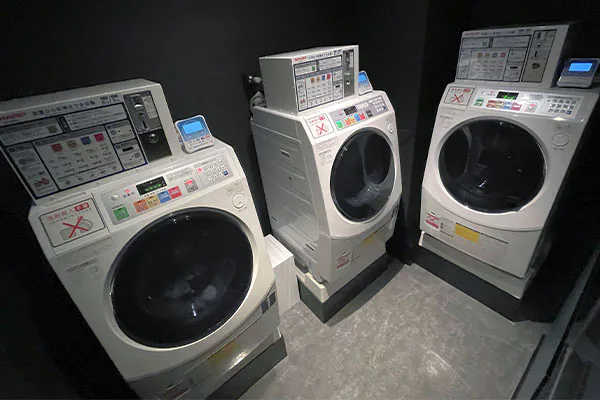
Coin laundry | 27F, 24 hours | Useful when Tokyo is the middle of a multi-city itinerary and you want to reduce clothing carried to the next stop |
Luggage storage | Before check-in and after checkout at 27F Guest Relations | Useful if the last Tokyo hours remain around Marunouchi, Nihombashi or Ginza |
Current view risk | Train View Twin page warns that north-side rooms may be affected by nearby construction cranes and daytime noise | Recheck the latest official notice if the rail view is why you are paying more |
The night before an early Shinkansen: what does the hotel actually save?
Tokyo Station’s problem is not a shortage of trains. It is scale. For a first-time visitor, “I have reached Tokyo Station” and “I am standing at the Nihombashi side I need” are different milestones. The hotel’s official access page says it is directly connected to JR Tokyo Station’s Nihombashi Exit and separately lists the Shinkansen Nihombashi Exit at about one minute and Yaesu North Exit at about two minutes. The hotel connection can also reduce outdoor luggage dragging in bad weather.
The one-minute figure must not be inflated into “one minute from your room to the Shinkansen platform.” You still leave the room, wait for hotel elevators, reach the station connection, enter Tokyo Station and walk to the correct platform. What the hotel genuinely removes is the highest-uncertainty segment: finding Tokyo Station from an external hotel, choosing the right side and moving luggage through streets or unfamiliar exits.
This is why I value the location most for an early departure with older travellers, a stroller or multiple large cases. You complete the “find the station and find the correct side” problem the night before. The next morning becomes a much narrower task. If your departure day is a peak holiday period, however, hotel location does not solve reserved-seat availability, oversized-luggage rules or a sold-out preferred train. Accommodation can remove access friction; it cannot replace transport planning.
If airport arrival is the harder problem than the next morning, compare the transfer logic in the Haneda Airport Hotel Comparison. And if the trip is staying fully inside Tokyo instead of transferring onward, the station-first value should be compared with a base such as NOHGA HOTEL UENO TOKYO, where the decision is built around Keisei/JR/Metro arrival routes and luggage rather than Shinkansen departure.
Pair the Tokyo Station decision with your actual base
A five-night Tokyo stay does not automatically become efficient because it begins beside Tokyo Station. If several days and nights are in Shinjuku, compare Tokyu Stay Shinjuku Eastside or the wider NOHGA Ueno vs HOTEL GROOVE Shinjuku base comparison. Tokyo Station earns its premium when the routes you actually repeat start or finish there.
Room choice: buy the route first, then decide whether the view matters
The easiest room-selection mistake is treating “high floor” and “rail view” as synonyms. They are not. The hotel currently sells specifically named Station Side Queen and Train View Twin categories while also offering no-view rooms. If tomorrow morning’s Shinkansen is the entire reason for staying, the cheapest room that gives you the same Tokyo Station connection may already solve the real problem. If the view itself is part of the trip, book the named category rather than assuming every room on floors 27–34 faces the tracks.
↔ Scroll table left or right
Room direction | Official area / positioning | How I would choose |
No View / inward-facing | Around 17m², 1–2 guests | Solo or one transfer night: first check whether this is the cheapest way to buy the same Tokyo Station route |
Queen / Station Side | Around 18–20m² | Compare when Tokyo Station-side views matter but you still want to limit the room premium; be conservative with two large cases |
Train View Twin | 25m², 1–2 guests | More logical for two travellers with large luggage or when the railway view itself is part of the stay |
Executive Corner Twin | 30m², 1–2 guests | Pay for the extra living space on a longer stay; it is not a requirement for a one-night early-train transfer |
For two travellers with two large hard-shell cases, I would compare the 25m² Twin tier instead of assuming a 20m² Queen will be comfortable simply because the hotel is convenient. That does not mean a 20m² room cannot physically hold two cases. It means the official area and photos do not prove that two specific 28-inch cases can remain fully open while leaving a generous walkway, so the article should not manufacture a guarantee.
For a Tokyo hotel where the room-size trade is more explicitly about a 26m² high-floor product rather than station transfer, compare Hotel Century Southern Tower. For an Ueno base where luggage and station route matter more than a room view, compare Mitsui Garden Hotel Ueno vs NOHGA
Train View has a current construction risk you should know before paying extra
The current official Train View Twin page includes a warning that north-side guestrooms may have their view affected by nearby construction cranes. It also notes the possibility of daytime construction noise and says sales of affected north-side Train View rooms may be adjusted depending on project progress. That means “Train View” remains a named room category, but the exact daytime environment and visible area are not fixed forever.
If the room is only a transfer night before a Shinkansen, I would not voluntarily pay a large premium for a view carrying extra uncertainty. If you are travelling with a child who loves trains, photographing rail operations or planning to spend real time at the window, the view can be part of the trip—but recheck the latest official warning before booking. A current construction notice matters more than an old review photo.
The same principle applies to event and venue hotels in Tokyo: book the feature you will actually use, not the label. Tokyo Dome Hotel is valuable when deleting the post-event train ride matters, while Mitsui Garden Hotel Jingugaien Tokyo Premier is built around a different event-base and public-bath trade-off. The named feature should match the actual itinerary.
If I stayed one night before a transfer, this is how I would use it
I would treat this as a transfer hotel rather than a sightseeing hotel. Return to Tokyo Station or Marunouchi in the evening, eat nearby, organise the next day’s tickets and luggage, then deal with laundry if the trip is continuing for several more days. The 27F coin laundry runs 24 hours, so washing does not have to compete with the next morning. If the Shinkansen leaves late enough, TENQOO breakfast starts at 06:00. If the train leaves too early, I would skip hotel breakfast and protect the station buffer instead.
This timeline explains why I like the hotel more for one strategic night than for an automatic five-night Tokyo base. On a one-night transfer, the 17–20m² downside happens once, while the Nihombashi Exit advantage is redeemed immediately after checkout. On five nights, room size affects you every day, shopping accumulates in the same small space, and you may use the Shinkansen connection only once. Repeated use should decide which feature deserves the premium.
Facilities matter only when the timetable gives you a chance to use them
↔ Scroll table left or right
Facility | Current condition | Value before an early transfer |
Coin laundry | 27F, 24 hours | High when Tokyo is the middle of a longer Japan trip; process clothes before moving on |
Breakfast | TENQOO 06:00–10:30 | Medium to high if the train leaves late enough; otherwise skip it rather than compressing station time |
Gym | 28F, 06:00–23:00 | Low to medium for a one-night transfer; more relevant on a longer stay |
Luggage storage | Before check-in / after checkout at Guest Relations | High if the final Tokyo hours stay around Marunouchi, Nihombashi or Ginza |
The 24-hour laundry is particularly useful before the trip continues to another city. You can reduce the amount of dirty clothing carried onto the next leg and keep large bags organised before the morning transfer. If Tokyo is instead the final stop, luggage storage may be the more useful facility: leave bags at 27F Guest Relations after checkout, spend a few more hours around Marunouchi, Nihombashi or Ginza, then return before the airport or train departure.
For a Tokyo stay where a hotel public bath is the feature you are more likely to use than 24-hour laundry, compare ONSEN RYOKAN YUEN SHINJUKU. Different facility lists solve different trip problems; the one you actually use should drive the room premium.
Put Tokyo Station into the whole itinerary: who really saves time?
↔ Scroll table left or right
Trip scenario | What the hotel gives you | Main trade-off |
Shinkansen out of Tokyo next morning | Direct Nihombashi Exit connection; the hotel-to-station route is already solved the night before | Rooms are not automatically large; a view upgrade may be unnecessary for a one-night transfer |
Tokyo to Hakone / Fuji direction | Tokyo Station is a major interchange and a useful place to organise luggage forwarding and onward travel | The actual route may not be Shinkansen all the way; recalculate from the specific destination |
Tokyo city stay for 4–5 nights | Tokyo, Marunouchi and Nihombashi are convenient; covered access is useful in rain | Repeated Shinjuku/Shibuya travel and 17–20m² room pressure can accumulate |
Older travellers / large luggage | Less outdoor luggage dragging and lower risk of choosing the wrong side of Tokyo Station | Still allow hotel elevator time, station walking and the actual platform distance |
The hotel works especially well when Tokyo is only one stage in a larger Japan trip. Stay one or two nights, then move to Nagoya, Kyoto, Osaka, Tohoku or another Shinkansen destination. The final night beside Tokyo Station acts almost like pre-positioning for the next morning. If the next stop is Hakone or the Fuji area, the route should still be recalculated from the exact destination; Tokyo Station is a major hub, but not every onward trip is automatically simplest from the same platform or train type.
If the rest of the Tokyo stay is built around seasonal sightseeing rather than intercity travel, a route such as the Tokyo Autumn Leaves Day Trip by Train shows how much can be done by urban rail without needing Tokyo Station as the hotel base every night. The right base is the one that reduces the repeated movement, not the one attached to the biggest station.
What are you giving up by staying here?
The first trade-off is space for transfer certainty. A 17–20m² room can be highly efficient for one traveller staying one night before an early train. Two people staying four or five nights, each with large luggage and shopping, experience the same floor area very differently. For a multi-night stay I would compare the 25m² tier and then re-open the location question entirely.
The second trade-off is view for predictability. Station Side and Train View are real named products, but the current Train View construction warning adds uncertainty to the very thing you may be paying extra to see. If the view is secondary, buy the route first. If the view is the purpose, verify the exact room and the latest construction notice again before paying.
The third trade-off is Tokyo Station’s location premium for avoiding one mistake. A traveller with time can often walk five or ten minutes to another hotel and save money. A traveller leaving early with older family members and several cases may rationally pay more to remove one wrong-exit decision, one outdoor luggage segment or one rain-exposed walk. That does not make the hotel globally better; it makes the trip context more expensive and therefore makes certainty more valuable.
If the question is whether to pay for room area rather than station certainty, compare Mitsui Garden Hotel Ueno vs NOHGA or Hotel Century Southern Tower. Those comparisons make the room-versus-location exchange more visible.
Compare the same room before choosing a booking platform
Fix the same date, exact room name, guest count, breakfast inclusion, taxes and cancellation deadline before comparing the three platforms. Station Side, Train View and No View create different stay outcomes, so do not compare only the lowest price shown on each homepage. The order below is not a price ranking.
Booking.com: compare Hotel Metropolitan Tokyo Marunouchi rooms
Trip.com: compare rooms and breakfast plans
Agoda: compare the same dates and room type
Final verdict: would I book Hotel Metropolitan Tokyo Marunouchi?
↔ Scroll table left or right
Decision | Core conditions |
I would book | Early Shinkansen next morning, first-time Tokyo Station, older travellers or large luggage. You are buying the certainty of solving the Nihombashi-side station approach the night before, and that value is redeemed immediately after checkout. |
I would reconsider | Two people staying several nights with substantial luggage and mostly Tokyo-city plans. Compare the 25m² tier and other Tokyo bases to see whether the room-space cost is worth the station premium. |
I would skip | No intercity transfer, the trip stays mainly around Shinjuku/Shibuya/Ikebukuro, or a large private room is non-negotiable. Tokyo Station may not be the accommodation investment that best matches the repeated itinerary. |
My final positioning is simple: Hotel Metropolitan Tokyo Marunouchi does not win by giving you a huge room. It wins by deleting the need to solve “how do I get back to the correct side of Tokyo Station tomorrow morning?” The earlier the departure, the more luggage you carry and the less familiar you are with Tokyo Station, the more valuable that certainty becomes.
Hotel Metropolitan Tokyo Marunouchi FAQ
Is it really directly connected to Tokyo Station’s Nihombashi Exit?
Yes. Official access information says the hotel is directly connected to JR Tokyo Station’s Nihombashi Exit. It lists the Shinkansen Nihombashi Exit at about one minute and Yaesu North Exit at about two minutes. These are exit-to-hotel reference times, not room-door-to-platform times.
Is it worth staying the night before an early Shinkansen?
This is the scenario where I value the hotel most. You solve the route from the hotel to the correct side of Tokyo Station the night before, so the morning is reduced to checkout, hotel elevators, station entry and platform movement. Large luggage and first-time Tokyo Station use make that certainty more valuable.
How large are the rooms, and what should two travellers with large luggage choose?
Current room types range from roughly 17m² inward-facing rooms to 20m² Queen, 25m² Twin and 30m² Executive Corner Twin options. For two large suitcases, I would compare the 25m² tier, but without exact furniture-clearance measurements I would not guarantee that two specific 28-inch cases can remain fully open.
Does a high floor guarantee a Tokyo Station or train view?
No. The hotel has explicitly named Station Side Queen and Train View Twin categories and also sells No View rooms. If the view is important, verify the exact room category rather than assuming every high-floor room overlooks the tracks.
Is Train View currently affected by construction?
The current official Train View Twin page warns that north-side rooms may be affected by nearby construction cranes and daytime construction noise, and sales may be adjusted as work progresses. Recheck the latest official warning before paying a premium for the rail view.
Does the hotel have 24-hour laundry?
Yes. Current facility information lists coin laundry on the 27th floor and says it is available 24 hours. This is particularly useful if Tokyo is the middle of a longer multi-city trip.
What time does breakfast start?
TENQOO breakfast is currently listed from 06:00 to 10:30, with last entry at 10:00. Whether that fits an early train depends on the actual departure time, checkout and the station buffer. If the timing is tight, protect the train rather than forcing in breakfast.
Can the hotel store luggage before check-in and after checkout?
Yes. The official FAQ says luggage can be stored at Guest Relations on the 27th floor before check-in and after checkout. This is helpful when the last Tokyo hours remain around Marunouchi, Nihombashi or Ginza.
40 Best Things to Do in Tokyo in 2026 — What’s Actually Worth Your Time by Area
teamLab Planets Tokyo Review: Is the Barefoot Water Experience Worth It?
Miyako Hotel Hakata: Is a Direct Hakata Station Connection Worth the Premium?
Is Oirase Keiryu Hotel Worth It? Rooms, Access, Dining and City-Hotel Alternatives
Hotel Torifito Hakata Gion Review: Is a 23 m² Twin and Public Bath Worth Leaving Hakata Station?
Sources
Hotel Metropolitan Tokyo Marunouchi official website
Official Tokyo Station access information
Official Queen room information
Official Twin / Triple room information
Official Train View Twin information and current construction warning
Official facilities information
Official breakfast information
Tekken Sekkei Sapia Tower project page
Room types, rates, availability and cancellation terms can change by date. This article may contain affiliate links; ValueNavi may earn a commission from qualifying bookings at no additional cost to you.