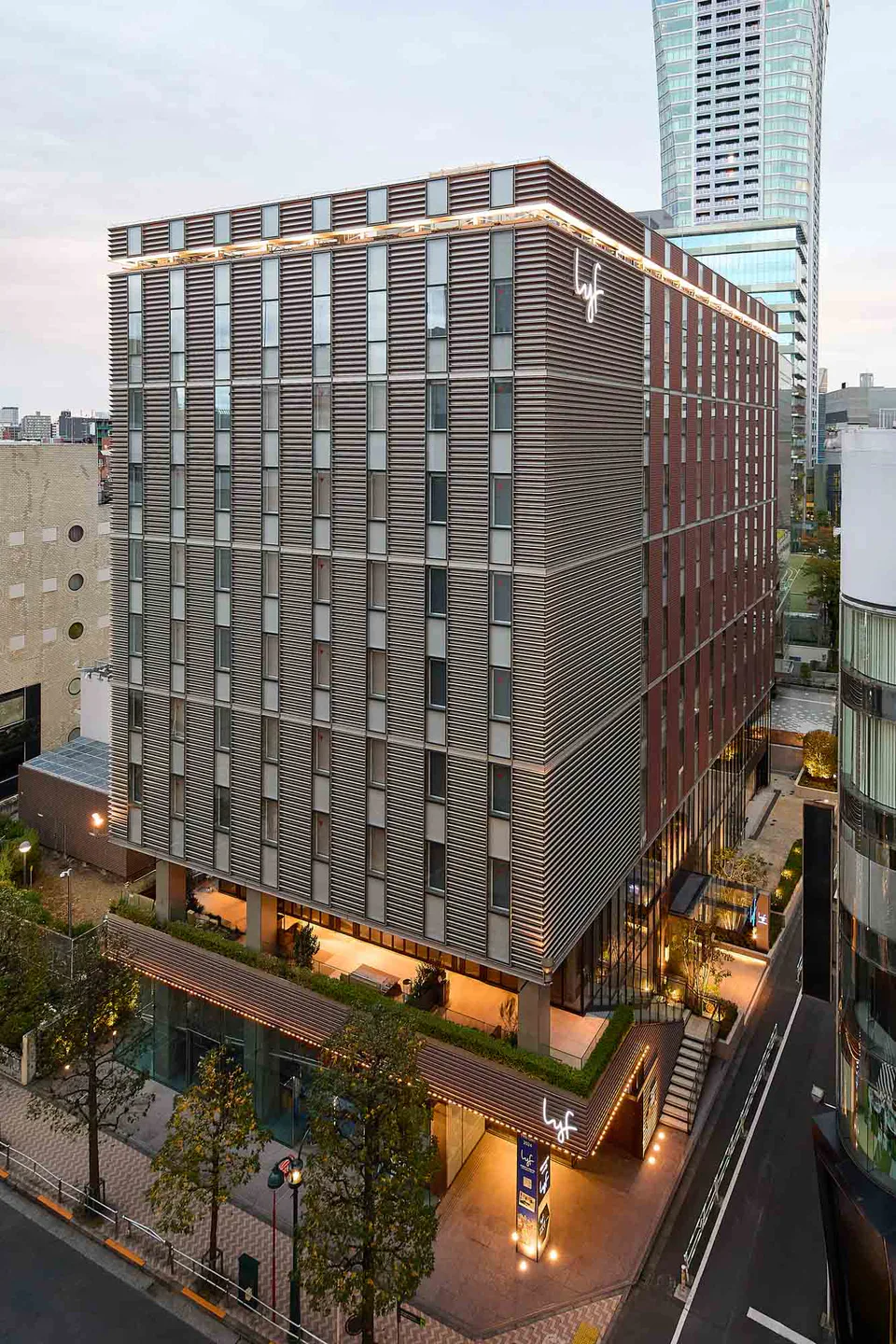
lyf Shibuya Tokyo is worth the 12m² room trade-off when you repeatedly use the Udagawacho location during the stay—not merely when you like the idea of sleeping in Shibuya. The hotel sits directly opposite Shibuya PARCO, and its official access guidance places both JR Shibuya Station’s Hachiko Exit and the A6b exit in the PARCO direction at roughly a seven-minute walk. That is valuable if you shop, return to drop bags, reset and go out again in Shibuya two or three times. It is much less valuable if you leave early for Disney, Hakone or long day trips and come back only to sleep.
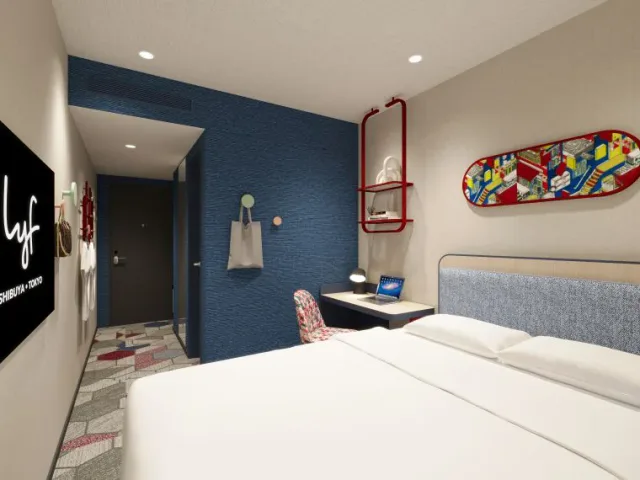
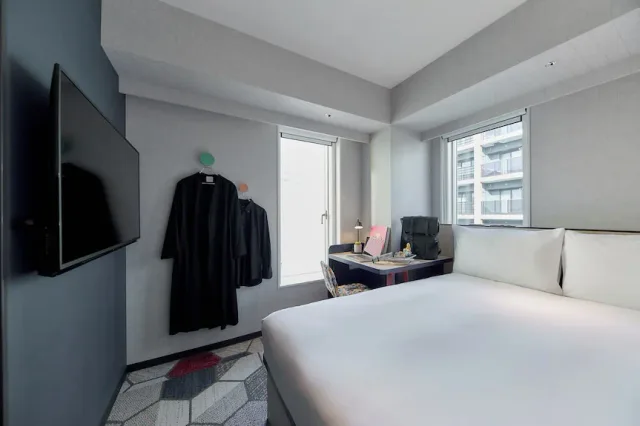
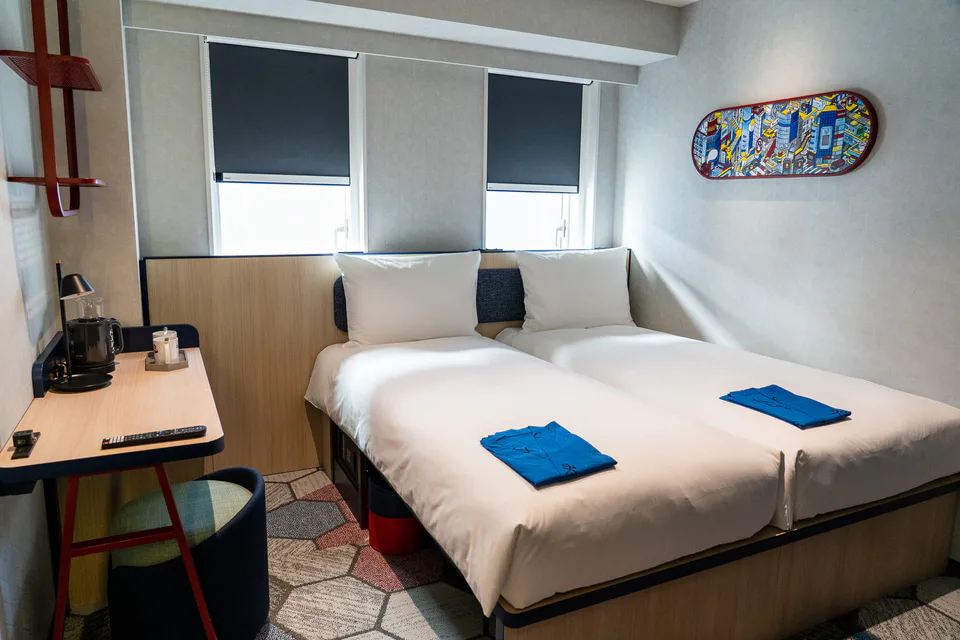
The room side of the equation is equally clear. One of a Kind and One of a Kind Plus are 12m²; Side by Side is 13m². For a solo traveller with one suitcase, that can be a rational price for location. For two long-haul travellers with two large cases, shopping bags and several nights of unpacking, the same 12–13m² becomes a repeated friction cost every evening.
If Shibuya itself is not yet the right base, settle Shinjuku vs Shibuya before comparing hotel rates. A great room deal does not repair the wrong neighbourhood.
ValueNavi decision table: when does lyf Shibuya make sense?
↔ Scroll table left or right
Your trip pattern | ValueNavi verdict | Why |
Solo, light luggage, several Shibuya evenings | Strong fit | You use the neighbourhood repeatedly while the smallest room is occupied mostly for sleep |
Couple, one suitcase, short three-night stay | Good if Shibuya is the anchor | The room is compact but the location can pay back several times |
Two travellers, two large suitcases, heavy shopping | Compare larger rooms or another hotel | The floor-space problem repeats every night and grows as purchases accumulate |
Four friends considering one room | Compare All Together / Two of a Kind carefully | 22–24m² can sleep four, but occupancy is not the same as four-adult comfort |
Disney / Hakone / Kamakura / day-trip-heavy stay | Usually weak value | You pay for central Shibuya but spend most usable hours elsewhere |
Remote work or lots of private-room downtime | Mixed | CONNECT helps, but shared workspace does not make a 12m² private room larger |
The ValueNavi location-utilisation test: count returns, not nights
For this hotel, I would not ask “How many nights are you staying?” first. I would ask how many times will the location actually change your day?
If you spend an afternoon around PARCO, Center-gai, Miyashita Park or Harajuku, return to the hotel to drop shopping, then go back out for dinner, the address has been used twice in one day. Repeat that rhythm on two or three days and the central location has real utility.
Now compare the opposite pattern. You leave at 07:30 for Disney, return at 22:30 and sleep. The next morning is Hakone. The following day is Kamakura. The hotel may still be fashionable and central, but most of the location premium is idle because your itinerary never uses the mid-day return advantage.
↔ Scroll table left or right
Number of useful Shibuya returns during the stay | How I read the location value | What to challenge |
0–1 | Low | You may be paying for an address you mostly see at bedtime |
2–3 | Meaningful | Dropping bags or resetting before dinner starts to justify the location premium |
4+ | High | The neighbourhood functions almost like an extension of the hotel |
This is not a hotel metric published by lyf. It is a ValueNavi planning test: the more often the address removes a journey or lets you reset between activities, the more reasonable the private-space compromise becomes.
Seven minutes from Shibuya Station is useful—but it is not platform-to-lobby time
The official location guidance currently gives roughly seven minutes on foot from JR Shibuya Station’s Hachiko Exit and roughly seven minutes from the A6b exit in the PARCO direction. That is far more useful than a vague “near Shibuya Station” label because it tells you which side of the station the hotel actually belongs to.
But international arrivals should still add station friction. Shibuya is a major interchange with multiple operators, levels and exits. A traveller stepping off a local train with a backpack is not solving the same problem as a traveller arriving from Narita or Haneda with two large cases.
ValueNavi arrival rule: treat the seven-minute figure as the street-side walk after you have reached a useful exit, not as a guaranteed train-door-to-hotel time.
If airport access and luggage dominate your first and last day, compare Ueno vs Shinjuku and the broader Tokyo first-time stay guide. An open-jaw itinerary—Narita in, Haneda out, or Tokyo in and Kansai out—can make one airport journey much less important than the district you use every night.
12m² is not automatically too small; it depends on how much of your life stays in the room
lyf currently lists One of a Kind and One of a Kind Plus at 12m² for up to two guests, and Side by Side at 13m² for up to two. That is compact even by Tokyo standards, but room size alone still does not decide the stay.
For a solo traveller, one suitcase can usually be treated as a storage problem. For a couple with two large suitcases, it becomes a circulation problem. Add shopping bags and the room starts carrying three jobs at once: bedroom, wardrobe and luggage store.
The decisive question is how many hours you expect to spend privately in the room. If the room is for shower, charging and sleep, 12m² can be entirely rational. If you want to work for three hours, eat takeaway, sort purchases and keep two suitcases open, every extra night repeats the compromise.
↔ Scroll table left or right
Private-room load | 12–13m² fit | Reason |
One person + one suitcase + mostly out | Good | The room has one main job: sleep |
Two people + one shared suitcase | Manageable | Less luggage competition, but personal-space tolerance still matters |
Two people + two large suitcases | High friction | Opening, packing and moving around become repeated tasks |
Heavy shopping over four or five nights | Gets worse with time | The room does not expand as bags accumulate |
Private-room work / long evenings inside | Weak | Shared spaces help, but do not replace private floor area |
Four-person rooms solve occupancy better than they solve privacy
The larger room types change the calculation. All Together is currently listed at 22m² for up to four guests; Two of a Kind is 24m² for up to four. The latter is a two-bedroom configuration, which is materially different from simply fitting four bodies into one small studio.
For a group of friends, the headline advantage is obvious: one central Shibuya booking can divide the room cost across more people. But a four-person stay has its own hidden cost—bathroom sequencing, luggage volume, different sleep times and getting ready at the same time.
ValueNavi group rule: compare the room as a four-person routine, not as “price ÷ four.” If one person showers slowly, one works late and everyone has a large suitcase, two rooms elsewhere can beat one cheaper room in central Shibuya even when the per-person nightly rate looks worse.
The shared spaces are the operating system of the small-room model
lyf’s common areas are not incidental amenities. The official property page lists BOND as the social kitchen, WASH & HANG as the laundry area, CONNECT as the coworking/social space and BURN as the gym. The current guest cheat sheet states that BURN operates 24 hours and the BOND IH stove is available from 06:00 to 23:00.
These spaces let activities leave the bedroom. You can work in CONNECT instead of balancing a laptop beside luggage. You can cook something simple in BOND instead of treating every meal as a restaurant decision. Laundry lets a long-haul traveller pack lighter.
But the shared-space model has a clear boundary: it expands functional space, not private space. If what you want after a long day is a private sofa, a larger bathroom or enough floor area to unpack without choreography, the common kitchen does not solve that.
↔ Scroll table left or right
Shared facility | What it can replace | What it cannot replace |
BOND | Some in-room eating / basic food preparation | Private dining space |
WASH & HANG | Extra clothes in the suitcase | Luggage floor area |
CONNECT | Laptop work in the bedroom | Private office space |
BURN | Looking for an external gym | Any room-size problem |
Shopping is the hidden variable most hotel comparisons miss
A 12m² room can feel perfectly workable on night one and much less workable on night four. International visitors often arrive with larger luggage than domestic weekend travellers, then add clothing, cosmetics, electronics or character goods during the trip. Shibuya is exactly the kind of neighbourhood where shopping volume can increase quickly.
That makes lyf’s best feature—easy returns to drop purchases—also the thing that can expose its biggest weakness. Every successful shopping return puts more physical objects into a compact room.
If shopping is a major purpose of the stay, I would ask two questions before booking: How many useful bag-drop returns will the location save? and where will those bags live once they reach the room? If you can answer the first but not the second, a slightly less central hotel with more floor area may produce the better five-night stay.
Day-trip-heavy travellers should challenge the PARCO premium
lyf is easiest to defend for Shibuya, Harajuku, Omotesando and west-central Tokyo days. It gets harder to defend when the itinerary repeatedly leaves the neighbourhood.
A Disney day uses almost none of the central-Shibuya return value. A Hakone transfer day uses Shibuya mainly as a starting point rather than a place to re-enter during the day. A Kamakura day can be transport-efficient from Shibuya, but again the hotel’s hyper-local PARCO position may add little once you leave.
This is where English-speaking long-haul travellers should be especially careful. A Tokyo hotel often sits inside a broader 10- or 14-day Japan itinerary. If Shibuya is only one evening among several regional day trips, paying for a neighbourhood you barely use can be less rational than choosing a calmer or more transport-oriented base.
Late arrival: the building-access rule is not the same as a late-check-in promise
The official property page currently lists check-in from 15:00 and checkout before 11:00. The current guest cheat sheet says the hotel entrance is locked from 00:00 to 05:00 and in-house guests use their card key to enter.
That tells an existing guest how to re-enter the building after midnight. It does not prove that a new guest can arrive unannounced at any hour and complete check-in. If a late international flight could put you at the hotel after midnight, confirm the late-arrival procedure directly with the hotel or through the exact booking channel before travel.
This is a good example of a common hotel-planning error: “24-hour environment” and “guaranteed late arrival without notice” are not the same fact.
Compare the exact room—not just the hotel name
Because the room types differ so much, a price comparison is only useful after fixing the product. One of a Kind 12m², Side by Side 13m², All Together 22m² and Two of a Kind 24m² solve different guest-count and privacy problems.
When comparing Booking.com, Expedia or another channel, lock the same room type, guest count, bed setup, taxes, payment timing and cancellation deadline. A cheap 12m² studio on one site is not “the same hotel price” as a 24m² two-bedroom option on another.
Booking.com: compare the exact lyf Shibuya Tokyo room
Expedia: compare the same room and cancellation terms
When I would book, compare or skip
↔ Scroll table left or right
Decision | Conditions | Reason |
Book | Solo/light luggage, multiple Shibuya returns, evenings in the neighbourhood, room mainly for sleep | The location is used repeatedly and the room-size compromise stays contained |
Compare | Couple with larger luggage, four or five nights, significant shopping or work time | The location still has value, but the small-room friction can compound |
Skip | Day-trip-heavy itinerary, little Shibuya nightlife, two large suitcases kept open, private-room comfort is important | You are paying for the wrong side of the trade-off |
Final verdict: this is a location-and-routine hotel, not a room-first hotel
ValueNavi’s default is to book lyf Shibuya Tokyo when the itinerary uses central Shibuya repeatedly enough that the hotel becomes a practical reset point. If you can drop bags, recharge and go back out two or three times during the stay, the PARCO-facing address does real work.
I would be much more cautious for two travellers with large luggage, heavy shopping or several room-based evenings. Shared facilities improve the operating model, but they do not change the published 12–13m² floor area. The hotel wins when neighbourhood utility matters more than private-room utility; it loses when the room itself has to carry too much of the trip.
Premier Hotel -CABIN- Asahikawa: Is the Overnight Hot Spring Worth a 14m² Room?
THE LUIGANS Spa & Resort Fukuoka: Is a 33m² Sea-View Room Worth Leaving Hakata for One Night?
MiraCosta Harbor Room vs Balcony Room: Is 60 m² Worth the Upgrade?
Mitsui Garden Hotel Fukuoka Gion: Is the 26.6 m² Triple Room Worth It for 3 Adults?
Cross Hotel Osaka: Is a 1-Minute Dotonbori Location Worth the Premium?
Sources
Room configurations, facility rules and access guidance can change. Recheck the hotel’s current page and your exact room conditions before booking.