
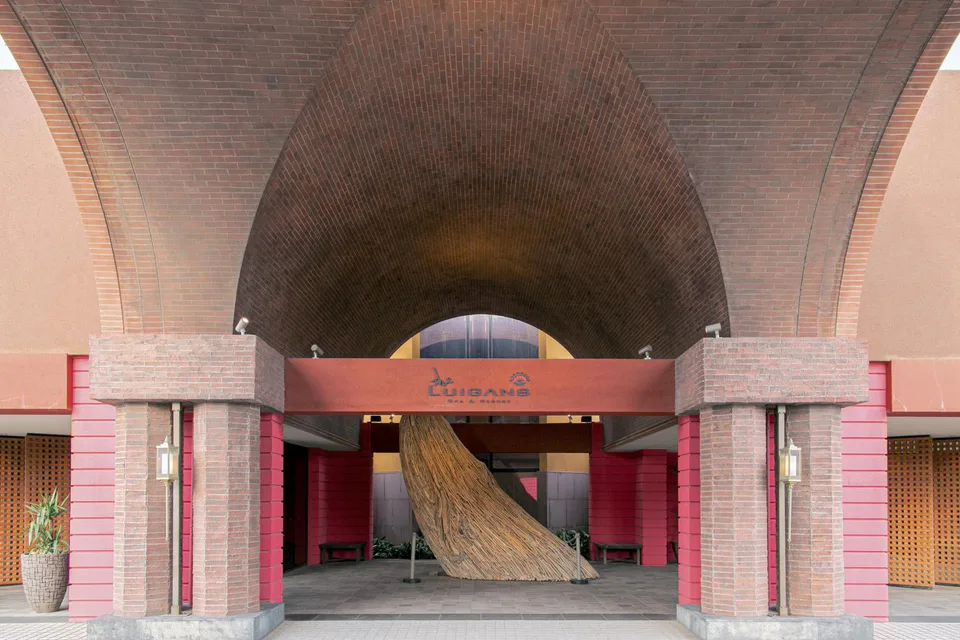
If your original plan was to spend four nights in Fukuoka around Hakata or Tenjin, I would not move the entire stay to THE LUIGANS Spa & Resort simply because the hotel has sea views, a seasonal pool and a resort atmosphere. The more useful question is whether one of those city nights should become a full Uminonakamichi resort night. The trade works only when Uminonakamichi itself becomes part of the itinerary rather than the hotel acting as a distant bed that you commute to from central Fukuoka every evening.
I treat THE LUIGANS Spa & Resort Fukuoka as a one-night itinerary product rather than a normal city hotel. Current hotel information places it in the Uminonakamichi area, with guest rooms oriented toward the coast; the common Grand Twin is 33m². The same location creates real constraints: the free Hakata shuttle cannot be reserved and works on a first-come, first-served basis, while the hotel explicitly warns that there are no convenience stores, drugstores or ordinary shops within easy walking distance. Those are not footnotes. They decide whether the resort night feels relaxing or awkward.
THE LUIGANS Spa & Resort Fukuoka: the 30-second decision
↔ Scroll table left or right
Verdict | When it works |
I would book | You have at least 3–4 Fukuoka nights, can give one full night to Uminonakamichi, can arrive early enough for shuttle/JR timing, and the next day also stays around the area. |
I would compare again | You mainly want a larger room or sea view but still want late dinners in Tenjin/Nakasu, or your flight/train timing makes the shuttle awkward. |
I would skip | Every morning starts with an early train from Hakata, every evening ends late in central Fukuoka, or the free shuttle is the only reason the hotel looks convenient. |
The hotel is really selling the chance to extend a Uminonakamichi day into a night. The decision is whether one hotel move, a more fixed transport rhythm and fewer spontaneous late-night shopping options are worth the room space, coastal setting and—in summer—the chance to use the pool as part of the stay rather than as a brochure feature.
Before moving any night out of central Fukuoka, compare the base logic in Where to Stay in Fukuoka: Hakata or Tenjin and the pacing in the Fukuoka 3-Day Itinerary. If the city itself already feels compressed, adding a hotel move usually makes the plan worse rather than more special.
THE LUIGANS Spa & Resort Fukuoka snapshot: the conditions that change the decision
↔ Scroll table left or right
Factor | Current verified detail | Trip impact |
Location | Saitozaki / Uminonakamichi, Higashi-ku, Fukuoka | Not a Hakata/Tenjin substitute; strongest when Uminonakamichi is a main itinerary day |
Free shuttle | From HEARTS Bus Station Hakata; first come, first served; no reservations; may be full | Free does not mean turn-up-anytime transport. Timetable and seat risk matter. |
JR | About 6 minutes on foot from Uminonakamichi Station | A useful fallback when shuttle timing fails, but you manage transfers and luggage yourself |
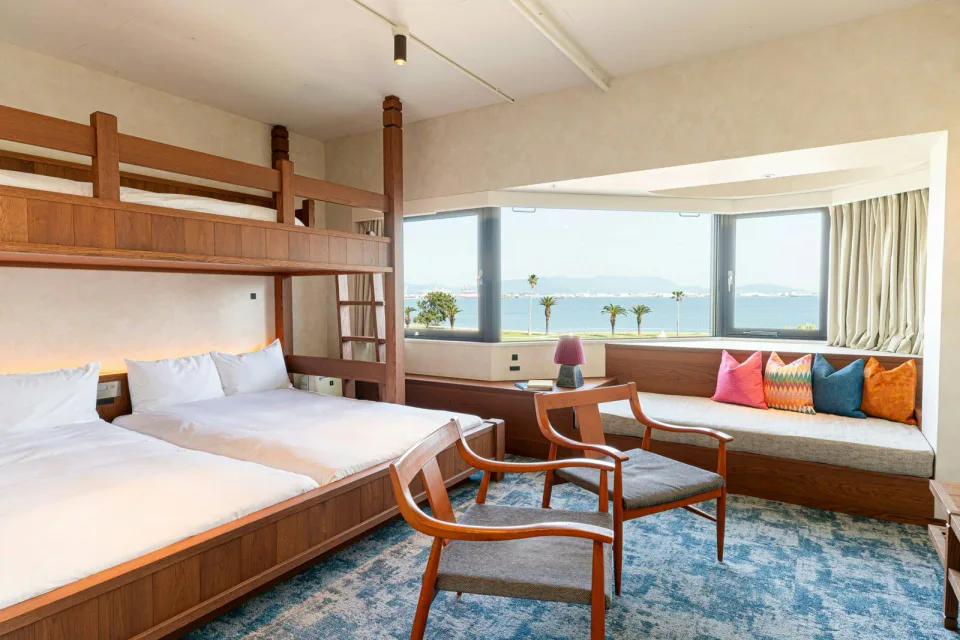
Guest rooms | Hotel positions rooms toward the coast; Grand Twin is 33m² | Coastal views are part of the proposition, but floor, angle and weather still affect the actual view |
Nearby shopping | No convenience store, drugstore or ordinary shop in easy walking range | Buy drinks, snacks and essential items before entering the resort zone |
2026 daytime pool | Jul 1–Sep 30, 09:00–17:00; 12:00–12:30 maintenance; free for staying guests | Only count the pool in the room value when your date and arrival schedule actually let you use it |
Arrival reality: the free shuttle is not a guaranteed Hakata Station transfer
The easiest mistake is to see “free shuttle from Hakata” and mentally set the transport friction to zero. The official pickup point is HEARTS Bus Station Hakata, and the hotel explicitly distinguishes it from the more familiar Hakata Bus Terminal. You still need to find the right pickup point. More importantly, seats cannot be reserved and boarding is first come, first served; the hotel warns that a full bus can leave you unable to board.
I would treat the shuttle as a scheduled service that can remove one transfer, not as an on-demand hotel bus. Timetables can change by date and season, so a booking made months ahead should always be followed by a fresh schedule check. If flight timing makes the shuttle uncertain, I would write the JR route into the plan before travel rather than inventing a perfect connection on arrival day.
JR gives you a second route: reach Uminonakamichi Station and then walk about six minutes according to current hotel guidance. The final walk is not long on paper, but heat, rain, a stroller or two large suitcases change the physical cost. The real arrival choice is shuttle seat risk versus rail transfers plus the final walk—not “free transport versus paid transport.”
Put that choice beside the Fukuoka Transport Guide. If your trip also has repeated regional rail days, the transport argument for moving out of Hakata becomes weaker even if the resort itself looks better.
The real cost: you cannot use the hotel like a city-centre base at night
The most useful—and easiest to overlook—line in the hotel’s access information is that there are no convenience stores, drugstores or general shops within easy walking distance. If you suddenly need water, cold medicine, contact-lens supplies or snacks late at night, you should not assume the answer is one block away. If I were taking the shuttle from Hakata, I would complete necessary shopping before boarding.
It also changes dinner. In Hakata, Tenjin or Nakasu, dinner can remain undecided until 19:00. At a Uminonakamichi resort, the evening works better when the food plan and return rhythm are settled before you enter the hotel zone. That is not the same as saying the hotel has no dining. It means you give up the city’s ability to walk out and choose a second or third option late at night.
If Fukuoka nights are a major part of the trip, compare the opportunity cost against the Fukuoka Yatai Guide and the Fukuoka Mentaiko Guide. A quiet resort evening is a feature only when you actually want to stop choosing restaurants and neighbourhoods for the night.
Room decision: 33m² is generous, but upgrade only for a real use case
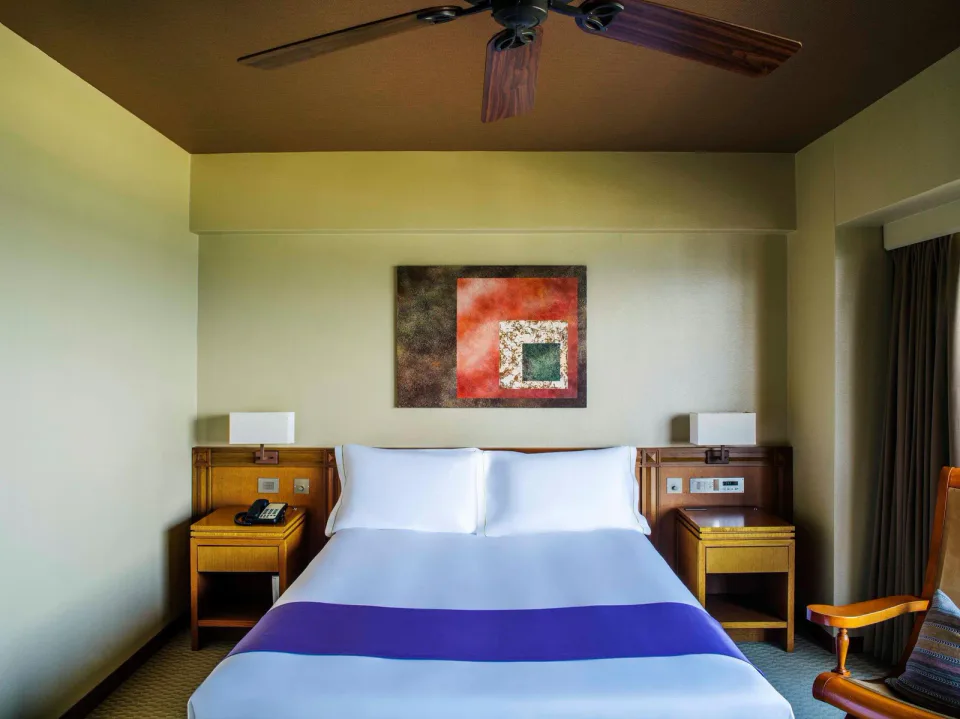
The room data is specific enough to make a real choice. Grand Twin is 33m² for up to three guests. Grand Balcony Twin is 34m² for up to two. Grand Deluxe Twin is 44m² for up to five. The Cabin categories opened in 2025 include Grand Cabin at 33m² for up to five and Grand Superior Cabin at 42m² for up to six. These figures verify floor area and published occupancy; they do not prove that five or six travellers can all spread luggage comfortably at once.
↔ Scroll table left or right
Room | Published area / occupancy | How I would use it |
Grand Twin | 33m² / up to 3 | Strong two-person baseline when room downtime is part of the resort value; three guests should still verify bedding |
Grand Deluxe Twin | 44m² / up to 5 | More persuasive for larger groups; do not pay only for the word “Deluxe” without checking the actual sleeping plan |
Grand Balcony Twin | 34m² / up to 2 | The balcony premium makes more sense when you have daylight room time; poor value for a late-arrive/early-leave stay |
Grand Cabin | 33m² / up to 5 | Family option worth checking, but five-person occupancy makes bedding and luggage layout especially important |
Grand Superior Cabin | 42m² / up to 6 | Clearer group-space option, but confirm bedding, child conditions and the actual rate for your date |
For two people staying one night, I would not automatically move from 33m² to 44m² because the larger number looks more luxurious. If a 33m² Grand Twin already gives you enough room to unpack, rest and use the coastal setting, the upgrade should be justified by actual time in the room or a group requirement. Published maximum occupancy is not a promise that everyone’s luggage and preferred sleeping setup will feel comfortable.
The core return: sea views need daylight room time to have value
The hotel currently positions its rooms toward the coast. That matters, but it should not be stretched into “every room has the same completely unobstructed sea view.” Floor, room category, window angle, weather and season can all change the real experience. The responsible conclusion is that the coastal orientation is part of the product—and then ask whether you will actually be in the room while there is something to see.
Arrive at 20:30 and leave at 07:30, and the sea-view value can collapse into a booking-page photo. Arrive in the afternoon, spend real time in the room and avoid an early next-day departure, and the view becomes part of what you actually bought. This is why I would not squeeze THE LUIGANS into a fast Kyushu point-to-point itinerary where the hotel is only used for sleep.
If the trip continues deeper into Kyushu, first calculate the transport cost with Fukuoka to Yufuin: Train, Bus or Rental Car and the broader Fukuoka–Hita–Yufuin–Beppu 3-Day Itinerary. A resort split that forces an unnecessary return to Hakata before a regional departure can erase much of the relaxation you were trying to buy.
2026 summer pool: only count it when the date and timeline match
For 2026, the daytime pool season is published as July 1 through September 30, from 09:00 to 17:00, with a 12:00–12:30 maintenance period. Staying guests can use it free, and the hotel states that guests may use the daytime pool from 09:00 on check-in day until checkout. That is much more useful than the generic phrase “the hotel has a pool”: it means a 15:00 room check-in does not necessarily prevent you from using the pool earlier that day.
The pool is seasonal. An October, winter or spring stay should not price in a summer photo as though the same facility were available. Even in summer, a 16:30 arrival leaves a short daytime window. My rule is to schedule the pool first, then choose the transport. Outside pool season, move the decision back to room space, coastal setting, food and the Uminonakamichi itinerary.
Stay timeline: how to recover the value of one resort night
This is an itinerary model based on the verified transport, room and facility information—not a claim that I personally stayed this exact schedule. The key is to make the hotel move the start of an afternoon block, not something you do at 21:00 after a full Tenjin day. In summer, arrive early enough to use the pool or spend the afternoon around Uminonakamichi before settling into the room. Outside summer, give that time to the surrounding area and make the evening intentionally hotel-centred.
↔ Scroll table left or right
Time | What to do | Why the hotel works here |
Check-in afternoon | Move to Uminonakamichi early; use the summer daytime pool or start the local itinerary | Complete the central-city → resort move once, instead of commuting back at night |
Evening | Use the room, coastal setting and a planned dinner/hotel dining option | This is the hotel time you deliberately bought by giving up spontaneous Tenjin/Nakasu dining |
Next morning | Avoid rushing straight back to Hakata; leave room for breakfast and the coastal setting | An immediate early-city departure compresses the return from the resort stay |
After checkout | Continue Uminonakamichi or return according to the current shuttle/JR plan | Tie the hotel move to the same area so it does not become an extra move just for sleep |
This timeline is also a useful rejection test. If the real plan is Dazaifu in the morning, Tenjin in the afternoon and Nakasu until late, THE LUIGANS breaks the city day in half. If you already wanted an entire Uminonakamichi day, the overnight stay can extend a trip that would otherwise require a same-day return.
For seasonal planning, the Fukuoka Autumn Leaves Day Trips shows how quickly a city base becomes valuable again when multiple day trips compete for the same stay. For a longer regional trip, the Kyushu Autumn Leaves 5- or 7-Day Itinerary is another check against moving hotels simply because one property looks appealing.
Location × itinerary: which trips justify moving one night here?
↔ Scroll table left or right
Your itinerary | Hotel friction | Fit | My judgment |
Full Uminonakamichi day | Low | High | Hotel and attractions share the same zone; one hotel move is easiest to repay with saved travel time |
Summer pool is a planned activity | Low–medium | High in season | Strongest when the 2026 season and operating hours match; do not reuse this conclusion outside pool season |
Tenjin shopping + late Nakasu dinner | High | Low | You repeatedly pay the return-time cost and lose city-hotel nighttime flexibility |
Early JR from Hakata next morning | Medium–high | Low | You must return to the Hakata hub; a Hakata hotel is usually more direct when the train time is fixed |
Self-drive, Uminonakamichi-led stay | Low–medium | Medium–high | Current hotel information lists free parking for staying guests, reducing shuttle dependency; next-day routing still matters |
For a first Fukuoka visit I would be conservative. With only two nights, a hotel move consumes a large share of the trip. At three or four nights, one night can more plausibly become a separate “outside central Fukuoka” stay. If the next part of the trip is Yufuin, Aso or another Kyushu destination, use the Fukuoka to Aso day-trip/overnight guide or the Yufuin transport guide before removing a night from the Hakata transport hub.
What are you giving up by staying at THE LUIGANS?
The first sacrifice is nighttime spontaneity. Hakata, Tenjin and Nakasu let you decide at 20:00 where to eat or which neighbourhood to browse. A Uminonakamichi resort asks you to settle the evening earlier. For a traveller who wants to stop moving and stay at the hotel, that is exactly the point. For someone who treats Fukuoka nightlife as the main event, it is a real constraint.
The second sacrifice is transport flexibility. The free shuttle can reduce cost and transfers, but “no reservations, first come first served” means it is not a guaranteed seat. A slightly delayed flight, shopping session or attraction can push you toward a later shuttle or the JR fallback. A Hakata Station-front hotel simply does not have the same risk.
The third sacrifice is paying for seasonal facilities when the season does not match. The summer pool can materially improve a July–September stay, but it is not a year-round argument. The more stable value is the Uminonakamichi location, larger rooms and coastal orientation. Seasonal features should only be added after the stay date is known.
If central-city food remains the priority, use the Fukuoka Breakfast Guide alongside the yatai and mentaiko guides before giving up one evening in town.
Compare the same room and meal plan before booking
Room differences here involve more than floor area: occupancy, balcony, series and meal plan can all change the product. Before comparing platforms, align the same date, same room category, same guest count, same meal condition, taxes and cancellation deadline. A 33m² non-refundable room-only rate should not be compared directly with a 44m² breakfast-included flexible rate and then used to claim one platform is cheaper.
Families and larger groups should also verify bedding, child rules, extra-bed setup and the wording of the exact package. Published maximum occupancy is a ceiling, not proof that your preferred sleep and luggage arrangement is comfortable. Decide whether 33m², 42m² or 44m² is the actual product you need before comparing prices.
Verify THE LUIGANS room and cancellation options
Trip.com alternative — THE LUIGANS
Agoda alternative — THE LUIGANS
Final verdict: would I book THE LUIGANS Spa & Resort Fukuoka?
↔ Scroll table left or right
Decision | My condition |
I would book | At least 3–4 Fukuoka nights; one full Uminonakamichi resort night; arrival before evening; no rushed Hakata departure next morning; summer pool actually fits the date if it matters to you |
I would compare again | You want the sea view/larger room but most activities remain central; shuttle timing is awkward; group bedding, meals or upgrade premium are not yet clear |
I would skip | Daily early Hakata departures, late Tenjin/Nakasu nights, hotel used only for sleep, or the feature you want is unavailable on your date |
My conclusion is simple: THE LUIGANS Spa & Resort is not merely “a nicer Fukuoka hotel farther from downtown.” It becomes compelling when you intentionally turn Uminonakamichi into the destination and let the location’s isolation become part of the resort night. The thing you are buying is not the free shuttle or the number 33m². It is one evening when you do not need to rush back to central Fukuoka.
THE LUIGANS Spa & Resort Fukuoka FAQ
How do I get from Hakata to THE LUIGANS Spa & Resort?
Use the free hotel shuttle from HEARTS Bus Station Hakata or take JR to Uminonakamichi Station and walk about six minutes. The shuttle is first come, first served, cannot be reserved and may be full, so choose based on arrival time, luggage and the latest timetable.
Can I reserve a seat on the free shuttle?
No. Current hotel access information says reservations are not accepted and boarding is first come, first served. If a particular shuttle is critical to your arrival, allow extra time at the pickup point and know the JR fallback.
Is there a convenience store near the hotel?
Current hotel guidance warns that there are no convenience stores, drugstores or general shops within easy walking distance. Late arrivals should buy essential drinks, snacks and medication before entering the resort area.
Are the rooms at THE LUIGANS large?
The main categories discussed here are Grand Twin 33m², Grand Balcony Twin 34m² and Grand Deluxe Twin 44m², with Cabin options including 33m² and 42m². They provide more floor area than many compact city rooms, but group stays still need a bedding and luggage check.
Is the outdoor pool open all year?
No. For 2026 the daytime pool is published for July 1 through September 30, 09:00–17:00, with a midday maintenance period. Future years may differ, so always recheck the current hotel announcement.
What if I arrive late?
Current hotel FAQ information says standard check-in begins from 15:00, depending on the rate plan, and guests expecting to arrive after 20:00 should contact the hotel. Your actual booking confirmation takes priority over a generic platform time.
Is parking free for staying guests?
Current hotel FAQ information lists free parking for staying guests. Driving removes some shuttle-timetable pressure, but if the next day returns to central Fukuoka you should still count road travel and any city parking cost in the full route.
voco Osaka Central: Is the Premium Room Worth Leaving Osaka Station?
Hotel Sonia Otaru: Is a Canal-View Room and Rooftop Onsen Worth the 8-Minute Station Walk?
Fukuoka Hotels for Couples: Decide Where Your Night Goes Before Paying for Views or a Luxury Room
Osaka for Couples: A 7-Day Itinerary That Saves the Best Nights for Kyoto, Kobe and One Big View
MiraCosta Balcony Room vs Harbor View: Is the Balcony Worth It?
Sources
THE LUIGANS Spa & Resort official website
Crossroad Fukuoka | THE LUIGANS Spa & Resort
Booking.com | THE LUIGANS Spa & Resort property page
Trip.com | THE LUIGANS Spa & Resort property page
Agoda | THE LUIGANS Spa & Resort property page
Room types, rates, availability and cancellation terms can change by date. This article may contain affiliate links; ValueNavi may earn a commission from qualifying bookings at no additional cost to you.