
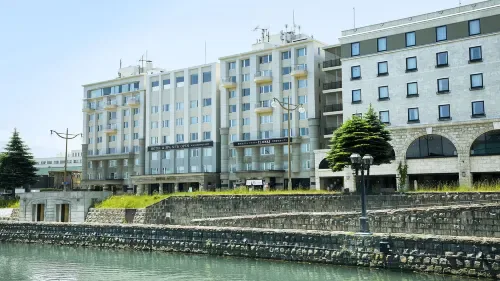
Hotel Sonia Otaru is worth the eight-minute walk from JR Otaru Station when you will repeatedly use the canal-side location and the top-floor natural hot spring. The strongest one-night pattern is not simply “I want to see Otaru Canal.” It is arrival early enough for an evening canal session, bath after dinner, then another canal or bath session before breakfast. If you arrive late, sleep and leave early, the hotel’s premium features barely have time to work and a station-first hotel becomes more rational.
I would therefore price Sonia by sessions used: how many times will the canal location save a deliberate walk or return journey, and how many of the bath windows will you actually use? That framework is more useful than paying automatically for the words “canal” and “onsen.” For self-drive travellers, however, the station walk stops being the main tax; parking becomes the real one.
↔ Scroll table left or right
Your one-night pattern | My call | Why |
Arrive 15:00–17:00, canal evening + bath + morning walk | Strong fit | The same location and bath are used several times before checkout |
Arrive after 21:00, early JR next morning | Recompare station hotels | You pay the luggage walk but lose most canal and evening-bath utility |
Winter + two large cases by rail | Conditional | The official eight-minute walk is a real luggage cost in snow; use Sonia only if the overnight experience repays it |
Self-drive through Otaru | Recalculate from parking, not JR distance | The station walk largely disappears; current hotel parking is first-come and paid |
Canal-side room booked only for the word “canal” | Verify exact view wording | Canal side is not automatically a guaranteed clear canal view |
Two nights in Otaru | Hotel gets stronger | The station transfer happens once while canal mornings/evenings and bath windows repeat |
The station walk is a one-time tax only if you stop carrying luggage after check-in
MYSTAYS currently lists Hotel Sonia about eight minutes on foot from JR Otaru Station. In dry weather with a small roller that is modest. In January or February with two full-size cases, packed snow and roadside snowbanks, it becomes a more meaningful first and last transfer.
The important counterweight is repetition. Once the bags are in the room, the canal location can work for you several times: sunset or blue hour, dinner, the illuminated warehouses, an early walk and a slower return before checkout. A station hotel makes arrival easier; Sonia can make the actual Otaru night easier.
This is the break-even question: does the heavier luggage transfer happen twice while the canal location pays you back three or four times? If yes, the trade is defensible. If the stay contains only one quick canal visit, it is harder to justify.
Self-drive changes the benchmark: parking replaces the station walk
The eight-minute JR walk is almost irrelevant if you arrive by rental car from Furano, Niseko, Shakotan or another Hokkaido road-trip segment. The hotel’s current official access page places it roughly five minutes from the Otaru IC by car, so a driver can deliver luggage to the property without dragging cases from JR Otaru Station.
But that does not make the transport cost zero. MYSTAYS currently lists 58 parking spaces at Hotel Sonia, first come, first served, for JPY 1,200 per night. The usable parking period is currently 15:00 to 12:00 the following day. The multilevel portion also has vehicle limits of about 5.0 m length, 2.0 m width and 1.55 m height. The hotel says there is no affiliated external parking lot; if the hotel parking is full, use nearby public coin parking.
That creates a completely different decision tree:
Compact/standard car and early arrival: Sonia gets stronger. You delete the winter suitcase walk and keep the canal-side location.
Tall SUV/minivan: verify vehicle height before assuming the multilevel spaces work. Outdoor spaces may exist, but the published total is not reservable.
Late arrival on a busy winter weekend: parking uncertainty replaces station-walk uncertainty. “Parking available” does not mean a guaranteed hotel space.
Car sits unused for the full Otaru stay: count the JPY 1,200/night fee plus the rental day itself. Otaru’s central canal area is highly walkable once you have checked in.
ValueNavi verdict: rail travellers should compare Sonia by luggage walk versus repeated canal/onsen sessions. Drivers should compare canal-side hotel + paid first-come parking against competing hotels’ parking setup, room and bath. Transport mode changes what the hotel premium is buying.
Count canal sessions before paying for a view premium
For one night, I would count four possible canal-use windows:
Arrival afternoon: daylight canal walk before shops and dinner.
After dark: gas lamps, warehouses and a much quieter atmosphere than the daytime loop.
Early morning: another low-crowd window before day visitors arrive.
Post-breakfast / pre-checkout: a short final walk without another train or bus.
If you expect to use three or four, sleeping beside the canal changes the stay. If only one survives your arrival/departure times, the address has much less premium value.
This also explains why a two-night stay strengthens Sonia: you pay the station transfer once in each direction but gain more repeat canal windows. Before adding the second night, though, first decide whether Otaru itself deserves it with Otaru Day Trip or Overnight?
Canal side and canal view are not the same booking promise
Hotel Sonia is physically along the canal, but the room purchase still needs exact wording. The useful question is whether your room category promises the view you are paying for, not whether the hotel building is canal-side.
A city-side room can still be the correct Sonia room if you mainly want the location and onsen. Conversely, if the room view itself is the reason you are accepting the eight-minute station walk, verify the exact category on the payment page and do not infer an unobstructed panorama from a broad “canal side” label.
This separates two premiums that are often bundled mentally: sleeping near the canal and seeing the canal from the room. You can value one without buying the other.
The natural hot spring is worth more when you can use two windows
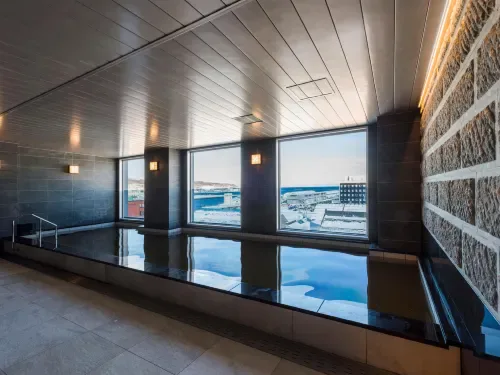
The current official onsen hours are 15:00–24:00 and 06:00–10:00. That creates a useful one-night structure: evening bath after dinner plus a second bath before breakfast or checkout.
Do not count both automatically. A 23:30 return leaves very little evening window. A 07:00 train can remove the morning session. If only one bath remains, compare the rate again as though Sonia had only one useful spa visit.
The women’s side includes an outdoor bath, while the top-floor natural hot spring uses water from Otaru’s Ironai area. These are genuine hotel differentiators, but their value is still constrained by your timetable.
Room size and canal view should be bought separately
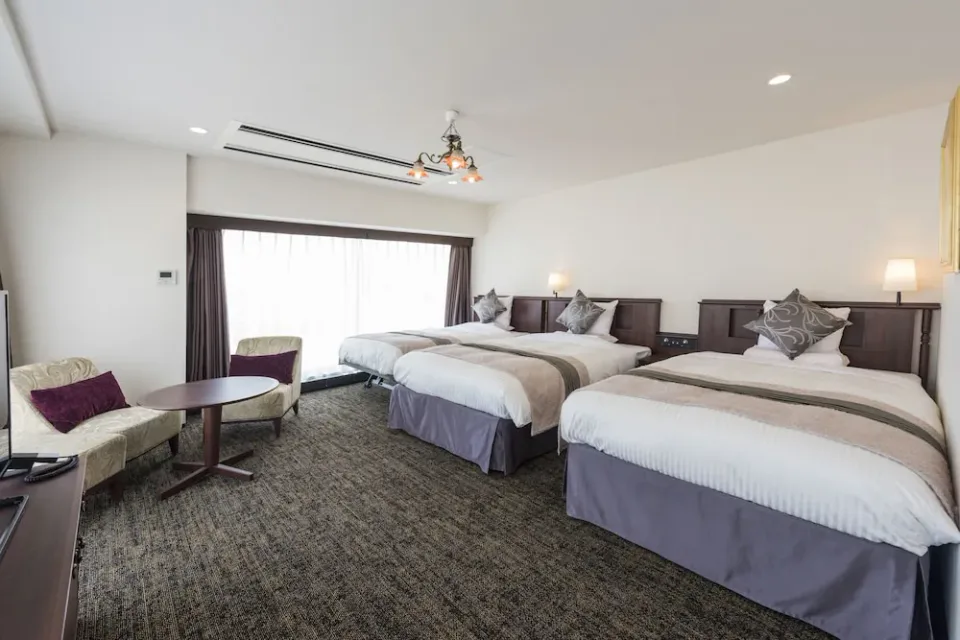
A larger room is not automatically the stronger Otaru experience. Families can find materially larger categories that prioritise floor area and occupancy rather than canal view. That can be the better trade for three or four people with luggage.
Ask two questions independently:
How much indoor space and how many real sleeping surfaces does the group need?
Is an in-room canal view worth a premium after the hotel’s canal-side location is already included?
If four guests need circulation more than a view, choose space. If two adults stay one special night and expect to spend time in the room, the view premium has more opportunity to be used.
Breakfast can duplicate the Otaru morning you actually wanted
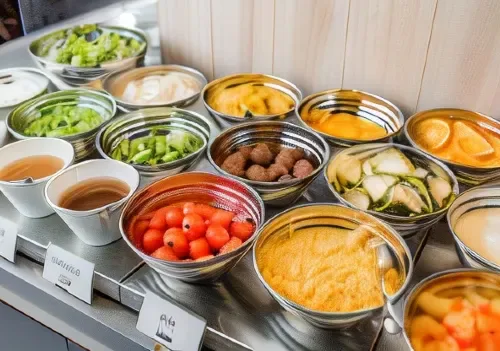
Hotel breakfast is convenient, particularly in poor weather or before an onward journey. But Otaru is also a destination where some travellers deliberately want a market, sushi or seafood breakfast. Paying for both can consume the same morning twice.
Choose breakfast when convenience, children or an early onward schedule matter. Choose room-only when a specific Otaru breakfast is part of the itinerary. The right comparison is not “is the buffet good?” but “which breakfast owns the only morning?”
One night vs two nights
One night: best when you can arrive by late afternoon, use the canal after dark, take at least one bath and still have a morning Otaru window. Weak when arrival and departure compress the room into a transit stop.
Two nights: stronger if Otaru itself is a real base rather than a checkbox. The initial luggage walk is diluted across more canal and onsen use. It is still not automatically better than keeping Sapporo as one base; the second night must beat the cost of another hotel move elsewhere in Hokkaido.
Who should choose another Otaru hotel?
I would start elsewhere when:
you arrive late and leave on an early JR service;
winter luggage friction is the biggest concern and you arrive by rail;
you are driving a vehicle that does not fit the parking setup or you need guaranteed parking;
you will not use the public bath;
the exact room does not guarantee the view you are paying for;
your Otaru plan is basically station → sleep → station.
For the station-first alternative, compare Dormy Inn PREMIUM Otaru. For the broader winter choice, use Dormy Inn vs OMO5 vs Hotel Sonia.
Final verdict
Hotel Sonia Otaru is strongest when one night contains several hotel-location paybacks: canal before or after dinner, at least one meaningful onsen session, and another canal or bath window in the morning. For rail travellers, an eight-minute station walk is a one-time tax for an overnight experience you use repeatedly. For drivers, that tax disappears and is replaced by a JPY 1,200 first-come parking decision.
If arrival is late, departure is early, parking is uncertain for your vehicle or you are paying for a canal label without a guaranteed view, the calculation reverses quickly. The right Sonia booking is not simply “the canal hotel.” It is the room, transport mode and timetable where the canal and bath are used often enough to justify the real arrival cost.
Verify Hotel Sonia Otaru room names and rates
References
Hotel Sonia Otaru — official hotel and room information · official natural hot spring information · official access and parking information. Checked August 25, 2026. Current official access is about eight minutes on foot from JR Otaru Station; onsen hours are 15:00–24:00 and 06:00–10:00. Current official parking is JPY 1,200/night, first come, 58 total spaces, with multilevel size restrictions and no affiliated overflow lot.