OMO5 Otaru: the 30-second decision
OMO5 Otaru is not the easiest choice if your only metric is distance from JR Otaru Station. The hotel currently lists about a nine-minute walk from the station, which is a very different proposition with a 28-inch suitcase on packed winter snow than it is on dry pavement. The reason to accept that walk is not the Hoshino Resorts name by itself. It is the chance to turn Otaru from a compressed Sapporo day trip into a slower evening-and-morning stay close to the canal and historic streets.
If you have not decided whether Otaru deserves a hotel night at all, start with Otaru Day Trip or Overnight?. If the overnight is already fixed, use the Dormy Inn vs OMO5 vs Hotel Sonia winter comparison to decide whether you value station convenience, canal-side atmosphere or a more specific hotel feature.
↔ Scroll table left or right
Decision point | Current hotel detail | Trip impact |
JR Otaru Station | About 9 minutes on foot | Not station-front; snow and hard-shell suitcases can make the arrival walk the main downside. |
Canal access | Official pages currently give inconsistent figures; the hotel itinerary places the canal only a few minutes away | Treat it as a canal-side base, not a station hotel. The payoff is evening and early-morning Otaru time. |
Guest-only / hotel-led activities | Canal cruises, market breakfast tour, morning walk and evening Local Rhythm Night vary by date and reservation | Only count them as brand value if your stay date and timetable let you use them. |
Stay length | Hoshino publishes a 3-day / 2-night model itinerary | One night can work, but two nights make the station walk easier to amortize. |
Breakfast | 06:30–09:30, last order 09:00 | Useful before an easy sightseeing day; less compelling if Sankaku Market or a sushi breakfast is already your morning plan. |
Laundry | Laundromat listed among general facilities | Low value on a standalone night, much higher mid-way through Hokkaido independent travel. |
Parking | Hotel lot 6 cars plus partner lots, all first come / no reservation | Parking available does not mean a late winter arrival has a guaranteed space. |
Check-in / check-out | 15:00 / 11:00 | The hotel makes more sense when you leave bags, use the evening, and avoid turning the stay into a sleep-only stop. |
Compare OMO5, Dormy Inn and Hotel Sonia for a winter Otaru stay
ValueNavi Otaru Overnight Payoff Score
This score asks whether moving hotels creates enough stay-only value to justify the station walk and base-change friction. The six dimensions are after-hours Otaru value 25%, morning-before-day-trip value 20%, stay-only activity fit 20%, luggage/base-change friction 15%, two-night amortization 10%, and Hokkaido-route opportunity cost 10%. Each factor is scored 0–10. It is an editorial planning score, not a Hoshino Resorts rating.
Scenario | ValueNavi score | Verdict |
|---|---|---|
1 night: arrive after dinner, sleep, early JR next morning | Weak payoff; you pay the hotel move without using canal-side hours. | |
1 night: canal after dark + quiet morning + one fitting OMO activity | Strong one-night case because the overnight creates experiences a Sapporo day trip cannot reproduce cleanly. | |
2 nights: one full Otaru day + evening activity + laundry reset | The station walk is amortized across more useful hours and hotel-side utility. | |
Short Hokkaido trip where Otaru only needs the daytime checklist | Keep the Sapporo base unless a specific overnight-only reason changes the trip. |
ValueNavi Stay-Hour Yield: count the hours you gain by sleeping in Otaru
Stay-Hour Yield = useful evening blocks + useful early-morning blocks + hotel-only activity blocks − base-change friction − displaced higher-priority time
This is deliberately a planning model rather than a fake exact time estimate. A one-night OMO5 stay should create at least two distinct useful blocks that a normal Sapporo day trip would struggle to reproduce—for example canal after dark plus an early Sakaimachi walk. If the only extra block is “sleep in a different room,” the overnight case is weak.
For two nights, the threshold is easier to clear because the nine-minute station walk is paid on arrival and departure while the hotel and neighbourhood can generate repeated value in between.
The 9-minute station walk is a small number until suitcase wheels meet snow
Hoshino currently gives about nine minutes on foot from JR Otaru Station. That is not remotely far for a normal city walk. The problem is that winter luggage does not behave like a pedestrian. A hard-shell case catches on compacted snow, crossings can be slushy, gloves reduce grip, and a snowbank can turn a straight line into repeated little detours. The hotel does not become badly located; the same published distance simply has a different physical cost in January than in October.
The upside is that you usually pay that suitcase cost only on arrival and departure. Once the bags are in the hotel, central Otaru works mainly as a walking destination. For travellers who would rather minimise every winter luggage transfer, the Japan luggage-forwarding guide is useful before deciding whether the large case even needs to enter Otaru. If your whole trip is still being assembled, the Hokkaido regions and transport planner helps decide whether Otaru is a real base change or just an unnecessary hotel move.
Do not buy “canal access” unless you will actually use the evening or morning
This is where OMO5 Otaru makes more sense than its station distance first suggests. Hoshino’s current pages are not perfectly consistent about the exact canal walking time: the main hotel page currently shows a longer figure, while the official sample itinerary places the canal only a few minutes from the hotel. I would therefore avoid treating “two minutes” or “three minutes” as a promise measured to the second. The practical point is simpler: this is a canal-side, central-Otaru base rather than a station-front hotel.
That location matters if your Otaru night has a job. Finish dinner without watching the return-train clock. Walk the canal after day-trippers have thinned out. Leave again early enough to see quieter streets. Hoshino’s own itinerary explicitly builds in an early-morning Otaru walk and a multi-day stay. If your overnight still means arriving after dinner, sleeping, then checking out for an early JR train, you have paid the suitcase walk without using the hours that justify it.
This is also why the question is not “Is OMO5 better than Sapporo?” If you only have a short Hokkaido trip, keeping one base can be stronger. Compare How Many Days in Sapporo?, the broader Where to Stay in Sapporo guide and the 5-, 7- or 10-day Hokkaido winter itinerary before donating a night to Otaru simply because the hotel looks interesting.
The historic South Wing is a reason to stay only if you care about the hotel itself
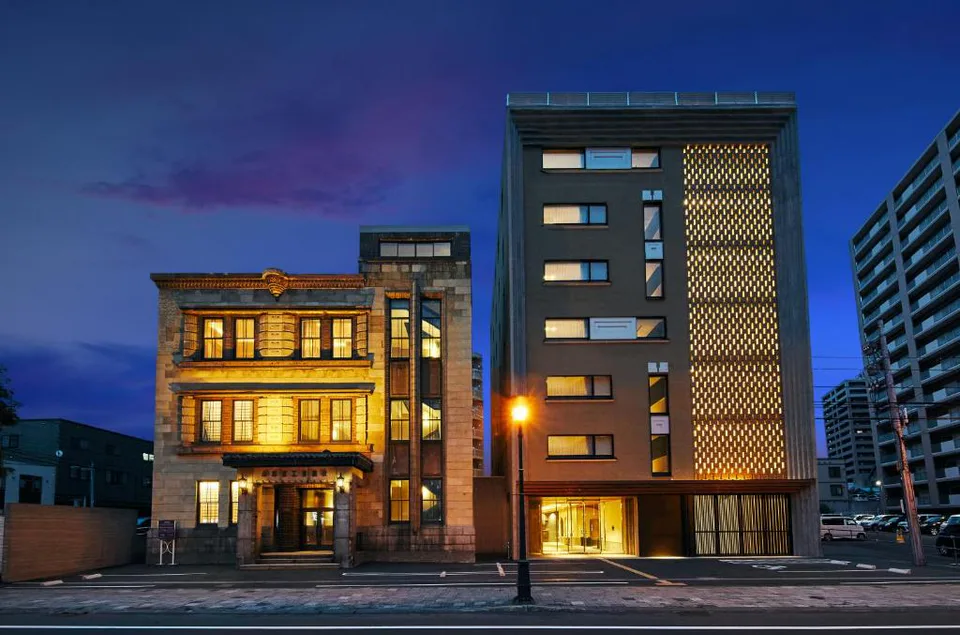
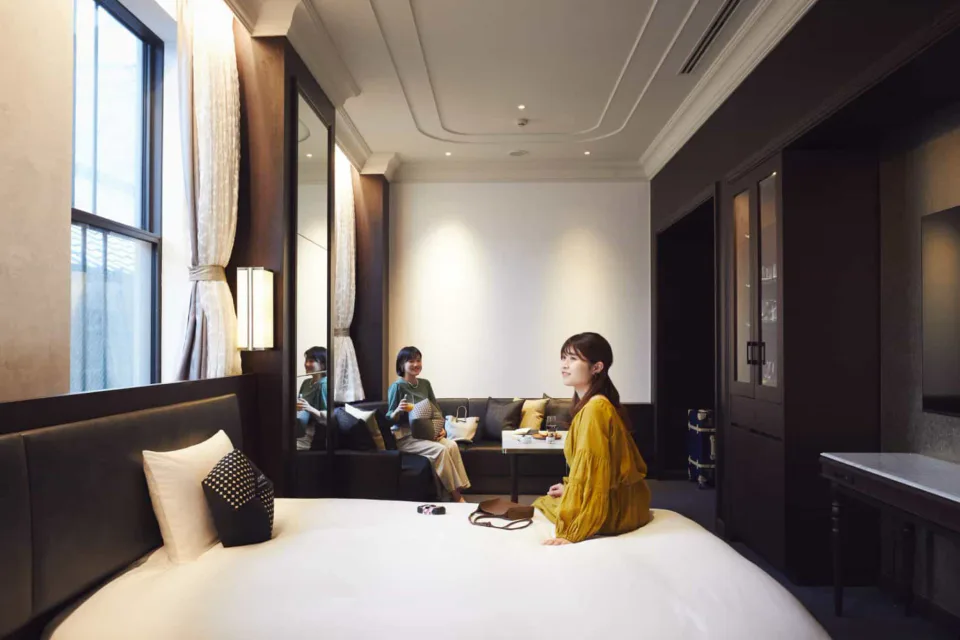
Part of OMO5 Otaru’s identity comes from reusing a historic building associated with the former Otaru Chamber of Commerce and Industry. That gives the property a more deliberate “old port city” atmosphere than a generic station business hotel. It can make the stay feel connected to Otaru rather than interchangeable with the next city on the route.
But this is exactly where brand premium can become dead money. If you check in at 22:00, never sit in the common spaces, do not notice the historic streets in the morning and leave before breakfast, there is no reason to pay extra simply because the word OMO or Hoshino is on the reservation. A hotel feature has value only when the itinerary creates time to use it. For a more conventional overnight with a public-bath angle, compare Hotel Torifito Otaru Canal instead of assuming every canal-area hotel solves the same problem.
OMO activities are part of the premium only when you can actually book or attend them
OMO5 is easier to overvalue than a conventional hotel because the brand sells a curated local programme as well as a room. The current official activity page lists multiple experiences, including guest-exclusive canal cruises, a guided Triangle Market seafood breakfast tour, a free morning Sakaimachi walk, a music-box library and the evening Local Rhythm Night. Those can create genuine stay-only value—but they are not one always-available bundle.
The reservation and calendar rules matter. The current Otaru Canal Wine Cruise runs on selected Saturdays, Sundays and holidays from September 5 to November 15, 2026, costs ¥6,400 per adult (about US$40), takes about an hour including the walk/boarding preparation and has capacity for ten people. It is a guest-only product and requires a reservation. A weekday guest outside the operating calendar should value it at zero. A weekend guest who would not otherwise spend ¥6,400 should also value it at zero. JPY is the reference price; the USD figure uses the August 26, 2026 exchange rate and will move.
Other experiences are easier to use. The current Local Rhythm Night runs year-round from 20:00 to 23:00, with free lounge use and music-box performances at set evening times. From September 1, 2026, the free Whisky Aroma Guide runs from 18:00 to 20:00. The morning Sakaimachi walk is free but reservation-based. The Triangle Market breakfast tour also requires a reservation. These programmes can turn an otherwise ordinary hotel evening or morning into something distinct, but only when they do not collide with the Otaru dinner, market breakfast or sightseeing you already planned.
This creates a useful brand-premium test:
OMO activity value =
activities on your exact stay date
× activities you are eligible/willing to book
× activities that do not replace something you already wanted more
This is ValueNavi analysis, not an official pricing formula. It stops the phrase “lots of activities” from being valued as though every guest receives every experience.
ValueNavi Activity Substitution Penalty
A hotel activity can be genuinely unique and still be poor incremental value if it replaces something already in the itinerary.
Activity Substitution Penalty = activity cash cost + time block consumed + value of the original plan it displaces
↔ Scroll table left or right
Overlap | Penalty | ValueNavi response |
Wine Cruise when you already planned another canal cruise | High | Count only the incremental wine/sushi/private-guest value, not a second full “canal cruise” benefit. |
Hotel breakfast when Sankaku Market breakfast is non-negotiable | High | Choose one morning priority instead of double-counting both. |
Local Rhythm Night during otherwise unstructured hotel time | Low | This is where an OMO activity can create clean incremental value. |
Morning walk before a relaxed second Otaru day | Low–medium | Good fit if it does not force an early checkout or train. |
There is also a substitution risk. If you already planned an independent Otaru Canal Cruise, paying again for a guest-only cruise may not add a new experience. If Sankaku Market breakfast is non-negotiable, the hotel buffet and the guided market breakfast compete for the same morning. If you want a long sushi dinner, the 20:00 Local Rhythm Night may be only partly usable. The hotel becomes strongest when one or two OMO programmes fit naturally into time you would otherwise leave unstructured.
ValueNavi verdict: if the rate premium over a comparable Otaru room is largely justified in your mind by “Hoshino activities,” name the exact activity before paying. If you cannot name one that operates on your date and fits your clock, remove the activity premium and compare OMO5 as a room + location + heritage-hotel product only.
One night versus two nights: the same 9-minute walk gets cheaper on the second night
For one night, every hotel move is expensive in proportion to the stay. You pack, check out, walk to the station, transfer, deposit luggage, then repeat the process the next morning. OMO5 can still be worth it if the evening canal and quiet morning are the product. But the threshold should be high: a one-night stay needs to add something you cannot get from a normal Sapporo day trip.
At two nights, the economics change. The station walk is still there, but it is spread across more awake hours. You can have one slower evening, one full Otaru day, a second morning, and use the laundromat or room as a mid-trip reset. Hoshino itself publishes a three-day/two-night sample itinerary, which is useful evidence of how the property expects guests to use Otaru rather than treating it as a sleep-and-run stop.
If you are building a rail-heavy week, the realistic 7-day Hokkaido without a car itinerary is a better place to test whether two nights here displace a more valuable night elsewhere.
Breakfast is not automatically a benefit if you already want a market breakfast
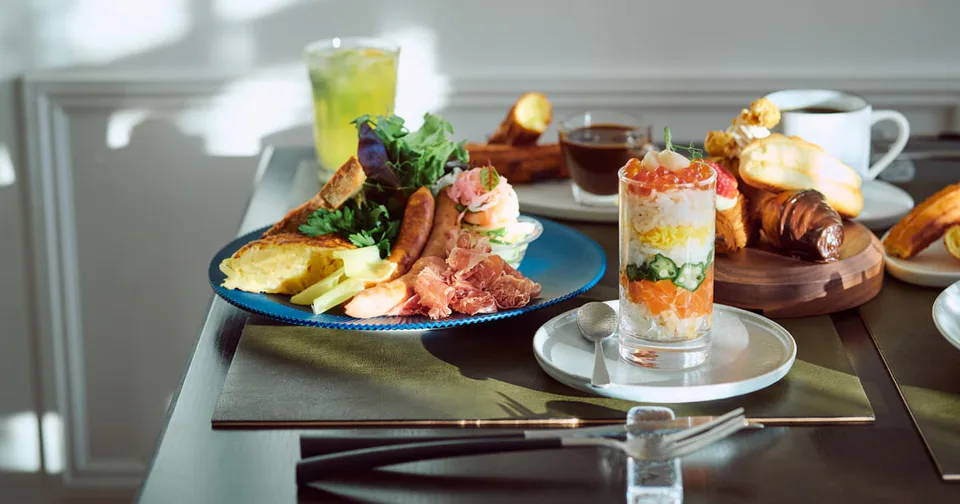
The current OMO Cafe & Bar breakfast runs from 06:30 to 09:30, with last order at 09:00. The buffet is intentionally Otaru-themed: the hotel highlights a seafood chirashi “parfait,” freshly fried churros and local bites associated with Nantaru Market. It is a real hotel experience rather than a generic toast-and-coffee add-on.
The counterargument is simple: Otaru is also a place where travellers actively plan a seafood breakfast outside the hotel. If Sankaku Market, sushi or a separate morning food stop is already part of the itinerary, paying for a hotel buffet can turn one morning into two competing breakfasts. Choose the included-breakfast rate only when you actually want the hotel breakfast, not because “breakfast included” sounds like higher value.
Verify OMO5 Otaru room types and cancellation terms on Booking.com
Room type matters more than the word “Twin” when two cases stay open
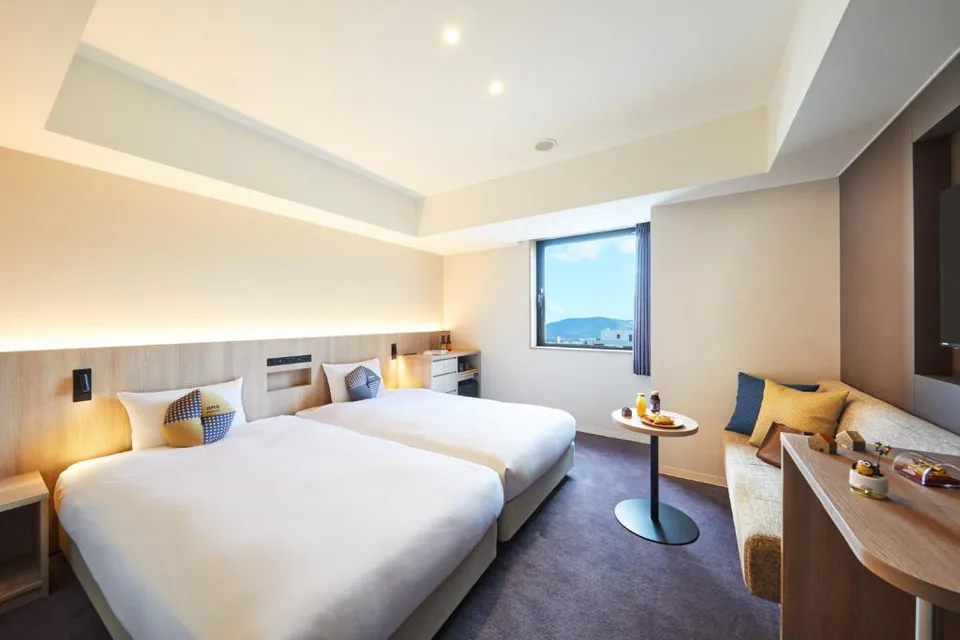
OMO5 Otaru currently lists 92 rooms across two buildings and general occupancy of one to three guests. That top-line information is useful, but it is not a floor-plan guarantee. Two adults with small carry-ons use a twin room very differently from two adults with 28-inch cases, wet outerwear, shopping bags and a next-city repacking job.
Do not turn “twin room” into an assumption that both large cases can remain open with a clear walkway. Compare the exact room name sold for your date, bed configuration, room photos, cancellation rules and any breakfast inclusion. If the price step to a more comfortable layout is small and you will spend two nights here, the extra usable space can matter more than a minor nightly saving. If the room is only a place to sleep for eight hours, the cheapest workable layout may be the rational choice.
Laundry becomes valuable when Otaru is the middle of the trip, not the beginning
Hoshino lists a laundromat among the hotel’s general facilities. On a standalone one-night Otaru stop, that is barely a reason to choose a property. Put the same hotel on night four or five of Hokkaido independent travel and the value changes: base layers, socks, gloves and winter tops have had time to accumulate, and a laundry reset can stop the second half of the trip from becoming a suitcase full of damp or bulky clothing.
This is a recurring pattern in Hokkaido: facilities become valuable through repetition. The Hokkaido winter activities without skiing guide is useful if your route mixes urban days and outdoor snow activities, because clothing volume and drying needs can be very different from a simple city break.
Driving? Six hotel spaces means “parking exists,” not “your arrival is solved”
OMO5 Otaru’s current access page lists six hotel parking spaces, first come and not reservable. It also lists nearby affiliated options, including a 27-space Times lot and a larger 250-space Otaru parking facility about six minutes away. That is enough to say there are fallback options. It is not enough to promise that a late winter arrival will put the car beside the lobby. Festival periods can make parking materially harder as well.
If your car is only needed after the Sapporo–Otaru portion, separate the rental decision from the hotel decision. Read New Chitose Airport rental car: take it now or later? and the Hokkaido winter driving guide before paying to keep a car through city days that work well by rail.
Check the same OMO5 Otaru dates on Trip.com
Who should stay at OMO5 Otaru?
It fits travellers who have already decided to stay overnight in Otaru, want the canal after dark or quieter early streets, enjoy a hotel with a historic-building story, are staying two nights, or need a laundry reset in the middle of a longer Hokkaido route. It also fits travellers who are comfortable paying the station walk once in exchange for a more central Otaru rhythm after the luggage is dropped.
It is weaker for a snowy one-night transfer with large luggage, an early JR departure, travellers whose main hotel priority is an onsen or large public bath, and anyone who only wants the standard daytime canal-and-Sakaimachi checklist. In those cases, the station-distance premium or simply keeping the Sapporo hotel can be more valuable than the OMO concept.
Still deciding whether to move hotels? Recheck Otaru day trip vs overnight
Final verdict: pay for the hours you will use, not the brand name
OMO5 Otaru works when the nine-minute station walk buys you a different Otaru: dinner without a return-train deadline, canal time after dark, a quieter morning, a hotel with historic character and enough time to use its facilities. It gets stronger when at least one current OMO activity also fits naturally into those hours rather than replacing another experience you wanted more.
If the rate difference is modest, pay for one repeated convenience or stay-only experience you will actually use. If the premium is large, treat the heritage atmosphere, OMO activities and canal-side rhythm as optional upgrades rather than necessities. That is the cleanest way to keep the hotel decision inside the trip instead of letting the hotel brand redesign the itinerary.
Sapporo Grand Hotel: Is the 10-Minute Underground Walk Worth It in Winter?
Vessel Hotel Campana Susukino: Is the 25:00 Public Bath Worth a 4-Minute Walk?
Oriental Hotel Okinawa Resort & Spa Review: Is the 170m Pool Worth a 7-Minute Beach Walk?
Hotel Sosei Sapporo Review: Is a 39 m² Twin-Queen Room Worth a 15-Minute Walk from Sapporo Station?
Sources
Hoshino Resorts — OMO5 Otaru Maps and Directions
Hoshino Resorts — OMO5 Otaru Official Site / At a Glance
Hoshino Resorts — current OMO5 Otaru activities and reservation rules
Hoshino Resorts — Otaru Canal Wine Cruise 2026 dates, ¥6,400 price and capacity
Hoshino Resorts — Local Rhythm Night
Hoshino Resorts — OMO5 Otaru Breakfast
Hoshino Resorts — OMO5 Otaru Sample Itinerary
Rechecked August 26, 2026. Activity calendars, reservation deadlines, capacity and prices can change. A guest-only activity should be valued only when it operates on the stay date and fits the itinerary.
Images: fresh OMO5 Otaru property, room and breakfast photography imported into ValueNavi Wix Media Manager for this English article; none of the Chinese OMO5 media IDs are reused.