
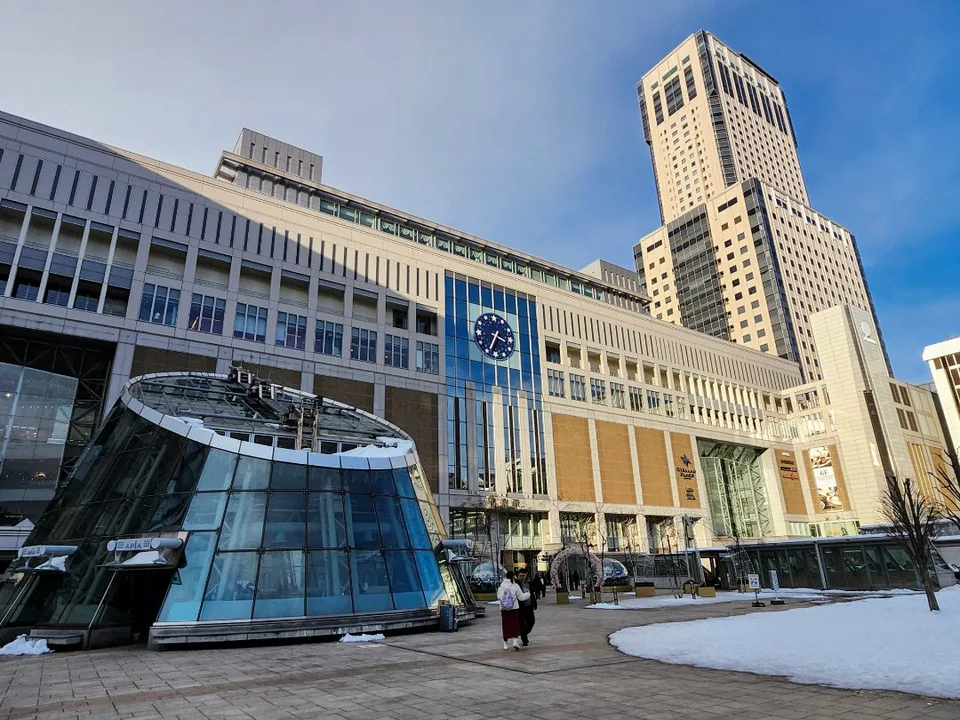
Three nights is the best default for a first Sapporo stay, but only when those three nights genuinely create two usable full days. That is enough for one proper Sapporo day and one Otaru day trip without changing hotels. Two nights works when Sapporo is mainly the arrival or departure base around Niseko, Furano, Hakodate or another Hokkaido stop. Four nights is worth paying for only when the third full day has a named job: Jozankei, one ski day, a fixed winter event, a second day trip, or weather flexibility that you can actually use.
The mistake is counting hotel nights as sightseeing days. A 20:30 arrival and a 10:00 departure turn three nights into roughly two days. A 10:00 arrival and 18:00 departure can make the same three nights feel closer to three. Before adding or removing a night, count usable daylight blocks, not calendar dates.
If the whole Hokkaido trip is not yet divided by region, start with the Hokkaido itinerary planner or the 5-, 7- or 10-day winter itinerary. The question here is narrower: once Sapporo is definitely in the trip, how many nights should it take away from every other Hokkaido base?
How many days in Sapporo: the 30-second decision
↔ Scroll table left or right
Your stay | I would choose it when | What it should accomplish | What would make me change it |
2 nights | Sapporo is a short urban stop between airport and another Hokkaido base | One strong city day, or one arrival evening + one full day | You also want Otaru; the stay becomes too compressed |
3 nights | First visit with two usable full days | One Sapporo day + one Otaru day | Both boundary days are badly timed, or Otaru deserves an overnight |
4 nights | The third full day has a specific purpose | Sapporo + Otaru + Jozankei / skiing / event / movable buffer | The extra night would improve Niseko, Furano, Noboribetsu or Otaru more |
First calculate usable days: nights are only the container
JR Hokkaido currently lists the fastest Rapid Airport trip between New Chitose Airport and Sapporo at about 33 minutes. That makes Sapporo unusually easy to reach from its airport, but the rail time is only one part of the boundary day. Immigration or baggage collection, the station walk, waiting for the train, hotel access, check-in and winter street conditions all sit outside that 33-minute number.
I would therefore classify arrival and departure days rather than pretending they are full days:
Useful half-day: you can realistically be at the hotel by early afternoon, leave the luggage and still choose one compact area.
Evening only: you reach central Sapporo late enough that dinner is the main usable activity.
Dead boundary: the flight or onward transfer consumes nearly everything except sleeping.
That changes the answer. Three nights with two dead boundaries is essentially a two-day Sapporo product. Three nights with an early arrival and late departure can carry much more city time. The hotel booking is identical; the useful trip is not.
If a late flight could turn Night 1 into nothing more than sleep, solve that first with the New Chitose late-arrival decision. Do not give Sapporo credit for a night you will spend reaching it.
Two nights: good for a stopover, weak for “Sapporo plus Otaru”
Two nights works best when Sapporo is not the main Hokkaido experience. Think of it as a low-friction urban bridge: airport → Sapporo → Niseko, Furano, Hakodate, an onsen stay or another regional base.
With only one complete day, I would normally keep that day in Sapporo. Trying to make it “Sapporo in the morning, Otaru in the afternoon” can produce the worst version of both. The rail journey is easy, but the hidden cost is fragmentation: hotel breakfast, station movement, Otaru, return train, another Sapporo evening, then repacking for the next base.
Two nights becomes much stronger when the boundary days cooperate. An early arrival can absorb Odori, Tanukikoji, Susukino or a food-focused evening before the one full day. A late departure can add another compact city block. But I would treat those as bonuses rather than planning assumptions until the actual flight times are fixed.
Short stays also magnify hotel geography. Arrival and departure make up a larger share of the trip, so compare Sapporo Station vs Susukino before paying for nightlife convenience that creates an extra luggage transfer at both ends.
Three nights is the sweet spot because it separates Sapporo from Otaru
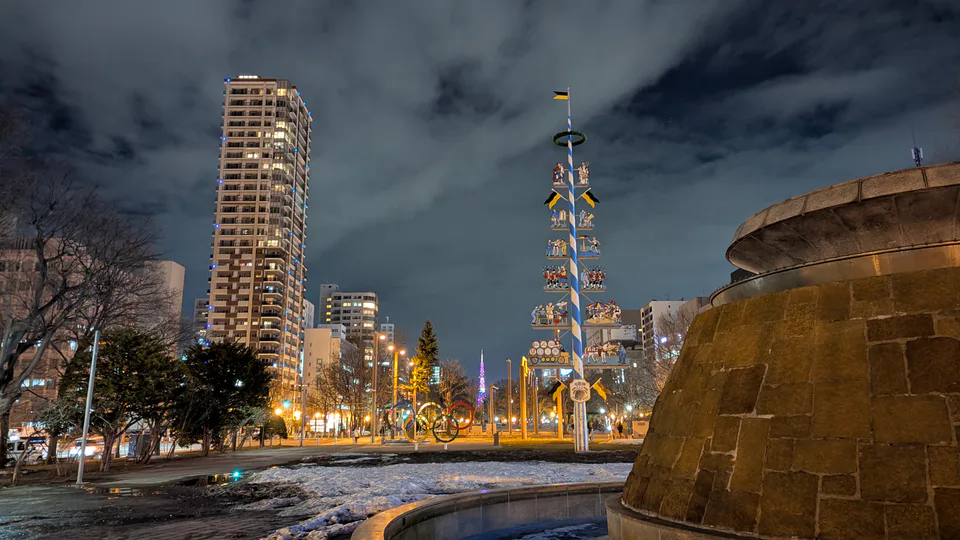
Visit Sapporo currently gives roughly 35 minutes by rapid train between Sapporo and Otaru. That makes Otaru an easy day trip, but it does not make it a free add-on. You still spend part of the morning reaching the station and part of the evening returning.
Three nights is the first stay length where that cost becomes comfortable. The default structure is simple:
Full Day 1: Sapporo. Keep the city together rather than treating it as leftover time around day trips.
Full Day 2: Otaru. Let the port town have its own daylight block, then return to the same Sapporo hotel.
The value of Night 3 is therefore not “one more Sapporo night.” It is the ability to run two different days without a hotel move or a split-day compromise.
A three-night stay works because Sapporo and Otaru no longer have to compete for the same full day.
There is one important reversal: if what you really want from Otaru is the evening after day-trippers leave, a canal-side night, a slower dinner or an early next morning, do not keep adding Sapporo nights and commuting back. Use the Otaru day trip vs overnight guide. If the overnight wins, the Otaru winter hotel comparison is a better next decision than simply booking Night 4 in Sapporo.
The third full day is the only reason to pay for four nights
Four nights usually creates three complete days between arrival and departure. The first two jobs are easy to name: Sapporo and Otaru. I would not book the fourth night until I can name the third job.
Good answers include:
a Jozankei day when you want hot springs without moving hotels;
one city-based ski day;
a fixed event that consumes one otherwise flexible day;
a second day trip that is genuinely more important than another Hokkaido overnight;
a winter buffer where at least two days can swap order.
“More shopping,” “extra time just in case,” or “Sapporo seems like a convenient base” are weaker answers. Convenience can become an expensive habit if every additional day starts with a long out-and-back journey to somewhere that would be better as the next base.
Jozankei: a good four-night branch, but not automatically a day trip
The Jozankei Tourist Association currently lists the direct KappaLiner from Sapporo Station at about 60 minutes, while ordinary route-bus options can take about 80 minutes. That makes Jozankei feasible from a Sapporo base, but the decision is not simply whether the bus ride is short enough.
A day trip is rational when the job is one soak, a walk, lunch and a change of scenery before returning to the same hotel. An overnight becomes stronger when the actual product is ryokan dinner, repeated bathing, a slower evening and a quiet morning. In that case, a fourth Sapporo night can be the wrong purchase even though the day trip is technically easy.
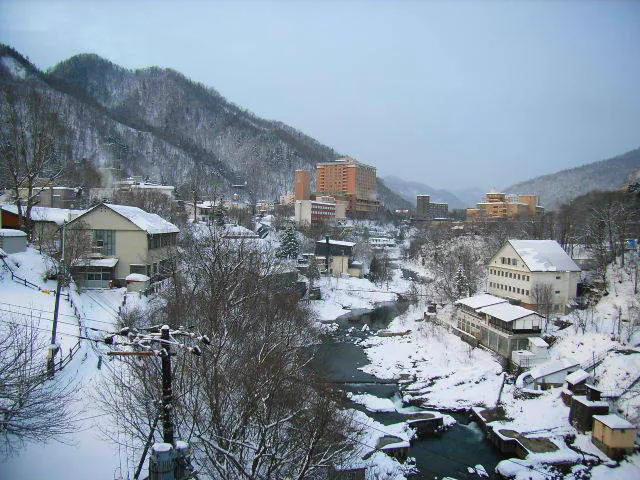
Jozankei can justify a third full day from Sapporo, but the overnight question should be decided on experience value, not bus time alone.
Use Noboribetsu vs Jozankei if the onsen night is competing with Night 4 in Sapporo.
One ski day can fit inside four nights; two or three may deserve a resort base
Sapporo is unusually useful because skiing can be a day branch rather than a separate trip. That does not mean every ski-focused itinerary should keep sleeping downtown.
For one ski day, the Sapporo hotel still earns its keep: you preserve the city evenings and avoid a resort move for a single day. Compare Sapporo Teine vs Sapporo Kokusai if that is the plan.
At two or three ski days, the decision can reverse. Repeating equipment logistics, transfer schedules and early starts from the city may cost more than one hotel move. That is the point to compare ski from Sapporo or move to a resort. A fourth Sapporo night should not exist merely because unpacking once feels easier.
Winter buffer only has value when your itinerary can move
“Add a night for winter weather” sounds safe but is incomplete advice. A buffer works only when it creates optionality.
Suppose your three full days are Sapporo, Otaru and skiing. If Otaru and the city day can swap while the ski lesson stays fixed, the extra night gives you room to react to visibility, snow or transport conditions. But if all three days are locked to non-refundable tours, timed activities or hotel changes, the extra Sapporo night does not create much recovery capacity. It simply gives you another fixed booking.
I would call four nights a genuine winter-buffer plan only when at least one important branch can change days without penalty. That makes the itinerary more resilient rather than merely longer.
If the whole trip is car-free, test the sequence against the 7-day Hokkaido no-car itinerary. In winter, removing a hotel move can be valuable—but only when staying put does not force longer repeated excursions.
A fixed event can reverse the normal three-night answer
If the Sapporo Snow Festival or another fixed event is a primary reason for the trip, Sapporo stops being merely the base. The event now owns a day or evening that would otherwise belong to the city or Otaru, so a fourth night can protect the rest of the itinerary.
This is also a hotel-location problem. An event-led stay can change the value of Odori, Susukino and Sapporo Station because the repeated journey is no longer the airport or Otaru train—it is the walk home after the event. Use the Sapporo Snow Festival area guide after deciding the night count.
Run the “move the fourth night” test before booking it
The hardest part of a Hokkaido itinerary is opportunity cost. Night 4 in Sapporo is not compared with having no hotel at all. It is compared with what the same night could become elsewhere.
↔ Scroll table left or right
If the extra day is really about… | Test this before keeping Night 4 in Sapporo |
Otaru evenings | Move one night to Otaru instead of commuting back |
Two or more ski days | Move toward the ski resort |
Ryokan dinner + multiple baths | Move the night to Jozankei or another onsen base |
Niseko / Rusutsu | Give the resort another night rather than using Sapporo as a distant launchpad |
Furano | Protect the Furano block instead of creating another long out-and-back day |
If skiing is the real priority, compare Niseko vs Rusutsu or Furano Zone vs Kitanomine. A base stops being efficient when it repeatedly pulls you away from the thing you actually came to Hokkaido to do.
Three-night and four-night hotel needs are not identical
Once you move from two nights to four, hotel features that barely mattered can start paying back repeatedly. Laundry, a public bath, luggage space and the final snowy walk to the station all become more important because you use them several times.
If three or four nights win, pair this decision with the Sapporo four-night hotel guide and Hotel Emion vs Keio Prelia. The correct order is night count first, base area second, exact hotel third. Otherwise it is easy to justify an extra night because you like the hotel rather than because the itinerary needs it.
If food is the only thing making a short stay feel too short, do not automatically buy another hotel night. Compare the guided Sapporo ramen tour with simply choosing a bowl yourself and decide whether the problem is actually time or just choice overload.
Failure test: what breaks if you remove one Sapporo night?
Before booking, delete one night on paper.
If removing Night 3 forces Sapporo and Otaru into the same day, keep the third night.
If removing Night 4 kills a ski day, event day or genuinely flexible winter branch you care about, keep the fourth night.
If removing Night 4 simply means less shopping or one fewer central-Sapporo evening, move the night elsewhere.
If removing Night 4 makes you move to Otaru, Jozankei or a ski resort earlier—and that destination is actually the point—the deletion improved the trip.
This test is more reliable than asking whether Sapporo has enough attractions for four nights. It does. The real question is whether Sapporo has the highest claim on that fourth night compared with the rest of Hokkaido.
Final verdict: book 2, 3 or 4 nights?
Book two nights when Sapporo is a short urban bridge and one complete city day is enough. Book three nights for the best first-time default when it creates two usable full days: one for Sapporo and one for Otaru. Book four nights only when the third full day has a specific, repeatable job—Jozankei, one ski day, a fixed event, a second worthwhile branch or winter flexibility that can actually move.
My red-line condition is simple: if the fourth night exists mainly because Sapporo is convenient, compare it against an overnight in the place you keep day-tripping to. The most efficient base is not always the one that minimizes hotel changes; sometimes one well-timed move deletes more travel than staying put.
Keio Prelia Hotel Sapporo: Is It Worth Staying Three to Five Nights?
1 or 2 Days at Tokyo Disney? How to Split Disneyland and DisneySea
The Busena Terrace: How Much Resort Time Do Two Nago Nights Need?
Osaka and Kyoto in 7 Days: 3 Nights Each — When One Hotel Move Is Actually Worth It
Japan November Weather: Tokyo Drops to 6°C by Month-End, Sapporo Turns Wintry, Okinawa Stays Warm
References
JR Hokkaido — New Chitose Airport ↔ Sapporo ↔ Otaru access · Visit Sapporo — official travel and itinerary guidance · Jozankei Tourist Association — current access guidance. Checked August 26, 2026. Train, bus, event and weather-sensitive operating details can change; recheck the exact travel date before building a fixed departure around them.
Sapporo is an efficient base, but the correct night count depends on which journeys it removes rather than how many attractions the city can fill.