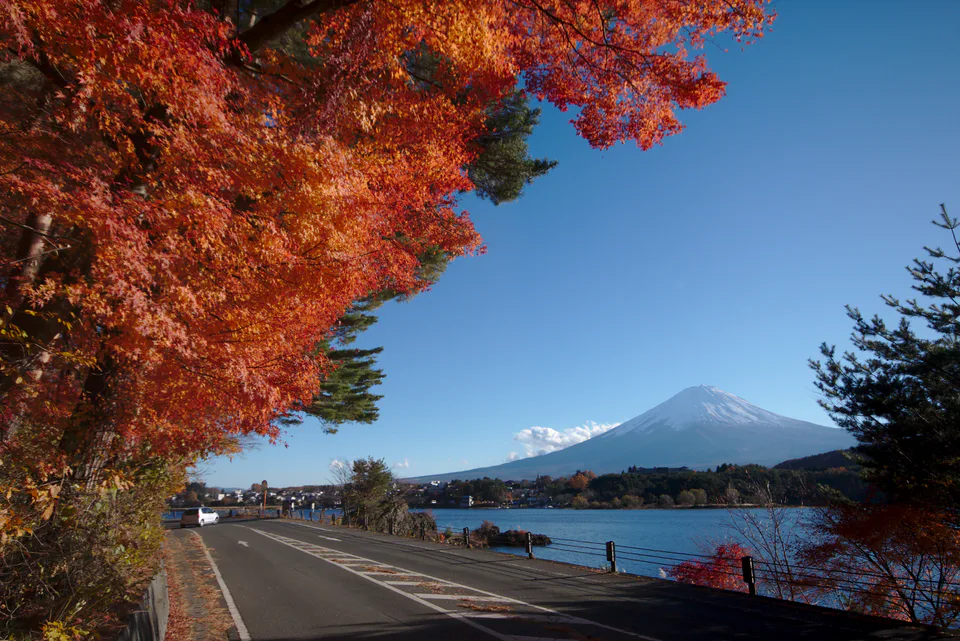
For most first visits to Lake Kawaguchi, one night is the best default. A Tokyo day trip is enough when you only need daylight views and one compact lakeside route; two nights are worth paying for only when Night 2 has a second job—another Fuji-viewing window, a full Biei-style “no checkout” day around the lake, a ryokan/onsen stay you actually want to use, or a weather-flexible side trip such as Fujiyoshida. A second night does not buy clear Mount Fuji. It buys time you can rearrange when the mountain, buses or weather refuse to cooperate.
The most useful way to decide is therefore not “How many attractions are there?” It is: what problem does each night remove? Night 1 removes the same-day Tokyo return and gives you an evening plus a dawn. Night 2 removes the checkout deadline from your only full day. If Night 2 does not create a distinct benefit, it is usually the night to cut.
Fact-checked August 26, 2026. JPY remains the primary currency; approximate USD figures use about ¥159 = US$1 as a working reference. Transport, festival operations, hotel shuttles and weather conditions can change.
Lake Kawaguchi: 0, 1 or 2 nights in 30 seconds
↔ Scroll table left or right
Your trip | My default | Why |
One Fuji viewpoint + one lakeside area, short Japan trip | Day trip | You can get a useful full daylight block from Tokyo without paying for a hotel. |
First visit, autumn leaves, onsen or ryokan dinner | 1 night | You gain dusk, dinner, one dawn and a second morning without sacrificing two hotel nights. |
Maple Corridor illumination is a priority | 1 night strongly preferred | The official illumination runs to 21:00, well after the last regular Fuji Excursion direct return. |
Photography, slow lake travel, private onsen, Fujiyoshida or a weather-exchange day | 2 nights | The second night protects a complete middle day from checkout and onward travel. |
Your only reason for Night 2 is “maybe Fuji will be clearer tomorrow” | Do not assume 2 nights | Persistent cloud can cover every window. Night 2 needs value even if Fuji never appears. |
You also want Hakone | Split the region instead | One night Kawaguchiko + one night Hakone is usually more coherent than using Kawaguchiko as a two-night base for a Hakone day trip. |
If you are deciding between a Mt Fuji day trip and an overnight, use that comparison first. If the overnight itself is already decided, the question here is whether Night 2 removes enough friction to justify tying up another Japan night.
The first night buys a time window; the second night buys optionality
Night 1 and Night 2 are not the same product. The first overnight changes the shape of the trip immediately: you no longer need to return to Tokyo before dinner, you can see the lake after the day-trip crowd thins, and you get a morning before another two-hour Tokyo transfer. That is why one night is such a strong default.
Night 2 is harder to justify. You already have the evening and dawn. What the extra night really buys is one complete middle day with no checkout, no luggage storage decision and no fixed intercity departure. That can be extremely valuable for photographers, families, older travellers and car-free visitors. It is poor value when your second day is simply a repeat of the first.
↔ Scroll table left or right
Night | What it buys | What it does not buy |
Night 1 | Dusk, dinner, one dawn, a less rushed departure morning | A guarantee of Mount Fuji visibility |
Night 2 | A luggage-free full day, another dawn, weather reshuffling, time for one genuine side programme | Automatic value just because the hotel is already booked |
A Tokyo day trip is more viable than the map makes it look—but the usable clock is still finite
Fujikyu Railway’s current 2026 timetable gives the cleanest benchmark. The earliest regular Fuji Excursion leaves Shinjuku at 07:30 and reaches Kawaguchiko at 09:28. The standard late direct return leaves Kawaguchiko at 17:41 and reaches Shinjuku around 19:48 on weekdays or 19:40 on Saturdays and holidays. The one-way fare is ¥4,200 (about US$26.40), so a direct round trip is about ¥8,400 (US$52.80).
That creates roughly eight hours between station arrival and the late direct departure. Eight hours sounds generous until you subtract the final mile. Kawaguchiko Station is not the Maple Corridor, Oishi Park or your ropeway queue. A day trip remains good when you choose one main lake zone plus one secondary activity. It becomes fragile when ropeway, cruise, Oishi Park, north-shore autumn leaves, lunch and shopping all stay mandatory.
This is the ValueNavi day-trip rule: protect the return first, then delete attractions when the day slips. If you arrive 45 minutes late, cut the least important paid activity rather than converting the return journey into an improvised late-night recovery plan.
Autumn 2026 creates a real route conflict: the ropeway closes long before the illumination
The confirmed 2026 Fujikawaguchiko Autumn Leaves Festival runs from November 7 to November 29. The official Maple Corridor illumination runs from sunset until 21:00. By contrast, the Mt. Fuji Panorama Ropeway’s normal non-summer operating hours are currently 08:30–17:00, with the last downhill ride at 17:20. Its current adult round-trip fare is ¥1,000 (about US$6.30).
That matters because “ropeway at sunset, then illumination, then Tokyo” looks simple in a list but is actually three separate clocks. The ropeway is an afternoon activity. The illumination is an evening activity. The regular direct Fuji Excursion return leaves before the illumination ends. You can still make a late day trip work using a later highway coach or ordinary rail connection if your exact date has space, but you must book around that return—not around the festival’s 21:00 closing time.
This route conflict is one of the strongest reasons to stay one night in autumn. Put the ropeway in daylight, the Maple Corridor at dusk or after dark, then walk or shuttle back to the hotel without converting the evening into a race to Tokyo.
Why one night is the default for first-time visitors
One night solves the highest-value problems without overcommitting the wider Japan itinerary. On Day 1, arrive early, leave your main bag, and use the clearest visible period first. If Mount Fuji is out, prioritise the viewpoint immediately. Clouds can move faster than your sightseeing list, so it is weak planning to save the mountain view until after a museum simply because that was the original order.
In autumn, move toward the north shore before late afternoon. See the Maple Corridor in daylight, then again after the light changes if the festival is operating. If you booked half board, the hotel dinner time becomes a harder deadline than the illumination. A prepaid ryokan dinner has real opportunity cost; do not miss it simply because the corridor remains lit until 21:00.
Day 2 should be intentionally lighter. Start from the hotel window or lakeshore, then choose one or two from Oishi Park, the ropeway, a cruise, a museum or Fujiyoshida. This is where the overnight pays off: you are not trying to fit both the first look at Fuji and the return to Tokyo into the same afternoon.
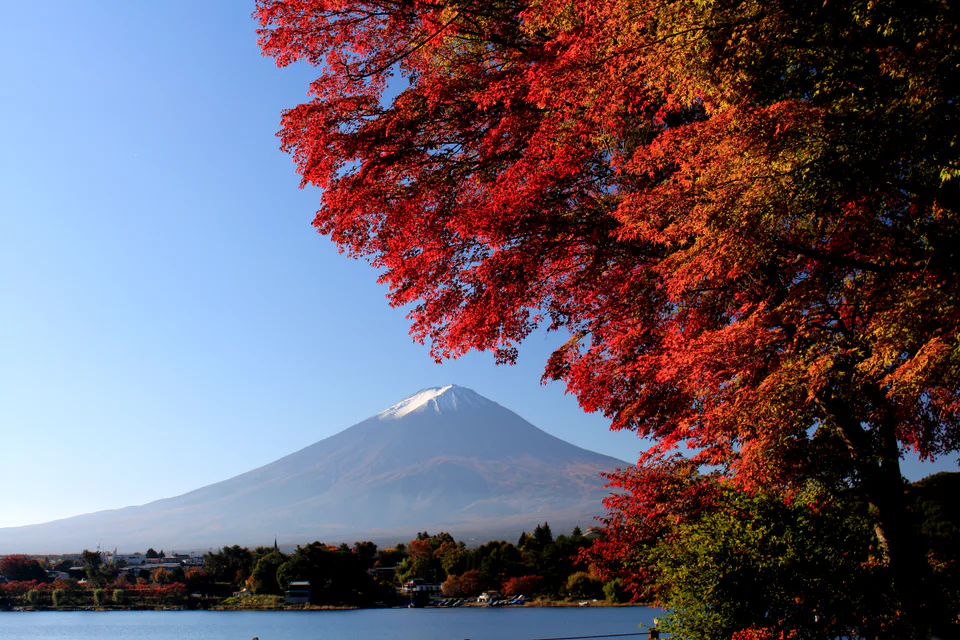
The second-night test: if the full middle day has no job, cut Night 2
Two nights work best when Day 2 would be frustrating if it had to coexist with checkout. I would pay for Night 2 in four main situations:
↔ Scroll table left or right
Job for Night 2 | Why it changes the trip | When I would not pay for it |
Photography / second dawn | You get another early observation window without packing or catching a Tokyo departure. | If you only care about one iconic photo and would be unhappy in cloud anyway. |
Ryokan / private onsen | The property itself becomes part of the holiday rather than a bed between bus rides. | If you leave early, return late and barely use the room or bath. |
Full Fujiyoshida or Yamanakako programme | You can add one distinct regional theme without turning the transfer day into a checklist. | If the extension is only one quick photo stop. |
Weather exchange | You can move the outdoor block to the clearer half-day and keep a museum/onsen block for poor weather. | If every activity depends on Fuji being visible. |
The key phrase is weather exchange, not weather insurance. Two nights give you more windows, but persistent cloud can hide Fuji for the entire stay. If the trip has no satisfying no-Fuji version, a second night may simply double the disappointment instead of reducing risk.
The local bus pass changes the economics of a two-day stay more than the headline price suggests
Fujikyu Bus currently sells a common sightseeing-bus pass for the Kawaguchiko, Saiko and Narusawa/Shojiko/Motosuko lines at ¥1,500 (about US$9.40) for one day and ¥2,000 (about US$12.60) for two days. In other words, once you genuinely need sightseeing buses on both days, extending the pass from one day to two costs only ¥500 (about US$3.15).
That does not make Night 2 cheap—the hotel remains the major cost—but it changes the marginal transport calculation. A car-free traveller staying two nights does not have to treat Day 2 as another full transport purchase. The real question becomes whether the second day creates enough itinerary value to justify the room.
There is also a current ¥3,300 (about US$20.80) R Coupon that combines the ropeway, either the cruise or Oishi Park line, and the two-day sightseeing-bus pass. The listed component total is ¥4,000, so the bundle saves about ¥700 (US$4.40) if—and only if—you were going to use all three components. Do not buy the bundle merely because you are staying two nights. If weather closes the ropeway or you never use the cruise/Oishi component, the “saving” disappears.
Station, south/east shore, north shore or Fujiyoshida: the best base changes with the number of nights
For a one-night stay with large luggage, late arrival or an early onward departure, the station side is hard to beat operationally. You trade some immediate lakeside atmosphere for easier trains, buses and baggage handling. That is often the correct trade when the overnight is mainly about adding one evening and one dawn.
For a first leisure-focused overnight, the south/east side of Lake Kawaguchi can be a better balance between lake access, restaurants and transport. For two nights, the north shore becomes more attractive if the hotel itself is part of the reason to stay: a Fuji-facing room, private bath, dinner and direct access to the autumn corridor can finally be used rather than squeezed around transfers.
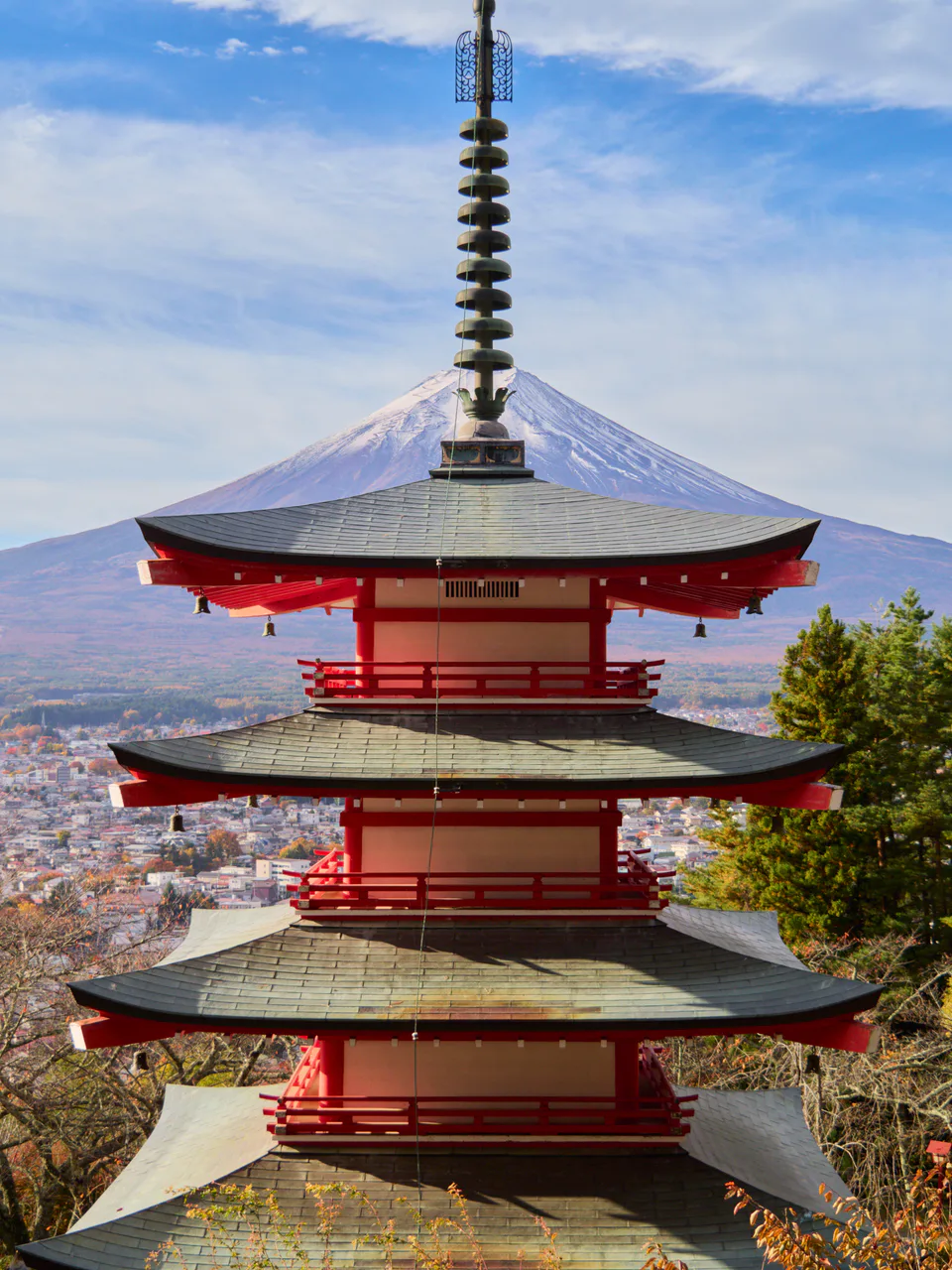
Fujiyoshida is a different decision. It can be a useful two-night split when Chureito Pagoda, Fuji-Q or the town itself matters. It is not a walking substitute for the Maple Corridor. A cheaper room in Fujiyoshida can create more bus or rail movement if your actual itinerary remains north-shore Kawaguchiko.
Room type can be more important than the hotel name
A “Mount Fuji view” room describes orientation, not a weather guarantee. “Lake view” does not automatically mean the room faces Fuji. A private bath also needs separate confirmation: natural hot-spring water, indoor or outdoor setting, stairs, privacy and the actual direction of the view are different product details.
If you are paying a large premium for one night, the room needs to deliver value in that one short window. If you are staying two nights, a less premium room can sometimes make more sense because you have more time to use public viewpoints and the hotel’s shared facilities. The more you pay for “the view,” the more important flexible cancellation becomes because the visual product is weather-dependent.
Do not confuse “direct train” with “door-to-door convenience”
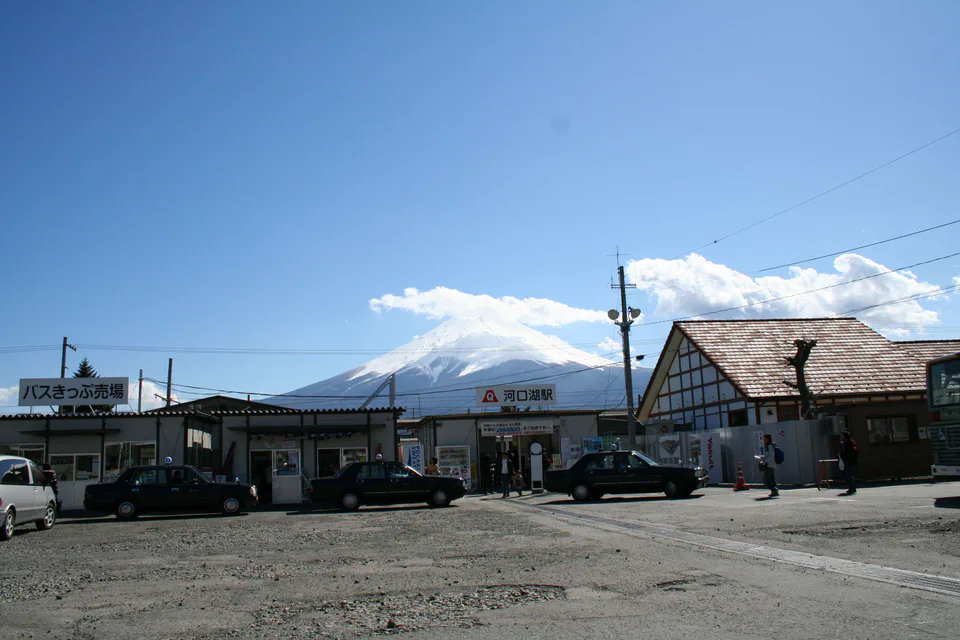
The Fuji Excursion is direct from Shinjuku to Kawaguchiko, but your hotel may still be another bus or shuttle ride away. The farther around the north shore you stay, the more the final mile matters. A direct two-hour train followed by a missed hotel shuttle can be less convenient than a slightly slower route that actually lines up with check-in.
Reserve the outbound and return together on autumn weekends when possible. Fujikyu currently operates four regular Fuji Excursion round trips daily, with additional seasonal services on selected dates. Those extra trains improve capacity but should not be treated as a universal fallback because they run only on specified days.
Highway coaches can offer later departures than the direct train, but road traffic is a different risk. If you are day-tripping specifically for autumn illumination, protect a late return before committing to dinner or the corridor. If you are overnighting, confirm the hotel shuttle cut-off before assuming “we can just stay until the lights finish.”
Continuing to Kyoto or Osaka? A linear exit through Mishima can change how many nights make sense
Many travellers automatically send Lake Kawaguchi back to Tokyo because that is how they arrived. If the next destination is Kyoto or Osaka, check the southbound route first. Fujikyu Bus currently operates the Kawaguchiko–Mishima express bus at ¥2,700 (about US$17) one way, with a current web fare of ¥2,500 (about US$15.70). From Mishima, you can continue west by Shinkansen.
This matters because a one- or two-night Kawaguchiko stay can become part of a linear Tokyo → Fuji → Kansai route rather than a Tokyo out-and-back. In that structure, the overnight costs less itinerary time than the hotel count suggests because you are not spending another half-day returning east. Forwarding the main suitcase and carrying one or two nights of essentials makes this much cleaner.
Families and older travellers should count energy, not just kilometres
One night is often the better family answer if the child sleeps poorly in new hotels or the wider trip already has many hotel changes. Two nights become stronger when the alternative is a packed checkout day with luggage, buses and a late onward train.
For older travellers, the question is similar. A second night can remove the need to combine breakfast, packing, checkout, a north-shore bus and a long intercity transfer in one day. But if the hotel itself has stairs, distant shuttle stops or a rigid dinner schedule, “two nights for comfort” can backfire. The base must actually reduce friction.
Weather, foliage and transport are three separate uncertainties
Do not bundle every autumn risk into “weather.” Mount Fuji visibility, leaf colour and transport conditions can move independently. Fuji can be hidden while the Maple Corridor is excellent. The mountain can be clear before the leaves peak. A sunny day can still have road congestion. Two nights help because you can rearrange independent blocks; they do not make every variable cooperate.
↔ Scroll table left or right
Problem | Best response |
Fuji hidden, foliage good | Keep the corridor, museums, onsen and food. Do not spend the day chasing cloud around the lake. |
Fuji clear, foliage weak | Prioritise the mountain immediately and treat autumn colour as a bonus. |
Ropeway closed by wind | Do not let a prepaid bundle force the schedule. Move to a lakeside viewpoint or indoor stop. |
Reserved return sold out | Rebuild the day before departure; do not assume an unreserved direct seat exists on the Fuji Excursion. |
Early snow / ice | Avoid inexperienced driving and reconfirm hotel shuttles and local buses. |
Red-team: when my one-night default is wrong
↔ Scroll table left or right
Condition | Why the recommendation flips |
Your Japan trip is only 5–6 nights and Tokyo/Kyoto are the real priorities | A day trip can be the better use of scarce hotel nights. |
You booked a destination ryokan and the hotel experience itself is a major reason for the trip | Two nights can be rational because you are buying hotel time, not merely another sightseeing day. |
You photograph sunrise/sunset and can use poor-weather time productively | A second dawn and a complete middle day have real value even without guaranteed visibility. |
You hate hotel changes and would otherwise split Kawaguchiko/Fujiyoshida | Two nights in one carefully chosen base may be more resilient than two one-night hotels. |
Weekend room rates are extreme and Night 2 has no independent purpose | Cut the second night. “More chances to see Fuji” alone is not enough to justify any price. |
Final verdict: one night is the default, but only because it solves the biggest timing problem
I would book one night for most first visits to Lake Kawaguchi. It changes the trip meaningfully: you stop racing the Tokyo return, gain a dusk and dawn, and can separate the autumn illumination from daytime attractions. That is a substantial gain for one hotel night.
I would choose two nights only when the second night has a named job: a full Fujiyoshida/Yamanakako programme, a serious onsen/ryokan stay, photography, family pacing or a weather-exchange day that still works without Mount Fuji. If you cannot name that job, cut Night 2.
And I would choose a day trip when the trip is short, the hotel experience does not matter and one controlled daylight route is enough. The decision is not “Is Kawaguchiko worth two nights?” The better question is: what does the extra night let you do that you cannot do well without it?
Official 2026 planning references
Fujikawaguchiko Tourism Federation: 2026 Autumn Leaves Festival
Fujikyu Railway: Fuji Excursion timetable and fares
Fujikyu Bus: Kawaguchiko/Saiko sightseeing buses and one-/two-day passes
Mt. Fuji Panorama Ropeway: current fares and operating hours
Fujikyu Bus: Kawaguchiko–Mishima express bus
Compare Lake Kawaguchi hotels
Search Lake Kawaguchi hotels on Booking.com
Compare Lake Kawaguchi hotels on Expedia
Related planning
Lake Kawaguchi Maple Corridor guide | Lake Kawaguchi vs Lake Yamanaka | Lake Kawaguchi vs Hakone
Things to Do in Kawaguchiko: Mt Fuji Views, Oishi Park, Ropeway and Fuji-Q