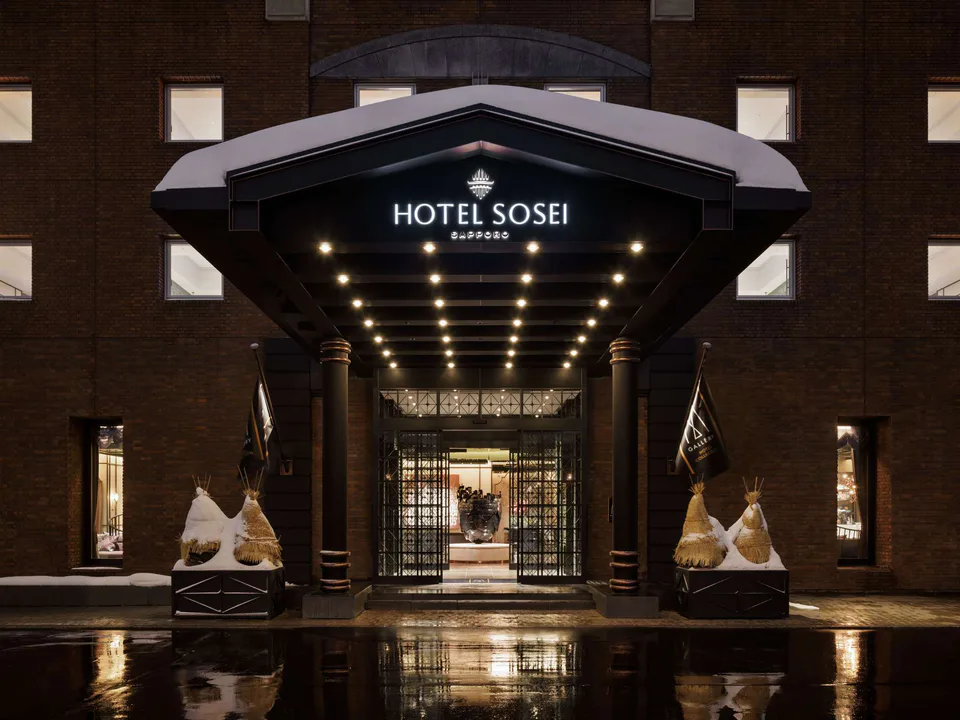
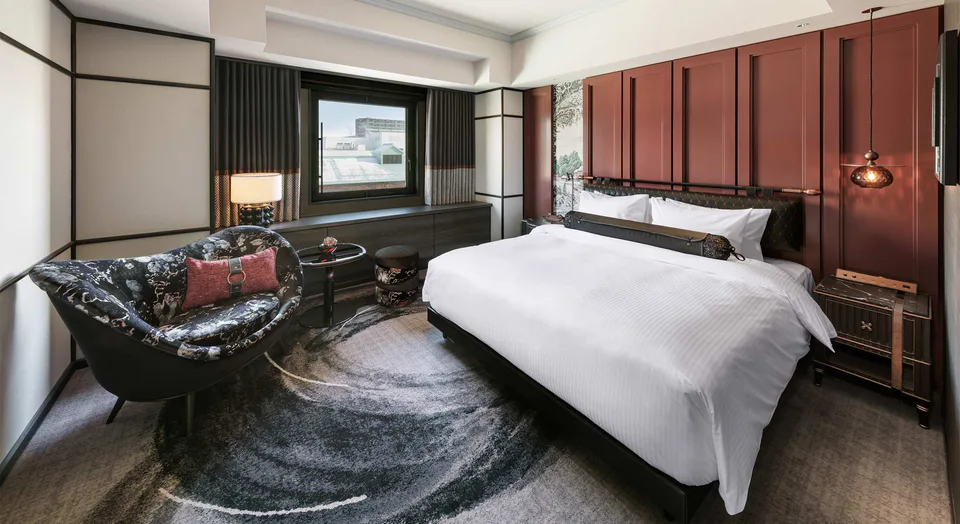
Hotel Sosei Sapporo is worth the 15-minute Sapporo Station walk when room space and hotel-side indoor convenience are things you will actually use. The current official inventory starts at 29 m² for a King room and reaches 39 m² for the two-Queen Deluxe, while Accor describes the hotel as connected to Sapporo Factory’s shopping, dining and entertainment. That is a very different product from a compact station-front room.
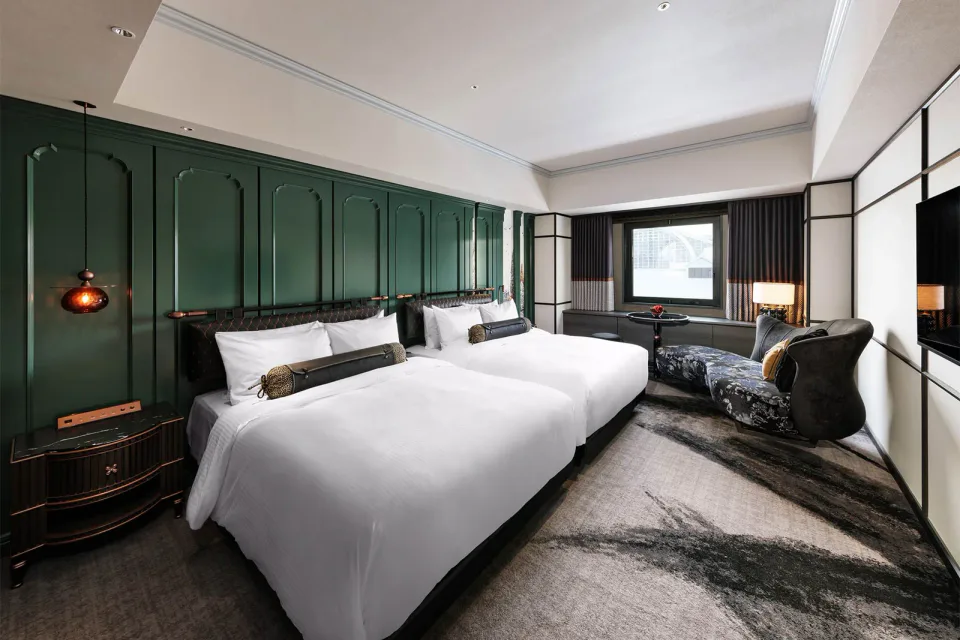
The key correction is that 39 m² for four guests does not mean four separate beds. The Deluxe has two Queen beds and a published capacity of four. For two adults and two children who are comfortable sharing, that can be an unusually useful Sapporo setup. For four adults who each expect their own sleeping surface, the room’s headline capacity does not solve the real problem.
↔ Scroll table left or right
Your trip | My call | Why |
Couple with large luggage, 3–4 nights | Strong fit | 29 m² already gives more breathing room than many station-area city rooms |
2 adults + 1–2 children sharing beds | Deluxe is compelling | 39 m² plus two Queen beds can reduce room squeeze without booking two rooms |
4 adults needing separate beds | Do not assume Deluxe works | Published capacity is four, but the standard bedding is two Queen beds |
Daily JR day trips | Recompare station hotels | The 15-minute Sapporo Station leg repeats morning and night |
Winter city stay with indoor downtime | Hotel gets stronger | Sapporo Factory connection adds nearby shopping/dining utility when weather is poor |
ValueNavi Hotel Fit Score: score the itinerary, not the hotel badge
For single-property hotel decisions, ValueNavi uses six scenario-weighted dimensions: room/bed fit 25%, station and luggage friction 25%, whole-trip route fit 15%, bad-weather indoor utility 15%, multi-night repeat utility 10%, and property-specific payoff 10%. Each dimension is scored from 0–10. This is an editorial planning model, not an official hotel rating.
Scenario | ValueNavi score | Decision signal |
|---|---|---|
Couple, 4 nights, one JR day trip, large luggage | Room space and Sapporo Factory utility repeat more often than the station penalty. | |
2 adults + 2 children sharing two Queen beds, 3 nights | The 39 m² Deluxe solves a real family-room problem if bed sharing is acceptable. | |
4 adults requiring four separate beds | The published four-person capacity does not match the sleeping requirement. | |
4 nights with three early JR day trips | The station walk becomes recurring infrastructure rather than a one-time inconvenience. |
A high score does not mean Hotel Sosei is universally “better.” It means its defining advantages line up with that specific itinerary. Change the bed requirement or the number of JR mornings and the answer can reverse.
ValueNavi Station Tax Multiplier: count every time the 15-minute baseline repeats
The official dry-pavement reference is about 15 minutes on foot between Hotel Sosei and Sapporo Station. Do not compare that number only once.
Station Tax baseline = published one-way station walk × meaningful Sapporo Station legs
Example: airport arrival by JR, one Otaru day trip and a final JR departure create four meaningful hotel↔station legs. On the published walking baseline, that is roughly 60 minutes of station-walk exposure across the stay before adding snow, luggage or waiting. This is not a prediction of winter walking time; it is a way to show why a small map disadvantage can become important through repetition.
My boundary is simple: 0–3 meaningful station legs keeps the location trade manageable for many travellers; 6+ legs means a station-front hotel deserves a serious recheck unless the Sosei room or family setup solves a bigger problem.
ValueNavi Space Payback: only pay for 39 m² when the extra space has a job
When comparing the 29 m² King with the 39 m² two-Queen Deluxe, do not treat the 10 m² difference as abstract luxury.
Space payback = room-rate premium ÷ nights where the larger layout materially improves sleeping, luggage or family circulation
If a family uses both Queen beds and needs the extra room every night, the premium has repeated utility. If two adults book 39 m² but use one bed and spend almost no waking time in the room, the same premium is buying mostly unused floor area. This formula lets the answer move with the live rate instead of hard-coding a price that will be stale next week.
The 15-minute walk is not one cost — it is a repeated-use tax
Accor currently places Sapporo Station about 1.1 km away, roughly 15 minutes on foot or five minutes by car, while Bus Center-Mae is around a five-minute walk. A one-time taxi on arrival with two large cases is easy to justify. Walking or taxiing back to JR twice a day for four days is a different product.
Use a simple count. If the itinerary contains one Otaru day and the rest of the stay is Sapporo city, the station penalty is paid only a few times. If every day begins with JR to Otaru, Asahikawa, New Chitose Airport or another rail destination, the hotel’s room-space advantage is being exchanged for repeated transfer friction.
This is why the hotel is strongest as a Sapporo stay with some rail, not a rail-hub stay that happens to sleep in Sapporo.
Winter makes the taxi compromise more rational, not the hotel automatically worse
A 15-minute summer walk should not be converted into a fake precise winter time. Snow depth, ice, suitcase wheels and footwear change it. But the direction of the trade-off is clear: the more luggage and winter surface friction you have, the more valuable a short taxi becomes.
For a three-night stay, I would rather pay for a taxi on arrival and departure, then enjoy a room that fits the group, than reject the hotel solely because of two luggage-heavy walks. The recommendation reverses if the group must return to Sapporo Station with gear every morning.
39 m² is a space upgrade; two Queens are a sharing model
The current Deluxe Room is 39 m² with two Queen beds and a maximum occupancy of four. That gives four guests a gross published-area figure of 9.75 m² each, but that number is only a comparison tool—not usable floor area after beds, bathroom and furniture.
The more important question is sleeping geometry. Two parents plus two children can use two Queens very differently from four unrelated adults. A family may gain privacy, luggage room and the ability to stay together. Four adults may discover that the “family-size” room still asks them to share beds.
The 29 m² Superior with one King is also useful for two travellers. It is not the consolation prize; it may be the better-value room when only two people are staying and the 39 m² upgrade would mostly buy unused floor space.
Sapporo Factory is a second kind of location convenience
Accor currently describes Hotel Sosei as connected to Sapporo Factory’s shopping, dining and entertainment. That does not make it a Sapporo Station hotel, but it creates a different convenience layer: food, shopping and indoor time close to the room.
This matters most on a winter or rainy day, with young children, or when the hotel is part of a slower city stay. If the group will return in the afternoon, reset and eat nearby, the connection is used. If everyone leaves at 07:30 and comes back after 22:00, the Sapporo Factory advantage is mostly theoretical.
Do not double-count it. “Connected to Sapporo Factory” does not cancel the 15-minute station walk; it compensates for it only when the trip actually uses the complex.
Heritage View and Executive upgrades need a separate reason
Accor currently lists Heritage View versions of both the 29 m² King and 39 m² two-Queen rooms, plus Executive categories with the same core floor areas. A higher category therefore does not automatically buy more space.
Price each premium by what changes: view, Executive privileges or package conditions. If the reason you chose Hotel Sosei was simply “I want a 39 m² room for four,” the standard Deluxe can remain the correct benchmark.
Who should not book Hotel Sosei?
I would choose another hotel when:
JR Sapporo Station is used for a serious day trip on most mornings;
four adults require four independent beds;
Susukino nightlife is the emotional centre of every evening;
the group will never use Sapporo Factory or hotel-side downtime;
the 39 m² rate premium reaches a level where two well-located rooms solve the group better.
Final verdict
Hotel Sosei Sapporo is a room-and-lifestyle premium, not a station-convenience premium. The strongest case is a couple or family staying several nights in Sapporo, carrying real luggage and valuing a 29–39 m² room plus nearby Sapporo Factory time. The weakest case is a JR-heavy itinerary where the 15-minute station leg repeats every morning and evening.
For four guests, treat the two-Queen Deluxe as a bed-sharing decision, not simply a four-person room. If that sleeping model works, 39 m² can justify the location trade. If it does not, the headline floor area should not persuade you.
Hotel Hankyu RESPIRE OSAKA: Is a 3-Minute Osaka Station Walk Worth the High-Rise Trade-Off?
Sapporo Grand Hotel: Is the 10-Minute Underground Walk Worth It in Winter?
ONSEN RYOKAN YUEN SAPPORO: Is the Karurusu Hot Spring Worth a 13-Minute Walk?
Solaria Nishitetsu Hotel Sapporo: Is the Five-Minute Walk Worth It?
References
Hotel Sosei Sapporo - MGallery Collection — official rooms, location and Sapporo Factory information. Rechecked August 26, 2026. Current official details list Sapporo Station at about 15 minutes on foot, Bus Center-Mae at about five minutes, Superior rooms at 29 m² and Deluxe rooms at 39 m² with two Queen beds.