
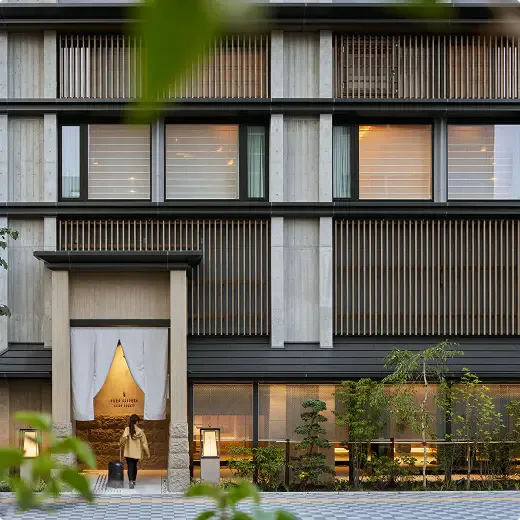
ONSEN RYOKAN YUEN SAPPORO exterior. The hotel images in this guide are verified property photos rather than AI-generated or substitute-hotel images.
ONSEN RYOKAN YUEN SAPPORO is not a Sapporo Station hotel disguised as a ryokan. Its most distinctive value is that you can finish a central-Sapporo day with hot-spring water transported from Noboribetsu Karurusu Onsen. The cost is equally clear: the hotel currently lists about a 13-minute walk from JR/subway Sapporo Station, and even when you use the underground walkway, roughly the last 500 metres remain above ground. In winter, with two large suitcases, that final section is a real booking cost rather than a footnote.
My answer is not that the walk is always worth it. If every day begins with an early JR train and ends after midnight, you keep paying the location cost while using less of the hot spring and sauna. If you stay two to four nights, spend much of the day around central Sapporo and can return before the bath closes, the product becomes much harder to replace with an ordinary station-side business hotel. Before choosing YUEN, settle whether your itinerary really belongs around Sapporo Station, Odori or Susukino; if the repeated trade-off is JR mornings versus late Susukino evenings, use the Sapporo Station vs Susukino guide. Then set the broader route with the Hokkaido itinerary by region and transport before deciding how many nights should remain in Sapporo.
ONSEN RYOKAN YUEN SAPPORO: 30-second verdict
↔ Scroll table left or right
Decision | Core condition | How I would read it |
I would book | 2–4 nights in Sapporo, city-centre days, and you can return before 1:00 a.m. to use the bath | You accept a longer station walk in exchange for the Karurusu outdoor bath, sauna and a more deliberate ryokan-style evening |
I would compare again | Late winter arrival, two large cases, older travellers, or daily early JR departures | CHIKAHO reduces outdoor exposure, but roughly 500m still remains after Exit 8; snow and ice amplify that final section |
I would skip | Shortest Sapporo Station transfer is the first priority and you do not intend to use the bath | You keep paying the location cost while leaving the hotel's most distinctive facility unused |
My one-big-decision rule: I treat YUEN SAPPORO as a city ryokan for travellers willing to move Sapporo Station proximity down the priority list in exchange for an evening hot-spring routine they will actually use. If the trip has no bath time, Japanese design alone is not enough reason to ignore the walk and the room rate.
ONSEN RYOKAN YUEN SAPPORO hotel snapshot
↔ Scroll table left or right
Item | Verified condition | Trip impact |
Sapporo Station | About 13 minutes from JR/subway Sapporo Station Exit 10 under current hotel guidance | This is not a station-connected hotel; repeated JR days make the distance more important |
Underground route | Hotel FAQ identifies CHIKAHO Exit 8 as nearest; about 500m remains above ground toward the Hokkaido Government Office | The 13-minute route is not all outdoors in winter, but the final snow-exposed section does not disappear |
Bath / sauna | Bath 15:00–01:00 and 06:00–10:00; sauna to 00:00 at night and 09:00 in the morning | A 00:10 return can still leave time for the bath but not the sauna |
Room ladder | Double about 20m²; High Floor Twin 24m²; Corner Twin/Double 27m²; suites 39m² | For two travellers with large luggage, 27m² is more useful to compare than automatically choosing the 20m² entry room |
Breakfast | Currently ¥4,000 per person, 07:00–10:00, last order 09:30; reservation required by the previous day and quantity is limited | Two adults = ¥8,000; do not add it automatically before an early JR departure |
Self-service laundry | 5F and 9F; current FAQ lists wash ¥300/30 min and dryer ¥100/30 min | On a 4–5 night stay, laundry can reduce winter clothing volume more than the ryokan atmosphere does |
Arrival reality: the last 500m still matters in a Sapporo winter
From New Chitose Airport, current JR Hokkaido Airport-series services reach Sapporo in different times depending on the train; the fastest services are roughly in the low-30-minute range, but you should not turn that into one universal journey time. Once at Sapporo Station, the hotel suggests using the Sapporo Ekimae-dori underground walkway and leaving at Exit 8, then walking roughly 500 metres above ground toward the Hokkaido Government Office. That is a more useful description than “13 minutes”: some of the route can be sheltered, but the hotel is not attached to the underground exit.
Winter changes the weighting. Packed snow and ice can make the same distance feel very different from a dry autumn afternoon. With a late December-to-February arrival, two large suitcases and unfamiliar streets, I count the last 500 metres as a real accommodation cost. With luggage already forwarded or a small overnight bag, the cost falls sharply. Use the Japan luggage-forwarding guide if the wider route changes hotels several times.
I would not invent a fixed “snow adds X minutes” rule: snowfall, footwear, signals and walking speed vary. The stable fact is the route shape—underground first, then a meaningful ground-level finish. If you are considering a car to avoid winter walking, read the Hokkaido winter-driving guide first; limited hotel parking and snow-road risk do not make driving an automatic convenience upgrade.
If station proximity is the real priority, compare the completed JR Tower Hotel Nikko Sapporo review and the Sapporo Station hotel comparison before paying for a city-ryokan concept that sits farther away.
20m², 24m², 27m² or 39m²: choose the room before the atmosphere
The current room range matters because floor area is one way to compensate for the longer station walk. A typical Double is around 20m²; High Floor Twin is 24m²; Corner Twin and Corner Double are around 27m²; Garden Suite and Family Suite reach 39m². Most standard rooms use a shower, while selected suites have bathtubs. The hotel's FAQ is explicit that guest rooms do not use hot-spring water, so a suite bathtub must not be described as an in-room onsen.
↔ Scroll table left or right
Room | Current specification | How I would choose |
Double | 20m² / 1–2 guests / 1600mm bed | Best for solo or a short two-person stay with limited luggage; I would not choose it only for the lowest rate when two large cases stay open |
High Floor Twin | 24m² / 1–3 guests / two 1200mm beds | A balanced option for two travellers who want separate beds without paying for the largest room |
Corner Twin | 27m² / 1–2 guests / two 1200mm beds | The tier I would compare first for two large suitcases and several nights; more area lowers space risk but is not a two-open-case guarantee |
Family Suite | 39m² / 1–4 guests / large bed plus Japanese bedding for 3+ guests | A genuine product change for families or four travellers; selected suite tubs still do not contain hot-spring water |
Two 28-inch suitcases are exactly where hotel writing can become too confident. Official information proves room area, bed size and selected photographs; it does not prove identical usable floor space in every 27m² room. I can reasonably say 27m² gives more organising buffer than 20m², but not promise two cases can remain fully open without affecting circulation. If your route continues to Asahikawa, the OMO7 Asahikawa guide is a useful comparison of a different city-base trade-off.
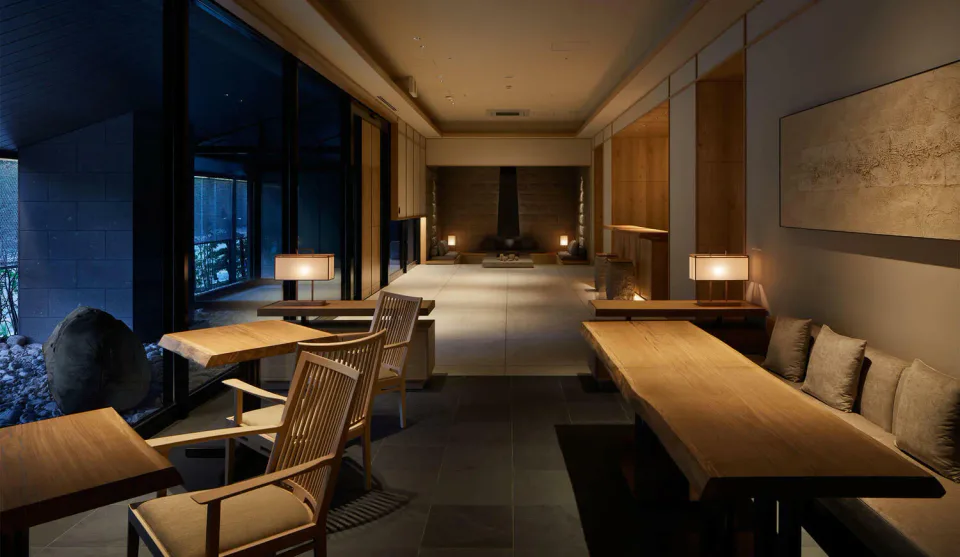
Verified hotel public space, guest room and bathroom images. When a specific room type cannot be identified reliably from the photo, the caption does not invent one.
Pair this with
For an autumn trip, use the five-day Hokkaido foliage itinerary and the wider Hokkaido autumn-leaves hub to decide whether Sapporo should hold several nights or only one stop.
Hot-spring value: a 00:10 return still allows the bath, but not the sauna
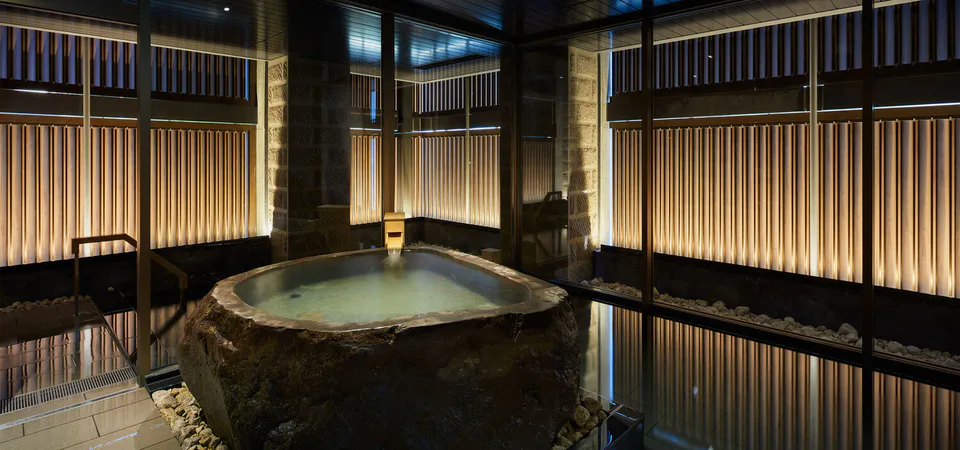
Official second-floor bath image. Only the outdoor bath is described here as using water transported from Noboribetsu Karurusu Onsen because that is the part the hotel explicitly identifies.
The current bath schedule is 15:00–01:00 with last entry at 00:45, then 06:00–10:00 with last entry at 09:45. The sauna ends earlier: 00:00 at night and 09:00 in the morning. That means a 00:10 return still leaves time for the bath but the sauna is already over. For travellers who routinely return after midnight, that 45-minute difference matters more than a generic “hotel has a sauna” label.
The hotel's onsen page says the outdoor bath uses hot-spring water transported from Noboribetsu Karurusu Onsen, while its FAQ explicitly says guest rooms do not use hot-spring water. Read both statements together. A suite may have a bathtub, but it is not an in-room onsen. If a private hot-spring bath or full one-night-two-meals ryokan experience is mandatory, do not let the word ONSEN in the hotel name override the actual product.
Tattoo rules also affect whether the key facility is usable. The current FAQ says tattoos need to be covered with concealment stickers; the hotel sells a specified sticker size, and larger designs that cannot be covered should be confirmed with the property before use. This belongs in the booking decision, not at the bath entrance.
Breakfast is ¥4,000 per person: two adults means an ¥8,000 decision
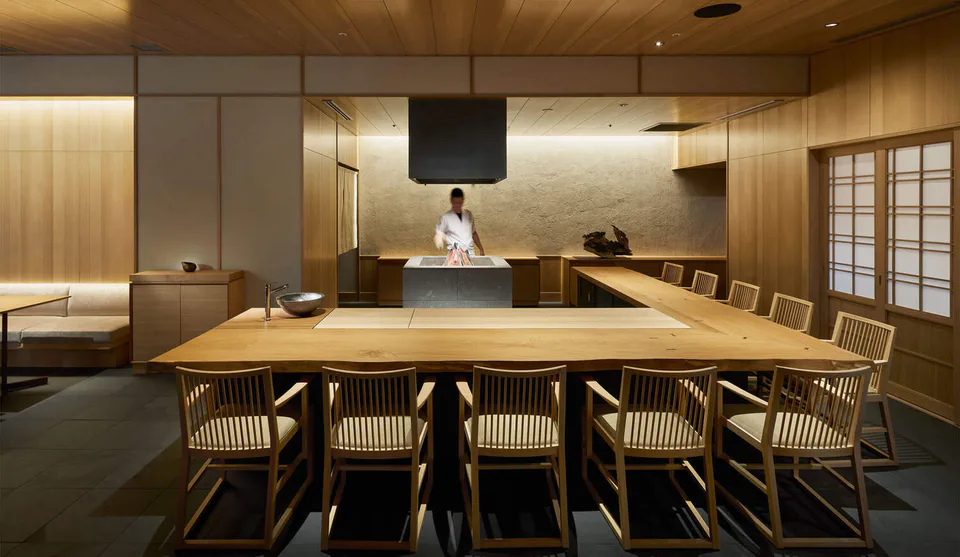
Official breakfast image. The menu may change, so a dish visible in a photograph is not treated as guaranteed for every stay.
The restaurant currently lists breakfast at ¥4,000 per person from 07:00–10:00, with last order at 09:30. It must be reserved by the previous day and is subject to limited quantities. For two adults, the real decision is ¥8,000. If you want to be on an early train to Otaru, Asahikawa or the airport, put the departure on the timeline before buying breakfast.
I would not label that price automatically good or bad. On a slow city morning, it can buy a deliberate Japanese breakfast and extend the ryokan rhythm. On a 07:10 platform deadline, it compresses the most valuable transport buffer. If the itinerary is built around early regional movement, compare a station-side hotel such as Solaria Nishitetsu Hotel Sapporo instead of treating every YUEN facility as mandatory value.
Laundry on floors 5 and 9 can matter more after the fourth night
The current FAQ lists self-service washers and dryers on floors 5 and 9, with washing at ¥300 for 30 minutes and drying at ¥100 for 30 minutes. On a four- or five-night Sapporo stay, that can reduce the number of base layers, socks and winter clothes you carry. A ryokan-style hotel is not automatically a poor long-stay choice just because the design feels more traditional.
Facilities still compete for time. Return at 22:30 and you can wash clothes, then use the bath before 01:00. Return at 00:10 and you need to choose which task matters first. This is the principle behind the whole review: facility value is not the number of things the hotel offers, but whether your real schedule lets you use them.
A three-night timeline: does the hotel actually earn its premium?
This is an itinerary stress test, not a personal-stay claim. Night one: arrive from New Chitose Airport, use the underground walkway to Exit 8, complete the last 500m above ground, and return from dinner early enough to use the bath. Day two: keep the itinerary around Odori and central Sapporo so the station-distance weakness appears less often, then return before midnight if the sauna matters. Day three: if an early JR day trip is planned, breakfast and the walk back to Sapporo Station must be scheduled together rather than treated as independent benefits.
For a winter trip that is not about skiing, the Hokkaido winter activities without skiing guide helps estimate how many evenings actually remain in central Sapporo. If Asahikawa becomes a major base, the Premier Hotel CABIN Asahikawa guide is another useful hot-spring-city-hotel comparison.
The three property-specific takeaways are therefore precise. First, the 13-minute station figure can be partly sheltered underground but still leaves about 500m above ground. Second, the bath stays open to 01:00 while the sauna ends at midnight, so a late return changes what you can use. Third, the room ladder reaches 27m² corners and 39m² suites rather than stopping at a 20m² Double, making room choice a real way to trade money for lower luggage friction.
What do you give up by staying here?
First, you give up the shortest JR Sapporo Station connection. You do not step off a train and reach the room through a few minutes of fully indoor circulation. In snow, with large luggage, older travellers or young children, the last ground-level section matters more. The Sapporo Grand Hotel underground-route guide is a useful comparison when sheltered winter access matters more than a ryokan-style bath night.
Second, not every room is spacious by traditional-ryokan standards. A 20m² Double is still an urban accommodation product. If you expect two open cases, winter gear and a large sitting zone, compare the 27m² or 39m² tier directly. If the higher rate reaches a different Sapporo hotel's price, rebuild the comparison across hotels instead of continuing to upgrade automatically.
Third, you have to reserve time inside the hotel. Bath, sauna and breakfast are not valuable merely because they exist. A schedule of 08:00 out and 00:30 back leaves little sauna use and can make breakfast conflict with transport. And the phrase “onsen ryokan” does not mean every guest room contains hot-spring water—the hotel's own FAQ says the rooms do not.
If you still want an in-city hot-spring product but a different station trade-off, compare SAPPORO HOTEL by GRANBELL. The point is not to crown one “best hotel”; it is to pay for the bath-and-access combination your route actually uses.
Five checks before you book
Will you arrive in Sapporo with large luggage? If yes, count the roughly 500m above-ground segment after CHIKAHO Exit 8 as a real winter cost.
Do you normally return at 23:30, 00:10 or 00:50? Those times change sauna, bath and last-entry availability.
Do two travellers really need 20m² or should 27m² Corner Twin be in the first rate comparison because of luggage and length of stay?
Does a ¥4,000-per-person breakfast starting at 07:00 fit the first JR train or day trip, or does it remove your transport buffer?
If tattoos, accessibility, a crib or an in-room onsen are hard requirements, check the hotel FAQ first; these conditions cannot be inferred from the word ryokan or a room photo.
Compare the exact same room and meal plan on all three platforms
Fix the dates, guest count, exact room category, bed setup, breakfast, taxes and cancellation deadline before comparing. A 20m² Double, 24m² High Floor Twin, 27m² Corner room and 39m² Suite are not the same product, so the lowest visible OTA price is not a valid comparison by itself.
Booking.com: check ONSEN RYOKAN YUEN SAPPORO rooms
Trip.com: check ONSEN RYOKAN YUEN SAPPORO rooms
Agoda: check ONSEN RYOKAN YUEN SAPPORO rooms
Final decision: would I book ONSEN RYOKAN YUEN SAPPORO?
↔ Scroll table left or right
Decision | Core condition | Reason and trade-off |
I would book | 2–4 nights, time reserved for the bath, and no need to drag large luggage to JR Sapporo every day | I would exchange the longer walk for Karurusu hot-spring time, sauna and the hotel rhythm; with two large cases I would compare 27m² rooms first |
I would compare again | Late winter arrival, older/young companions, daily early JR trains, or a rate close to roomier alternatives | Station distance, breakfast timing and room area can create friction at the same time; the existence of an onsen does not erase those trade-offs |
I would skip | You only need a bed, never use public baths, or require the shortest / fully indoor Sapporo Station route | The hotel's most distinctive value is unused, leaving the longer walk and possible price premium |
My final positioning: ONSEN RYOKAN YUEN SAPPORO is not the closest hotel to Sapporo Station. It is a city ryokan for travellers willing to walk the final section in exchange for reserving genuine hot-spring time inside a central-Sapporo stay.
ONSEN RYOKAN YUEN SAPPORO FAQ
Is ONSEN RYOKAN YUEN SAPPORO really a 13-minute walk from Sapporo Station?
The hotel currently lists about 13 minutes from JR/subway Sapporo Station Exit 10. Its FAQ also says CHIKAHO Exit 8 is the nearest underground exit, followed by roughly 500 metres above ground toward the Hokkaido Government Office. Winter time varies with snow, luggage and walking speed.
Is the hot spring really from Noboribetsu Karurusu Onsen?
The hotel's onsen page states that the outdoor bath uses hot-spring water transported from Noboribetsu Karurusu Onsen. This guide applies that source only to the part the hotel explicitly identifies rather than describing every tub or guest-room bathtub as the same hot spring.
Do the guest rooms have hot-spring water?
No. The hotel's FAQ explicitly states that guest rooms do not use hot-spring water. Selected suites may have bathtubs, but those are not in-room onsen baths.
What time do the public bath and sauna close?
Current hours list the bath from 15:00–01:00 with last entry at 00:45, then 06:00–10:00 with last entry at 09:45. The sauna ends at 00:00 at night and 09:00 in the morning, so a post-midnight return changes which facility you can still use.
How much is breakfast, and do I need to reserve it?
The restaurant currently lists breakfast at ¥4,000 per person from 07:00–10:00, last order 09:30. It must be reserved by the previous day and is subject to limited quantities. Two adults should evaluate the ¥8,000 total against their actual morning timetable.
Can the hotel store luggage, and does it have laundry?
Current FAQ information says luggage can be stored before check-in and, subject to space, after checkout on the same day before leaving Sapporo. Self-service washers and dryers are on floors 5 and 9; current listed prices are ¥300 for a 30-minute wash and ¥100 for a 30-minute dry.
Oriental Hotel Okinawa Resort & Spa Review: Is the 170m Pool Worth a 7-Minute Beach Walk?
Hotel Sosei Sapporo Review: Is a 39 m² Twin-Queen Room Worth a 15-Minute Walk from Sapporo Station?
The Naha Terrace: Are 35m² Rooms and 12:00 Check-Out Worth a 15–20 Minute Station Walk?
Hotel Hankyu RESPIRE OSAKA: Is a 3-Minute Osaka Station Walk Worth the High-Rise Trade-Off?
THE BLOSSOM HAKATA Premier: Is the 7-Minute Walk Worth a 30m² Twin and Public Bath?
Sources
ONSEN RYOKAN YUEN SAPPORO official website | Official rooms | Official onsen | Official restaurant / breakfast | Official FAQ | JR Hokkaido airport rail information | Booking.com property page | Trip.com property page | Agoda property page
Room types, rates, availability and cancellation terms can change by date. This article may contain affiliate links; ValueNavi may earn a commission from qualifying bookings at no additional cost to you.