
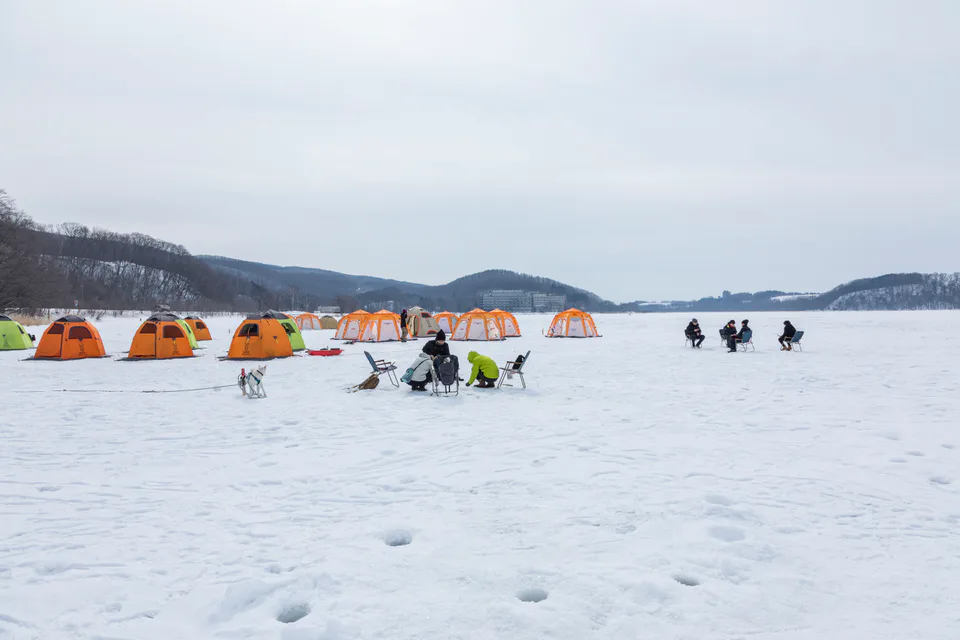
The best Hokkaido winter activity without skiing is usually the one that does not force the rest of your trip to become fragile. Abashiri drift ice, a Shiretoko drift-ice walk, Tokachi dog sledding and a Niseko snow day are all legitimate winter highlights, but they sit in different transport basins. Crossing Hokkaido for one prepaid activity can cost more in hotel moves and weather exposure than the activity adds.
For a first winter trip, my default is one regional base, one hard-to-replace winter anchor, and one backup that stays in the same region. That rule matters more for long-haul visitors because five or seven days in Japan are expensive trip days; losing one to a cross-island rescue plan hurts more than missing one optional activity.
Checked August 26, 2026. Abashiri’s Aurora currently publishes a January 20–March 31 operating season and an adult fare of ¥7,000, about US$44 at the August 26 exchange rate. Shiretoko’s official 2026 winter material describes drift-ice walking as a late-January-to-March natural-condition activity using a dedicated dry suit and professional guide. Recheck the next winter season before booking.
ValueNavi Regional Commitment Score: how much of the trip must bend around the activity?
I separate “fun activity” from regional commitment. A nearby snow experience from Sapporo may cost half a day. A drift-ice walk in Utoro can require a dedicated eastern-Hokkaido stay, a weather window and a backup day.
| Base / experience | Time Cost | Booking Risk | Weather Risk | Route Fit | Uniqueness | Commitment |
|---|---|---|---|---|---|---|
| Sapporo / Asahikawa snow day | 9/10 | Low | ||||
| Niseko non-ski day | 8/10 for mixed groups | Medium | ||||
| Tokachi dog-sled / snow anchor | 6/10 | Medium-high | ||||
| Abashiri Aurora | 8/10 if based in Abashiri | High | ||||
| Shiretoko drift-ice walk | 5/10 from outside Utoro | Very high |
These are ValueNavi editorial scores, not operator ratings. They are designed to answer the question ordinary activity lists miss: how much itinerary infrastructure does this experience require?
One hard winter anchor per two to three nights
A “hard” winter anchor is something tied to a specific time, natural condition or remote location: drift ice, a guided backcountry-style activity, dog sledding, or a frozen-lake experience. On a five- or six-night trip, I would not put three hard anchors in three separate regions.
My rule is one hard anchor per two to three nights. That leaves a neighboring day that can absorb bad weather, a changed departure time or a replacement activity. It also prevents a booking calendar from dictating every hotel move.
A robust six-night example is three nights in eastern Hokkaido built around one or two compatible winter experiences, then three nights in Sapporo. A fragile version is Sapporo → Tokachi → Abashiri → Niseko in the same six nights because each activity looked good separately.
Abashiri Aurora: the ticket is cheap compared with the detour
The large Aurora currently runs about one hour per sailing during its published January 20–March 31 season. The adult fare is ¥7,000, roughly US$44. The operator explicitly says times can change with drift-ice conditions.
More importantly, no drift ice does not automatically mean the same experience. The large ship may switch to a Cape Notoro sea excursion; the smaller Aurora III can be suspended. That is why I would never value the trip as “US$44 for a boat ride.” The real purchase is a night or two in Abashiri plus the probability of seeing the winter phenomenon you came for.
If Abashiri is already your base, Route Fit is strong. If you cross Hokkaido for a single sailing and leave immediately after, the boat ticket is the smallest cost in the decision.
The heated indoor cabin also makes Aurora a materially better fit than a direct-on-ice activity for travellers who want the drift-ice landscape without prolonged cold exposure.
Shiretoko drift-ice walking: highest uniqueness, highest failure sensitivity
Shiretoko’s official winter material makes the boundary clear: drift-ice walking is done with a professional guide and dedicated dry suit. Walking onto drift ice in ordinary clothing is dangerous. In the 2026 season, the official program described the experience as operating around late January through March, subject to actual ice conditions.
This is the most unique option in this guide, but that is exactly why it deserves a proper Utoro block. I would not plan “arrive in Utoro at noon, do one afternoon session, catch the last useful connection out.” If the activity is a trip priority, stay locally and give it a replacement window.
Participation conditions can also vary by operator, including age, height or other physical requirements. Confirm the actual operator rather than assuming every product labelled “drift ice walk” has identical rules.
Bad-Weather Replacement Radius: a backup is only useful if it is nearby
“If Shiretoko is cancelled, we will go to Sapporo” is not a backup. It is another regional transfer. ValueNavi’s Bad-Weather Replacement Radius requires the fallback to remain inside the same practical transport basin.
↔ Scroll table left or right
| Base | Anchor | Good fallback | Bad fallback |
|---|---|---|---|
| Abashiri | Aurora | local museums, city time, shorter regional day | same-day dash to Niseko |
| Utoro | drift-ice walk | onsen, local guided alternative, rest / nature day | returning to Sapporo just to fill time |
| Tokachi | dog-sled / snow activity | onsen, nearby winter experience | trying to rebook in Abashiri that day |
| Niseko | snowshoe / snowmobile | onsen, food, indoor recovery | moving hotels to save one activity |
A refundable booking is useful. A nearby replacement day is more useful because it protects the trip even after the activity disappears.
Tokachi: only detour for dog sledding if Tokachi still works without the dogs
Official Hokkaido adventure material includes dog sledding as a genuine Tokachi winter experience, but schedules, snow requirements and operator capacity vary. I would not publish one universal 2026–27 season before the actual operator calendar is available.
The itinerary test is more durable: remove dog sledding from the plan. Would you still want to spend the night in Tokachi? If the answer is yes because you also want Obihiro, Tokachigawa Onsen or a winter landscape nearby, the detour has structural value. If the answer is no, you are probably moving hotels to collect one activity.
Niseko: strongest Route Fit when skiers and non-skiers travel together
Niseko is not automatically the best non-ski destination. Its big advantage appears when the group is split. Skiers can use the mountain while non-skiers keep the same hotel base and choose snowshoeing, snowmobiling, onsen, food or a slower day.
If nobody in the group skis and the goal is specifically drift ice or a uniquely eastern-Hokkaido winter experience, Niseko may be less distinctive. If half the group skis, Route Fit improves dramatically because one hotel supports two travel styles.
Use the Niseko non-ski guide and Where to Stay in Niseko together; activity quality is secondary if the village transfer makes every non-ski day awkward.
Sapporo or Asahikawa: best for testing winter without rebuilding the trip
For a first five-day Hokkaido trip, especially with children, older travellers or large luggage, a city base can be the better product. You give up some uniqueness, but gain resilience: fixed hotel, more food options, simpler transport and the ability to abandon a snow activity without losing the entire day.
I would choose this model when the goal is “experience Hokkaido winter” rather than “I must walk on Sea of Okhotsk drift ice.” A half-day snow experience then has low opportunity cost.
Cold exposure is not the same as physical difficulty
Aurora can be physically easy and still feel wintry because you can retreat to a heated cabin. A drift-ice walk can be short but highly exposed to the environment. Snowshoeing can be gentle on a short guided route or demanding on a longer one.
For families and older travellers, I would check six items before booking: time outdoors, warm-up access, toilets, age/size requirements, weather cancellation terms and transport time to the starting point. Those six details predict the real fatigue of the day better than a marketing label such as “beginner-friendly.”
Three realistic non-ski itineraries
Five nights, simplicity first: Sapporo or Asahikawa as the main base, one snow day, possibly one onsen night. This is the highest-resilience version.
Five to six nights, drift ice first: a real Abashiri/Utoro block with room to move one activity, then one second city base. Do not sandwich Aurora and the drift-ice walk between rigid transfer days.
Six to seven nights, mixed ski/non-ski group: several nights in Niseko plus Sapporo. The point is not to give non-skiers more activities; it is to avoid splitting the group across multiple hotel bases.
When this recommendation reverses
The “region first” rule can loosen on a ten-day-plus trip if you travel light, understand winter transport and accept that a booking may disappear. It becomes stricter on a five-day trip, with children, large luggage or several non-refundable reservations.
I would also stop planning around drift ice entirely if your dates fall outside the realistic seasonal window. A natural phenomenon is not a product guarantee. Pick a different winter experience rather than forcing an eastern-Hokkaido detour because a brochure photograph looked good.
Final verdict: choose the winter anchor that fits the route, not the longest activity list
For the strongest winter identity, I would choose Abashiri + Shiretoko and give the region enough nights to absorb weather. For a purposeful Tokachi stay, dog sledding can be a strong anchor. For mixed skiers and non-skiers, Niseko has the best Route Fit. For a low-risk first taste of winter, Sapporo or Asahikawa is the more resilient choice.
The ValueNavi rule is simple: an exceptional activity is not good value if it makes every neighboring day fragile.