
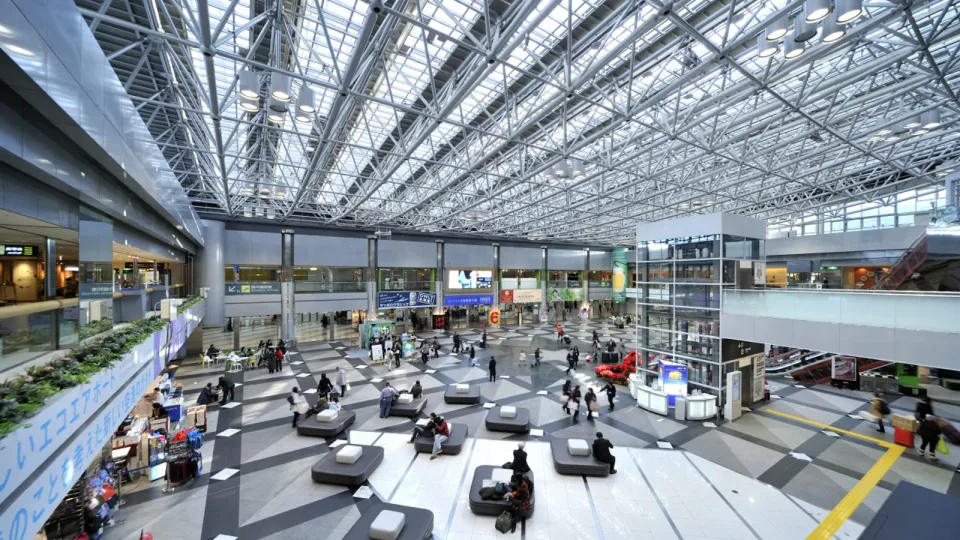
New Chitose Airport car rental makes sense only when the car has a useful job before you reach or leave Sapporo. If your first night is in Sapporo, I usually would not collect the car at the airport. JR Hokkaido’s Airport trains currently cover Sapporo–New Chitose in roughly 33–37 minutes at the fastest, and the airport station is directly connected to the terminal. If Day 1 is simply dinner and check-in in Sapporo and Day 2 is still a Sapporo city day, immediate pickup mostly adds the shuttle, paperwork, parking and one or two idle rental days.
The same logic should be applied at the other end of the trip. Do not keep the car until New Chitose merely because you collected it for a rural segment. Once the route has returned to Sapporo or Otaru and the car has stopped solving problems, an earlier city return can remove rental days, parking and a departure-morning rental-counter/shuttle step. The best rental period begins when the first useful driving job starts and ends when the last useful driving job finishes.
The core test is simple: in the first hour after you receive the keys, is the car already solving a problem—and in the final hour before you return it, is it still solving one? If it only drives from the airport to a Sapporo hotel and then sits in a garage, it has almost no Day 1 job. If it sits in Sapporo for the final two days and is then driven only to an off-airport return site, the same waste appears at the other end.
New Chitose Airport car rental: the 30-second decision
↔ Scroll table left or right
Your route | Default | Why |
First night in Sapporo + another Sapporo day | Take JR first, rent later | The car would mainly add shuttle, parking and idle rental time |
First night directly in Furano, Noboribetsu or another rural base | Consider airport pickup | The car begins doing useful work immediately |
Late flight / first left-side drive / first snow drive | Delay pickup | Sleep and daylight are worth more than moving the bed farther on arrival night |
Rural road trip ends, then final 1–2 nights in Sapporo | Consider returning the car early | You can stop paying for city parking and remove the airport-rental return chain from departure day |
Final hotel is rural or directly on the airport-driving route | Keep the car to New Chitose | The vehicle still performs a final transfer job that rail would not replace cleanly |
Large group + heavy luggage + weak public transport | Car gets stronger at either edge | The vehicle may remove several baggage hand-offs rather than merely replace one train |
If your first night is in Sapporo, JR has already solved the hardest airport transfer
JR Hokkaido’s Airport trains run frequently during the day, and New Chitose Airport Station connects directly to the terminal. On a Sapporo first night, you do not need to deal with a rental counter, shuttle, vehicle inspection, left-side navigation and hotel parking right after a flight. Go into Sapporo, check in, eat and buy what you need; then bring the car into the trip on the morning you actually leave the city.
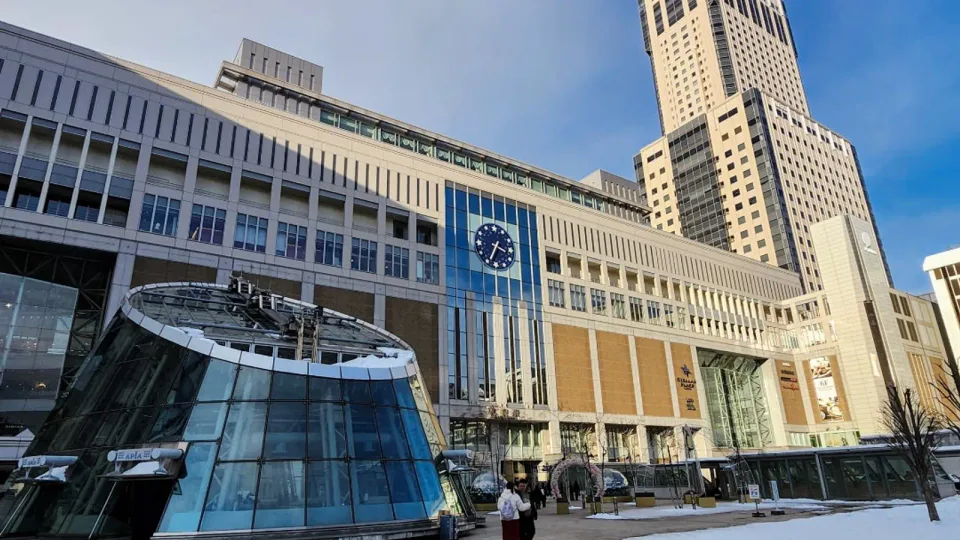
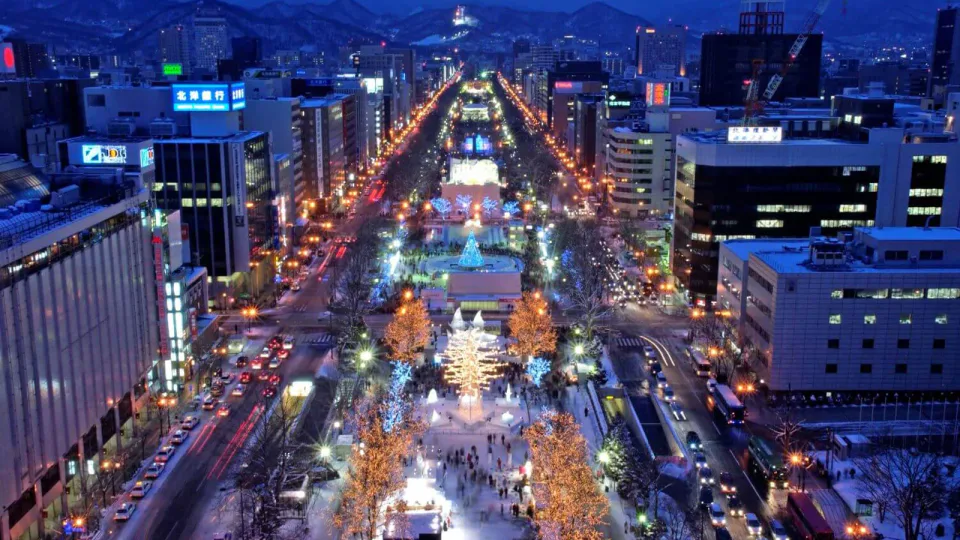
The core areas around Sapporo Station, Odori and Susukino also do not require daily driving. If Day 2 is still shopping, markets and city sights, the most likely thing the car does is sit at the hotel while rental fees, insurance and parking continue.
Airport pickup is not the same as walking off the plane and driving away
International travelers still need to clear immigration, collect luggage, find the rental counter, take any required shuttle and complete the branch paperwork. Office location, operating hours, vehicle type and shuttle arrangements vary by company. A scheduled 3:00 p.m. arrival does not mean you are on the highway at 3:20. Leaving the rental office can take much longer. If the itinerary still expects another two or three hours of driving that evening, “saving time” can easily become a fatigued night drive on unfamiliar roads.
Write “flight arrival” and “safe driving start” as two separate lines in the itinerary. If you are sleeping in Sapporo, there is no reason to accept that uncertainty. It only becomes worth it when your first night genuinely needs to be outside the city.
When does immediate airport pickup make the most sense?
First, you are not going into Sapporo at all and your first night is Noboribetsu, Lake Shikotsu, Furano or another rural base; detouring into Sapporo would only create backtracking. Second, you are a family of four or a larger group with heavy luggage and a stroller, and the hotel is far from useful rail service, so the car moves both people and bags from the start. Third, the route is linear—for example New Chitose → Furano/Biei/Asahikawa, or New Chitose → Noboribetsu/Toya—so the car keeps moving the hotel base forward from Day 1.
If the 48 hours after pickup are almost entirely rural, the car has a clear job. If the next 48 hours are Sapporo and central Otaru, delaying pickup is usually the more efficient answer.
Late flights are where people most often make the wrong call
It is tempting to think, “I’ll drive to Furano tonight so I can start sightseeing early tomorrow.” But the driver has already been on a flight and still has immigration, baggage claim and rental-car formalities ahead. The real cost is attention. First-time left-side drivers and first-time Hokkaido drivers should not put the least familiar segment into the most tired part of the day. Sleeping in Sapporo or Chitose and picking up the next morning removes a high-stress transfer; it does not necessarily remove a useful sightseeing day.
In winter, the answer leans even more toward renting later
The winter threshold is higher than in summer. If you arrive in daylight, have solid snow-driving experience, road conditions are normal and the first-night drive is reasonable, immediate pickup can still work. But a late flight, first snow drive, first left-side drive and tired travel companions are a poor combination. If your first two days were already going to be Sapporo and Otaru, using JR first costs very little and preserves the option to decide on the rental after seeing the weather. For snow-road risk, whiteouts, parking and emergency planning, read our Hokkaido winter driving guide. The goal of a Hokkaido trip is not to complete a full self-drive itinerary; it is to have a car on the days that truly need one.
Sleeping in Chitose or near the airport does not mean you need the car that night
If a late-arriving traveler chooses to sleep in Chitose or near the airport, the point is already to delay the long transfer. Parking a rental car overnight adds no experience. Sleeping properly and picking it up the next morning is more consistent with that hotel decision. “Stay near the airport” and “rent immediately” are two separate choices; do not tie them together automatically. If you are comparing a true terminal stay rather than central Chitose, the Portom International Hokkaido guide shows what an airport-connected night actually buys.
If you rent later in Sapporo, choose the pickup point around the next leg of the route
Once you decide to delay the rental, the next question is not just which company is cheapest. The pickup location should sit naturally on your next leg. Dragging a family across Sapporo with luggage to a distant cheap branch after checkout can create more friction than paying a little more near the hotel; picking up at 8:00 a.m. while you still have a full Sapporo afternoon just creates another parking problem. Treat the pickup branch as the starting line for the rural drive and collect the car when you are genuinely leaving Sapporo.
Use the same rule in reverse: stop the rental meter when the last rural job ends
Many Hokkaido itineraries apply careful logic to the pickup day and then keep the car automatically until the airport. That can be the wrong end of the same decision.
Suppose a seven-day trip is New Chitose → Furano/Biei → Noboribetsu → Sapporo, followed by two city nights. Once the car reaches Sapporo, it may spend the final 36–48 hours parked while the group uses rail, subway and walking. Keeping it to New Chitose now buys an additional rental period, insurance and hotel/city parking, then adds a vehicle-return chain before the flight.
The airport return itself is not instantaneous. Current ORIX information places its New Chitose Rental Site about 2 km from the terminal and says the free shuttle takes about 10 minutes; the site currently operates 08:00–20:00 and accepts one-way returns within Hokkaido. Toyota’s New Chitose Poplar and Suzuran shops are likewise off-terminal and use free shuttles of about nine minutes. Their published hours vary by season, reaching 22:00 in July–August but closing at 20:00 in winter.
Those shuttle figures are only the ride. Before the terminal you still need branch arrival, fuel/inspection as required, unloading and shuttle waiting. On departure morning, that chain has a higher failure cost than the pickup chain because the flight will not wait for a slow vehicle return.
Returning the car in Sapporo earlier can therefore be rational when all four conditions are true:
the final one or two days are genuinely city/rail days;
the company permits the exact one-way return pair and vehicle class;
the one-way/drop fee is less than the extra rental + parking + risk you are deleting;
the luggage move from the return branch to the hotel remains simple.
The answer reverses when the final hotel is rural, when the car still carries a family and ski/luggage load that public transport handles poorly, or when the one-way return fee/branch location makes an early return more awkward than keeping the vehicle.
ValueNavi rule: start the meter when the first useful car-only segment begins; stop it when the last useful car-only segment ends. “Airport to airport” is a contract shape, not an itinerary goal.
For Furano and Biei, arrival time matters more than whether Sapporo looks like a detour
If an international flight lands in the late afternoon or evening, even an airport pickup may get you to Furano only at night. You have not gained a Furano sightseeing day—you have simply moved the bed east. Picking up in Sapporo the next morning may add distance on the map, but it buys proper sleep, daylight driving and a more predictable start. The opposite is also true: if your flight arrives in the morning, you can leave the rental office before or around noon and your first night is definitely in Furano, driving straight there can be worthwhile. If Furano is the next base, compare where to stay in Furano before deciding whether airport pickup improves the hotel route.
Do not compare only one extra rental day—count idle costs too
Picking up a day early may also add another day of insurance, hotel parking and city-driving hassle. Keeping the car a day or two too long creates the same cost at the end. If the car only goes from New Chitose to a Sapporo hotel and sits all next day, the return is poor. If it stops being used after a rural road trip and then sits in Sapporo until the flight, the final rental days deserve the same scrutiny.
If the vehicle saves a family of four from multiple transfers, carries luggage directly to a rural hotel and keeps serving weak-transit destinations through the last night, those extra days may still be justified. Compare total travel friction, not just the daily headline rate on the rental website.
Final verdict: start and stop the rental around the car’s actual jobs
First night in Sapporo: most travelers should take JR first. First night in Chitose/airport area after a late flight: sleep first and pick up next morning. First night directly in rural Hokkaido: daylight arrival and a fit driver can justify airport pickup. First winter drive or late flight: delay it. Final one or two days back in Sapporo: consider returning the car early rather than paying to park it and rebuilding a rental-return chain before the flight.
Keep the vehicle to New Chitose when the final rural transfer, group size or luggage still makes it useful. Do not collect a car simply because the rental counter is at the airport, and do not keep it simply because the return box on the reservation says New Chitose. If the car does not create value at one edge of the rental period, move that edge inward.
If the overall regional order is still uncertain, start with the Hokkaido itinerary-by-region guide before choosing the pickup and return days.
Wait Until 40 Minutes Before Sunset: When Mojiko Retro Observation Room Is Actually Worth ¥600
Sapporo vs Chitose for the Last Night: Where to Stay in Hokkaido
Okinawa Car Rental: OTS vs Toyota vs ORIX — Which Should You Book?
Sources
JR Hokkaido: New Chitose Airport–Sapporo Airport trains, with current fastest travel of roughly 33–37 minutes and frequent daytime service. ORIX Rent a Car — New Chitose Airport Rental Site · Toyota Rent a Car — New Chitose Airport shops. Information rechecked August 25, 2026. Current ORIX airport shuttle is about 10 minutes with 08:00–20:00 hours and one-way returns permitted within Hokkaido; Toyota’s airport shops use roughly nine-minute shuttles and seasonal operating hours. Rental-office hours, shuttles, one-way fees/eligibility, pricing, roads and weather can change; recheck the exact rate and branch pair before booking.