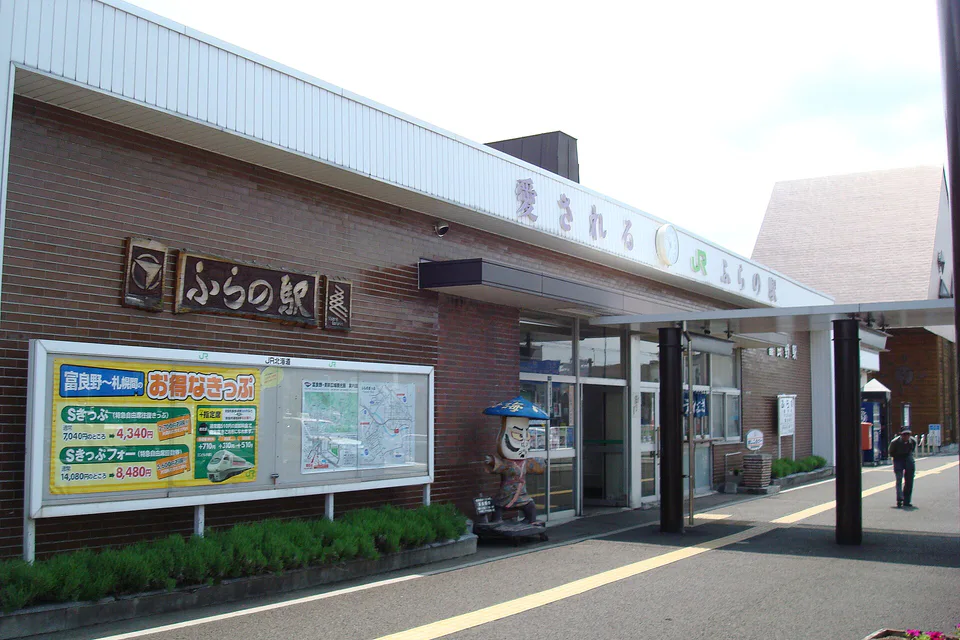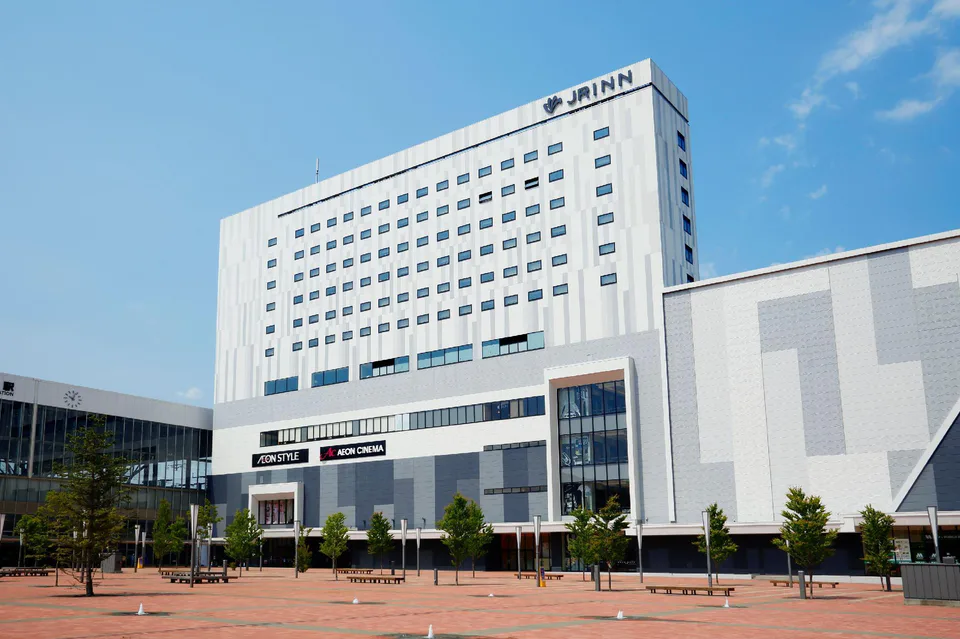
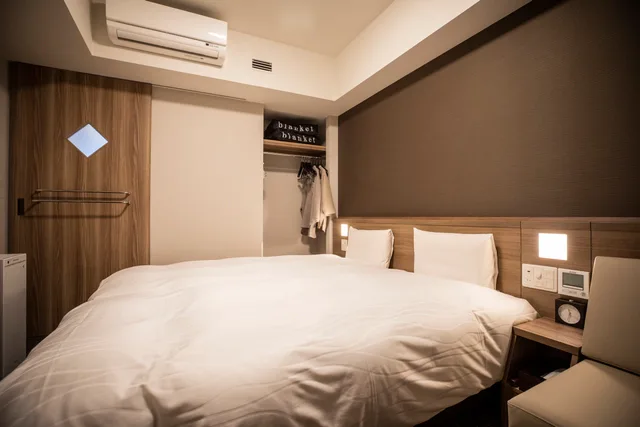
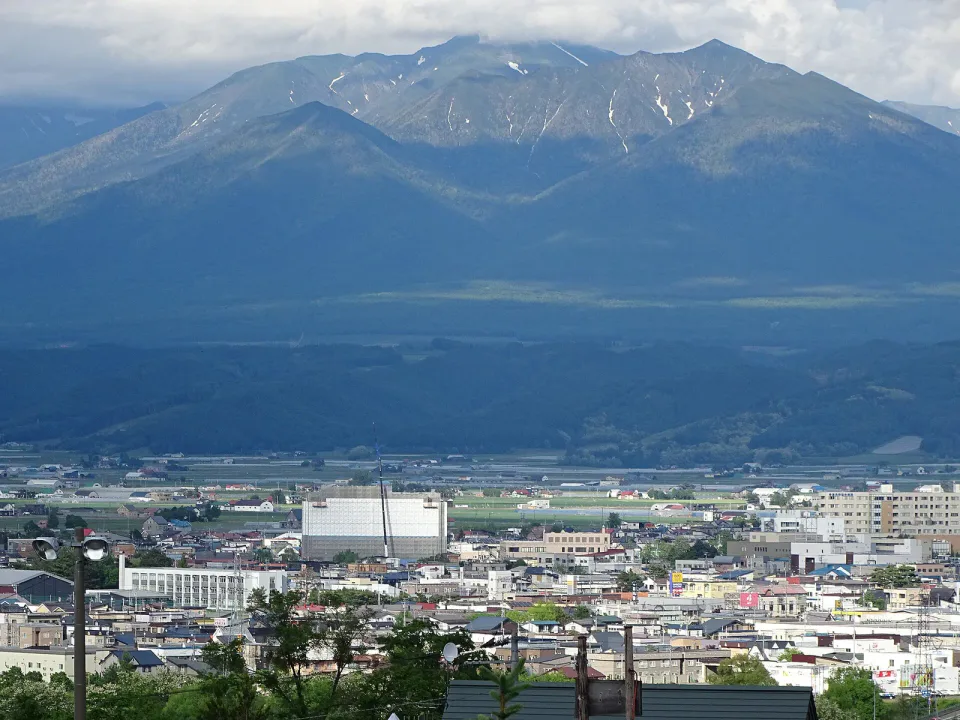
For most first-time visitors without a car, Furano Station is the safest one-night base. Choose Nakafurano only when being close to Farm Tomita or a rural stay is itself the priority; choose Asahikawa when Biei, Asahikawa Airport and the northern Hokkaido corridor matter as much as Furano; use Sapporo only when Furano is a single day trip and avoiding a hotel move matters more than early and late hours in the fields.
The important correction is that these bases do not have fixed value all year. In summer 2026, the temporary Lavender Farm Station puts Farm Tomita only a 7–8 minute walk from the train—but only on Furano-Biei Norokko operating dates. Outside those dates, Farm Tomita says Nakafurano Station is about a 25-minute walk. The best base therefore depends on the exact date, not just the town name.
↔ Scroll table left or right
Your trip pattern | Start with | Why |
One night, no car, Furano is the main event | Furano Station | Best balance of luggage handling, food, taxis and timetable recovery |
Two nights, Farm Tomita / Nakafurano scenery dominates | Furano Station or Nakafurano | Choose between transport resilience and first/last-hour proximity; do not split the two nights between them |
Biei + Asahikawa Airport are equally important | Asahikawa | One base can serve the airport, Biei and Furano corridor instead of making Furano solve every leg |
Asahikawa Airport arrival but Furano is still the main stay | Do not default to Asahikawa | The Lavender-go directly links the airport with Nakafurano/Furano; the flight-to-bus connection is the real test |
Only one Furano day and you refuse another hotel move | Sapporo | Viable on the right seasonal transport day, but you sacrifice roughly four or more hours to the round trip |
Two Furano/Biei sightseeing days | Do not use Sapporo as default | Repeated commuting becomes the trip instead of supporting it |
The real decision is which journey you are willing to repeat twice
A hotel base is not judged by the journey you make once. It is judged by the journey you pay again the next morning and again when you return tired.
If you sleep in Sapporo and visit Furano once, the long transfer may be a reasonable price for avoiding a hotel move. If you do it on two consecutive days, the same decision can consume most of a sightseeing day in repeated transport. If you sleep in Asahikawa and spend one day in Biei and one in Furano, that repeated north-south movement can be rational because the hotel is also serving the airport and Biei. If Farm Tomita and central Furano are the only targets, Asahikawa is adding distance without enough return.
This is the useful test: write down the first place you want to reach on each full morning and the place you expect to finish each evening. The base that shortens the repeated pair usually beats the base that looks most central on a map.
Farm Tomita access changes by date: Lavender Farm Station is seasonal
Farm Tomita’s official access information says Lavender Farm Station is a temporary stop used only by the Furano-Biei Norokko train in summer. In 2026, the published operating dates are June 6–7, June 13–August 11, weekends from August 15–September 13, and September 19–23. From Lavender Farm Station, Farm Tomita is about a 7–8 minute walk.
Outside those operating dates, do not build the hotel decision around that shortcut. Farm Tomita lists Nakafurano Station at about a 25-minute walk. Its current bus guidance gives roughly 12 minutes from Furano Station to Nakafurano and 48 minutes from Asahikawa Airport to Nakafurano on the Lavender-go corridor.
This creates two very different versions of a no-car Nakafurano stay:
Norokko operating date: rail can place you close to Farm Tomita, so a rural/Nakafurano stay can combine well with the field.
Non-operating date: the final walk, taxi or hotel transfer matters much more. “Near Farm Tomita” on a map is not automatically an easy luggage route.
There is also a hard future boundary. JR Hokkaido says the Furano-Biei Norokko ends operation after September 23, 2026. Do not carry this specific 2026 station-access advantage into a 2027 trip without rebuilding the transport plan.
Furano Station is the best default because it buys recovery options
Furano Station is not the closest base to Farm Tomita, and that is exactly why its value is sometimes underestimated. The station area buys options: JR, buses, taxis, restaurants, luggage storage at the hotel and a simpler departure the following day. On a one-night trip, those repair options matter because one delayed connection should not destroy the evening.
For a first-time no-car visitor arriving with a suitcase, I would usually choose Furano Station unless there is a specific reason to sleep elsewhere. Check in once, leave the large luggage, then use trains, buses or a taxi with a day bag. That is often more useful than dragging the suitcase closer to one flower field and making every other movement harder.
The trade-off is obvious: Furano Station does not give you Farm Tomita outside the door. If the trip is built around opening-time photography, a quiet rural dinner or a specific Nakafurano property, pay for proximity deliberately rather than expecting the station base to imitate it.
For summer planning, use the Farm Tomita and lavender guide before booking the room. The first field you care about should influence the base.
Nakafurano is an experience base, not automatically the transport winner
Nakafurano becomes stronger when the accommodation and the field hours are part of the trip. A rural room, mountain view, hotel dinner and a short first movement toward Farm Tomita can create value that a town hotel cannot reproduce.
But the area has less redundancy. If the hotel pickup ends at a fixed time, dinner has a last seating, the train is delayed or you arrive with two large cases, there are fewer fallback choices than around Furano Station. A quiet base is valuable partly because it is less urban; the same characteristic makes mistakes more expensive.
For a no-car stay, confirm four things before paying:
the exact station or bus stop the hotel expects you to use;
whether pickup is offered, whether it must be reserved and its final operating time;
the dinner/check-in deadline if the rate includes meals;
how the large luggage will reach the room on a non-Norokko day.
If those four are solved, Nakafurano can beat Furano Station for a slow two-night scenery trip. If they are not, the prettier postcode is adding operational risk.
Do not split two nights between Furano Station and Nakafurano just to save 10–20 minutes
Farm Tomita’s current transport information puts Furano Station to Nakafurano at roughly 10 minutes by JR or about 12 minutes by the Lavender-go bus. That is too small a gap to justify a routine hotel move on a two-night trip.
A Furano → Nakafurano hotel change means packing, checkout, carrying or storing luggage, timing the move and checking in again. You can easily spend more effort moving the room than the movement saves.
I would split these two nights only when the second hotel unlocks a genuinely different experience—a fixed rural dinner, a special room, an early field plan or a stay you wanted for its own sake. If the only argument is “the second hotel is a bit closer to Farm Tomita,” keep one room.
Asahikawa wins when Furano is only one branch of a wider northern route
Asahikawa is not the Furano shortcut. It is the better network base when the trip also needs Biei, Asahikawa Airport, Asahikawa city or a later move farther north.
Furano Bus currently runs the Lavender-go along Furano → Nakafurano → Biei → Asahikawa Airport → Asahikawa. The operator says reservations are not accepted and connections to flights or JR are not guaranteed. That makes the route useful but not a zero-buffer airport connection.
This produces an important correction: flying through Asahikawa Airport does not automatically mean you should sleep in Asahikawa. Farm Tomita currently gives about 48 minutes from Asahikawa Airport to Nakafurano by Lavender-go, so a Furano-area first night can still be logical when the bus timing works. Asahikawa becomes the stronger answer when the flight timing leaves poor margin, Biei owns the next day, or you want one hotel to serve several northern-Hokkaido movements.
For a two-night trip where Day 1 is Biei and Day 2 is Furano, Asahikawa deserves a real comparison. For two mornings around Furano and Farm Tomita, it usually does not.
The airport connection has a failure mode: “a bus exists” is not the same as “my flight connects”
The Lavender-go is non-reserved and Furano Bus explicitly says it does not guarantee connections with flights or JR. That matters more than the published 48-minute Asahikawa Airport–Nakafurano travel time.
If the flight arrives shortly before the bus you intend to use, baggage claim and a small delay can turn a direct route into a long wait. On departure day, a bus scheduled to reach the airport shortly before airline check-in closes is not a robust plan simply because the timetable technically fits.
Use Asahikawa as the buffer when missing the direct bus would materially damage the itinerary. Use Furano/Nakafurano when the bus timing leaves enough slack that the airport connection is just one clean leg rather than a bet.
Sapporo is a one-day-trip product, not the default Furano base
JR Hokkaido’s 2026 Furano Lavender Express makes a Sapporo day trip unusually workable on selected operating dates. The current timetable shows Sapporo 07:41 → Furano 09:44 and Furano 16:53 → Sapporo 18:52. That gives roughly seven hours in the Furano area while spending a little over four hours on the direct trains.
That can be a good trade when Furano is one day inside a Sapporo-heavy trip and you strongly dislike changing hotels. It is not evidence that Sapporo is a good base for two Furano/Biei days.
The service is seasonal and all-reserved. JR Hokkaido’s own sample one-day lavender course applies only on selected 2026 dates. Farm Tomita also lists the regular Sapporo–Furano highway bus at about 2.5 hours. So outside the convenient seasonal rail pattern, the day-trip geometry gets weaker.
ValueNavi’s boundary is simple: one Furano day can justify Sapporo; two Furano/Biei days normally justify moving the hotel closer. The exception is when Furano accommodation is dramatically more expensive or sold out and the extra commuting is a conscious trade rather than an accidental one.
One night versus two nights: the second morning is what you are paying for
One night: Furano Station is the safest no-car default. You gain one evening in the area and one early-ish start without creating a complicated rural arrival.
Two nights, Furano-heavy: keep one Furano or Nakafurano room. The second morning becomes weather insurance: use the clearer day for the view/flower priority and the other for central Furano, Biei or a lower-risk plan.
Two nights, Biei + airport-heavy: Asahikawa can win because the room is serving more than Furano. Judge the whole route, not the distance to one field.
Zero Furano nights: Sapporo is acceptable when there is one concentrated Furano day and the seasonal train/bus plan is strong enough. Do not use the same logic for repeated days.
Weather makes a two-night local stay more valuable than the room itself
Furano and Biei are unusually sensitive to visibility, light, rain and seasonal bloom conditions. A one-day Sapporo excursion gives you one weather lottery. Two nights near the area give you the ability to swap the priorities between mornings without rebuilding the entire Hokkaido route.
This is why the second local night can be worth more than its accommodation price suggests. You are not only buying another bed; you are buying another chance to use the better weather window.
The same logic can reverse if the forecast is poor across the whole stay and your main targets are weather-dependent. Do not add a hotel night purely because “Furano deserves two nights” if the itinerary has a stronger indoor or city fallback elsewhere.
Families, older travellers and large luggage should price the last 500 metres
A station-to-station itinerary can look easy while the hotel remains difficult. For a family with a stroller, older parents or two large suitcases, a 20–30 minute rural walk can matter more than a ten-minute rail difference between towns.
Prioritise the hotel-to-platform route, pickup reliability, taxi fallback and luggage storage before the view. If a Furano Station hotel removes the hardest luggage movement, it can be better value even when a Nakafurano hotel looks closer to the field.
If the suitcase is forcing you toward a worse base, use the Japan luggage-forwarding guide and travel with a smaller overnight bag where the route supports it.
Price can reverse the answer—and that is legitimate
Furano’s peak summer inventory can become expensive or scarce. A transport-optimal base is not worth any price.
If Furano/Nakafurano is sold out or costs dramatically more than Asahikawa, calculate the premium against the repeated travel it removes. For one day, a large price gap can make Asahikawa or even Sapporo rational. For two full Furano-area days, the hotel premium is buying back several hours and more weather flexibility, so the break-even point rises.
Do not use an arbitrary percentage. Compare the actual hotel difference with what you lose: train/bus fares, repeated travel hours, an earlier wake-up, less evening flexibility and the probability that one delayed connection damages the day.
Final verdict
For one no-car night, start with Furano Station. For two Furano-heavy nights, keep one room in Furano or Nakafurano; choose Nakafurano only when the field/rural stay is worth fewer transport fallbacks. Choose Asahikawa when Biei, Asahikawa Airport and the wider northern route are doing at least as much work as Furano. Keep Sapporo only when Furano is one concentrated day trip and avoiding a hotel move matters more than losing early/late local hours.
The seasonal rule is the part most worth checking again before payment. In 2026, Lavender Farm Station and the Norokko shortcut only exist on specified dates, the Norokko ends after September 23, and the direct Furano Lavender Express from Sapporo is also date-limited. A hotel decision built on a seasonal train should expire when the train does.
Compare Furano-area stays after choosing the base
References and verification date
Farm Tomita — Lavender Farm Station and 2026 Norokko dates · Farm Tomita — Nakafurano, airport and bus access · JR Hokkaido — Furano Lavender Express and Furano-Biei Norokko · JR Hokkaido — selected-date Sapporo day-trip example · Furano Bus — Lavender-go current route and connection conditions. Checked August 25, 2026. Seasonal services, hotel transfers and operating dates can change; recheck the exact stay date before booking.
Where to Stay for Kochi Yosakoi: Station, Obiyamachi or Saenbacho
Sapporo vs Chitose for the Last Night: Where to Stay in Hokkaido
Where to Stay in Kyoto: Kyoto Station, Kawaramachi or Higashiyama?
Where to Stay in Okutama Without a Car: Ome, Mitake Gorge or Okutama Station?
Where to Stay at Lake Kawaguchi for Autumn Leaves: Station, North Shore or Fuji-Yoshida?