
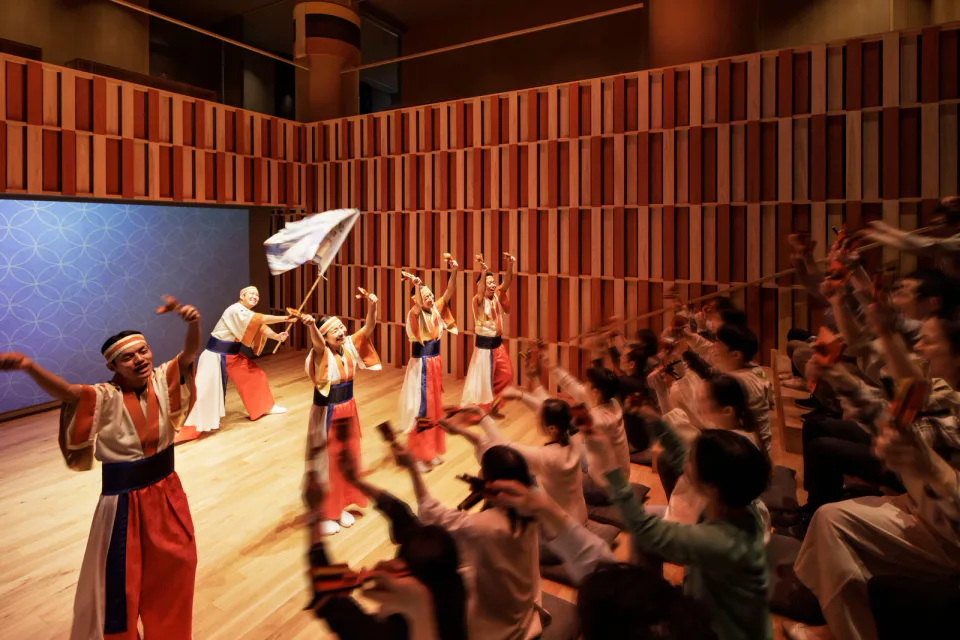
For a first Kochi Yosakoi trip on August 10 or 11, I would usually stay around Obiyamachi–Harimayabashi rather than beside JR Kochi Station. The reason is not that the station is far away. It is that the 2026 main festival runs from 11:00 to 22:00 across multiple venues, and the highest-value hotel advantage is being able to finish a late Otesuji, Obiyamachi or Central Park session and walk back without adding another transport decision. Kochi Station becomes the better base when an early train, late rail arrival or heavy luggage is the harder constraint.
Saenbacho is the third option, not merely an overflow area. It is itself a 2026 competition venue, and it becomes attractive when a larger room, public bath or hotel-led recovery matters more than being in the densest central viewing cluster. The right question is therefore: where will your last useful festival hour happen, and what must happen immediately after it?
↔ Scroll table left or right
Your trip pattern | Best starting area | What you are buying | Main trade-off |
First visit, Aug 10–11, stay through evening performances | Obiyamachi / Harimayabashi | Walk-back from the central Otesuji–Obiyamachi–Central Park cluster | Festival-date room rates and availability can be harsher |
Only Aug 9 pre-festival | Central area | The 2026 pre-festival is concentrated at Central Park until around 21:40–21:50 | Station hotels can still win if you arrive late by rail |
Aug 12 national contest / after-party | Obiyamachi / central Kochi | The 2026 venues are Otesuji North/South, Obiyamachi, Central Park and Kochi Castle | Early departure next morning can push you back toward Kochi Station |
Early JR train / late rail arrival / several large cases | Kochi Station | Shorter luggage and departure chain | You give up the easiest late-night walk-back from the central venue cluster |
Family or couple who will use the hotel between sessions | Saenbacho or a larger central hotel | Room space, bath and midday reset can outweigh absolute venue proximity | Check the actual walk/tram route to your chosen late venue |
Two festival nights | Keep one room | The same location benefit repeats twice; no second checkout | Do not split areas just to sample two hotels |
Choose the hotel from your last planned venue, not your first arrival point
The 2026 festival calendar makes this unusually important. August 10 and 11 are scheduled from 11:00 to 22:00 across Otesuji and the wider network of competition/performance venues. At Otesuji itself, the structured night programme runs 17:45–21:30. On August 12, the national contest/after-party runs 12:30–22:00 across Otesuji North and South, Obiyamachi, Central Park and Kochi Castle.
That means a hotel decision made from 15:00 arrival convenience can be wrong by 21:30. Your luggage may touch the hotel once; your tired walk back happens every festival night.
I would therefore use a last-venue test. Write down where you realistically expect to finish after 21:00. If the answer is Otesuji, Obiyamachi or Central Park on two nights, a central room buys two repeated walk-backs plus easier breaks during the day. If the answer is “we will leave early and have a 07:00 train tomorrow,” Kochi Station can be the more rational trade.
Obiyamachi and Harimayabashi are the safest first-visit default
Obiyamachi is not just a nightlife or shopping choice during Yosakoi. It is one of the festival’s performance venues and sits inside the central viewing geometry near Otesuji and Central Park. On August 12, Obiyamachi is also one of the five official national-contest venues.
This is why I would normally choose the central area for a first visit focused on the festival itself. You can move between different performance styles during the day and still end the night without making the return journey a second logistics exercise. Covered shopping streets also give useful shade and food options between outdoor sessions, although they should not be treated as a substitute for proper heat precautions.
The premium is not worth any price. If a central room is dramatically more expensive and you plan to leave performances by 19:00, the late-walk advantage may be weak. But for two 11:00–22:00 festival days, the location is used repeatedly enough that a moderate premium has a clear job.
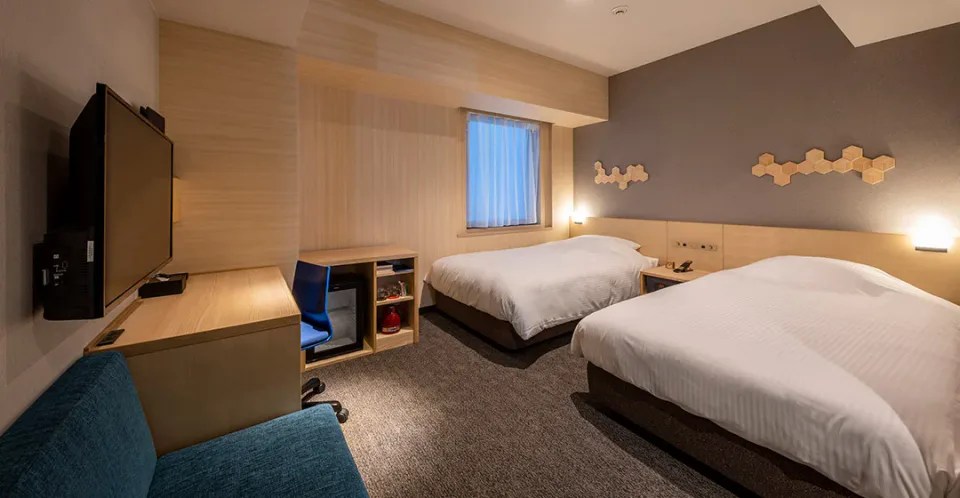
Dormy Inn Kochi is one practical central example because it combines the location with a public bath after a long walking day. Treat it as an example of the area, not as the only hotel answer.
Kochi Station is a transport base, but it is not outside the festival
A common oversimplification is to describe the station area as “convenient but away from Yosakoi.” The 2026 venue list includes Kochi Station itself as a competition venue. So staying near JR Kochi Station does not mean you have left the festival behind.
What it does mean is that you are farther from the densest central cluster around Otesuji, Obiyamachi and Central Park. That matters most late in the evening, when the station venue being nearby does not automatically reproduce the experience of finishing at Otesuji at 21:30.
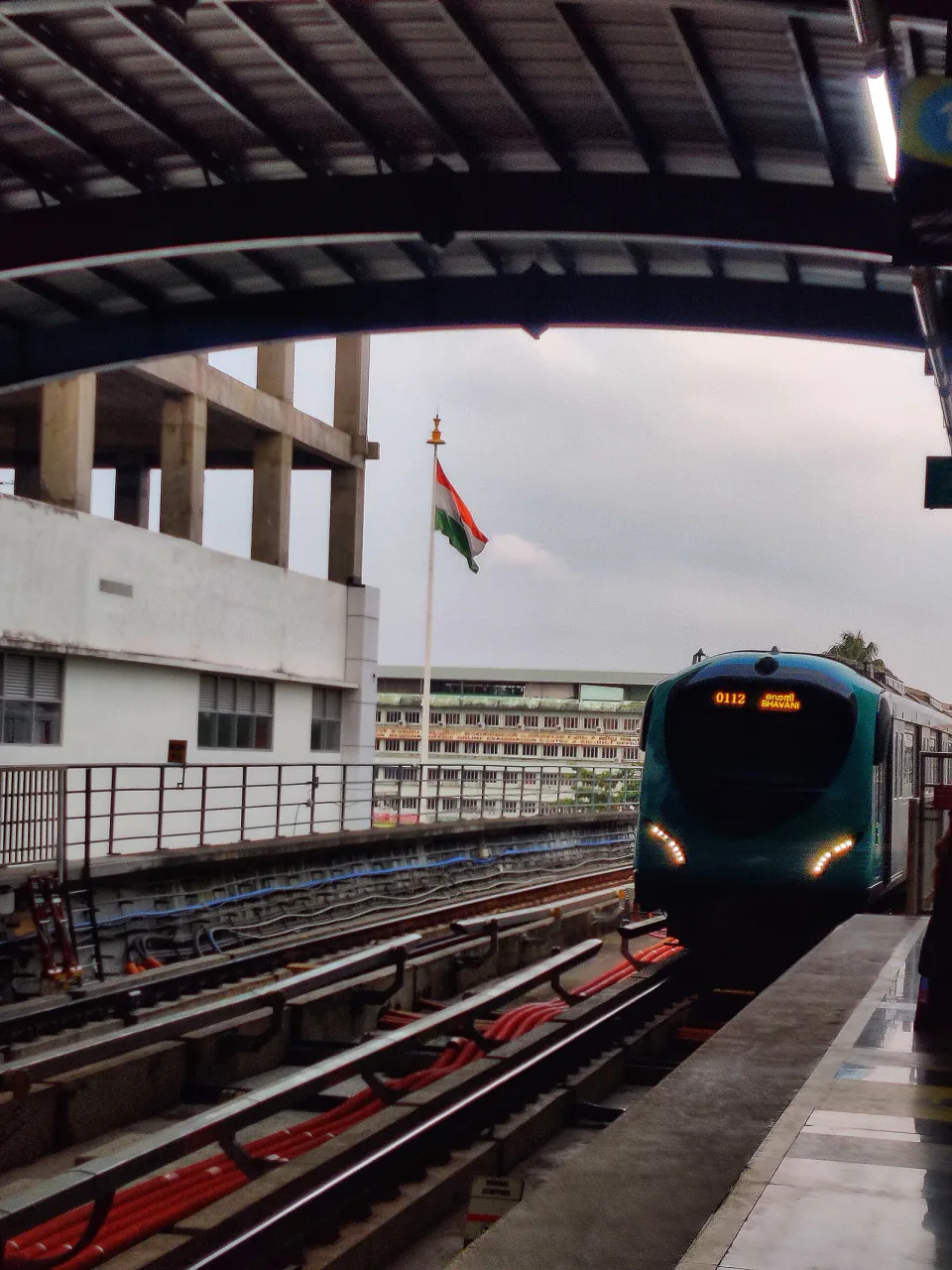
I would choose Kochi Station when the next hard edge is stronger than the final festival hour: a very early train, a late inbound rail arrival, several full-size suitcases or an itinerary continuing across Shikoku the next morning. Comfort Hotel Kochi is a useful example for that role because the hotel decision is primarily about rail/luggage continuity rather than paying for the central festival premium.
Do not move to the station for Night 2 solely because you leave the next morning. One hotel change means packing, checkout, luggage storage and another check-in. If your train is not especially early, keeping the central room for both festival nights can be the lower-friction itinerary.
Saenbacho is strongest when the hotel itself has to absorb part of the festival day
Saenbacho should not be treated as a generic quieter east-side alternative. It is also a 2026 competition venue. Its real distinction is that some travellers can use the hotel as a recovery base rather than only a bed.
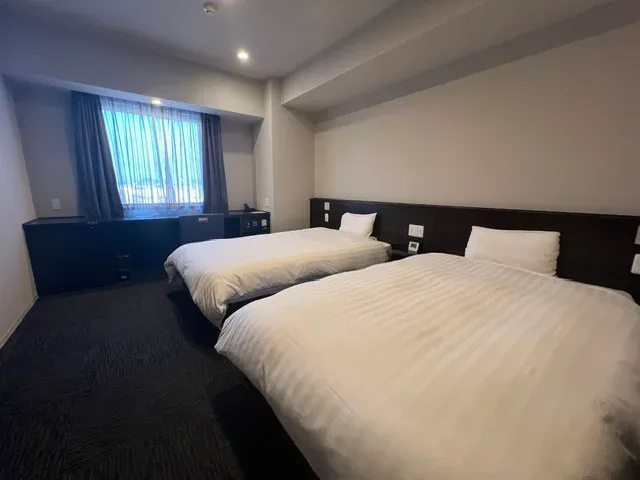
OMO7 Kochi is the clearest example. Larger room categories, public bathing and common space can matter for families, couples and groups who need a midday shower, a place to sit, or more luggage circulation than a compact central business-hotel room provides. During a festival running from late morning to 22:00 in August heat, a room you can genuinely use between sessions may be more valuable than a theoretically shorter walk you never exploit.
But Saenbacho should earn the extra movement. If your whole plan is paid Otesuji night seating followed by an immediate walk to bed, central Obiyamachi may still be the cleaner product. Choose Saenbacho when the hotel utility is real, not because it sounds less crowded.
One night: let the specific festival date decide the area
August 9 only: the 2026 pre-festival is concentrated at Central Park, scheduled from 17:00 into roughly 21:40–21:50. A central hotel has the clearest geographic advantage. If you arrive at Kochi Station late in the afternoon with luggage, however, a station room can still win if checking in centrally would cost too much of the event.
August 10 or 11: these are the broadest festival days, scheduled 11:00–22:00 across the city. For a first-time spectator, central Obiyamachi/Harimayabashi is my default because it protects the evening and makes venue-hopping easier. Station wins when transport after the night is the harder constraint.
August 12: the national contest/after-party is much more concentrated: Otesuji North/South, Obiyamachi, Central Park and Kochi Castle. That is an especially strong central-hotel night unless the next morning departure is very early.
Two nights: the central premium gets more defensible because it repeats
For August 10 + 11, I would normally keep the same hotel both nights. The two main festival days each run until 22:00, so a central room can protect two late returns, not one. It can also become a midday recovery point on both days.
This is the right way to think about festival hotel pricing. Do not ask only, “Is Obiyamachi JPY X more expensive than the station?” Ask, “How many high-friction journeys does that premium remove?”
If the central premium removes two post-21:00 transfers plus two midday return trips, it is buying repeated utility. If you will watch only one afternoon session and spend the rest of the trip elsewhere, the same premium is much weaker.
There is almost never a reason to split Kochi Station and central Kochi across a two-night Yosakoi stay merely to optimise the departure morning. The distance between the areas is too small to justify routinely rebuilding the hotel setup.
Paid Otesuji seats make the viewing time predictable, not the hotel route irrelevant
The Kochi City Tourism Association currently sells reserved Otesuji seating for August 10, 11 and 12. General-seat sessions run 13:15–17:15 and 17:45–21:30. Current 2026 prices range from JPY 1,000–2,000 for daytime A/B seats and JPY 2,000–3,000 for evening A/B seats. General sales began June 29, and purchases cannot be changed or cancelled after purchase.
A paid seat therefore creates a hard time-and-place anchor. If you hold a night ticket ending around 21:30, I would put more weight on a hotel with a simple walk back from Otesuji. The seat removes uncertainty about where you will watch; it does not remove the journey after the session.
Conversely, if you plan to move freely among unpaid venues, hotel centrality has a different benefit: it lets you stop whenever heat, fatigue or a child’s energy level says the day is done.
The August heat makes a hotel a potential midday facility, not only a night address
Yosakoi is a long outdoor event in August. Official festival materials warn spectators about heatstroke risk. That should change how families and older travellers value hotel proximity.
A central hotel can create a realistic two-session day: morning/lunch viewing → hotel shower/rest → late-afternoon and evening viewing. A room beside Kochi Station can also provide a break, but the round trip is less attractive if your entire viewing plan is clustered around Otesuji and Central Park.
This does not mean everyone needs a luxury room. It means that on a 11:00–22:00 festival day, the usable daytime hotel window can be part of the room premium. If check-in timing means you cannot use the room until late afternoon on your only festival day, reduce that value accordingly.
Do not build the hotel decision around a tram working exactly as usual
Festival traffic controls and crowds can change how easy a surface-transport trip feels. I would not choose a hotel on the assumption that one exact tram connection will remain effortless after the final performance. Recheck current operations and road restrictions for your dates.
This is another reason walking distance matters more at night than it does on a normal Kochi city break. Walking is not always the shortest route, especially in the heat, but it removes timetable and congestion dependency after you have already spent ten hours around the festival.
Three hotel archetypes are enough to make the decision
Comfort Hotel Kochi — station/transfer archetype. Choose it when rail, luggage and the next morning dominate. The room does not need to be the festival experience; its job is to make arrival and departure simple.
Dormy Inn Kochi — central festival archetype. Choose it when you want to walk back from the central venues and value a public bath after long festival days. It is a stronger first-time festival answer than a station hotel when the final viewing hour is the priority.
OMO7 Kochi — recovery-space archetype. Choose it when larger rooms, baths and hotel time matter enough to justify being on the Saenbacho side of the centre. It is particularly defensible for families or groups who will use the hotel between sessions.
Do not compare these three from the cheapest room rate alone. Fix the same dates, occupancy, room size and cancellation policy, then ask which one removes the most important friction from your actual festival day.
Compare Kochi hotels after choosing the festival area
Final verdict
For a first Yosakoi visit on August 10 or 11, choose Obiyamachi/Harimayabashi unless a hard transport constraint says otherwise. It gives the best chance of finishing a late central performance and simply walking back, while also making a midday reset realistic. Choose Kochi Station when arrival, luggage or an early onward train matters more than the final festival hour. Choose Saenbacho when room space, bathing and hotel recovery time are part of the product you are buying.
For two festival nights, do not split hotels. The best room is the one whose location benefit repeats on both nights. And if you already bought an Otesuji night seat, make the 21:30 walk back part of the hotel comparison before you pay.
Where to Stay for Tohoku Autumn Leaves: Sendai, Morioka, Aomori and Hachinohe
Where to Stay for Naoshima and Shodoshima: Uno, Takamatsu or Okayama?
Nikko vs Kinugawa Onsen: Where Should You Stay for One or Two Nights?
References
Yosakoi Festival — 2026 schedule · Yosakoi Festival — 2026 performance schedules · Kochi City Tourism Association — 2026 Otesuji reserved seating. Checked August 25, 2026. Event operation, traffic controls and transport can change; verify the live festival information for the actual date.