
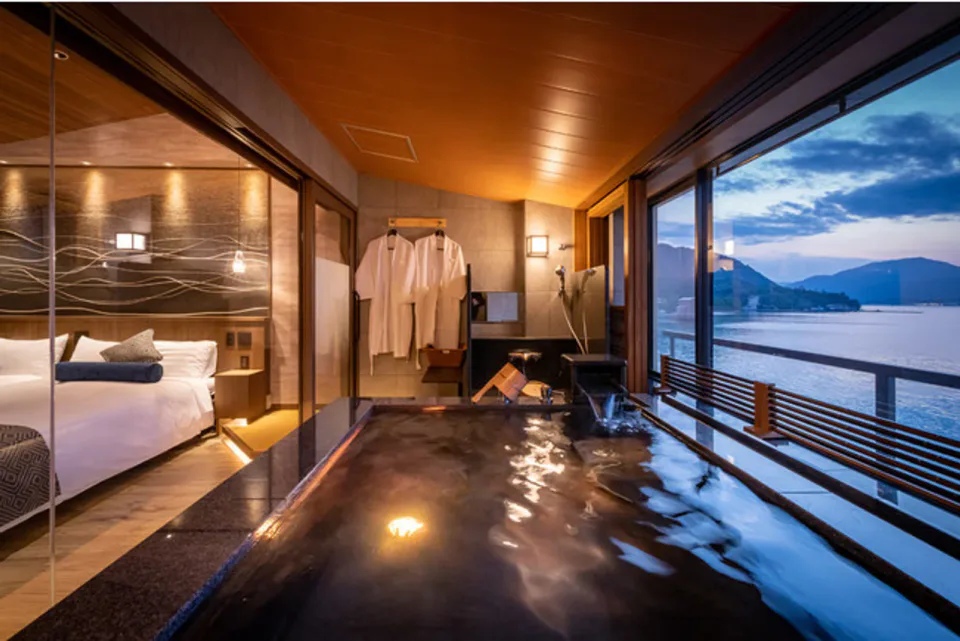
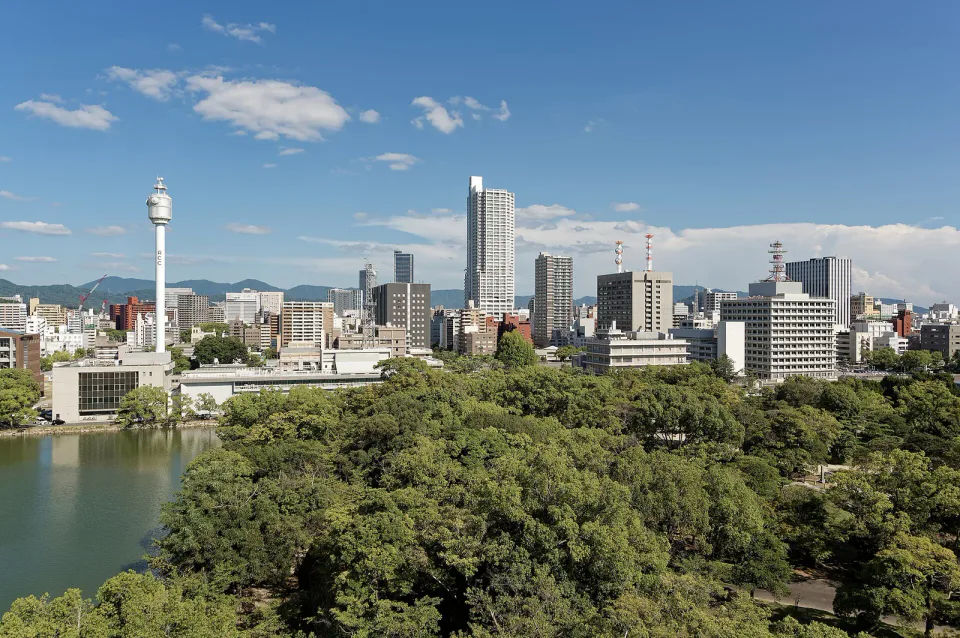
For most first-time visitors with only one night, stay in Hiroshima unless sleeping on Miyajima unlocks at least two island-specific experiences you genuinely want. Hiroshima protects a late arrival, large luggage and the next Shinkansen. Miyajima earns the hotel move when the night buys a ryokan dinner or bath, a quiet evening after day visitors thin out, an early waterfront or shrine walk, an early Mt. Misen start, or a second useful tide window.
The key correction is that “I want to see Miyajima in the evening” does not automatically mean “I need a Miyajima hotel.” The current JR West ferry timetable continues from Miyajima until 22:14 on the regular schedule. Conversely, sleeping on the island can be very valuable even when the ferry still runs, because the hotel removes the ferry and mainland positioning from the following morning. Separate the transport question from the accommodation question.
↔ Scroll table left or right
Your one-night problem | Start with | Why | What can reverse it |
Late arrival, early Shinkansen, two large cases | Hiroshima | The room protects the wider Japan route and removes another ferry/luggage hand-off | You arrive early enough that the island ryokan itself is a major trip priority |
Ryokan dinner + quiet island evening | Miyajima | The hotel buys hours that a standard daytime visit uses poorly | Your arrival only reaches the property near its meal/check-in deadline |
Early Mt. Misen morning | Miyajima | You wake on the island before the 09:00 ropeway opening instead of first travelling from Hiroshima | Weather makes the ropeway/mountain plan fragile and you do not value the other island-night benefits |
Only want shrine + evening atmosphere | Hiroshima can still work | Regular Miyajimaguchi ferries operate well into the evening | You specifically want the post-ferry quiet hours or a ryokan meal/bath |
Central Hiroshima hotel + ordinary Miyajima day | Keep Hiroshima | The Peace Park direct boat can remove the morning cross-city transfer without forcing a hotel move | You need the island’s earliest or latest hours, when the Miyajimaguchi route is more flexible |
Use a two-window test before paying for the Miyajima night
One-night itineraries have almost no slack, so the island hotel needs a higher burden of proof than a two- or three-night Setouchi stay. I would book Miyajima only when the overnight unlocks at least two meaningful windows or experiences that a Hiroshima day trip would either miss or use badly.
Ryokan dinner and bathing: the accommodation itself is part of the destination rather than merely a bed.
Quiet evening: you want the island after the daytime visitor flow has thinned, not simply one sunset photo.
Early waterfront / shrine time: you care about using the island before the normal day-trip rhythm.
Mt. Misen positioning: you intend to make the 09:00 ropeway opening or start the mountain morning without a ferry commute.
A second tide state: the exact tide table gives a useful evening or early-morning condition that would be awkward from the mainland.
If you can only name one weak benefit—“it seems romantic,” “we might walk around after dinner,” or “the island hotel looks nice”—Hiroshima usually wins after luggage, checkout and the next transport leg are counted. If you can name three—say, half-board ryokan + quiet evening + early Misen—then the hotel move is doing real work.
Do not use a fixed 14:00 or 18:00 rule; work backwards from the ryokan
The old version of this decision is often written as “arrive before X o’clock, stay on Miyajima.” That is too crude because the relevant deadline belongs to the property, not the island.
Work backwards from the exact accommodation instead:
What is the latest check-in for your booked plan?
Does a half-board dinner have a fixed seating or final arrival time?
How will you travel from Hiroshima to the ferry and from Miyajima Pier to the property?
How much buffer remains after a delayed Shinkansen, baggage collection or a missed local connection?
If the answer is “the ryokan works only if every transfer runs perfectly,” the island night is fragile even if the ferry timetable technically allows it. A premium ryokan reached just before sleep can lose the exact bath, meal and evening hours that justified paying more.
Hiroshima is therefore the better late-arrival product not because Miyajima becomes inaccessible, but because a city hotel is more tolerant of a late arrival. You can eat when you arrive, leave the main luggage in one place and start the island fresh the next morning.
A late ferry timetable means some “Miyajima-only” evening value is actually day-trip value
The regular JR West Miyajima Ferry timetable currently lists evening departures from Miyajima at 19:00, 19:30, 20:00, 20:42, 21:25 and 22:14. The crossing to Miyajimaguchi takes about 10 minutes.
That changes the one-night decision. If your only reason for sleeping on Miyajima is “I want to stay after the shops get quieter,” you may be able to use a later ferry and still sleep in Hiroshima. The hotel premium must buy something beyond the last normal daytime ferry.
This does not make a Miyajima overnight pointless. The value shifts to what happens after you would otherwise leave: a structured ryokan dinner, bathing, the quietest late hours and waking on the island. Those are accommodation benefits, not ferry-timetable benefits.
It also creates a cheaper middle ground for travellers who want a long island day but dislike moving hotels: leave the large suitcase in Hiroshima, stay on Miyajima into the evening, then return by the regular ferry. That can capture more island time without paying the checkout/luggage cost of an overnight.
Central Hiroshima has a direct Miyajima route — but it does not replace the JR ferry at every hour
If you stay near Peace Memorial Park or Kamiyacho, Aqua Net Hiroshima’s World Heritage Sea Route can change the day-trip geometry. The current timetable starts from Peace Park at 08:30 and reaches Miyajima at 09:15, taking about 45 minutes. For a lower-island sightseeing day, this can be a very clean route because you walk from the central hotel to the pier instead of first crossing Hiroshima to the rail station and travelling to Miyajimaguchi.
But the direct boat has a narrower operating span. Its current last Miyajima → Peace Park sailing leaves at 17:30. If you want a late island evening, the Miyajimaguchi ferry route is the more useful return layer. And if Mt. Misen opening time matters, the conventional route can position you earlier: JR West’s current regular ferry from Miyajimaguchi begins at 06:25, while the direct Peace Park boat does not arrive on the island until 09:15.
That means you do not need to choose one ferry operator for both directions. A central-Hiroshima traveller can rationally use Peace Park → Miyajima direct outbound, then Miyajima → Miyajimaguchi ferry + rail return. The route decision is independent of the hotel decision.
There is also a resilience difference. Aqua Net warns that the river section can be affected by tide levels and may be cancelled or rerouted when bridge clearance or river depth makes operation unsuitable. Do not let a direct-ferry convenience become the only reason a tight one-night itinerary works.
Mt. Misen is the strongest reason to wake on Miyajima — if you will actually use the advantage
Miyajima Ropeway currently operates uphill from 09:00 to 16:00, with the final return departure at 16:30. The operator can suspend service for strong wind, thunderstorms or maintenance.
Sleeping on Miyajima removes the morning mainland-to-island transfer, but it does not teleport you onto the ropeway. You still need to reach the Momijidani side and allow for the mountain route. The overnight is most valuable when you deliberately use the morning: early waterfront walk, breakfast, then position for Misen.
If you sleep late, eat a long breakfast and reach the ropeway at the same time as day-trippers, you have paid for an advantage you did not use. The same is true if poor weather removes the mountain and you did not care about the ryokan evening or tide windows.
For a one-night trip, weather therefore has more power to reverse the answer than it does on a longer stay. If Misen is the only second window that makes Miyajima pass the two-window test, a bad forecast can push the decision back toward Hiroshima.
Tide timing can justify the overnight — but only when the exact height supports the experience
Miyajima Tourist Association explicitly warns against using the words “high tide” and “low tide” alone. Its guidance uses tide height: around 250 cm and above can make Itsukushima Shrine appear to float on the sea; below roughly 100 cm can allow walking close to the Great Torii.
That makes tide a valid overnight reason only after checking the actual date. A beautiful evening high-tide window plus a low early-morning window can make sleeping on the island unusually valuable. On another date, both useful states may happen during normal day-trip hours, in which case the hotel should not receive credit for them.
Do not pay an island-room premium for “two tides” without checking the 2026 tide table first. The overnight increases your usable hours; it does not guarantee the photographic conditions you want.
Large luggage creates a hotel-move tax that a cabin bag does not
With one overnight bag, the train/ferry/walk sequence can feel like part of the Miyajima experience. With two 29-inch suitcases, each transition becomes a task that exists only because you changed hotels.
Count the hand-offs:
Hiroshima base: station or airport → Hiroshima hotel → day bag to Miyajima → return to same room.
Miyajima overnight: arrival transport → local connection → ferry → island hotel → checkout → ferry → mainland transport → next hotel or Shinkansen.
If the island overnight passes the two-window test, solve the bag separately. Leave the main cases in Hiroshima when returning to the same hotel, forward them to the next destination when timing allows, or carry only what you need for one night. The Japan luggage-forwarding guide covers the wider transfer logic.
If you cannot simplify the luggage and the only island benefit is atmosphere, keeping the city hotel is usually the more resilient first-trip choice.
Hiroshima Station and Peace Park are different versions of the “stay in Hiroshima” answer
Choosing Hiroshima does not finish the accommodation decision. Hiroshima Station is strongest when the one night sits between Shinkansen journeys, the bags are large or the departure is early. Peace Park / Kamiyacho gets stronger when the city evening matters and the direct World Heritage Sea Route fits the next day.
That distinction prevents a common false comparison. “Miyajima is more atmospheric than Hiroshima Station” may be true for the traveller, but the real alternative might be a central Hiroshima hotel within walking distance of Peace Park and dinner. Compare the island night against the right city base, not against the least appealing version of Hiroshima.
Use Hiroshima Station vs Peace Park once you decide the island overnight does not clear its burden of proof.
Four one-night scenarios
Kyoto → Hiroshima at 16:30, Fukuoka Shinkansen next morning
Stay in Hiroshima. The arrival and departure both depend on the rail network, and the island hotel would create a transfer-heavy night for limited usable island time. Visit Miyajima only if the calendar gives you enough daytime hours; otherwise protect Hiroshima itself and add Miyajima on a longer trip.
Arrive Hiroshima before lunch, booked ryokan half-board, no early train next day
Miyajima can be worth it. You have time to reach the island without racing the meal, use the evening, bathe and wake beside the sights. The overnight is buying multiple windows rather than only a bed.
Two large suitcases, one-night stop, want an evening walk on Miyajima
Stay in Hiroshima and use a late ferry back. The current regular ferry timetable gives enough evening span that an overnight is not required merely to remain on the island after the main daytime rush. Keep the luggage in the city.
Photography trip with a useful evening tide and early-morning Misen plan
Choose Miyajima. The hotel is now unlocking two separate time-sensitive windows. Confirm the tide height, ropeway operation and the property’s meal/check-in rules before paying.
Weather is the red-team test for the Miyajima premium
A calm forecast strengthens the island stay because evening walking and Misen are more likely to deliver value. Heavy rain, strong wind or a ropeway suspension can remove one or more of the windows you paid to unlock.
Ask a simple question before the free-cancellation deadline: if Misen is unavailable and the waterfront is wet, would I still be happy that I moved hotels for the ryokan, dinner and quiet island night?
If yes, the accommodation itself justifies the stay. If no, a flexible Hiroshima base is safer. This is the red-team condition that separates a genuine ryokan experience from an expensive transport optimisation.
Final verdict: Miyajima must earn the hotel move twice
Choose Hiroshima when the one night must protect arrival, luggage and the next long-distance journey. You can still have a long Miyajima day, use a central Peace Park direct boat when its hours fit, or return late through Miyajimaguchi without moving hotels.
Choose Miyajima when the overnight unlocks at least two island-specific benefits you will actually use—for example ryokan dinner + quiet evening, evening tide + early shrine walk, or bath/ryokan time + an early Mt. Misen morning. Arriving on the island only to sleep is not enough.
The final decision is therefore not “Which place is more special?” It is which hotel night creates more irreplaceable hours inside this one-night trip.
Compare Hiroshima and Miyajima stays after choosing the base
Related planning
Where to Stay in Hiroshima: Station or Peace Park? · Hiroshima–Miyajima 2-Day Itinerary · Miyajima Momijidani and Mt. Misen Guide · Japan Luggage Forwarding Guide
Sources and verification
Checked August 25, 2026 against JR West Miyajima Ferry — current regular timetable, Aqua Net Hiroshima — World Heritage Sea Route timetable and operating limits, Miyajima Ropeway — current operating hours and service guidance, and Miyajima Tourist Association — tide guidance. Ryokan meal/check-in rules, ferry schedules, ropeway operation and tides can change; verify the exact travel date and booked property before payment.