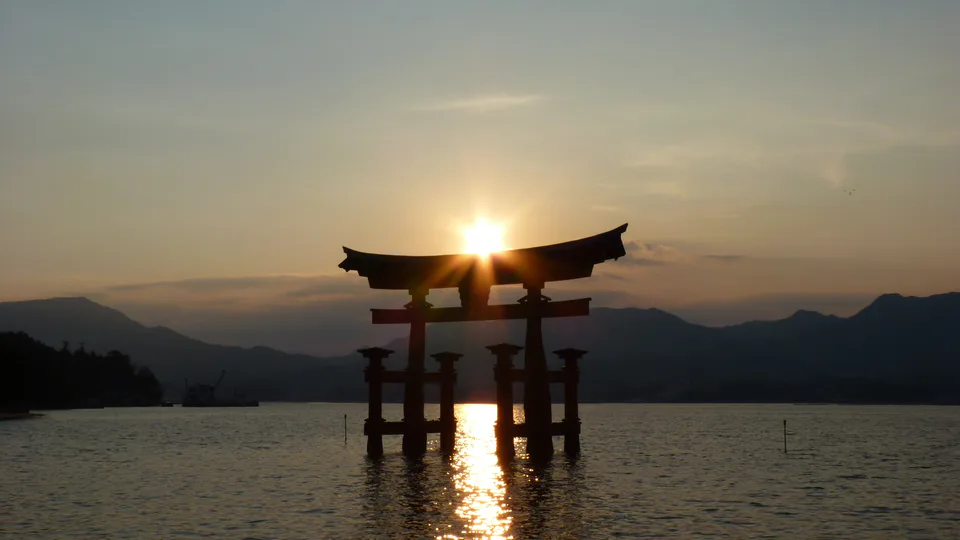
For a first autumn visit to Miyajima, Momijidani Park is the default; Mt. Misen is the upgrade. Do not make the summit a success condition before you know the weather, ropeway operation, walking ability and how much island time remains. A strong four-to-six-hour first visit can already combine Itsukushima Shrine, Momijidani's lowland maples, Daishoin or Senjokaku and the waterfront. Add Shishiiwa when the Seto Inland Sea view is worth roughly another hour from the ropeway station. Add the summit only when you are willing to spend another hour or more on mountain walking and still protect the final descent.
The key autumn planning mistake is treating “Momijidani,” “the ropeway” and “Mt. Misen summit” as one attraction. They are three different commitments. The lowland park is easy to keep in a flexible island day. The ropeway costs money and has a 16:30 final return departure. The summit adds walking after the ropeway. Choose the highest layer that still leaves the rest of Miyajima enjoyable.
Miyajima autumn: choose your highest layer in 30 seconds
↔ Scroll table left or right
Your day | Best stopping point | Why | Main trade-off |
First visit, 4–6 island hours | Momijidani lowlands | Keeps shrine, temple, town and foliage in one resilient route | No high Seto Inland Sea viewpoint |
Clear weather, 6+ hours, moderate walking | Shishiiwa by ropeway | Gets the mountain panorama without making the summit mandatory | ¥2,000 round trip plus about an hour from the ropeway station |
Mt. Misen is a trip priority and legs are strong | Summit | Adds the mountain walk and summit experience | Roughly another hour beyond the Shishiiwa round-trip block, before queues/approach |
Stroller / wheelchair / reduced mobility | Lowland route first | The ropeway has no elevator and these mobility devices cannot stay in use in the circulating gondola | Shishiiwa may still work only if the traveller can transfer and manage station movement |
Strong wind, thunder or uncertain operation | Keep the island, drop the mountain | Ropeway suspension does not close Momijidani or the shrine district | You lose the high viewpoint, not the whole Miyajima day |
One island night | Split lowlands and mountain across two windows | You gain evening/dawn island time and a second weather decision | Only worth it if those extra hours have a real job |
The ¥2,000 ropeway is a one-hour decision, not a 14-minute ride
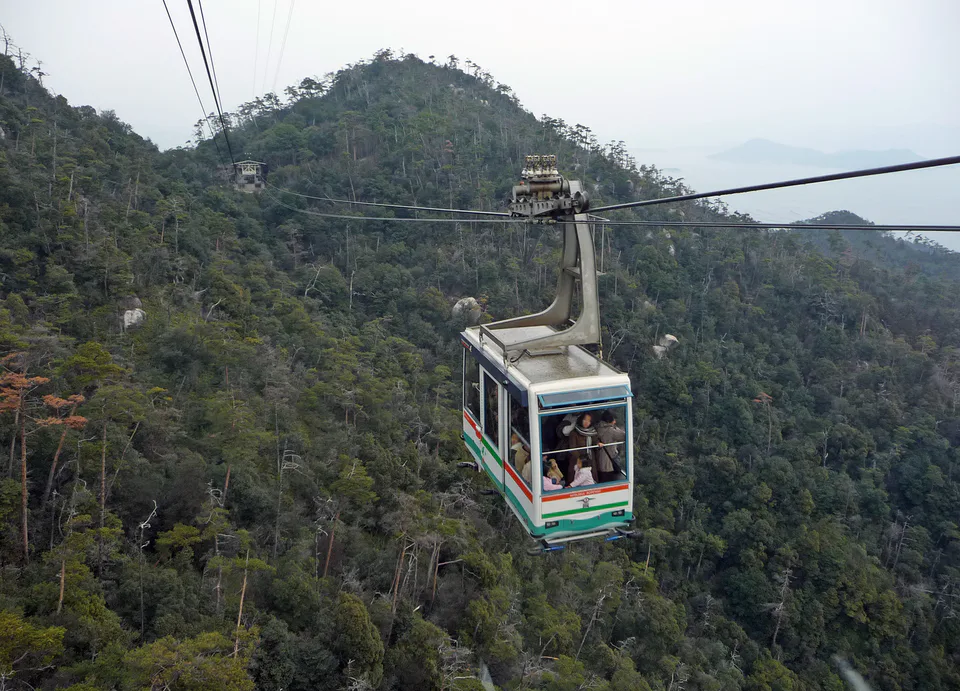
The current adult Miyajima Ropeway fare is ¥2,000 round trip (about US$13) or ¥1,100 one way (about US$6.90). The first Momijidani–Kayatani section takes about 10 minutes; the second Kayatani–Shishiiwa section takes about four minutes. Looking only at those ride times makes the mountain look much cheaper in itinerary time than it is.
The operator's own planning guidance says a round trip from Momijidani Station to Shishiiwa is about one hour. Going on to the top of Mt. Misen adds about another hour for the round trip from the ropeway side. That is before you count the walk to Momijidani Station, busy-day queues, photographs, food or a slow family pace.
↔ Scroll table left or right
Mountain choice | Official baseline from Momijidani Station | Planning meaning |
No ropeway | No fixed mountain transport clock | Keep shrine, Momijidani, Daishoin and town flexible |
Shishiiwa only | About 1 hour round trip | Budget a real sightseeing block, not “14 minutes each way” |
Mt. Misen summit | About 1 additional hour | The mountain can turn a half-day island visit into a long day |
USD conversions use the August 25 exchange rate and are approximate.
Your basic island transport cost is small; the mountain is the meaningful add-on
Hatsukaichi City's current access guidance lists the Miyajimaguchi–Miyajima ferry at ¥200 each way for an adult, plus the ¥100 Miyajima visitor tax when entering the island. That makes an ordinary adult round-trip ferry plus visitor tax ¥500 (about US$3.10), before any attraction admission.
Add a standard round-trip ropeway and the simple transport stack becomes ¥2,500 (about US$16). The money is not the main reason to skip Mt. Misen, but it is a useful reality check: the mountain is the part of this day that adds both the largest transport cost and the largest time block.
A one-way ropeway ticket is not automatically the “smart” ¥900 saving. Buy one-way only when hiking the other direction is an intentional part of the day and everyone is prepared for the trail. Turning the descent into an unplanned hike to save a small fare difference is the wrong trade.
November reservation trap: no listed date yet does not mean no reservation will be required
As of August 26, the official ropeway page lists mandatory advance reservations for September 19–22 and October 11. It currently lists no November dates on the visible schedule.
Do not interpret that as “November needs no reservation.” The operator explicitly says it publishes designated reservation-required dates for the next three months, and specific-day reservations can be made three months in advance. Autumn travellers should therefore check again once their November date enters the operator's published horizon.
This is especially important because the reservation rule is date-specific, not a permanent “reserve / no reserve” policy. Save the official operation page and recheck it after your travel date falls inside the three-month window.
The 16:30 final return should control the summit, not the sunset
Current standard hours are 09:00–16:00 uphill, with the final return departure at 16:30. Strong wind, thunderstorms, power problems or maintenance can suspend service.
If you are only visiting Shishiiwa, the return clock is straightforward. If you continue to the summit, build a personal turnaround time that is earlier than the mathematical last possible cabin. The extra walk, photo stops and downhill return can all slip.
A useful first-timer rule is: do not begin the summit because you technically still can; begin it because you have enough buffer to finish without treating the mountain as a race. If that buffer is gone, Shishiiwa is a complete viewpoint, not a failed summit attempt.
Lowland Momijidani is the better autumn default because it has a higher value floor
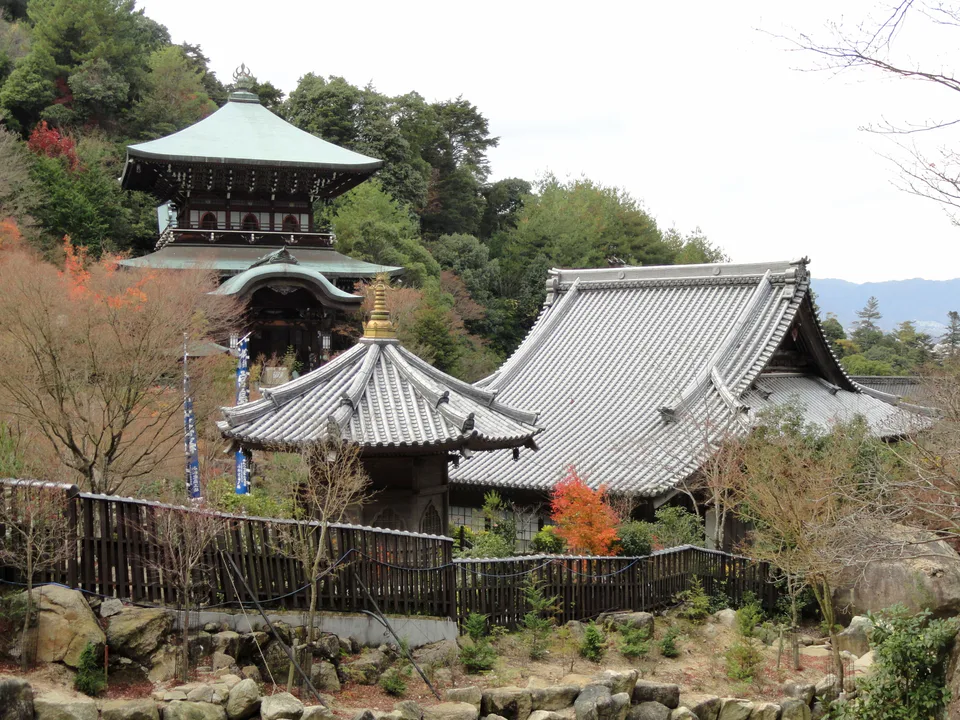
Momijidani's lowland park sits inside the normal shrine-and-temple sightseeing geography. If the foliage is early, late or uneven, you can still walk to Itsukushima Shrine, Daishoin, Senjokaku, Omotesando and the waterfront without losing the whole day.
Mt. Misen has higher upside in clear weather: wider views, a mountain walk and a very different sense of the island. It also has a lower bad-weather floor because clouds, wind and ropeway suspension can erase the main reason you paid the extra time and fare.
↔ Scroll table left or right
Condition | Momijidani lowlands | Mt. Misen / ropeway |
Clear, calm day | Strong | Highest upside |
Cloudy but dry | Still strong | Reassess whether the panorama is worth the time |
Strong wind / thunder | Can remain viable | Operation may stop |
Peak foliage crowds | Flexible route, but busy | Queues and reservation rules matter more |
Short daylight / late arrival | Better fit | Final descent becomes the constraint |
Families: the stroller rule can reverse the mountain decision
The ropeway does not have elevators, and strollers and wheelchairs cannot remain in use on the circulating section. The operator asks guests to leave them with the Momijidani Station office. That does not mean every family must skip Shishiiwa, but it changes who has to walk, transfer and carry a small child.
If the child can walk comfortably and the group wants the view, Shishiiwa can still make sense. If the stroller is essential to the entire day, or an older traveller needs continuous mobility support, the lowland park and temple/shrine route has a much cleaner failure mode.
Do not measure success by altitude. A family that finishes Momijidani, Daishoin and the waterfront comfortably has made a better Miyajima day than a group that forces the summit and spends the final two hours racing the descent.
Day trip from Hiroshima: protect one mountain decision, not every attraction
The ferry crossing itself is only about 10 minutes and departures are frequent, but the real transfer begins at the hotel and includes Hiroshima transport, Miyajimaguchi, the terminal and the island walk. On a first visit, I would use this order:
Reach Miyajima early enough that the day still has choices.
Do the shrine/waterfront block that matters most.
Walk into Momijidani.
At that point, decide lowlands only, Shishiiwa, or summit from the actual weather and clock.
After the mountain, use one flexible town/food/temple block rather than trying to recover every skipped sight.
This sequence is more resilient than reserving a summit outcome months in advance. If the ropeway is suspended, keep the island and redistribute the hours.
Tide timing should not be allowed to hijack the foliage day
High and low tide change the look of Itsukushima Shrine and the torii; they do not control the colour of Momijidani. Trying to see both tide states, peak foliage, the ropeway and the summit in one day can produce a long waiting-heavy itinerary.
Pick the one tide state that matters most, then treat the second as a bonus if it naturally appears. If both tide states are genuinely important, that is one of the arguments for spending longer on the island—not for rushing the mountain.
The Hiroshima + Miyajima two-day itinerary is the better next step when the island is competing with the Hiroshima city day.
An island overnight is worth it only when it buys two non-transferable windows
A Miyajima hotel night earns its premium when it creates hours a Hiroshima day trip cannot reproduce easily. I would look for at least two:
Evening: quieter waterfront, ryokan dinner or an unhurried island night.
Morning: Momijidani or the shrine area before the main day-trip flow.
Weather option: choose the better of two days for the ropeway.
Route quality: the room itself is part of the experience, not merely a place to sleep.
If you arrive after dinner and leave before breakfast for a Shinkansen, the island night may create more luggage handling than usable Miyajima time. In that case, stay in Hiroshima and use an early ferry. If you are still choosing the overnight location, compare Hiroshima city vs Miyajima for one night.
When the ropeway closes, the correct Plan B stays on Miyajima
Wind or thunder should remove the mountain before it removes the island. Keep Momijidani, Daishoin, Senjokaku, Itsukushima Shrine and the waterfront. This is a better backup than immediately adding another ferry journey or forcing a completely different Hiroshima day.
That is the main reason the lowland-first strategy works. Your highest-risk component sits on top of a day that is already complete without it.
Final verdict: Momijidani first, Shishiiwa second, summit only when the day earns it
For a first autumn day trip, I would protect the lowland island experience and make Mt. Misen conditional. Pay ¥2,000 (~US$13) for the ropeway when the weather is clear enough that the Seto Inland Sea view has real value and you have roughly an extra hour from Momijidani Station. Continue to the summit when another hour of walking is one of the reasons you came, not because the map makes the top look like the natural endpoint.
For November travellers, check the official designated-date list again once your date enters the three-month reservation horizon. And whatever the season, let the 16:30 final return and the day's weather control the mountain. The strongest Miyajima itinerary is one where a closed ropeway changes one decision—not the entire day.
References and verification date
Checked August 26, 2026 against Miyajima Ropeway current operation and reservation guidance, official fares, hours and time estimates, and Hatsukaichi City's Miyajima ferry access information. Ropeway operation, designated reservation dates, weather and autumn colour can change; recheck the actual travel date.