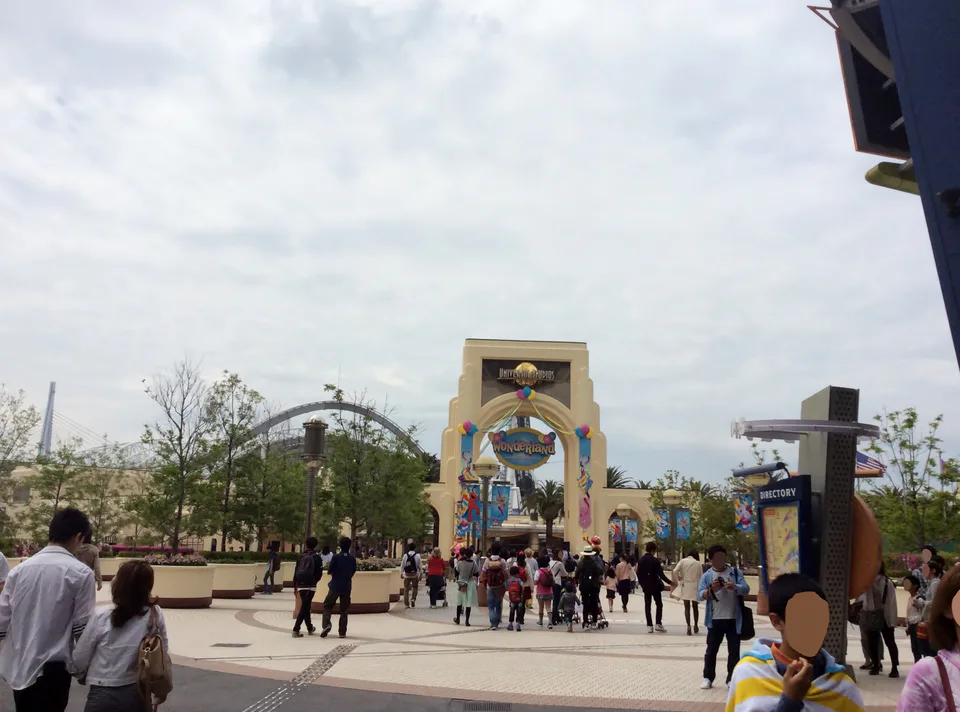
For one normal USJ day inside a four- or five-night Osaka stay, I would usually keep the Namba or Umeda hotel you already need for the rest of the trip. For two consecutive full park days, Universal City becomes much easier to justify—but even then, one well-placed middle night can be smarter than automatically booking two or three park-side nights.
The useful calculation is not “How close is the hotel to USJ?” It is how many city-to-park legs does this hotel night remove, and what do you pay for each hour of friction removed? That framework also exposes a 2026 option that many hotel comparisons miss: USJ currently sells 1-Day, 1.5-Day and 2-Day Studio Passes. A 1.5-day ticket can turn the afternoon you move to Universal City into actual park time instead of a pure positioning night.
Checked August 26, 2026. USJ ticket prices are date-sensitive. Approximate USD figures below use ¥10,000 ≈ US$62.81 only for orientation; exchange rates and card conversion rates move. For visits from September 1, 2026, USJ says admission-ticket prices may be reconsidered and increased after sales open according to demand, so use the current price calendar for your exact dates.
USJ hotel split: the decision in 30 seconds
↔ Scroll table left or right
Your park plan | Best starting hotel strategy | Why |
1 USJ day in a 4–5 night Osaka stay | Keep Namba/Umeda | One morning commute and one late return usually cost less friction than a full hotel move. |
1 USJ day, but children / older parents / very early start matter | Compare the night before in Universal City | The location is buying a safer morning and an easier post-park recovery, not extra sightseeing. |
1.5 park days | Universal City gets much stronger | The first afternoon can become park time from 15:00 instead of merely a hotel-transfer day. |
2 consecutive full USJ days | At least compare one middle Universal City night | It removes the Day 1 late return and Day 2 early outbound commute—the two legs with the highest fatigue cost. |
2 park days and USJ is the trip priority | Park-side nights before and between the two days | You protect both opening mornings and the recovery night between them. |
1 USJ day + Kyoto/Kobe/Himeji-heavy itinerary | Keep Umeda | The non-USJ mornings outnumber the park morning, so the wider rail geometry wins. |
If the normal Osaka base is not settled, decide that first with Where to Stay in Osaka for First-Time Visitors. “USJ is one day of the trip” and “USJ is the trip” should never produce the same hotel answer.
Compare Universal City stays for your dates
The ticket layer changes the hotel decision: 1 day, 1.5 days or 2 days
USJ currently lists adult Studio Pass prices from ¥8,900 (about US$56) for one day, ¥14,300 (about US$90) for 1.5 days and ¥16,900 (about US$106) for two days. The 1.5-Day Studio Pass allows entry from 15:00 on Day 1 and from park opening on Day 2. The 2-Day Studio Pass covers two full days.
↔ Scroll table left or right
Ticket | Current adult price from | Hotel implication |
1-Day Studio Pass | ¥8,900 (~US$56) | A park-side night must justify itself mainly through the morning/evening commute, because the park product is still one complete day. |
1.5-Day Studio Pass | ¥14,300 (~US$90) | A Universal City move before 15:00 can become an afternoon/evening park session rather than dead positioning time. |
2-Day Studio Pass | ¥16,900 (~US$106) | Two opening mornings make location more valuable, especially the night between park days. |
At the current minimum prices, moving from 1.5 days to two full days costs only ¥2,600 (about US$16). That does not mean everyone should buy two days—the second morning still consumes itinerary time—but it means the real constraint may be your Japan schedule rather than the admission-price gap.
From September 1, 2026 admission dates, USJ’s pricing system can adjust ticket prices after sales begin according to demand. Treat every figure above as a floor, not a guaranteed quote for your date. If two park days are already fixed, compare the actual 2-Day Studio Pass with your date-specific alternatives before you price the hotel.
ValueNavi hotel-premium test: price the time you are actually buying
Do not compare a Universal City hotel premium only with the JR fare. Rail fare is usually the smaller part of the decision. The expensive part is the door-to-gate time, crowded-platform friction, and the fact that the commute lands at the worst points of the day: before a high-priority opening and after a long park day.
Use your own map result for the hotel you are genuinely considering:
time saved per removed commute leg
= city-hotel door-to-USJ gate time
− park-side hotel door-to-USJ gate time

value paid per saved hour
= extra park-side hotel cost
÷ total hours removed
Example: suppose your city hotel takes 40 minutes door-to-gate and the park-side option takes 10. One removed leg saves 30 minutes. A middle night between two USJ days removes two legs: Day 1 park → city hotel and Day 2 city hotel → park. That is roughly one hour saved in this example.
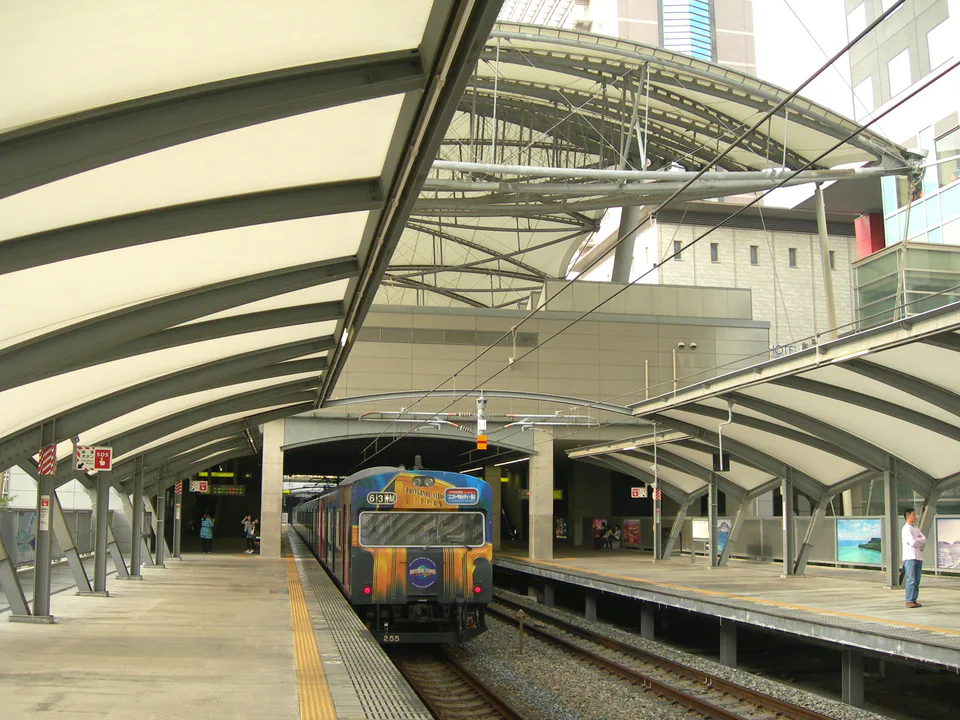
If the park-side room is ¥10,000 (~US$63) more than the city room, you are effectively paying about ¥10,000 for that saved hour—before assigning any value to less fatigue, easier stroller handling or extra sleep. If the premium is ¥25,000, the same middle night needs a much stronger reason. This is a better comparison than “Official Hotel versus non-Official Hotel” because it lets the actual room rate and actual route decide.
Two USJ days create three different hotel patterns—not one automatic answer
↔ Scroll table left or right
Pattern | Commute legs removed | Main cost | Best fit |
Keep one Osaka city hotel | None | Four city ↔ park legs across two days | Light luggage, strong city-night priorities, low hotel-move tolerance |
One middle night in Universal City | Two | One real luggage move | Best compromise when Day 1 can start from the city but Day 2 needs an easier morning |
Universal City the night before Day 1 + middle night | Three of the four typical legs | More park-side nights and an earlier hotel move | USJ-focused trips where both opening mornings matter |
Stay park-side before, between and after | All four typical park commute legs | Three nights shaped around two park days | Only when the post-Day-2 evening or next morning also belongs near the park |
The middle-night pattern is the one most often missed. You can start Day 1 from Namba or Umeda, spend the full day at USJ, sleep in Universal City, then protect Day 2’s early start without paying the park-side premium for every Osaka night. The trade-off is luggage: two repeated commutes may be easier than one hotel move if you have multiple large suitcases, a stroller and children’s gear.
With two consecutive USJ days, Universal City Station affects the recovery night between the two days as much as the first arrival.
One USJ day: a city base still wins unless the edges are unusually expensive
Imagine four or five Osaka nights. One day is USJ; the others are Namba, Umeda, city sightseeing, Kyoto, Kobe or shopping. Moving hotels only for the park can turn one convenient morning into checkout, luggage storage, retrieval, check-in and repacking.
That is why my default remains Namba or Umeda for a single normal park day. The recommendation reverses when the edges are unusually costly: a child who will be asleep by park exit, an older parent who struggles with the late transfer, a stroller plus luggage, or a very high-priority morning where reducing transport uncertainty matters more than the room premium.
For a one-day visit, the night before USJ is often more valuable than the night after. It protects the morning. If the following day already points toward Kyoto, KIX or another Osaka district, keeping the post-park night near Universal City can create a second hotel move with little benefit.
The Park Front Hotel: buy the main-gate position only when you will reuse it
USJ’s current Official Hotel page describes The Park Front Hotel at Universal Studios Japan as the hotel located right outside the main gate and the closest hotel to the park. That is strongest when the same position is used repeatedly: late exit after Day 1, early start on Day 2, or a family that needs the shortest possible final walk.
For one casual USJ day, the premium can be harder to defend because the advantage is used once in each direction. For two consecutive days, the same location can affect three high-value edges depending on which nights you book.
If this property is already on the shortlist, use the The Park Front Hotel decision guide for the room-size and location trade-offs.
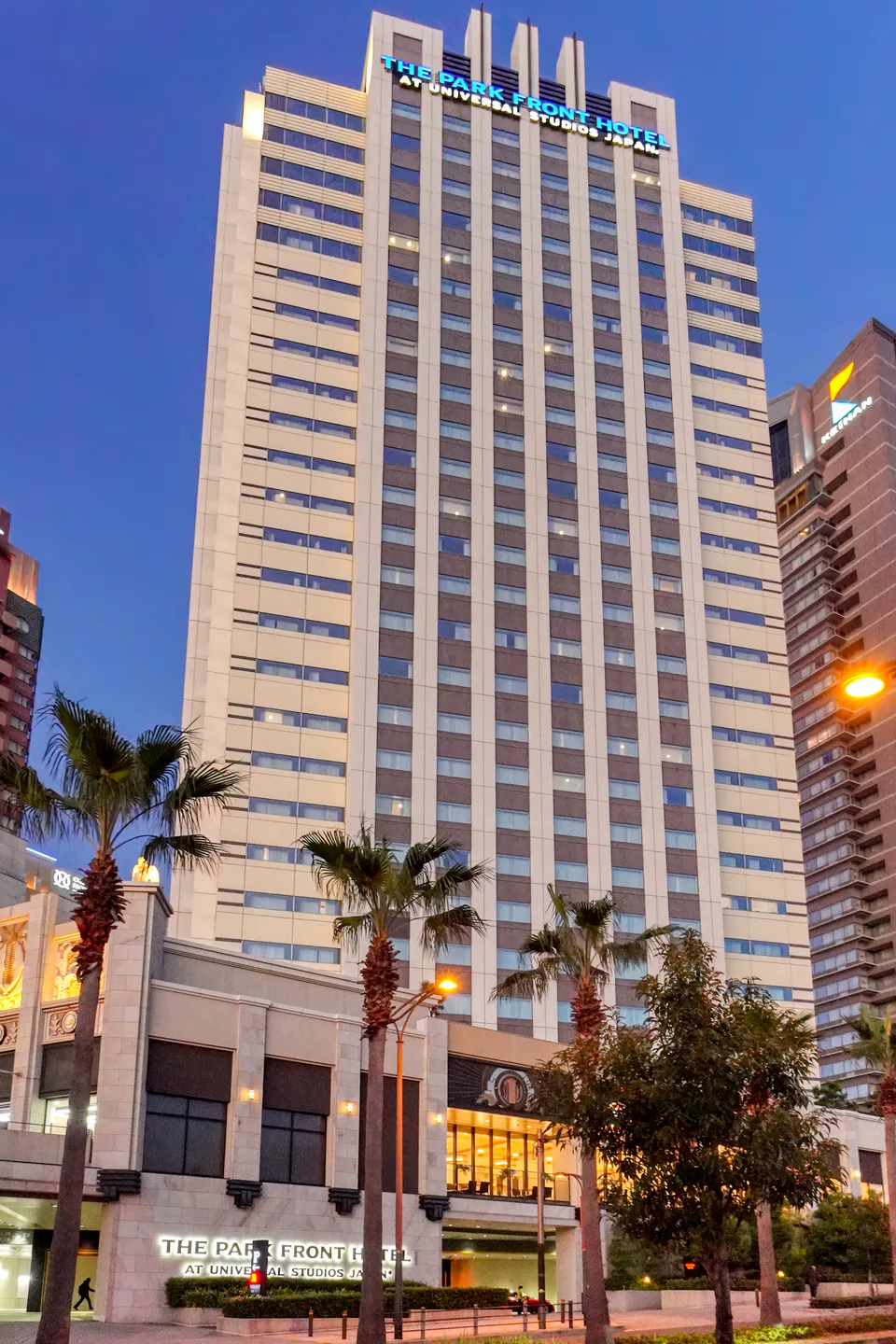
The closest-to-gate premium becomes easier to justify when the location protects more than one park edge.
Compare The Park Front Hotel rooms
Compare The Park Front Hotel on Expedia
THE SINGULARI HOTEL: station connection and Skyspa solve a different problem
USJ’s current Official Hotel listing describes THE SINGULARI HOTEL & SKYSPA as directly connected to the train station and highlights its outdoor bath and sauna. That is not the same product as “closest to the main gate.” It is a recovery-and-rail proposition.
If you stay until very late and will shower and sleep immediately, the spa can remain a paper benefit. If you deliberately leave enough time to use it, the hotel converts the post-park window into recovery rather than another journey. Choose by what happens after you leave the park, not by a generic hotel ranking.
Seven Official Hotels do not mean seven versions of Early Park In
USJ currently lists seven Official Hotels around the park: Oriental Hotel Universal City, THE SINGULARI HOTEL & SKYSPA, The Park Front Hotel, Hotel Kintetsu Universal City, Hotel Keihan Universal Tower, Hotel Universal Port and Hotel Universal Port Vita.
Do not assume that “Official Hotel” automatically means a general early-entry benefit. USJ’s current hotel-benefits table lists benefits such as ticket sales and certain Studio Pass upgrade benefits, but it does not list blanket early park admission as a standard Official Hotel benefit. Older package pages and travel memories can therefore create the wrong expectation.
USJ separately warns that actual admission may begin earlier than the published park opening time on some days. That is a park-operations issue, not the same thing as an automatic hotel privilege. A nearby hotel still helps because it reduces morning travel uncertainty—but buy the room for location unless your exact package explicitly documents an admission benefit.
The 1.5-Day Studio Pass can make a positioning night earn its keep
This is the strongest reason to reconsider the usual “one USJ day does not justify moving” rule. If you can reach Universal City before 15:00, the current 1.5-Day Studio Pass lets Day 1 become a real afternoon/evening park session, followed by a full Day 2.
That means a hotel move no longer exists only to make tomorrow easier. The sequence can be:
leave the previous Osaka base after a normal morning;
move luggage to Universal City;
enter USJ from 15:00;
sleep park-side;
return from park opening on Day 2.
The boundary condition is arrival time. If luggage, lunch and check-in push you to 18:00, you have paid for 1.5 days but used only a short evening. If you already want a complete first morning inside USJ, the 2-Day Studio Pass is the cleaner product.
Express Pass and hotel location remove different failures
An Express Pass can reduce queue uncertainty inside the park. A Universal City hotel reduces friction before and after the park. Neither substitutes for the other.
This matters because paying for both can look excessive until you identify the two separate failure modes. A family with one high-priority USJ day may rationally buy Express access but keep a city hotel because the park queues are the bigger problem. A two-day visitor may skip some Express products but pay for a middle park-side night because recovery and the second opening morning matter more.
If SUPER NINTENDO WORLD is central to the trip, remember that current USJ guidance requires an Area Timed Entry Ticket: Advance Booking or an Area Timed Entry Ticket/Standby Entry Ticket when timed entry is in operation. Certain Express Passes include advance area entry, while hotel proximity by itself does not guarantee it. Finish the ticket strategy separately from the hotel strategy.
Luggage is the hidden cost that can reverse the middle-night recommendation
A park-side middle night looks excellent on a timetable because it deletes two commutes. It can look much worse when the group has two large suitcases, a stroller, shopping bags and children’s gear.
Before splitting the stay, write down the full hotel-change sequence: pack → check out → move/store bags → retrieve them → check in → reopen everything. If that process is more stressful than two train journeys with day bags, keep one hotel. If the main luggage can be forwarded to the hotel after the USJ segment, the park-side middle night becomes cleaner; use the Japan luggage-forwarding guide to check receiving-hotel and lead-time constraints.
Families and older travellers can rationally pay more for the same minutes saved
A 30-minute commute is not the same product for every traveller. For two adults with backpacks, it may be trivial. For a family leaving USJ with a sleeping child, or an older parent after a 12-hour park day, the same half hour can be the hardest part of the itinerary.
That is why the “value per saved hour” formula needs one human adjustment: the worst hour of the day is worth more to remove than an easy midday hour. Universal City is strongest when it deletes the late-night and pre-opening edges, not simply because it shortens a map route.
Kyoto, Kobe and Shin-Osaka can make Umeda the better base again
One USJ day plus two or three days in Kyoto, Kobe, Himeji or other JR-heavy directions should be judged as one network. Umeda can keep paying back its connectivity on every non-USJ morning. Moving to Universal City for one park night may save one difficult edge while making several other departures worse.
The opposite can also be true. If the itinerary is USJ-heavy and the next hard edge is KIX or another western/southern segment, a split can be coherent. Hotel geography should follow the sequence of high-value days, not the number of Official Hotels on a booking page.
When a Universal City move is probably a mistake
One ordinary USJ day: your existing Osaka hotel already works and everyone handles the commute well.
Three hotel moves in four nights: location optimisation has turned into luggage churn.
You still want Namba nightlife after the park: the gate-side hotel is no longer your true last stop.
The second USJ day is only a short transfer-day fragment: you pay for park-side positioning without buying a complete second park experience.
You are assuming Official Hotel means guaranteed early entry: verify the exact package benefit instead.
The park-side premium is large but your measured door-to-gate saving is small: keep the better room or better city location and commute.
Final verdict
For one normal USJ day, keep the Osaka base unless companions, luggage or a very high-priority early start make the two commute edges unusually expensive. One attraction day should not automatically control four or five hotel nights.
For two consecutive full park days, calculate Universal City seriously—but start with one middle night. That single night removes the Day 1 late return and Day 2 early outbound commute, which are usually the two highest-fatigue legs. Add the night before Day 1 only when protecting the first opening matters enough; add the night after Day 2 only when the post-park evening or next morning still belongs near Universal City.
The 1.5-Day Studio Pass is the useful wild card. At a current adult price from ¥14,300 (~US$90), it can turn a 15:00 arrival into real park time and make a park-side night work harder. If you already want two complete days, the 2-Day Studio Pass starts from ¥16,900 (~US$106), only ¥2,600 (~US$16) above the current 1.5-day minimum—but the extra morning still has to be worth another half-day of your Japan itinerary.
Do not buy the hotel label. Buy the specific commute legs, sleep, recovery time and park hours the location removes.
References
Universal Studios Japan — current Official, Alliance and Associate hotel listings · Universal Studios Japan — current partner-hotel benefits table · Universal Studios Japan — current 1-Day, 1.5-Day and 2-Day Studio Pass lineup and starting prices · Universal Studios Japan — June 30, 2026 Studio Pass pricing-system update · Universal Studios Japan — operation hours and early-admission warning. Checked August 26, 2026; ticket prices, park hours, hotel benefits and package conditions can change.