
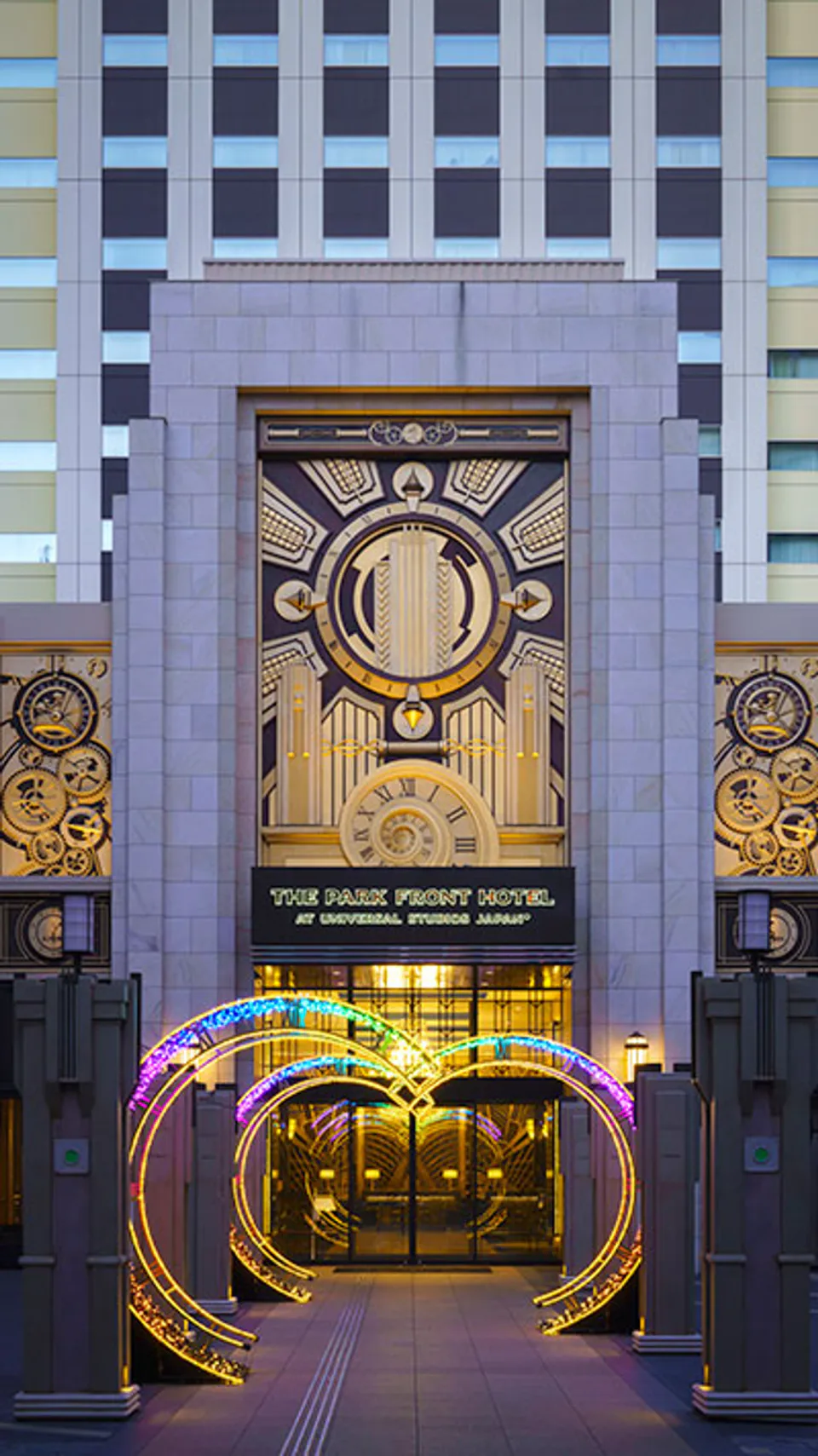
The Park Front Hotel is worth paying extra for when you want to protect the two edges of a USJ day: getting to the gate early and getting back to the room with almost no post-park journey. It is much less valuable as a “midday rest hotel” for a normal one-day visitor, because Universal Studios Japan currently states that Studio Passes other than Annual Passes do not allow re-entry after you leave the park. That rule changes the entire value calculation.
The hotel’s own current site places it about a one-minute walk from the park entrance and about a one-minute walk from JR Universal City Station. Those are real advantages. But for a standard Studio Pass holder, the hotel normally cannot be used as a lunch-break bedroom, shopping-bag drop or child-nap stop followed by re-entry. The premium therefore has to earn itself before your one park entry, after your final exit, through room practicality, or across two separate park days.
The 30-second decision
↔ Scroll table left or right
Your trip | Verdict | Why |
One USJ day, standard Studio Pass, central Osaka trip otherwise | Compare before paying the premium | You get the early start and very short final return, but not a normal midday hotel break with re-entry |
Two USJ days | Strong fit | The one-minute location is used on two mornings and two evenings, so the premium repeats |
Annual Pass holder planning an actual exit and re-entry | Much stronger fit | USJ currently permits re-entry for Annual Passes; the room can genuinely become part of the park day |
Family of 4–5, several bags, 40–45.5 m² room makes sense | Strong if the room solves space as well as location | The hotel can replace both a long late-night journey and a cramped central-Osaka room |
USJ is one day inside a 4–5 night Osaka/Kyoto stay | Usually one USJ-side night at most | Do not turn every non-USJ day into a commute from a specialist park base |
You mainly want a midday nap and plan to re-enter on a normal Studio Pass | Do not book for that reason | Standard Studio Passes currently do not allow re-entry once you exit |
The biggest correction: a one-minute hotel does not create re-entry rights
USJ’s current English service guide states that Studio Passes, except Annual Passes, do not permit re-entry after exiting the park. The ticket page repeats the same rule. That means the most tempting hotel scenario—leave the park at 16:00, nap in the room, unload shopping, then walk back in at 18:00—is not a normal option for an ordinary one-day Studio Pass holder.
This matters because proximity is only valuable when the park rules let you use it. A room 60 seconds from the gate can still be functionally unavailable for the middle of the park day if leaving would end that day’s admission.
For standard-ticket visitors, plan the hotel around three legal use windows:
Before entry: store luggage, eat, prepare children, then walk to the gate.
After final exit: return to the room immediately instead of taking JR back to Umeda, Namba or Kyoto.
Between separate park days: sleep at the gate, then repeat the short approach the next morning with a new day’s admission.
If you hold an Annual Pass, the calculation changes because re-entry is currently allowed. If you are using a special separately ticketed event or another unusual admission product, verify that product’s own rules rather than assuming the standard Studio Pass rule or the Annual Pass exception applies.
Night before USJ and night after USJ solve different problems
A one-night booking should be attached to one edge of the park day.
Stay the night before when the main goal is an easier morning. The hotel’s one-minute location removes a city-to-USJ commute before a day when USJ itself warns that admission may begin earlier than the published opening time. That makes a park-side room valuable even though it does not guarantee an advantage inside the gate.
Stay the night after when the main goal is avoiding the exhausted return to central Osaka. This is especially useful after a late closing, Halloween programme, shopping-heavy day, or a family visit where everyone has already spent twelve hours walking and queueing.
Stay two nights when both edges matter. An afternoon arrival, one complete USJ day, then a relaxed departure is the cleanest use of the property. The hotel now protects the previous evening, the park morning and the final exit without asking you to change rooms during the core trip.
The important red-team point is that “two nights” is not automatically better. If the next day is Kyoto, Kobe or several Osaka-city days, the second post-USJ night can start creating the exact commute you paid to avoid elsewhere.
The one-minute premium should be priced by uses, not by distance
The hotel’s current official site markets the park entrance as about one minute away, and its location page also makes the final walk from Universal City Station exceptionally short. A useful ValueNavi way to think about the premium is to count high-friction transitions eliminated.
For a standard one-day visitor, the hotel may eliminate:
one early-morning city-to-park transfer if you slept there the night before;
one late-night park-to-city transfer if you sleep there after;
one luggage-heavy station-to-hotel final mile on arrival;
one luggage-heavy hotel-to-station final mile on departure.
It does not normally eliminate multiple midday park-to-room trips because standard Studio Pass re-entry is not allowed. That correction lowers the location value most sharply for families who were justifying the hotel around naps or merchandise drops.
For two consecutive USJ days, the same location can still be used four meaningful times: first morning, first night, second morning and second night. That is where the hotel’s specialist geography is easiest to defend.
For families, room geometry may be more valuable than the final 60 seconds
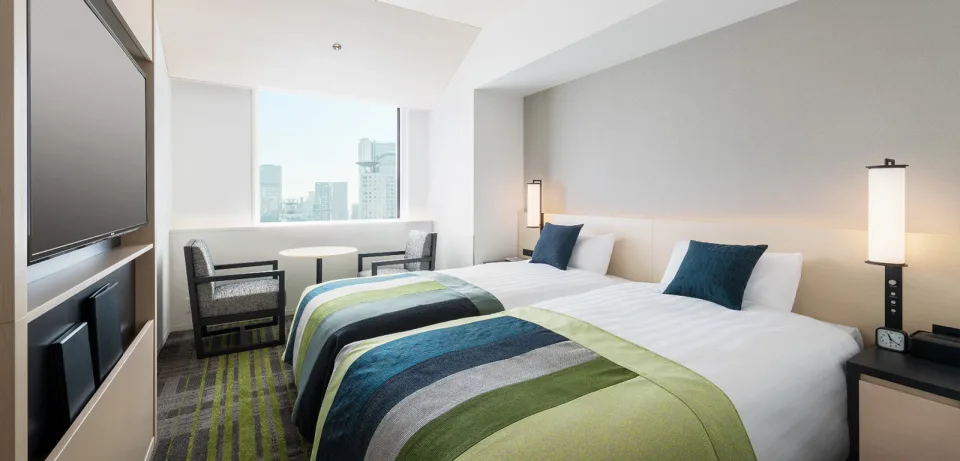
The Park Front Hotel currently has a much wider room-size range than many compact city hotels. Its common City View Guest Rooms are around 30–34 m² with two twin beds. Park View and Family categories commonly move to about 40–45.5 m², with sleeping arrangements varying by room and floor.
That matters because a family booking is not just “four people fit.” Four travellers can mean two fixed beds plus extra beds, a stroller, several full-size cases and shopping bags. A 40–45.5 m² room can be worth paying for even if the one-minute gate advantage is only used once at night.
I would therefore choose the room in this order:
Legal occupancy and actual sleeping surfaces. Check how many are fixed twin beds and how many are extra beds.
Luggage circulation. Ask whether the room still works after everyone’s bags are inside.
Bathroom and family practicality. These matter for a tired group more than a high floor.
Park View last. Pay for the view only after the room already solves the group’s physical needs.
For two adults staying one night, the 30–34 m² tier can already be generous enough. Do not upgrade to 40 m² simply because this is a theme-park hotel.
Park View is an experience premium, not a transport premium
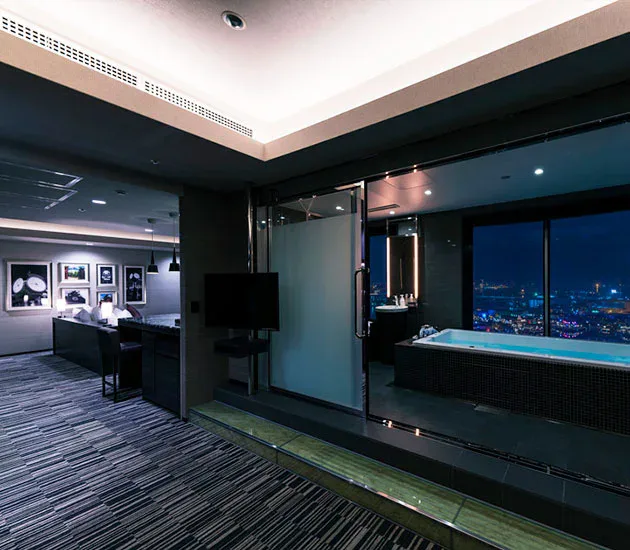
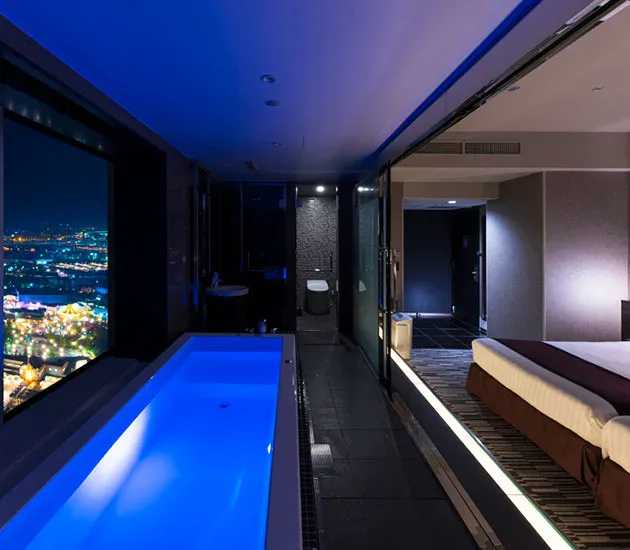
The official room pages currently show Park View categories around 40–45.5 m² in many family and park-view variants. The view can extend the USJ atmosphere into the room, but it should be priced separately from location.
If you leave the hotel before sunrise, spend all day inside the park and return after dark exhausted, you may barely use the view. In that case the gate position is doing the work; the Park View premium is not.
Park View gets stronger when the hotel itself has awake hours: an arrival afternoon, children going to bed earlier than adults, a second morning before checkout, or a group that deliberately schedules breakfast and room time. The room should have at least one meaningful viewing window before you pay extra for it.
Breakfast can erase part of the early-start advantage
The hotel currently lists breakfast from 07:00 to 09:30. USJ currently warns that actual admission may start earlier than the published park opening time on some days.
Those two facts create a direct trade-off. If your reason for sleeping one minute from the gate is an aggressive early-arrival strategy, a relaxed 07:00 hotel breakfast competes with the same morning buffer you paid for. A room-only rate plus a faster breakfast can fit that objective better.
Breakfast becomes more valuable when the next morning is not a USJ opening day: after the park day, before a later train, or on a two-night stay when one morning is deliberately slower. Do not treat “breakfast included” as free value if you cannot realistically use it.
Luggage storage and laundry are useful because they work outside park admission
The hotel’s current facilities page lists complimentary luggage lockers on the second floor, available 24 hours. If lockers are full, luggage is too large or special handling is required, guests are directed to the front desk. That makes park-first arrival easier without pretending every suitcase is guaranteed a specific locker.
The hotel also currently lists washer-dryers on floors 4–28, available 24 hours at JPY 600 per load including detergent. Laundry is not a reason to choose the hotel for one normal night, but it becomes useful on a two-night USJ stay, summer trip, family stay or costume-heavy Halloween visit.
These facilities are more dependable parts of the location premium than the old “midday room restart” logic because you can use them before park entry or after final exit without conflicting with USJ’s re-entry rule.
One USJ day inside a longer Osaka trip usually calls for a specialist night, not a specialist base
Universal City is an excellent specialist base and an imperfect general Osaka base. If the itinerary is USJ on Day 2, then Umeda, Namba, Kyoto and Kobe on Days 3–5, keeping every night at the park creates repeated travel after the hotel’s main job is finished.
I would normally use one of three patterns:
USJ-focused trip: two nights at The Park Front around one full park day.
One USJ day in a wider Osaka trip: one strategic night at Universal City, then central Osaka for the rest.
USJ is only a secondary attraction: stay central and commute once unless the late finish, family logistics or room-size difference clearly justifies the hotel move.
If you are deciding whether Universal City should be a base at all, use Where to Stay for USJ. If the rest of the trip is JR-heavy, compare an Osaka Station hotel instead of forcing one property to solve two different travel patterns.
The Park Front vs THE SINGULARI: gate or Skyspa?
The rebuilt THE SINGULARI HOTEL guide exposes the cleanest alternative. THE SINGULARI is directly connected to Universal City Station and adds a guest-only Skyspa. The Park Front pushes the park-gate walk to the minimum and offers broader 30–45.5 m² room choices.
Choose The Park Front when gate proximity, room size and family sleeping layout are the main reasons for paying a USJ-area premium. Choose THE SINGULARI when station connection + public-bath use matter enough to accept its more compact common rooms.
Neither hotel can override the Studio Pass re-entry rule. For standard ticket holders, both are primarily pre-entry and post-exit products on a one-day park visit.
Final verdict
Book The Park Front Hotel when USJ is a major trip anchor and you can name at least two benefits you will actually use: an early gate start, a nearly frictionless late return, a larger family room, luggage handling around the park day, or a second USJ morning.
Compare again when the justification is “we can go back to the room during the day.” For ordinary Studio Pass holders, that plan conflicts with USJ’s current no-re-entry rule. Annual Pass holders are the important exception.
Skip the multi-night Universal City premium when USJ is only one day and the rest of the itinerary belongs in central Osaka, Kyoto or Kobe. In that case, one strategic park-side night—or no hotel move at all—usually preserves more total trip time.
The one-minute walk is real. Its value is just narrower and more specific than it first appears: it buys an easier approach before entry and an easier escape after final exit, not unlimited access to your room during a standard park day.
Compare The Park Front Hotel room types and rates
Hotel Hankyu RESPIRE OSAKA: Is a 3-Minute Osaka Station Walk Worth the High-Rise Trade-Off?
Sapporo Summer Festival After 8 PM: Is Odori Park Still Worth the Walk?
Hotel Sonia Otaru: Is a Canal-View Room and Rooftop Onsen Worth the 8-Minute Station Walk?
Oriental Hotel Okinawa Resort & Spa Review: Is the 170m Pool Worth a 7-Minute Beach Walk?
Hotel Sosei Sapporo Review: Is a 39 m² Twin-Queen Room Worth a 15-Minute Walk from Sapporo Station?
References
Universal Studios Japan — current re-entry and locker rules · Universal Studios Japan — current Studio Pass rules · Universal Studios Japan — current operating-hours guidance · The Park Front Hotel — current location information · The Park Front Hotel — current room sizes and sleeping arrangements · The Park Front Hotel — current luggage and laundry facilities. Checked August 25, 2026. Park hours, admission rules, room types and hotel services can change; verify the exact ticket and stay date.