
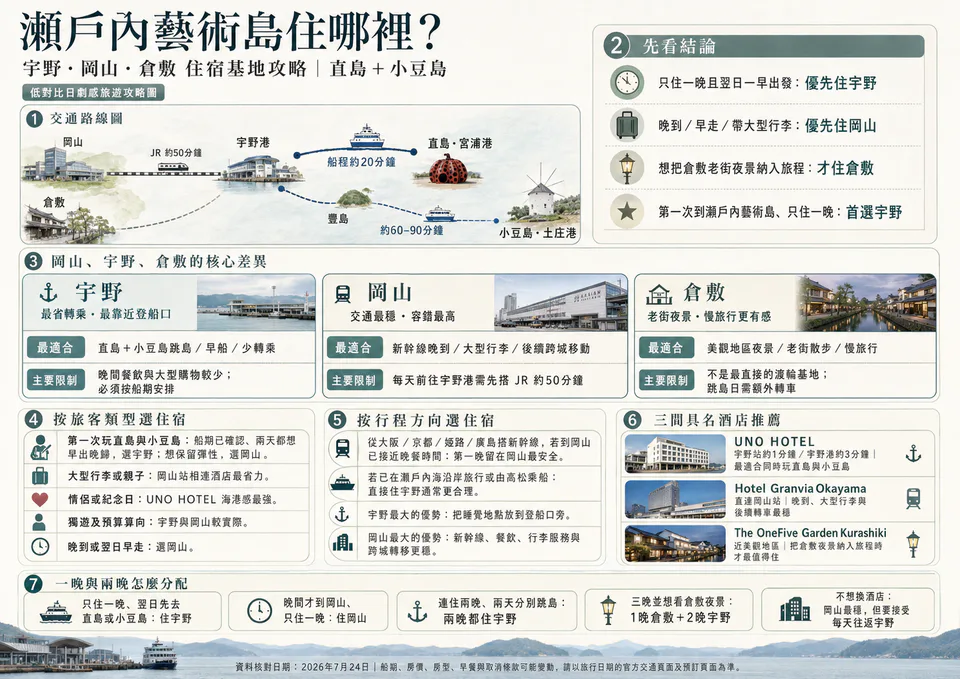
If Naoshima is the main event, stay in Uno. If Shodoshima is the main event, stay in Takamatsu. If you have only one island day and arrive late by Shinkansen, Okayama is often the safer base. The difficult case is one day on Naoshima plus one day on Shodoshima: Uno is dramatically better for Naoshima, while Takamatsu has the much stronger Shodoshima ferry network. In that mixed-island itinerary, the correct base depends on which island needs the earlier or longer day and which direction your trip continues afterward.
The old shortcut—“Uno is closest to the islands, so use Uno for two island days”—is too broad. Current official access shows Uno–Miyanoura on Naoshima at about 20 minutes with many sailings, while Uno–Tonosho on Shodoshima runs through Teshima and takes about 90 minutes on the through route with far fewer departures. Takamatsu is the reverse kind of hub: Naoshima takes about 60 minutes, but Shodoshima has frequent ferries and high-speed boats. Choose the port that protects the island day that is hardest to replace.
↔ Scroll table left or right
Your itinerary | Best starting base | Why | Main trade-off |
Naoshima only | Uno | Uno–Miyanoura is about 20 minutes and the timetable is dense | Uno is a logistics town, not automatically the most interesting evening |
Shodoshima only | Takamatsu | Takamatsu–Tonosho has frequent roughly 60-minute ferries plus roughly 35-minute high-speed boats | If you arrive from Okayama by Shinkansen, you must cross to Shikoku before the island day |
Naoshima + Shodoshima, one day each | Uno or Takamatsu | Pick the hub that gives the more important island its better morning and return margin | No mainland base is equally optimal for both islands |
One island day + late Shinkansen arrival / early Honshu departure | Okayama | Protects the rail side of the trip and avoids a late extra hotel transfer | You add about 50 minutes of JR Uno Line before a Naoshima ferry |
Naoshima evening / quiet morning is part of the trip | Naoshima | The night buys island hours that a ferry day trip cannot reproduce | You take luggage onto the island and must still plan local transport |
Shodoshima road trip or multi-zone sightseeing | Shodoshima | The island is large enough that an overnight can remove a mainland return and create a second route day | Port choice and island transport matter more than the hotel name |
Uno is the strongest Naoshima base because the advantage repeats all day
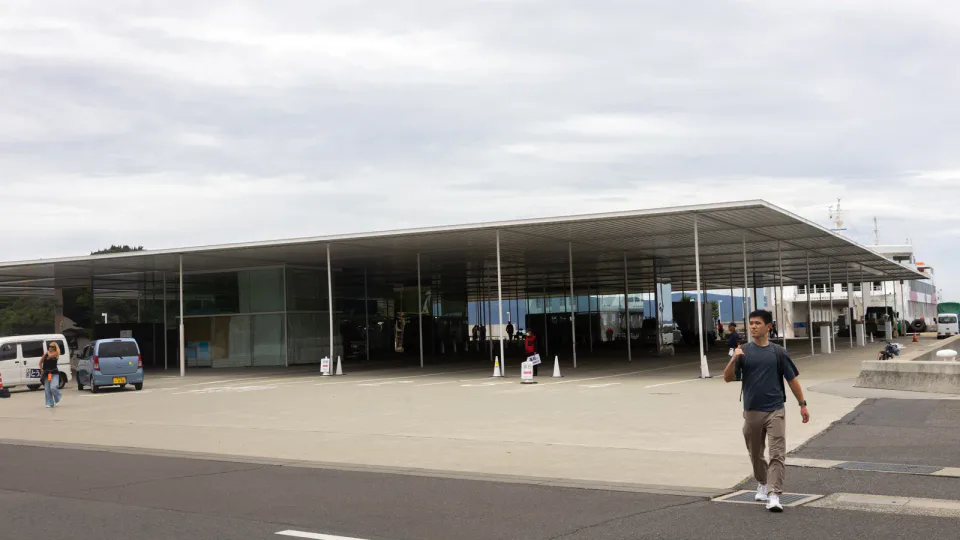
Benesse Art Site Naoshima currently lists JR Okayama to Uno at about 50 minutes, Uno Station to Uno Port at about three minutes on foot, and Uno Port to Miyanoura on Naoshima at about 20 minutes. The current Uno–Miyanoura timetable contains departures from early morning through late evening, including a 06:10 departure and multiple services after 20:00.
That frequency changes the hotel decision. You are not merely saving 40 minutes compared with a longer ferry. You are buying more possible start times, more possible return times and a much smaller penalty if you deliberately leave Naoshima later than expected.
There is still a failure condition: Shikoku Kisen says advance reservations are not accepted and boarding is first-come, first-served. “I slept beside the port” therefore does not mean you should walk onto the pier at the scheduled departure time. The port advantage is margin, not immunity from queues or weather disruption.
ValueNavi verdict: for one full Naoshima day, I would pay a modest Uno premium over an equivalent Okayama room when that premium buys an easier early ferry and an easier tired return. I would not pay a large premium merely to be in Uno if the arrival is late, the next day starts leisurely, or the trip needs the Shinkansen again immediately afterward.
Shodoshima changes the geometry: Takamatsu becomes the stronger ferry hub
Shodoshima should not be treated as “another island from Uno.” The current Shodoshima tourism timetable shows a much denser Takamatsu–Tonosho network: ferries generally take about 60 minutes and high-speed boats about 35 minutes, with departures spread across the day.
Uno does have a direct through service to Tonosho via Teshima. The current Shodoshima Teshima Ferry timetable includes departures such as 06:45, 08:40, 11:10, 13:25, 15:25 and 17:30 from Uno, with the through journey to Tonosho taking roughly 90 minutes. That is usable, and it can be strategically excellent when Teshima is also part of the trip. But it is not the same level of schedule flexibility as Takamatsu–Tonosho.
This is the core correction for a two-island itinerary. Uno is a Naoshima-first hub that can also reach Shodoshima; Takamatsu is a Shodoshima-first hub that can also reach Naoshima. Those are not equivalent claims.
Takamatsu can be the best two-island compromise when the trip continues into Shikoku
Benesse currently lists Takamatsu Port–Miyanoura at about 60 minutes. The current timetable has multiple departures in both directions, so Naoshima remains a practical day trip even though Uno is much closer.
Takamatsu becomes especially rational when Shodoshima gets the longer day and your route continues to places such as Tokushima, Matsuyama or Kochi. In that pattern, moving the hotel to Uno simply to save time on Naoshima can create a mainland backtrack after the second island day.
A useful mixed-island test is:
Naoshima needs the early start; Shodoshima is a simpler Tonosho-focused day: lean Uno.
Shodoshima needs a long multi-stop day; Naoshima is a compact art day: lean Takamatsu.
The trip arrives from / returns to Honshu: Uno gains because you avoid crossing to Shikoku only to cross back.
The trip continues through Shikoku: Takamatsu gains because the hotel move advances the wider itinerary.
The cheapest hotel should come after that geometry is fixed. A room that saves JPY 2,000 but creates a 50- to 60-minute positioning journey on both mornings can be the more expensive travel product.
Okayama is not the best island base; it is the best rail-buffer base
Okayama’s strength is not ferry access. It is the fact that the Shinkansen, luggage and mainland hotel all remain in one place. Benesse currently gives roughly 50 minutes by JR Uno Line from Okayama to Uno, then about three minutes on foot to the port.
That makes Okayama a strong answer for a late arrival from Tokyo, Kyoto, Hiroshima or Kyushu. Instead of adding a final evening train to Uno after a long rail day, you can sleep beside the major station and absorb the Uno transfer in the morning.
The price is repetition. A single Naoshima day adds the Okayama–Uno rail leg outbound and inbound. Two Naoshima/Uno-side island days add it four times. That is why Okayama gets weaker as the number of ferry mornings increases.
I would therefore describe Okayama as the one-island-day / mainland-continuity option, not as the universal comfortable alternative to Uno.
Kurashiki should not be chosen as an island transport base
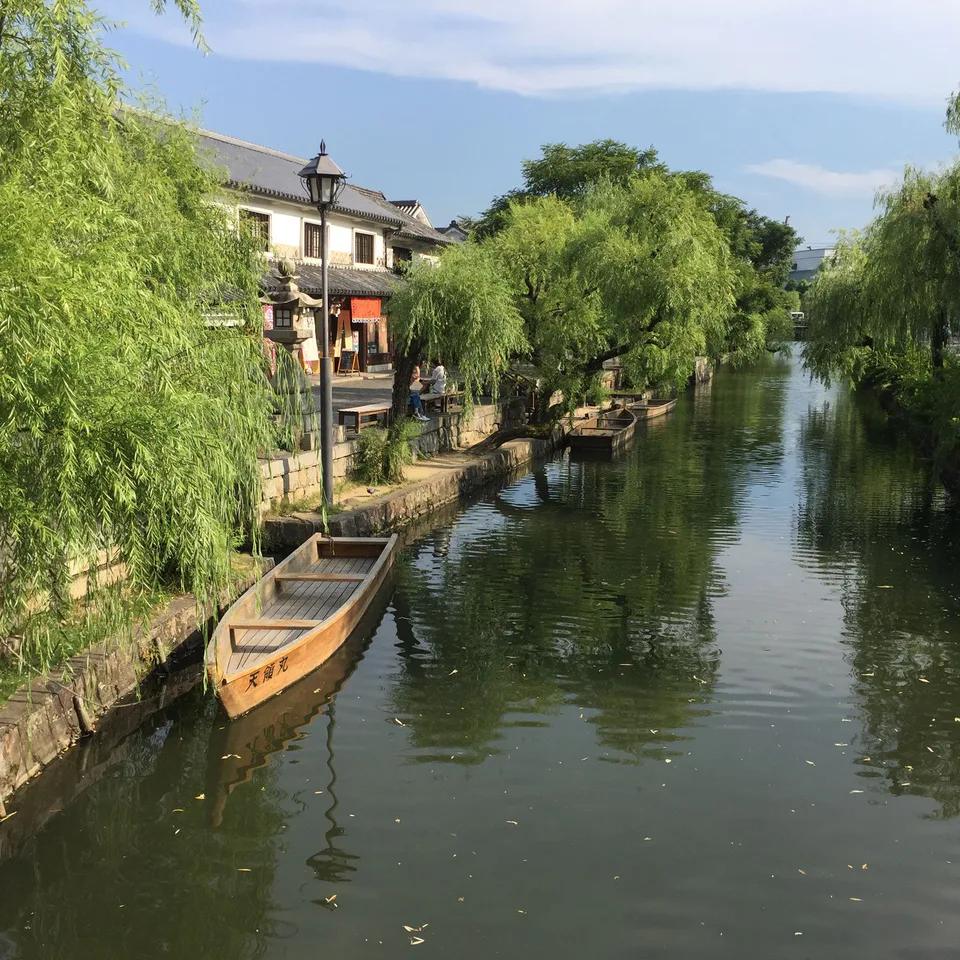
Kurashiki can be a wonderful night, but that is exactly why it should be judged separately. If you want the Bikan Historical Quarter after day visitors leave, staying there can be a genuine travel experience. If you are only sleeping there to visit Naoshima the next morning, you have added another station walk and rail segment without improving the ferry.
The correct question is: would I still want the Kurashiki night if the island day disappeared? If yes, keep it. If no, use Uno or Okayama and visit Kurashiki as its own day or evening.
This removes a common false compromise. A heritage-town hotel is not “more central” just because it sits between several places on a map. Your real centre is the port or station you must use at a fixed time the next morning.
Staying on Naoshima is an experience upgrade, not a ferry hack
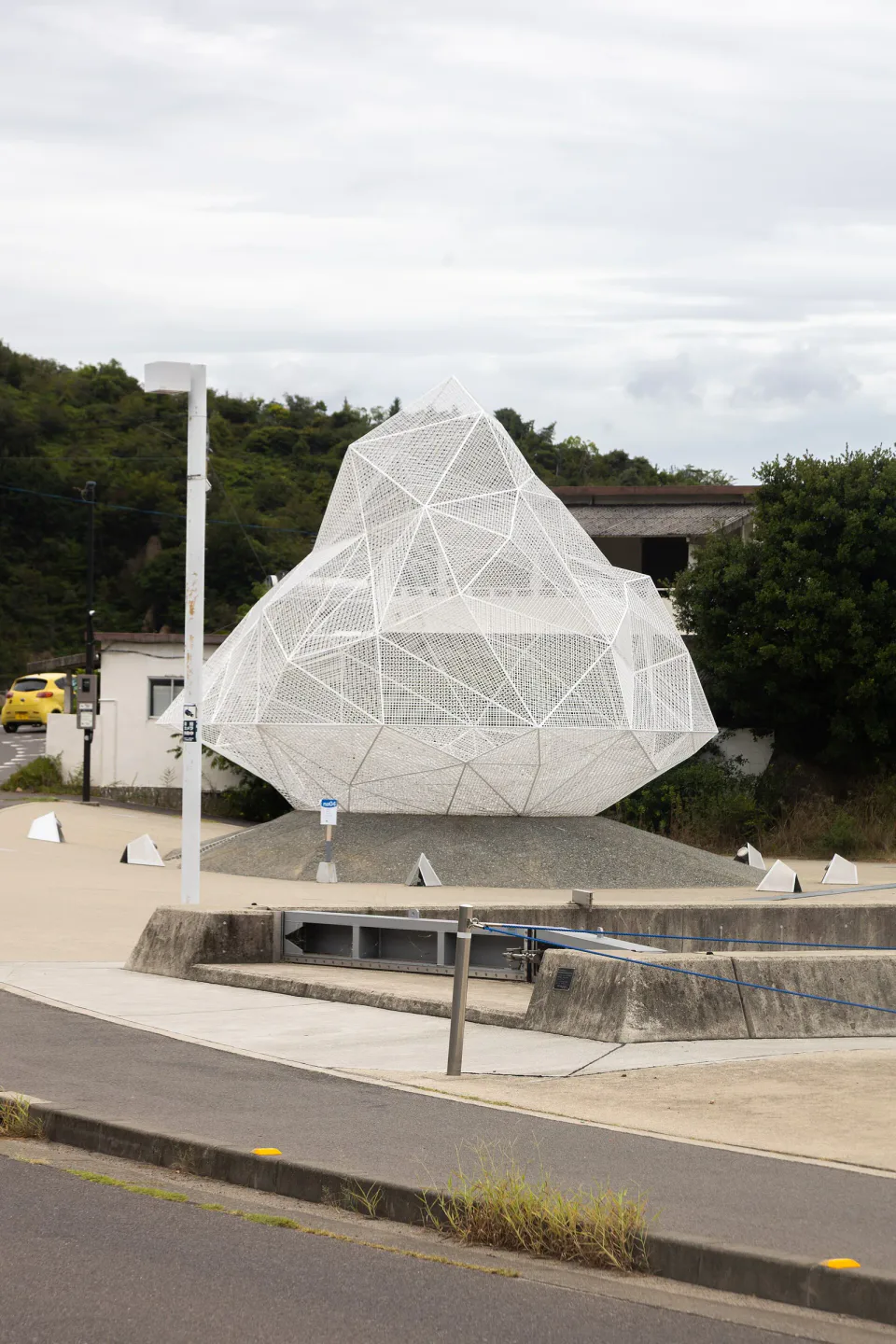
An island night becomes worth paying for when you want the hours after the day-trip ferry pressure fades or before the main daytime flow begins. That can include a slower Miyanoura or Honmura evening, a quiet morning, or simply more time to sequence several art facilities without forcing everything into one ferry window.
Do not justify the hotel with a vague claim that “you can see more museums.” Current Benesse facilities have their own opening calendars, timed or online-ticket systems and closure dates. For example, the Naoshima New Museum of Art currently operates 10:00–16:30 and is normally closed on Mondays, with additional temporary closures announced separately. An overnight does not make a closed museum open.
Use a two-session test:
Evening session: will you actually use the island after the normal day-trip rhythm?
Morning session: does being on the island materially improve the next day before your departure ferry?
If neither session has a job, sleeping on Naoshima may simply move your suitcase across the water for no decision value.
Shodoshima overnight is more often a route upgrade than an atmosphere upgrade
Shodoshima is physically and operationally a different type of island from Naoshima. Its sightseeing zones, ports and inland attractions can make the day depend on bus timing or driving. When the plan includes multiple parts of the island rather than one Tonosho-area stop, staying overnight can turn one compressed out-and-back day into two directional route blocks.
The key is port strategy. Tonosho is useful for the dense Takamatsu connection and the Uno/Teshima route. Other ports can make more sense for different ferry origins or an onward direction. Do not choose a hotel first and then discover that the morning ferry or bus starts from the opposite side of the island.
If the accommodation exists only to sleep between two ferry rides, Takamatsu may still be easier. The island night earns its premium when it removes real backtracking or unlocks a second meaningful sightseeing block.
One base for two island days? Count the weaker morning, not the stronger one
For a Naoshima + Shodoshima pair, people often choose the base by asking which island is faster. Use the opposite test: which island becomes most fragile from this base?
From Uno, Naoshima is easy and Shodoshima is the timetable-sensitive day. From Takamatsu, Shodoshima is easy and Naoshima is the longer ferry day. The base should be chosen by the day whose missed sailing, museum reservation or transport sequence would hurt more.
This framework also handles weather better. Ferry operators warn that services may be suspended or delayed because of sea conditions. Keeping one mainland base avoids a hotel move when the island order has to change, but only if both island days remain realistically serviceable from that base.
Large luggage changes the value of a mainland base
Two large suitcases make every ferry hotel move more expensive. If the trip is part of a longer Japan route, a mainland base can let you leave the main cases and use a daypack on the islands. That is a real reason to prefer Uno, Takamatsu or Okayama even when an island hotel sounds more atmospheric.
If you do move onto an island, check luggage acceptance, the port-to-hotel transfer and the next day’s departure before paying. Naoshima’s local movement still relies on town buses, walking, rental cycles and the Benesse shuttle within the museum area. Sleeping on the island does not remove that last-mile problem.
For a longer multi-stop Japan trip, luggage forwarding can be more valuable than changing the accommodation base solely to avoid one suitcase transfer.
Four practical base patterns
1. One Naoshima day between Kyoto/Osaka and Hiroshima
Stay Uno if the ferry morning matters; stay Okayama if the late arrival or next Shinkansen matters more. Do not move to Takamatsu unless Shikoku itself is part of the route.
2. Naoshima + Shodoshima, then continue through Shikoku
Start by pricing Takamatsu. You accept the longer Naoshima ferry in exchange for a much stronger Shodoshima network and a base that advances the next leg.
3. Naoshima + Shodoshima, then return to Honshu
Uno becomes more competitive. The Naoshima day is extremely efficient and the current Uno–Teshima–Tonosho route keeps Shodoshima possible without crossing to Takamatsu. Check the exact Shodoshima sailing first because that is now the weaker day.
4. Naoshima itself is one of the trip’s main experiences
Consider one Naoshima night. The decision is justified by evening/morning island time, not by a belief that mainland ferry access is poor—it is not.
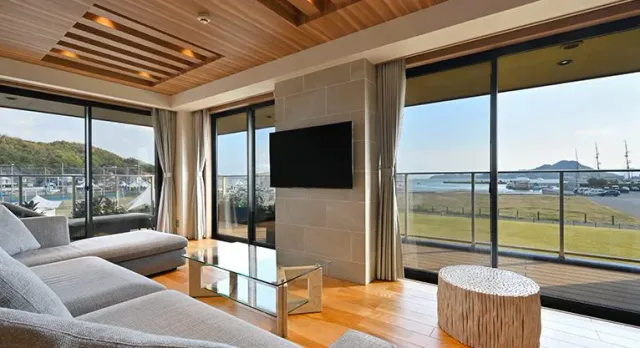
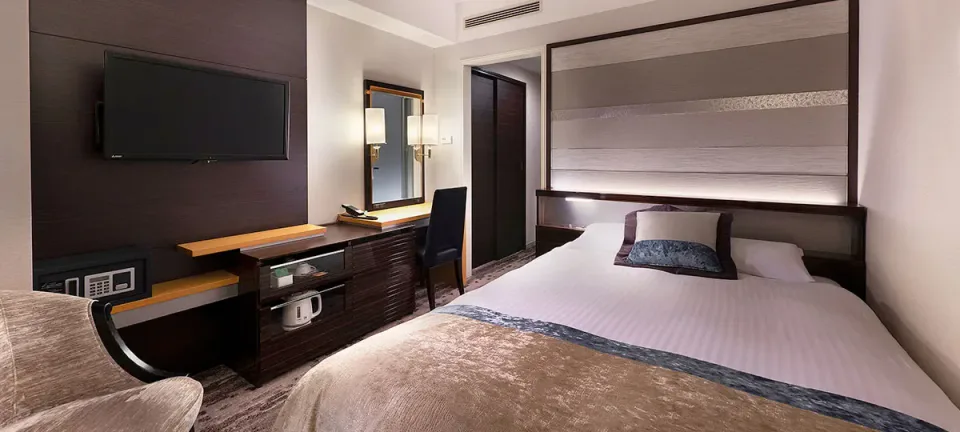
Compare stays around Uno Port
Final verdict
Uno is the best Naoshima logistics base. Takamatsu is the best Shodoshima logistics base. Okayama is the best Honshu rail-buffer base. An island hotel is the right answer only when the island night itself creates useful hours.
For one Naoshima + one Shodoshima day, do not force a universal winner. If the route returns to Honshu and Naoshima is the priority, Uno is usually the cleaner starting point. If Shodoshima needs the longer day or the trip continues through Shikoku, Takamatsu can be the better two-island base despite the longer Naoshima ferry.
The deletion test is simple: remove the hotel name and ask what the night must accomplish. Early Naoshima ferry? Uno. Dense Shodoshima departures? Takamatsu. Late Shinkansen and luggage continuity? Okayama. Naoshima evening and morning? Stay on Naoshima. If the night has no job beyond “somewhere between the islands,” the itinerary still needs work.
Tateyama Kurobe Traverse or Round Trip? Transport, Luggage and Where to Stay
5-Day Hokkaido Autumn Leaves Itinerary: Driving, Public Transport and Where to Stay
Where to Stay for Kochi Yosakoi: Station, Obiyamachi or Saenbacho
Kagoshima or Ibusuki: Where to Stay for One Night Without a Car
Happo vs Echoland: Where Should You Stay in Hakuba for Skiing?
References
Benesse Art Site Naoshima — current access from Okayama, Uno and Takamatsu · Shikoku Kisen — Naoshima ferry routes, schedules and service status · Shodoshima Teshima Ferry — Uno/Teshima/Tonosho timetable · Shodoshima Tourism Association — Takamatsu/Shodoshima ferry access · Benesse Art Site Naoshima — opening calendar. Checked August 25, 2026. Ferry timetables and art-facility calendars are date-sensitive and can change because of weather, maintenance or event schedules; verify the exact travel date before booking.