
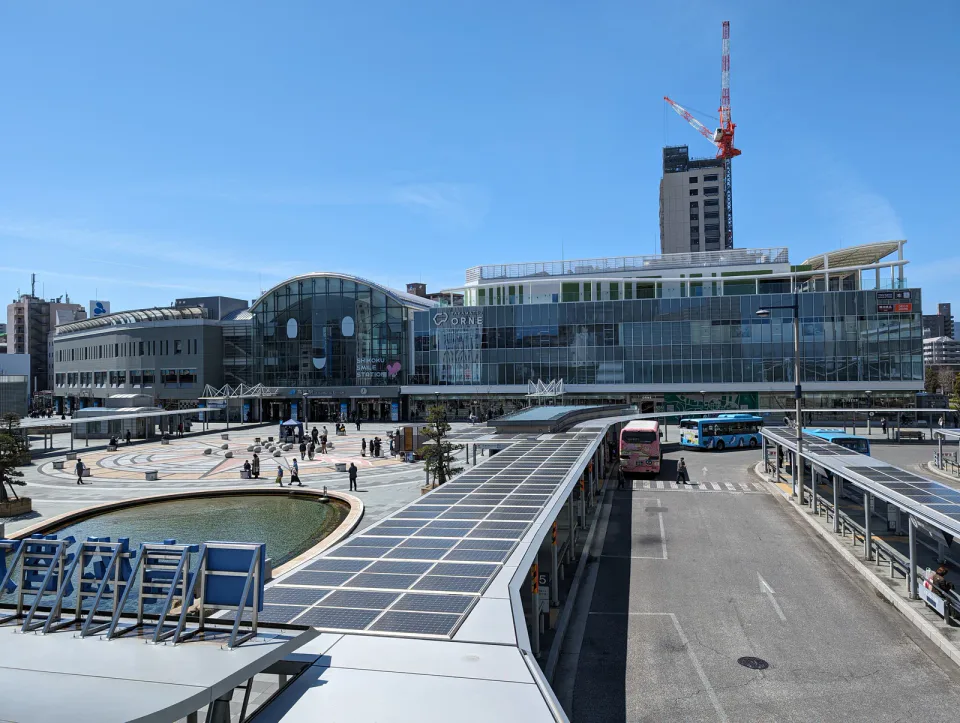

Choose the Takamatsu Station / port side when the trip contains two or more ferry mornings, a very early Naoshima departure, repeated JR day trips, large luggage or only one or two nights in the city. Choose Kawaramachi when there is only one ferry day and the trip repeatedly ends with restaurants, shopping arcades, Kotoden journeys or a slower city evening. The airport bus does not break the tie by itself: the current limousine route directly serves both Kawaramachi and Takamatsu Station.
The useful question is not which area is “more central.” It is which inconvenient movement repeats at the least forgiving time of day. A ten- or fifteen-minute extra local transfer is cheap at 18:00 when you are choosing dinner. It is much more expensive before a 07:20 ferry whose ticket is sold at the port and whose departure will not wait for a late local connection.
↔ Scroll table left or right
Your trip pattern | Better base | What the base protects | When the answer reverses |
Two or more island-ferry mornings | Takamatsu Station / port | Repeated pre-ferry buffer and simpler ticketing mornings | The ferries are late-day departures and most evenings matter more than mornings |
One Naoshima day + several restaurant/shopping evenings | Kawaramachi | Repeated evening walking and dining convenience | The Naoshima day uses the earliest boat and missing it would materially damage the day |
JR-heavy onward route to Okayama, Matsuyama or Kochi | Takamatsu Station / port | Luggage-to-platform simplicity | JR is used only once and most local days use Kotoden/downtown |
Ritsurin Garden + Kotoden + downtown evenings | Kawaramachi | Central city access and a better evening endpoint | Early ferries or a luggage-heavy JR departure dominate the stay |
Late Takamatsu Airport arrival | Either | Airport limousine bus currently serves both | The exact hotel has a materially easier stop or the next morning has an early ferry |
The station-side premium is really a missed-ferry insurance premium
Shikoku Kisen currently lists the Takamatsu–Miyanoura route with both ferries and high-speed passenger boats. The earliest high-speed boat leaves Takamatsu at 07:20 and reaches Miyanoura at 07:50. The first standard ferry leaves at 08:12 and arrives at 09:02. JR Takamatsu Station is about a five-minute walk from Takamatsu Port, while Kotoden Takamatsu-Chikko is about three minutes away.
Those times matter because the operator does not accept reservations on this route. Ferry tickets begin selling 40 minutes before departure; high-speed-boat tickets begin selling 30 minutes before departure. The high-speed boat also uses its own ticket counter, about three minutes from the ferry ticket counter.
So a station-side hotel is not merely “close to the port.” It removes one local transport dependency before a first-come transport product. For a 07:20 Naoshima boat, that can be worth more than the room being closer to restaurants the previous night.
ValueNavi test: if missing the intended ferry would cost a museum reservation, several island hours or the whole structure of the day, value the station-side premium as risk reduction. If the boat is one flexible part of a relaxed trip, do not overpay for that buffer.
The first ferry is not automatically the best ferry
Do not choose the station side simply because an early ferry exists. The 07:20 high-speed boat is faster but currently costs JPY 1,590 one way, compared with JPY 680 for the standard ferry. The high-speed boat also cannot carry bicycles or cars, while the ferry can.
If your Naoshima plan begins after museums or rentals open, the 08:12 ferry may already be early enough. In that case, the difference between sleeping beside the port and sleeping in central Takamatsu is less valuable. Conversely, if you are deliberately trying to maximise island hours, the 07:20 boat makes the station-side morning much more defensible.
This is why the correct sequence is choose the island timetable first, then choose the Takamatsu base—not the other way around.
Airport access does not justify the station side on its own
Kotoden Bus currently runs the Takamatsu Airport limousine bus through both Kawaramachi and the waterfront. The current fare table lists JPY 900 to Kawaramachi and JPY 1,000 to Takamatsu Station, Takamatsu-Chikko, JR Hotel Clement Takamatsu and the ferry terminal. The operator says services are coordinated with flight arrivals, with airport departures generally about 15 minutes after arriving flights and adjustments when landings are delayed.
That removes one common but weak argument: “stay at Takamatsu Station because the airport bus goes there.” The airport bus also goes to Kawaramachi. Airport access should become a tie-breaker only after you check the exact hotel stop and the next morning’s plan.
If the arrival is late and the next morning is a 07:20 Naoshima boat, the station side gets stronger because one hotel location solves both the airport night and the ferry morning. If the next day is Ritsurin Garden and an evening in the arcades, Kawaramachi can remain the better base even after a flight arrival.
Kawaramachi wins when the repeated cost happens after sightseeing
The central-city advantage is not a vague “better nightlife” label. It is the ability to finish several days near the hotel instead of returning to the waterfront every evening. Kawaramachi sits closer to the covered shopping arcades, restaurant streets and the Kotoden network used for several local directions.
That matters most on three- or four-night stays with only one island day. If three evenings end around Kawaramachi but only one morning begins at the port, you are choosing between one early transfer and three tired evening returns. The city-centre base can win even though it is worse for the ferry.
This is the same repeated-friction logic as the ferry argument. Count the journeys. Do not let the most visually obvious landmark on the map decide the hotel.
Ritsurin Garden does not require Kawaramachi—but it strengthens the central-city case
Ritsurin Garden’s official access information lists Kotoden Ritsurin Koen Station at about a ten-minute walk, JR Ritsurin Koen Kitaguchi at about three minutes and the Ritsurin Koen-mae bus stop at about one minute. JR Takamatsu Station is still practical—official tourism information lists about 20 minutes by bus or seven minutes by car.
So Ritsurin Garden is not a hard “Kawaramachi only” attraction. Its value in this decision is cumulative: if the same stay also uses Kotoden, central dining and the shopping arcades, the garden adds another day that points south/central rather than toward the waterfront.
Seasonal opening times can also make early garden visits realistic; the official schedule opens as early as 05:30 in June–August and 06:00–07:00 in other months. If an early Ritsurin morning is one of the trip’s anchor experiences, compare the actual hotel-to-garden route rather than treating all Takamatsu hotels as equally central.
JR day trips make the station side stronger only when they repeat
Takamatsu Station is the natural rail gateway for trips toward Okayama and onward Shikoku travel. That is valuable with luggage, an early train or several JR-based days. It is not a reason to move the whole stay to the waterfront for one train journey.
A three-night trip with Naoshima on Day 2 and a single JR departure on Day 4 still has two central evenings that may matter more. A three-night trip with Naoshima, Okayama and then a Matsuyama move has the opposite geometry: almost every hard edge of the stay touches the station/port zone.
If Matsuyama is entering the route, use Takamatsu or Matsuyama as a five-day Shikoku base before optimising the local Takamatsu hotel.
Large luggage raises the cost of every “small” local transfer
A short city ride looks trivial until it is attached to two full-size suitcases, a stroller or an older traveller. If the trip arrives by JR, takes two ferry days and leaves by JR again, the station side deletes several luggage hand-offs. That can justify a less lively evening area.
The reverse is also true. If the bags stay in the hotel for four nights and the only luggage movement is arrival and departure, luggage should not overpower three central evenings. Use luggage forwarding for the larger Shikoku route when appropriate, but do not invent a station-hotel requirement for bags that are not moving each day.
Do not split hotels inside Takamatsu for a normal two- or three-night stay
Station and Kawaramachi solve different problems, but they are not far enough apart to justify routine hotel-hopping. Checkout, luggage storage, moving the bags and a second check-in usually cost more than one or two local rides.
I would split inside Takamatsu only when the hotel move is attached to a larger route change—for example, one arrival night beside the port before two very early island departures, followed by several days where the itinerary itself shifts south or continues elsewhere. Even then, ask whether keeping one room and taking a taxi once would be simpler.
Red-team rule: if the only reason for changing Takamatsu hotels is “one area is better in the morning and the other at night,” do not move. Choose which repeated inconvenience you are willing to pay.
Hotel examples: use them to express the area strategy, not as a ranking
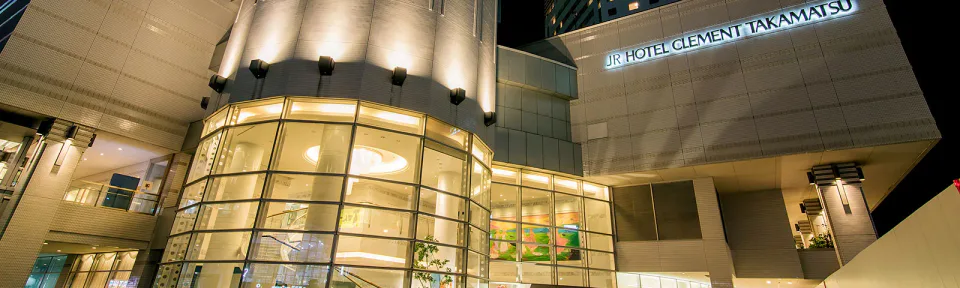
JR Hotel Clement Takamatsu is the clearest station/port example: it sits beside JR Takamatsu Station, Takamatsu-Chikko and the waterfront, and the airport limousine bus serves the hotel. Its value is route compression, especially before ferries or with luggage.
Daiwa Roynet Hotel Takamatsu is a useful central example around Marugamemachi Green. Its official access is about eight minutes on foot from Kawaramachi Station, so the appeal is the arcade/restaurant environment rather than port proximity.
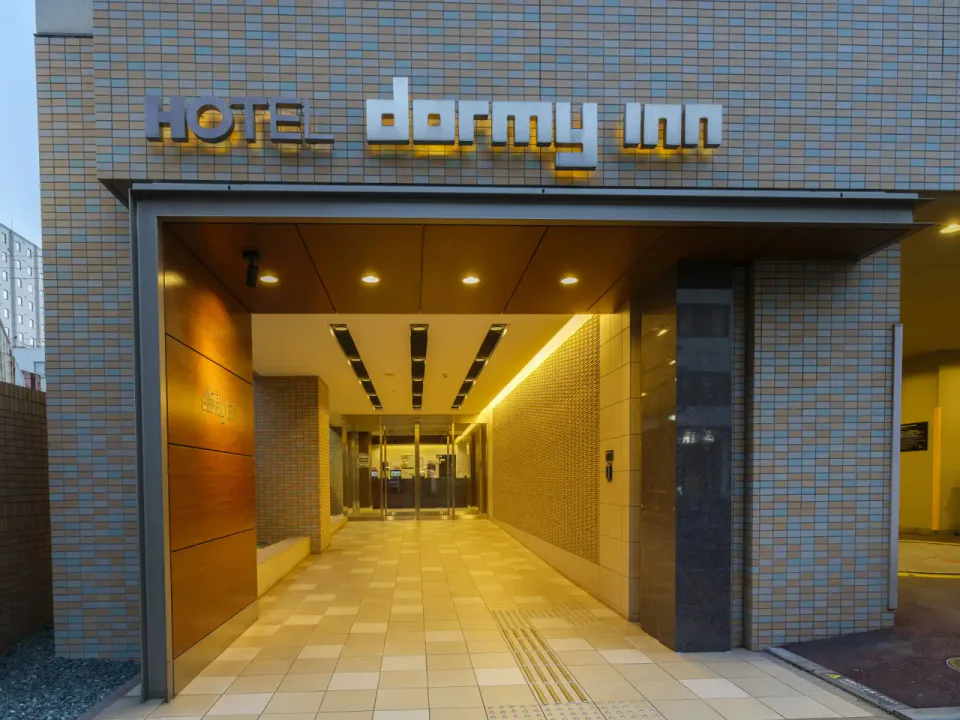
Dormy Inn Takamatsu Chuo Koen-mae represents a third central trade-off: about five minutes from Kawaramachi Station plus a public bath/recovery feature. That can be valuable after long island days if you return early enough to use the hotel rather than only sleep there.
These are examples of area logic, not a permanent top-three ranking. Live room size, cancellation terms and price can reverse the hotel choice without changing the correct area.
One, two or three nights: the base threshold changes
↔ Scroll table left or right
Stay length | Default logic |
1 night | Station/port usually wins unless the stay is explicitly for dinner and central Takamatsu. Short stays punish luggage and transfer friction most. |
2 nights | One island day: either area can work. Let the other full day and the arrival/departure direction decide. |
3+ nights | Count repeated ferry/JR mornings against repeated central evenings. One ferry day no longer automatically makes the station side the best base. |
Final verdict: buy the buffer you will actually use
Stay by Takamatsu Station / the port when two or more mornings depend on ferries, when the 07:20 Naoshima high-speed boat is part of the plan, when JR movement repeats, or when large luggage makes every extra connection expensive. The value is not glamour; it is fewer ways to miss the first transport of the day.
Stay around Kawaramachi when there is only one flexible ferry day and several nights finish with food, shopping or Kotoden-based city travel. The airport bus still serves the area, so you do not need to sacrifice the better evening base solely for airport access.
For a mixed three-night first visit, use a simple threshold: two hard ferry/JR mornings usually push the answer to the station side; one ferry morning plus two or three meaningful downtown evenings usually pushes it to Kawaramachi. When the count is tied, let luggage and the first morning break the tie.
Kankakei Gorge Autumn Leaves Guide: Ferries, Buses, Ropeway and Where to Stay
Where to Stay for Kochi Yosakoi: Station, Obiyamachi or Saenbacho
References
Shikoku Kisen — Takamatsu–Miyanoura timetable, fares, ticket sales and port access · Shikoku Kisen — route and current operating-status portal · Kotoden Bus — Takamatsu Airport limousine bus · Kotoden Bus — current airport-bus fares and stops · VISIT KAGAWA — Ritsurin Garden opening times and access. Checked August 25, 2026. Ferry schedules, first-come boarding, airport-bus timetables and hotel rates can change; recheck the exact travel date.