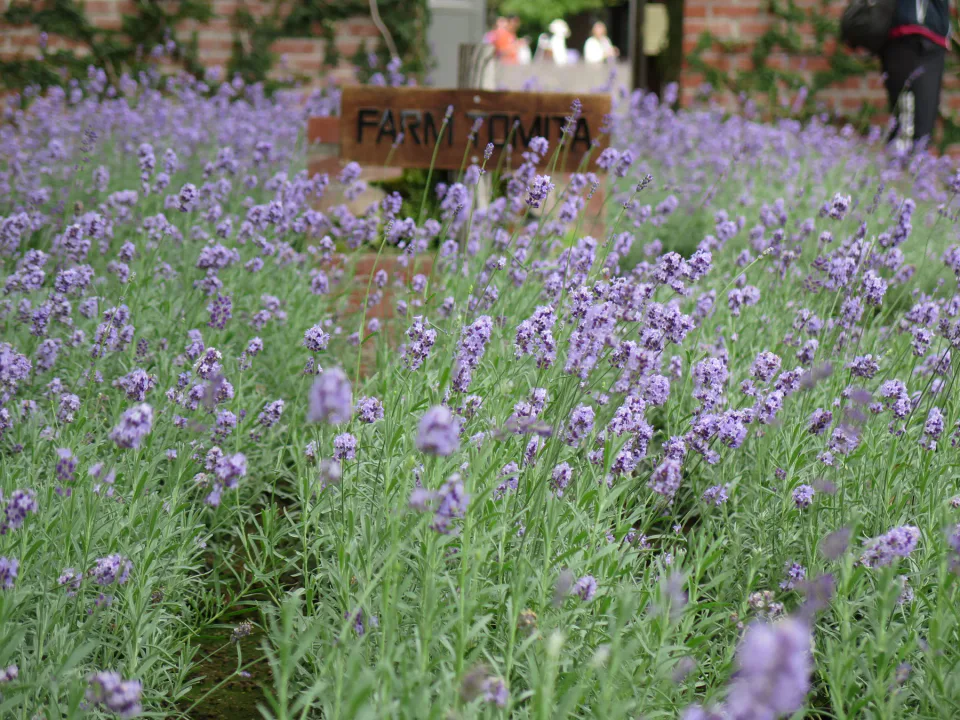
If you are travelling now, on August 25, 2026, I would not make a special Sapporo-to-Furano trip only for peak lavender. Farm Tomita is still open and currently lists 08:30–17:30 hours, but JR Hokkaido itself describes the regional lavender season as late June to early August, and Lavender East finished its 2026 season on July 20. A late-August visit should be treated as a broader Furano flower-and-scenery day rather than a guaranteed lavender pilgrimage.
For travellers planning the next core lavender window, the decision is different: Farm Tomita remains the best car-free default because it combines several fields, cafés and shops in one place, while a car becomes valuable when you deliberately add dispersed Kamifurano landscapes. The important rule is to match the field to the week, not simply book “Furano in July” and assume every lavender site peaks together.
↔ Scroll table left or right
Your date / goal | Best decision | Why |
Early–mid July, lavender is the main reason | Farm Tomita + one second lavender landscape | This is the strongest overlap between several official bloom windows |
Late July | Check exact field reports before leaving Sapporo | Lavender East has already closed by July 20 in 2026; later fields can still differ |
Late August / September 2026 | Reframe as Furano/Biei flowers, scenery and food | Core lavender season is over even though Farm Tomita and seasonal trains may still operate |
No car, first visit | Farm Tomita first | One stop provides multiple fields plus food and shopping; seasonal rail can remove road logistics |
Car + photography | Farm Tomita + one Kamifurano cluster | The car earns its value by unlocking dispersed landscapes, not by collecting more pins |
Want Furano and Biei without rushing | Stay one night | The hotel should buy a second useful light/route window, not merely avoid a long train ride |
As of August 25, the correct question is no longer “Where is peak lavender?”
Farm Tomita’s current official site still lists 08:30–17:30 opening hours and shows live webcams for its current flower fields. The farm is open beyond the lavender peak and can still be a worthwhile stop for seasonal flowers, cafés and products.
But Lavender East is a different facility with a much narrower season. Farm Tomita currently marks its 2026 operation as finished: it ran June 20–July 20, 09:30–16:30, with the stated blooming period from late June to mid-July and best viewing in early to mid-July.
This distinction matters because late-summer travellers can otherwise make a classic planning mistake: they see “Farm Tomita is open” and infer “the famous lavender landscape is still in season.” The first fact is true; the second does not follow.
For late August, I would visit only if the broader Furano experience still has enough value. If your entire success condition is one deep-purple lavender panorama, use the live Farm Tomita webcam/current flower update before committing the day, and be willing to skip or reframe the trip.
The 2026 rail timetable keeps running after the lavender-first window
JR Hokkaido’s seasonal operation is another place where “service exists” can be confused with “the original seasonal reason still exists.” Its Furano Lavender Express has operating dates after the core lavender period, including August 29–30 and selected September dates.
JR also continues to publish one-day Furano/Biei model routes on selected dates in September. But JR’s own route page states that the lavender season is late June to early August. Therefore a September train operation should be understood as seasonal access to Furano/Biei, not evidence that lavender remains at peak.
That is a useful itinerary boundary. Ride the seasonal train in September because you want Furano/Biei, autumn flowers, food, scenery or the train itself—not because the word “Lavender” appears in the train name.
2026 is also the final year for the regular Furano-Biei Norokko operation
JR Hokkaido’s 2026 tourism pages state that the Furano-Biei Norokko train’s operation ends this year. That gives 2026 rail travellers a separate reason to care about the seasonal route even after the strongest lavender weeks.
Do not let that create a checklist trap. A train-specific goal and a flower-specific goal are different. If riding the Norokko matters, build the day around its actual operating date and timetable. If lavender is the only goal, bloom condition still outranks railway nostalgia.
For next year’s lavender planning, there is no single peak week
Farm Tomita’s fields deliberately have different calendars. In the current official guide, Sakiwai Field’s lavender runs from late June into early August with the strongest period around early to mid-July. Irodori Field is more concentrated in July. Lavender East is shorter again.
The practical planning rule is:
Early July: strongest chance of catching multiple lavender areas in useful condition.
Mid-July: still a strong core period, but crowds and specific field timing matter.
Late July: stop treating Lavender East as automatic; verify later fields.
August: move from calendar assumptions to live condition checks.
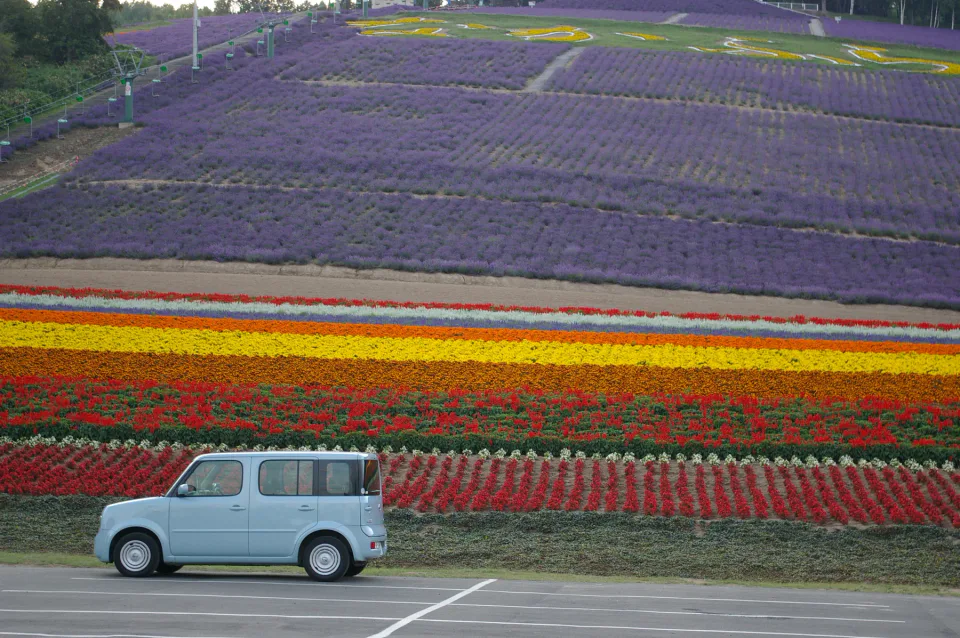
Weather and annual flowering can shift this. The farm’s live webcam is more valuable in the final planning week than a historic “best date” copied from another year.
Without a car, Farm Tomita remains the best first stop
The strongest reason is concentration. Farm Tomita gives you multiple fields, cafés, shops and enough space to spend a substantial block of time without another road transfer.
JR Hokkaido’s 2026 model route demonstrates that a Sapporo day trip can be a real visit rather than a token photo stop. On selected dates, the model combines Naka-Furano/Hokuseiyama with Farm Tomita and uses seasonal services to structure the day.
That means an overnight is not required merely because Furano is far from Sapporo. The hotel must unlock something extra: an early field window, a second regional day, better photography light, or onward route progression.
A car should unlock geography, not inflate the checklist
Lavender East sits several kilometres away from the main farm, and Kamifurano viewpoints are dispersed. This is where a car can genuinely add value in the core season.
But the correct car itinerary is not “Farm Tomita + Lavender East + Hinode Park + Biei + Blue Pond + Ningle Terrace because we can.” The vehicle removes transfer friction; it does not remove parking, walking, meal time, photo time or fatigue.
For a core-season first visit, I would normally use Farm Tomita plus one second landscape cluster. That creates contrast without turning the day into a sequence of car parks.
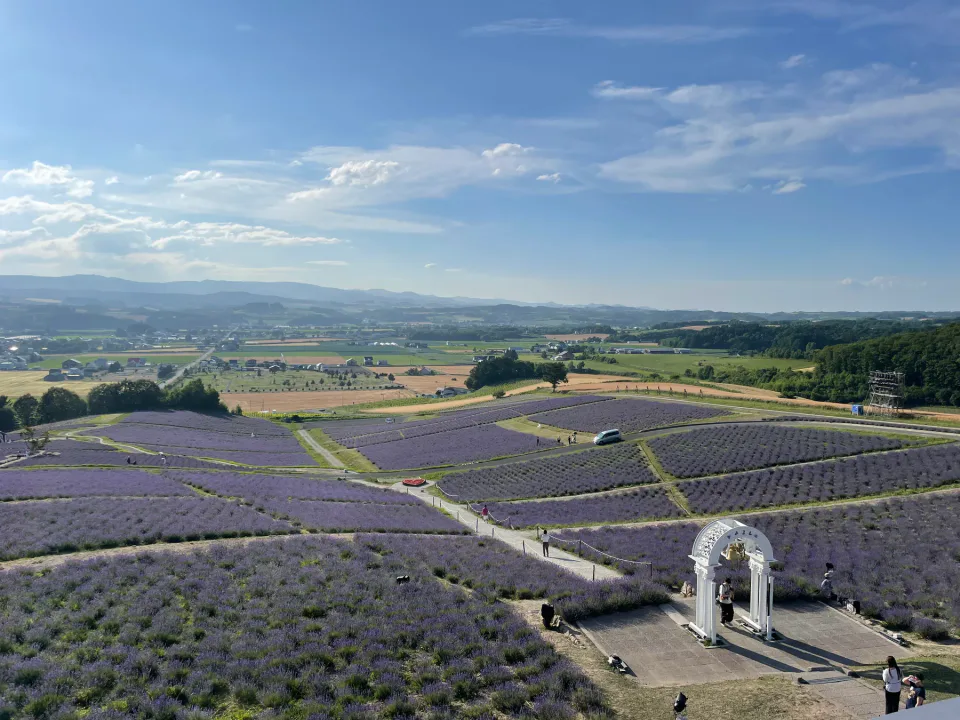
When is a Furano overnight actually worth paying for?
The overnight has to buy time that the Sapporo day trip cannot.
Early field access: you can be at Farm Tomita near opening rather than arrive after a long Sapporo transfer.
Two regional days: one for Furano/Nakafurano and one for Biei/Kamifurano.
Photography: you gain morning/evening light instead of being tied to a single public-transport window.
Onward route: sleeping locally moves the next day forward instead of returning to Sapporo simply to come back east again.
If the only reason is “the train ride from Sapporo is long,” the overnight is not automatically good value. JR’s own one-day models show that substantial sightseeing is possible when the seasonal timetable fits.
Final verdict
For August 25, 2026 onward, stop selling Furano as a guaranteed lavender-first trip. Farm Tomita is still open, and JR still has selected seasonal services, but the official core lavender window has passed and Lavender East is closed for the year. Go now for a broader Furano/Biei day, not for a promised peak-lavender scene.
For future core-season planning, Farm Tomita remains the strongest first car-free stop. Add one second landscape only when it creates a different view or route benefit. Stay overnight when the night buys a second useful time window, not because “Furano is far.”
Sources and verification date
Checked August 25, 2026 against Farm Tomita’s current main-site hours, live-webcam page and Lavender East 2026 closure notice, plus JR Hokkaido’s current 2026 Furano Lavender Express / Furano-Biei tourism pages. JR explicitly states that the regional lavender season is late June to early August and that the Furano-Biei Norokko operation ends in 2026. Recheck live flower and train status before travel.
Nokogiriyama Ropeway: Round Trip or One Way? The Route Choice That Changes Your Day
Beppu Hells 2-Day Itinerary: Route, Transport and Onsen Tips
Mt. Takao Autumn Leaves Day Trip: Cable Car, Trails and Timing
Osaka for Couples: A 7-Day Itinerary That Saves the Best Nights for Kyoto, Kobe and One Big View