
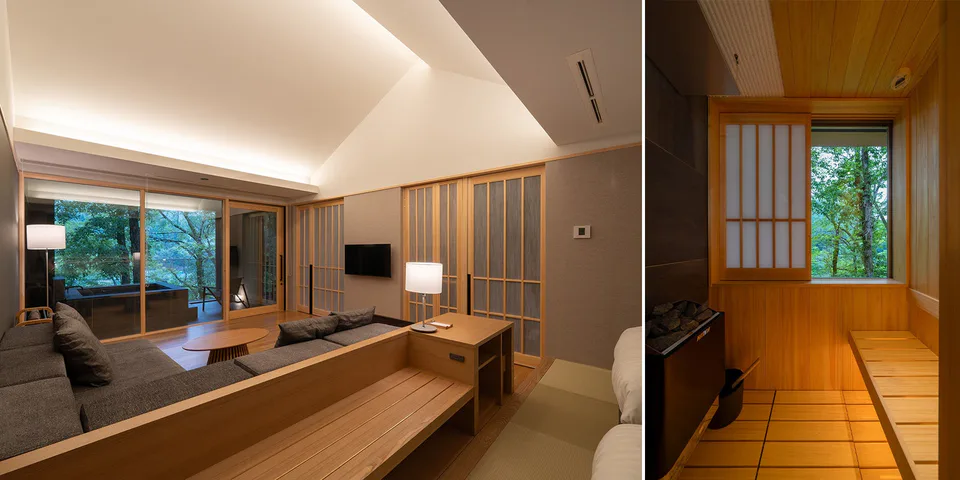
Where to stay in Okutama without a car is not mainly a hotel question. It is a transport-chain and recovery-options question. Ome gives you the strongest fallback if you arrive late, need dinner, have luggage or the weather turns. Mitake is the most efficient base when the gorge is the first thing you want to walk. Mt. Mitake only makes sense when sleeping on the mountain is itself part of the trip. Okutama Station is the tactical base when the next morning depends on the bus toward Lake Okutama or deeper western routes.
GO TOKYO currently puts central Tokyo to Okutama at roughly two hours by rail, with Okutama Station as the JR Ome Line access point. Lake Okutama then requires another bus from Okutama Station. Mt. Mitake is also a multi-stage trip: JR to Mitake Station, then bus/cable car and an uphill walk. That is why the best base is the one that removes the specific stage that would otherwise control your next morning, not automatically the farthest-west room.
Okutama without a car: the 30-second decision
↔ Scroll table left or right
| Base | Choose it when | Main failure mode | ValueNavi call |
|---|---|---|---|
| Ome | You want meals, luggage simplicity and two flexible western-Tokyo days | You still repeat onward rail/bus travel for deeper Okutama | Best resilience |
| Mitake / gorge area | An early gorge walk or photography is the point | Fewer dinner and late-arrival recovery options | Best focused nature base |
| Mt. Mitake | The shrine, hiking and mountain evening/morning are the product | Bus + cable car + walking make luggage and late arrival fragile | Best immersion, weakest recovery |
| Okutama Station | Your first useful movement is toward Lake Okutama or a deeper-west bus | Missing one low-frequency connection can erase the advantage | Best tactical launch point |
ValueNavi Base Resilience Score
This is an editorial score for a car-free one- or two-night stay where flexibility matters, not an official tourism rating. The same seven dimensions are used across ValueNavi decision guides; 10 means more favorable for this exact scenario.
↔ Scroll table left or right
| Base | Money Cost | Time Cost | Booking Risk | Weather Risk | Crowd Risk | Route Fit | Uniqueness | Composite |
|---|---|---|---|---|---|---|---|---|
| Ome | 8.5 | 6.0 | 9.0 | 8.5 | 8.0 | 7.5 | 4.5 | 7.4 |
| Mitake | 8.0 | 8.0 | 7.5 | 6.5 | 7.0 | 8.5 | 7.5 | 7.6 |
| Mt. Mitake | 6.5 | 6.0 | 6.5 | 5.0 | 6.5 | 7.0 | 9.5 | 6.7 |
| Okutama Station | 7.5 | 8.5 | 8.0 | 5.5 | 7.0 | 8.5 | 8.0 | 7.6 |
The composites are deliberately close because the bases solve different problems. Mitake does not “beat” Ome if you arrive at 19:00 with a suitcase; Okutama Station does not “beat” Mitake if the gorge is your only objective. Use the score to expose trade-offs, then let the next morning decide.
The transport-chain test: count stages, not kilometres
↔ Scroll table left or right
| Tomorrow's priority | From Ome | From Mitake | From Mt. Mitake | From Okutama Station |
|---|---|---|---|---|
| Mitake Gorge | JR + walk | Walk / very short local start | Downhill/cable/bus + JR or walking route | JR back east + walk |
| Mt. Mitake | JR + bus + cable car + walk | Bus + cable car + walk | Walk | JR east + bus + cable car + walk |
| Lake Okutama | JR + bus | JR + bus | Downhill chain + JR + bus | Bus |
| Flexible bad-weather day | Strongest recovery | Moderate | Weak | Moderate to weak |
This is the most useful proprietary way to think about a car-free overnight: the hotel should delete a transport stage you would otherwise repeat when it matters. If it only saves a small amount of rail time but adds checkout, luggage handling and a fixed dinner, the “closer” hotel may make the trip less efficient.
One night: stay only when the morning advantage is real
A one-night move is easiest to justify when it removes a stage you would otherwise repeat before the first useful bus or before the gorge gets busy. Mitake earns the night when you want to step outside and begin the river walk early. Okutama Station earns it when Lake Okutama or another bus-dependent route is the first job of the morning.
If your plan begins after 10:00, central Tokyo often wins. The overnight has not bought enough early access to repay checkout, luggage and another check-in. For a first Tokyo trip, compare the move with how many days you actually have in Tokyo before spending a night to save one morning train.
An 18:00 arrival reverses the ranking
Late arrival is where the romantic “sleep deeper in the mountains” idea becomes fragile. Ome has the strongest recovery options: more food, easier rail arrival and fewer last-mile stages. Mitake can work when dinner is confirmed at the accommodation. Mt. Mitake adds bus, cable car and uphill access; Okutama Station gives you a simpler rail arrival but fewer late food options than Ome.
If the accommodation has a fixed dinner time, a missed rail or last-mile connection can affect both check-in and the meal. For a late arrival, I would therefore rank recovery options above morning proximity. A west-side Tokyo hotel can also be surprisingly competitive: if the same day already ends in Shinjuku, compare Tokyo Station vs Shinjuku before adding a rural night solely to reduce tomorrow's rail time.
Missing the first bus can erase the Okutama Station advantage
GO TOKYO's current route material shows the Lake Okutama leg as a bus from Okutama Station, with the lake itself beyond the JR terminus. Sleeping by the station therefore removes the long Tokyo rail leg, but it does not create extra bus frequency. If you miss the departure that your route depends on, the next service can shift the whole lake, cave or hike block later.
Work backwards from the return connection first. A room five minutes farther from the station with a reliable breakfast/check-out routine can be safer than a theoretically perfect room that makes your first bus fragile. The overnight is valuable only if you actually capture the transport window it was purchased to protect.
Mt. Mitake: high uniqueness, high last-mile friction
GO TOKYO currently describes access to the Mitake Visitor Center as Mitake Station on the JR Ome Line followed by bus/cable car and then a walk. That is exactly why the mountain stay scores so differently: once you are up there, the evening and early morning are genuinely hard to reproduce from Tokyo; getting there with a large suitcase is also genuinely worse.
Stay uphill when the shrine, hiking and mountain atmosphere are the product. Do not stay uphill merely to say you slept closer to Okutama. Leave the main suitcase at the Tokyo base or use luggage forwarding and carry an overnight bag.
Weather is a base-selection variable, not a footnote
Lake and trail routes can be affected by rain, high water, winter conditions or closures. GO TOKYO currently warns that the long Lake Okutama Ikoi Road can close because of bad weather, winter conditions or construction. This changes the value of a deep-west booking: a room that is perfect for one outdoor plan may have weak substitutes when that plan disappears.
If the forecast is poor before the free-cancellation deadline, Ome or the Tokyo hotel gains value because you have more recovery options. Do not protect a sunk hotel cost by forcing an unsafe trail. Keep a city fallback such as the Tokyo rainy-day itinerary.
Two nights: choose a base that improves both days
Two nights change the question because you now have a full middle day. Ome works when Day 1 and Day 2 point in different directions—Mitake on one day, deeper Okutama or another western route on the other. Mitake is stronger when both days revolve around the gorge/Mt. Mitake corridor. Okutama Station works when both mornings are genuinely deep-west.
The deletion test is simple: if moving the hotel changes only one morning, keep the Tokyo base. If it improves two complete days, the overnight block has a real job.
Three nights: this is no longer a commute hack
At three nights, you are temporarily moving your Tokyo base. That can be excellent for hikers, photographers or travelers deliberately building a western-Tokyo mini-trip, but it is rarely efficient for a first Tokyo visit. Three nights remove three central-Tokyo evenings, increase luggage friction and weaken airport or Shinkansen positioning.
I would only do it if at least two full days start west of Ome and the third day also benefits from staying there. Otherwise use one or two nights and return to Tokyo before the next long-distance leg.
Compare Okutama and Ome accommodation
Search Okutama and Ome hotels on Booking.com
Compare Ome, Mitake and Okutama hotels on Expedia
Final verdict
Ome is the resilience pick. Mitake is the efficient gorge pick. Mt. Mitake is the immersion pick. Okutama Station is the tactical bus-launch pick. For a single car-free nature day, keep the Tokyo hotel unless the overnight removes a transport bottleneck you will actually use. For two nights, make sure both days improve. The farther-west room is not automatically the better base; the best base is the one that deletes the most fragile stage from the next day's chain.
Where to Stay in Takamatsu: Station or Kawaramachi for Ferries, Trains and Evenings?
Where to Stay in Osaka With Kids — USJ, Namba or Osaka Station?
Where to Stay at Lake Kawaguchi for Autumn Leaves: Station, North Shore or Fuji-Yoshida?
Where to Stay for Kochi Yosakoi: Station, Obiyamachi or Saenbacho
Where to Stay in Kyoto: Kyoto Station, Kawaramachi or Higashiyama?
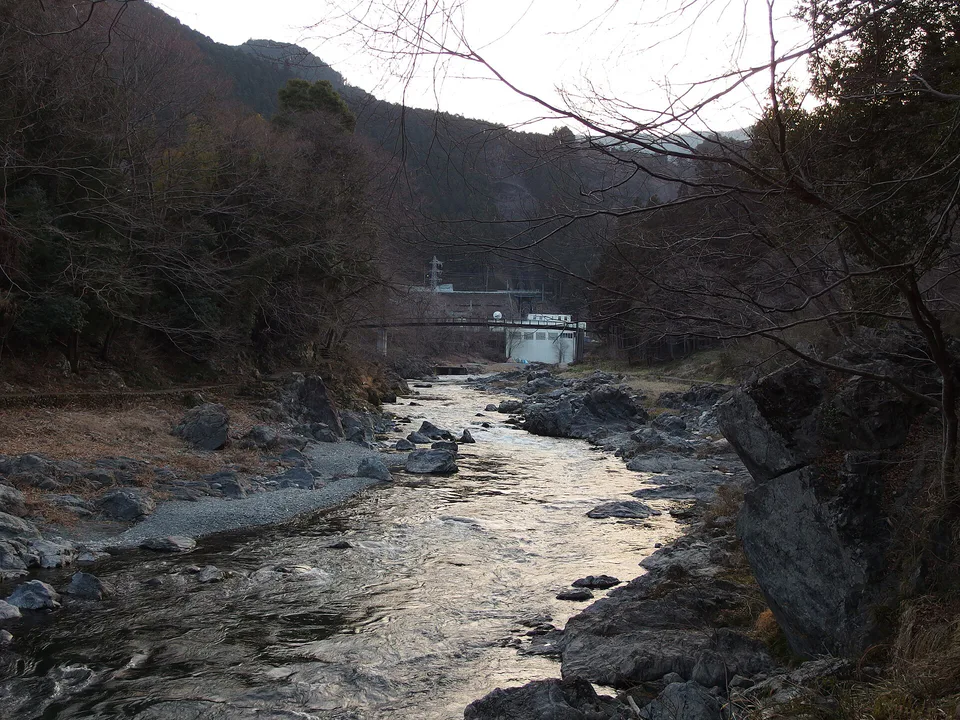
References
GO TOKYO: Okutama & Around, Lake Okutama, Ogouchi Reservoir, Mitake Visitor Center and 2026 western-Tokyo route material. Mitake Tozan Railway: current 2026 operating information. Information rechecked August 27, 2026. JR, bus, cable-car, trail and weather conditions can change by date. ValueNavi scores and transport-chain analysis are editorial analysis, not official ratings.