
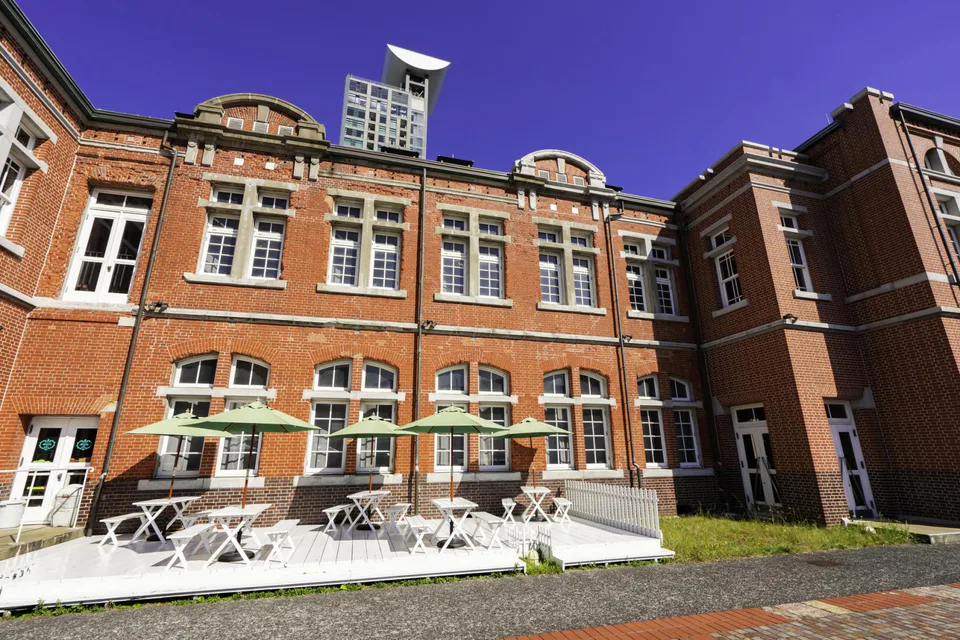
Mojiko Retro Observation Room is worth the ¥600 adult admission (about US$3.80 / NT$120) mainly when you use timing to make one ticket deliver more than one view. A short midday visit gives you a clear panorama, but the free waterfront already does much of that job. The stronger use is to enter roughly 40–60 minutes before sunset, see the Kanmon Strait in daylight, stay through the colour change and finish at blue hour or early night. The 40–60 minute window is a ValueNavi planning rule, not an official requirement.
The paid product is therefore not simply “a 103-metre-high view.” It is a controlled way to watch Kyushu, Honshu and the working strait change while you remain indoors. If visibility is poor, you have a fixed train soon, or the itinerary only gives Mojiko two or three daylight hours, the observation room becomes much easier to skip.
↔ Scroll table left or right
Your situation | ValueNavi verdict | Why |
Clear day, staying until sunset | Go up | One ¥600 ticket can cover daylight, sunset transition and blue hour |
Only 20–30 minutes at midday | Usually skip | The free waterfront already gives strong Kanmon Strait views |
Mojiko + Shimonoseki in the same day | Gets stronger | The elevated view gives geographic context to both shores, and a Twin Tower ticket may reduce the cost if you also visit Kaikyo Yume Tower |
Fog, heavy rain or the opposite shore has disappeared | Skip unless you specifically want an indoor rest | The two-shore panorama is the feature most damaged by poor visibility |
Fixed dinner or Hakata-bound train soon after sunset | Shorten or skip | Waiting for darkness has an opportunity cost |
Already paying for a high-floor hotel view | Recheck the premium | The hotel may duplicate part of the night-view value, although the sightlines are not identical |
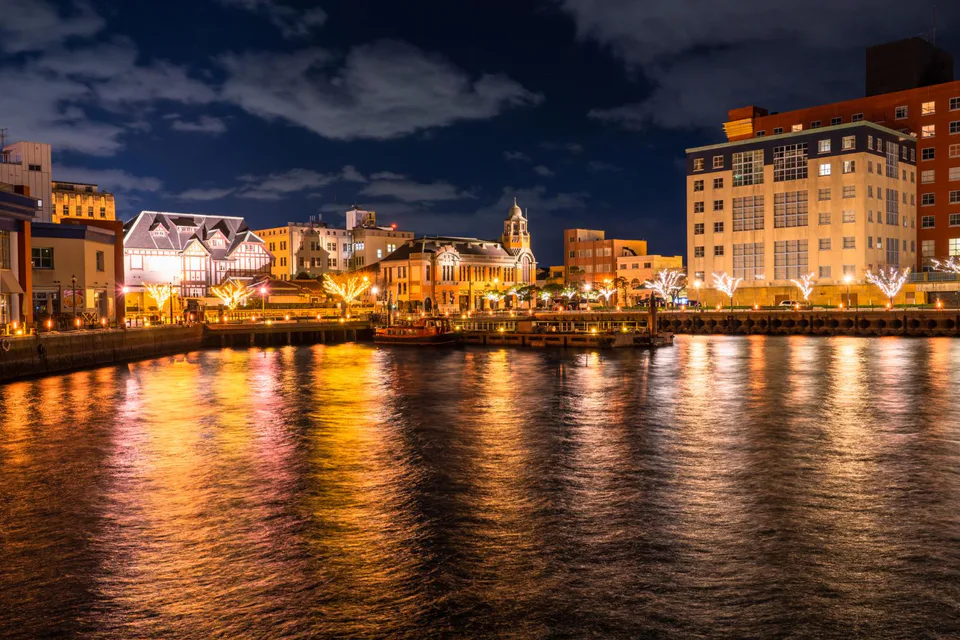
First check the current facts: the adult price is ¥600 in 2026
The current Mojiko Retro operator site lists the observation room on the 31st floor of Retro Highmart at a height of 103 metres. Current hours are 10:00–22:00, with last admission at 21:30. Adult admission is ¥600 (about US$3.80 / NT$120), or ¥400 (about US$2.50 / NT$80) for qualifying Kitakyushu residents; elementary and junior-high students pay ¥300 (about US$1.90 / NT$60).
This matters because older official Mojiko pages and archived English material still show the previous ¥300 adult price. For a 2026 trip, use the current operator page rather than an old brochure. The operator currently lists four irregular maintenance closures across the present cycle: April 21 and June 16, 2026 have passed; the remaining published closures are September 15, 2026 and January 19, 2027.
The operator gives the address as 1-32 Higashiminatomachi and currently describes the walk from JR Mojiko Station as about 13 minutes. Other official tourism pages use shorter walking estimates, so 13 minutes is the safer planning number when a return train matters. It is an itinerary buffer, not a claim that every traveller will take exactly 13 minutes.
Currency guide: JPY is the price you actually pay. USD and TWD figures in this article are rounded planning references using late-August 2026 rates of roughly ¥1 = US$0.00628 = NT$0.200; card issuers and cash-exchange spreads will differ.
The real value is the transition, not the height
A daylight visit and a sunset-to-night visit use the same room but solve different jobs. Daylight is best for reading the geography: the Kanmon Bridge, Shimonoseki, Mojiko’s historic waterfront and ships moving through the channel are easier to distinguish. The official Kitakyushu tourism page specifically describes the sunset changing gradually into an illuminated night view.
That change is the part the free waterfront cannot reproduce from one fixed high angle. At ground level, Mojiko is better for architecture, harbour scale and being close to the water. From 103 metres, the distinctive benefit is seeing both shores and the strait as one system.
ValueNavi timing rule: on a reasonably clear day, arrive roughly 40–60 minutes before local sunset. That is early enough to see the strait in daylight but late enough that most of the visit is spent watching visible change rather than waiting indoors. If photography is important, blue hour can be especially useful because the water, shoreline and city lights still retain some separation.
This is editorial timing derived from how the attraction changes through the evening; the operator does not require or officially recommend a 40–60 minute arrival window.
A 25-minute daytime visit and a 75-minute sunset visit should not be judged by the same standard
The admission price is fixed, but the opportunity cost is not. For a short two- or three-hour Mojiko stop, every 45 minutes inside the observation room is 45 minutes not spent on the historic waterfront, curry, the Former Moji Mitsui Club, Blue Wing Moji or a ferry across the strait.
That makes a midday observation-room visit a weak default. If the itinerary is short, the free ground-level experience usually deserves priority. The observation room earns the slot when it produces something additional: a weather-protected rest, a sunset transition, a night view, or a geographic overview after visiting both sides of the Kanmon Strait.
For a longer four- or five-hour Mojiko/Shimonoseki day, the calculation changes. If you have crossed to Karato or spent time on the Shimonoseki side, the elevated view can function as a final map of places you have actually used. That is more decision value than treating the tower as the first attraction after getting off the train.
If you are also visiting Shimonoseki, check the ¥1,150 Twin Tower Ticket
The current Mojiko Retro ticket page lists a Kanmon Twin Tower Ticket covering Mojiko Retro Observation Room and Kaikyo Yume Tower in Shimonoseki for ¥1,150 (about US$7.20 / NT$230) for an adult, valid for three months from purchase.
Current standalone adult prices are ¥600 (about US$3.80 / NT$120) for Mojiko Retro Observation Room and ¥750 (about US$4.70 / NT$150) for Kaikyo Yume Tower. Bought separately, that is ¥1,350 (about US$8.50 / NT$270), so the current combined ticket saves ¥200 (about US$1.30 / NT$40) for an adult.
This is only useful if you genuinely want both towers. Two elevated views of the same strait can also become repetitive. The combination makes more sense when the day deliberately uses both shores and you enjoy comparing the geography from two positions. If Shimonoseki is mainly Karato Market and the waterfront, buying a second tower merely to “use the discount” is false economy.
The ValueNavi ticket ladder: do not buy a pass until the itinerary earns it
↔ Scroll table left or right
What your day actually includes | Ticket to start with | 2026 adult price | Decision rule |
Observation Room only | Standard admission | ¥600 ≈ US$3.80 / NT$120 | Best when sunset or the high-angle geography is the only paid view you need |
Mojiko Observation Room + Kaikyo Yume Tower | Kanmon Twin Tower Ticket | ¥1,150 ≈ US$7.20 / NT$230 | Use it only when both towers were already in the plan; the ¥200 saving is too small to justify a duplicate view by itself |
Several paid Mojiko Retro museums / heritage interiors plus the Observation Room | Mojiko Retro Free Pass | ¥1,700 ≈ US$10.70 / NT$340 | Officially covers five listed attractions whose published regular total is ¥1,900; it becomes useful when your actual paid stops would otherwise exceed the pass price |
The important comparison is not “which ticket has the biggest discount?” It is which ticket matches the stops you would visit even without a discount. The Free Pass saves ¥200 (about US$1.30 / NT$40) against the operator’s published ¥1,900 regular total for all five covered attractions, so it is a route-convenience product more than a dramatic money hack. If your Mojiko day is mostly streets, waterfront, food and one sunset view, the ¥600 single ticket remains the cleaner purchase.
The free waterfront is the correct alternative, not a cheaper imitation
Skipping the observation room does not mean settling for a bad Mojiko experience. The waterfront, Blue Wing Moji and historic buildings already provide strong views of the port and strait with no observation-room admission.
The difference is perspective. The waterfront gives movement, scale and architecture at eye level. The observation room gives compression: Kyushu, Honshu, bridge, ships and city lights can enter the same frame. If that compression is not important to you, the ¥600 is easy to save.
A useful deletion test is: if the tower disappeared from the itinerary, what would you actually lose? If the answer is “one more night photo,” stay outside. If the answer is “the sunset transition and one high-angle view tying together both shores,” the ticket has a clear job.
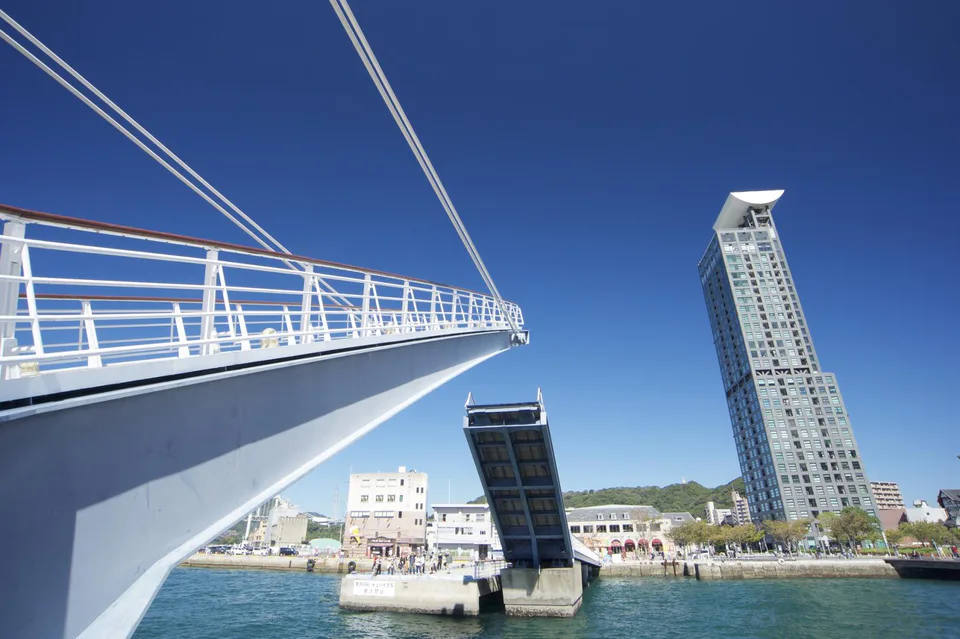
Glass changes the photography decision
The observation room is glass enclosed. That protects the view from wind and bad weather, but it introduces reflections after dark. Interior lights, clothing and the phone itself can appear in photos even when the view looks clear to the eye.
For photography, move the lens close to the glass, turn off flash and avoid a bright light directly behind the camera. Blue hour can be easier than full darkness because the exterior scene remains bright enough to compete with reflections.
If the main goal is technically clean night photography through open air, this may not be the best paid stop. If the goal is simply to watch the transition comfortably, the glass is much less of a problem. This distinction matters because “good night view” and “easy night photography” are not the same product.
Weather can either destroy the value or make the indoor stop more useful
Visibility is the first weather test. Thin cloud can still create a worthwhile sunset transition, but heavy rain or fog that hides Shimonoseki removes the two-shore perspective that most justifies the ticket.
The second weather test is fatigue. On a hot, cold or wet day, a climate-controlled indoor stop with a café can have more value for families, older travellers or anyone who has already spent several hours walking. In that case, part of the ¥600 is buying a comfortable low-effort finish rather than only a panorama.
Do not confuse those two cases. “Bad weather” does not automatically make the observation room better. Poor visibility lowers the view value; unpleasant outdoor conditions can raise the rest value. Decide which effect is stronger on the actual day.
Families and older travellers should price the attraction in energy, not only yen
For a family, the observation room can be a useful end-of-day stop because it replaces another walking attraction with an indoor view. But a sleeping child, stroller logistics, dinner timing or an early train can make waiting for darkness more expensive than the ticket itself.
For older travellers, the elevated view is also a way to see the wider Kanmon geography without adding another long waterfront walk. The same logic applies: it is valuable when it removes effort, not merely because it is accessible by elevator.
If the group is already staying overnight in Mojiko and the hotel has a high-floor harbour view, compare what the room already provides. The hotel will not reproduce the exact 31st-floor sightlines, but it can reduce the need to pay separately for a second night panorama.
As of August 26, 2026, the Sky Beer Terrace is still running — but only until August 30
The current operator notice lists the 2026 Sky Beer Terrace from July 17 through August 30, 10:00–22:00. The ¥1,000 terrace set (about US$6.30 / NT$200) includes one observation-room admission and one selected drink; food is extra.
With standard adult admission at ¥600, the bundle effectively adds ¥400 (about US$2.50 / NT$80) for the included drink. That is tidy if you already wanted a drink while waiting for sunset. It is not a reason to reroute the day, and it expires after August 30, 2026. Travellers after that date should ignore this section and check the current operator page for later promotions.
Four situations where the ¥600 should stay in your pocket
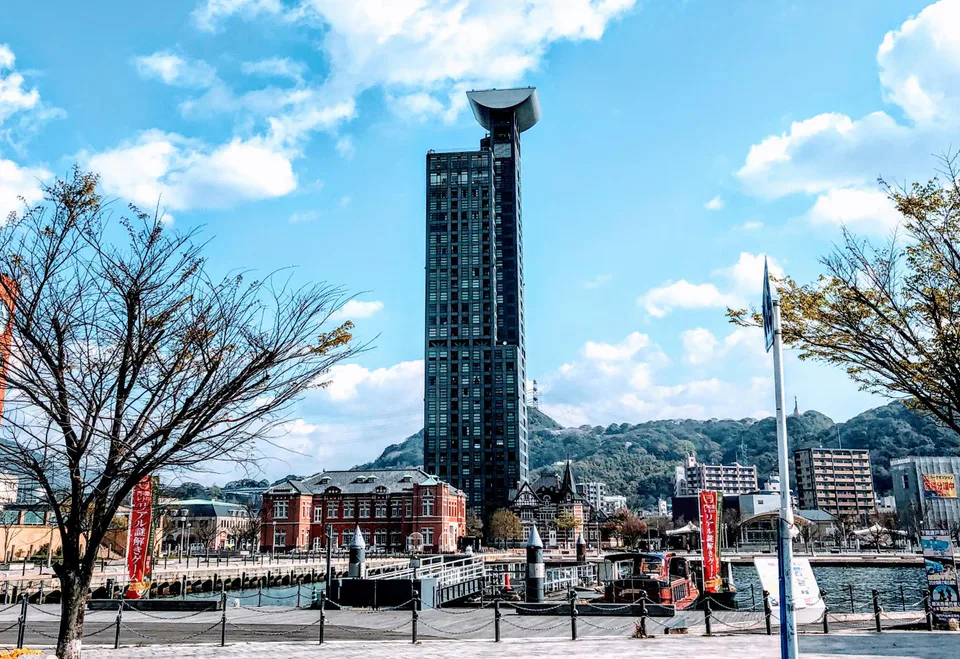
Only a short daylight stop: use the free waterfront and historic district instead.
Very poor visibility: if the opposite shore is mostly gone, the main high-angle advantage has been removed.
A fixed train or dinner starts the clock: do not turn a relaxed sunset into a sprint back to Mojiko Station.
You already have a view product doing the same job: a high-floor hotel, another tower or a deliberate night cruise may make the observation room redundant.
A practical Mojiko evening sequence
For a first visit that will stay into the evening, a coherent order is:
Walk Mojiko Station, the historic buildings and waterfront in daylight.
Add Shimonoseki/Karato only if the ferry and return timing fit without rushing.
Check the actual sunset time and current visibility.
Enter the observation room about 40–60 minutes before sunset if the conditions are still good.
Stay through blue hour rather than waiting automatically for full darkness.
Leave enough margin for dinner and the real walk back to JR Mojiko Station.
This sequence makes the observation room a conclusion to the geography you have already experienced rather than a generic tower visit inserted at noon.
Klook | Check Mojiko Retro Observation Room ticket availability
KKday | Compare the same-date ticket conditions
Final verdict: the ticket is cheap, but the time window is the real purchase
For most first-time visitors, Mojiko Retro Observation Room is optional in the middle of the day and much stronger around sunset. The best case is clear visibility, at least 40–60 minutes of unhurried time and no fixed plan immediately afterward. The weakest case is a rushed midday stop when the free waterfront is already delivering the view you want.
Use a four-part test: visibility, time, transition and duplication. Is the opposite shore visible? Do you have at least roughly 40 minutes? Can you catch sunset or blue hour? Is another hotel/tower/viewpoint already doing the same job? If the first three are yes and duplication is low, the ¥600 is easy to justify. If only one condition is true, keep the waterfront in the itinerary and skip the elevator.
If the evening makes Mojiko feel like more than a day trip, the bigger decision is whether BEB5 Mojiko is worth an overnight stay. One extra night changes the timing of the whole port visit more than the observation-room ticket does.
MUWA Niseko Review: When Is Ski-in/Ski-out Worth the Premium?
JR East Hotel Mets Premier Akihabara Review: Is a 17 m² Room Worth the 1-Minute Location?
átoa’s ¥2,600 Ticket Isn’t Paying for More Fish — So What Are You Actually Buying?
40 Best Things to Do in Tokyo in 2026 — What’s Actually Worth Your Time by Area
References
Mojiko Retro official — observation room hours, 2026 admission, height and maintenance closures · Kitakyushu official tourism — current observation-room overview and sunset/night-view context · Mojiko Retro official — current Free Pass and Kanmon Twin Tower Ticket · Kaikyo Yume Tower official — current admission · Mojiko Retro official — 2026 Sky Beer Terrace notice. Checked August 26, 2026. Prices, maintenance dates and seasonal promotions can change; recheck the operator before travel.