Portom International Hokkaido is worth the premium when your flight uses New Chitose’s international terminal and you still have enough awake hotel time to use the 43 m² room, guest-only onsen or breakfast. If the stay is only “arrive at 23:00, sleep, leave at 05:30,” most of the luxury premium is dormant. And if the next flight is domestic, Air Terminal Hotel starts with the better terminal geometry.
The useful comparison is therefore not Portom versus “an airport hotel.” It is Portom for the international-terminal side + premium hotel time, Air Terminal Hotel for domestic-terminal practicality, or Sapporo when sleeping at the airport merely postpones a city transfer you could comfortably finish tonight.
↔ Scroll table left or right
Your situation | Start with | Why |
Early international departure | Portom | Hotel is directly connected to the International Terminal Building |
Early domestic departure | Air Terminal Hotel | It sits on the domestic-terminal side; Portom still requires the cross-airport walk |
International arrival around 16:00–19:00 | Portom can justify the premium | Enough time remains for room, onsen and possibly a reserved dinner/bar |
International arrival after 22:00 | Price Portom as a sleep/location product | Most dining and leisure value has already disappeared |
Domestic arrival, city trip starts next morning | Air Terminal or Sapporo | Portom’s international-side location is not doing the main job |
Arrival in mid-afternoon and next day is entirely Sapporo | Sapporo | The airport night postpones rather than removes the city transfer |
The terminal side is the first decision, not the room size
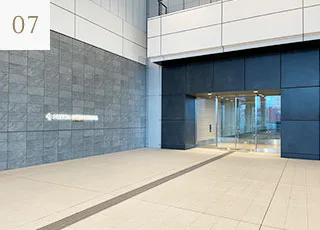
Portom is directly connected to New Chitose Airport’s International Terminal Building on 4F. Its official access page currently gives about 10 minutes / 700 metres from JR New Chitose Airport Station through the connecting passage.
That is excellent when the next flight is international because the final hotel-to-terminal chain is concentrated on the correct side of the airport. It is less valuable before a domestic flight because you still have to reverse the airport crossing in the morning.
This is where the phrase “inside New Chitose Airport” becomes too vague. An international-side hotel and a domestic-side hotel can both be inside the airport while solving completely different departure mornings.
Use awake hotel hours to decide whether 43 m² is worth paying for
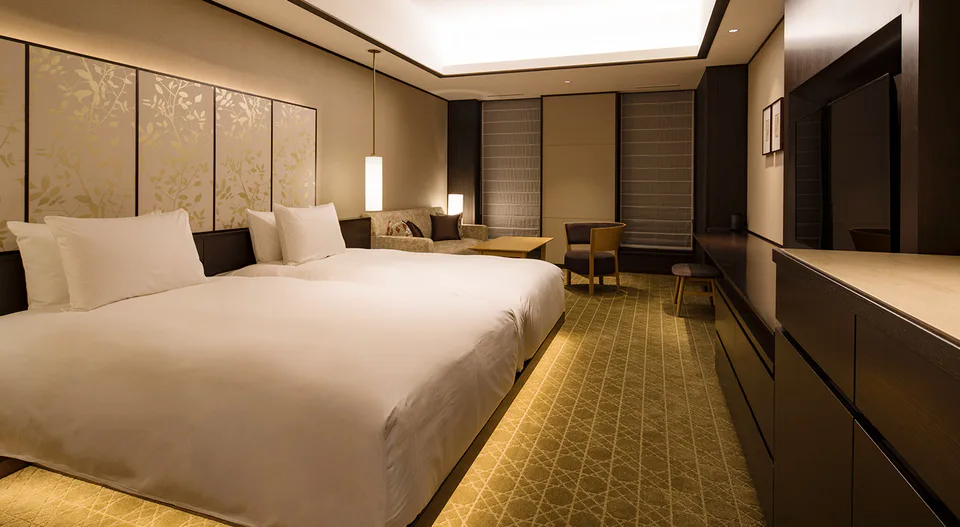
Portom’s standard Superior is a 43 m² room, which is substantial for a one-night airport buffer. That space can genuinely help with two large suitcases, ski clothing, repacking purchases or simply having a final night that feels like a hotel stay rather than a transit stop.
But room area is only valuable while you are awake enough to use it. A simple ValueNavi test is:
premium hotel value =
usable awake room hours
+ usable onsen sessions
+ usable food/bar window
+ terminal friction removed
Compare two stays:
16:00 check-in, 10:00 international flight: you can use the room, onsen, evening facilities, sleep and breakfast. Portom is doing several jobs.
23:00 arrival, 07:00 flight: the room and terminal location still matter, but most premium facilities are no longer part of the purchase. A high rate should now be compared with the cost of a simpler sleep solution.
This is more useful than asking whether Portom is “luxurious enough.” The question is whether your schedule leaves time to consume the luxury you are buying.
The onsen is unusually usable after a flight
Portom’s current official spa page lists the guest-only hot spring from 15:00 until 10:00 the following morning. The sauna runs 15:00–24:00 and again 06:00–10:00.
That long overnight window is one of the hotel’s strongest advantages. A guest arriving at 21:30 can still bathe without leaving the hotel and can use the onsen again in the morning if the flight time allows.
But count actual use, not theoretical availability. If no one in the room uses public bathing, remove this benefit from the premium calculation. Likewise, a 05:00 departure gives the overnight opening hours almost no practical value.
Late arrival does not mean “hotel dinner is solved”
This is the most important operational correction for a premium airport stay. Portom currently lists TATERU YOSHINO dinner from 18:00–22:00 and SHIMOGAMO SARYO – KITA NO HANARE dinner from 18:00–22:00, but both dinner services require a reservation by 18:00 on the previous day. They also have weekly closed days.
The bar has later service on operating days, but it is not a substitute for assuming you can land, check in and decide on a full restaurant dinner at 21:00.
Therefore solve food before the final flight leg when arrival will be late. A good airport-hotel plan should be:
food plan known → hotel → onsen → sleep, not “we will see what is open after baggage claim.”
Breakfast is valuable only when it fits the airline clock
Portom’s current breakfast runs 06:00–11:00 with last order at 10:30. The hotel’s 2026 breakfast information lists JPY 4,807 per adult, JPY 2,530 for ages 6–11 and free for children five and under when paying separately.
That is a premium breakfast, so it should perform a job. It makes sense when the flight is late enough for a relaxed final meal or when breakfast replaces an airport-search problem for the whole family.
It is worth zero if everyone has to leave the room before service begins. Never compare “Portom with breakfast” against another hotel if the itinerary cannot physically use the meal.

Portom vs Air Terminal Hotel: the correct comparison changes with the flight
Air Terminal Hotel is directly connected to the domestic-terminal side and is the cleaner product when tomorrow’s flight is domestic. Its separate New Chitose Airport Onsen benefit is not identical to Portom’s in-house onsen: the route from the hotel to the airport onsen is about five minutes and requires movement through public airport space.
Portom is therefore stronger when three conditions line up:
international terminal is the correct side for the flight;
the stay has enough awake hours to use the larger room or onsen;
the price premium does not exceed the value of those two advantages.
If tomorrow is domestic and the stay is six hours of sleep, Portom can still be the nicer hotel while being the weaker travel decision.
First night: do not pay to postpone an easy Sapporo transfer
After an international arrival, Portom is excellent when the flight is late, winter conditions are poor, the group is exhausted or tomorrow’s route does not need a Sapporo evening.
If the flight lands mid-afternoon and the next day is entirely in Sapporo, I would usually continue to the city. Sleeping at the airport does not remove that transfer; it pushes it into tomorrow morning and sacrifices a useful Sapporo evening.
The airport hotel becomes rational when the transfer tonight has a higher cost than the transfer tomorrow, not simply because the hotel is convenient.
Final night: terminal-side convenience has more value because departure is less forgiving
The final night is different. Moving to New Chitose before an early flight can remove the most failure-sensitive rail or road movement from departure morning.
For an international departure, Portom’s location can therefore justify a larger premium than it would on arrival night. For a domestic departure, apply the same logic to Air Terminal Hotel instead.
Families with ski bags or multiple large cases should weight this even more heavily. An indoor 700-metre airport walk is not difficult in the abstract, but it is a different product when repeated with children and four pieces of winter luggage.
When I would not pay for Portom
The next flight is domestic and terminal-side convenience is the only priority.
The stay begins after 22:00 and ends before 06:00, so most premium facilities are unused.
No one values the public onsen or larger room.
The rate is dramatically above a domestic-terminal alternative and the trip only needs sleep.
Arriving early enough to reach Sapporo comfortably, when the next day is a city day anyway.
Final verdict
Choose Portom for the combination of international-terminal geometry and real hotel time. Its current 700-metre/10-minute station connection, 43 m² standard room, overnight guest onsen and long breakfast window can make the first or final night genuinely useful.
But the premium collapses when the schedule cannot use those features. A late arrival does not automatically unlock restaurant dinner, because the main dinner venues currently require advance reservation. A very early domestic flight also shifts the geometry toward Air Terminal Hotel. Portom is at its best when the terminal side, awake hours and facilities all point in the same direction.
Sources and verification date
Checked August 25, 2026 against Portom International Hokkaido’s current official access, spa, breakfast and in-house-facility operating notices, plus Air Terminal Hotel’s published airport-onsen route information. Portom currently lists about 10 minutes/700 metres from JR New Chitose Airport Station, guest onsen 15:00–10:00 next day, and dinner reservations by 18:00 the previous day for its two main dinner restaurants. Recheck flight-specific terminal and facility hours before travel.
Lequ Okinawa Chatan Spa & Resort: Is the Paid Rooftop Pool Worth a Chatan Stay?
Where to Stay in Hokkaido for Autumn Leaves: Six Bases Compared
BEB5 Mojiko Just Opened: Is the Kanmon Strait View Worth an Overnight Stay?
Nishitetsu Hotel Croom Hakata: Is 14.6 m² Worth a 1-Minute Bus Terminal and Late Onsen?
Narita Late Arrival: Stay Near the Airport or Go Into Tokyo?