
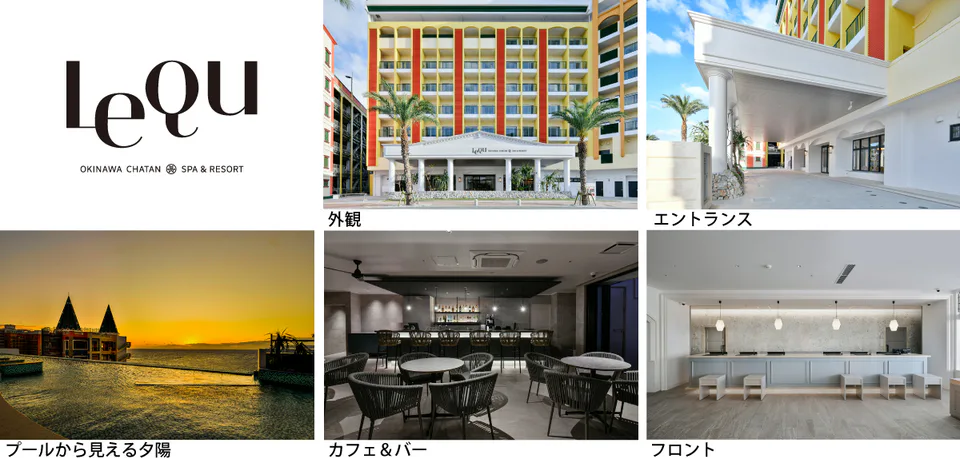

Lequ Okinawa Chatan Spa & Resort is worth paying for when at least two parts of its value stack fit your actual schedule: evenings in American Village, the included natural hot spring, deliberate rooftop-pool time, or repeated use of Premier Building features such as an in-room hot-spring bath and washer-dryer. If you will leave after breakfast, return late and sleep, a resort-looking pool photo should not decide the booking. The Main Building can be the better product because the public hot spring is already included for guests; Premier earns its premium only when privacy, laundry or longer room time is used repeatedly.
The biggest pricing trap is the rooftop pool. It is not a standard free hotel amenity. For the published 2026 main season, adults pay JPY 2,000 and children aged 6–12 pay JPY 1,000 per use; children five and under are free. A family with two adults and two children aged 6–12 therefore pays JPY 6,000 for one pool day, before the room rate. That makes the correct question “How many pool sessions will we actually use?” rather than “Does the hotel have an infinity pool?”
↔ Scroll table left or right
Your stay pattern | Start with | Why |
One night, out sightseeing most of the day | Main Building | You still get the late natural hot spring without paying for Premier features you may barely use |
Two nights with a deliberate Chatan afternoon / pool block | Main or Premier, then price the pool separately | Two nights create enough usable hotel time for the pool and American Village evenings to work together |
Three or more nights, family laundry, private bathing or more room time | Premier becomes much easier to justify | Every Premier room has natural hot-spring bathing and a washer-dryer, so the premium solves repeated tasks |
No car and an airport limousine matches your flight | Lequ gets stronger | The hotel currently lists a limited direct airport-limousine service stopping at the property |
Driving every day to Motobu, Nago or far-north Okinawa | Reconsider Chatan itself | A good hotel cannot erase repeated northbound backtracking |
Very late arrival or early Naha Airport flight | Naha / airport corridor first | You are unlikely to use the resort features enough to repay the extra transfer |
First decide whether Chatan is doing a real job
Lequ sits inside Depot Island in the American Village area. That location is valuable when the evening itself is part of the stay: dinner, a walk, shopping, sunset or drinks, followed by a short return to the hotel and the public bath. It is much less valuable when Chatan is simply the place where you happen to sleep between long drives elsewhere.
This is the first red-team test. Write down where the final two awake hours of each night will happen. If two nights end in American Village, Lequ is solving a repeated problem. If every night ends after a long drive back from Onna, Nago or Motobu, the location may be adding rather than removing road time.
If the wider base is still undecided, use Where to Stay in Okinawa: Naha, Chatan, Onna, Nago or Motobu before comparing Lequ room types. A hotel decision should not rescue the wrong island base.
The Lequ value stack: do not count the same premium four times
Lequ has four features that are easy to blur together:
Chatan location: the value of ending evenings inside American Village rather than driving again.
Natural public hot spring: included for registered guests and open late enough to fit a normal sightseeing day.
Rooftop pool: a paid activity with its own operating season, weather risk and per-person cost.
Premier Building: a different room product with private natural hot-spring bathing and an in-room washer-dryer in every room.
Do not pay a Premier premium because “the hotel has a hot spring” if you are perfectly happy using the included Main Building public bath. Do not justify an expensive room with the infinity pool if you will not return before it closes. Each premium needs a separate use case.
Main Building vs Premier: choose by repeated private-room use
The official room information separates the simple Main Building from the more residential Premier Building. The important current distinction is not merely decor: the hotel says every Premier room has natural hot-spring water supplied to the room bath and every Premier room has a washer-dryer. Main Building guests instead have access to the shared natural hot spring and a 24-hour laundry area.
I would normally start with Main for a one-night stay. If you arrive around dinner, walk American Village, use the public bath and leave the next morning, the Premier washer-dryer and private bath have very little time to compound. You may be buying duplicated bathing access rather than a fundamentally better trip.
Premier becomes stronger over three or more nights. A family can run laundry without waiting for a shared machine, wet swimwear can be dealt with inside the room, and private hot-spring bathing can be used repeatedly rather than once as a novelty. The more often those tasks recur, the more defensible the room premium becomes.
Use a simple break-even test: divide the Premier premium by the number of Premier-only uses you expect. Do not assign a fake yen value to a bath or laundry cycle; just count them. If the answer is “one private bath and maybe one wash,” the premium has a weak workload. If the answer is “private bath every night plus two or three laundry cycles,” it is solving a real stay pattern.
The rooftop pool is a separate activity, not part of the room rate
For the published 2026 main season, the rooftop pool operates from March 20 to October 31, generally from 08:00 to 20:00 and until 21:00 from July through September. Current guest pricing is JPY 2,000 per adult, JPY 1,000 for ages 6–12 and free for ages five and under. The hotel also publishes a heated winter operation from November 1, 2026 through February 20, 2027 at the same standard guest prices.
The family rule matters: children aged 12 and under require an accompanying adult, and the accompanying adult is charged the normal adult fee even if that adult does not swim. That creates a useful real-world calculation:
2 adults = JPY 4,000 for one pool session
2 adults × 2 pool days = JPY 8,000
2 adults + 2 children aged 6–12 = JPY 6,000 per pool day
same family × 2 pool days = JPY 12,000
Those are derived totals from the hotel’s published guest fees, not package prices. They show why repeated pool use must be included in the hotel comparison rather than treated as free resort value.
The hotel currently also publishes a checkout-day limited pool option from 08:00 until checkout at a lower JPY 1,500 adult / JPY 700 child rate. If one final-morning swim is all you want, that can be a more rational use of the pool than paying the standard rate on several days. Recheck the live terms because operating periods and special plans can change.
Use “hotel hours actually available” before paying for the pool
A pool can be open and still be unusable in your itinerary. Consider two stays:
Road-trip pattern: breakfast, leave at 08:00, return to Chatan at 20:30, dinner, sleep. The pool contributes almost nothing; the late hot spring still contributes.
Chatan-reset pattern: morning outing, return around 15:00, swim, shower, dinner in American Village, public bath later. The pool now has a real job.
This is why I would not choose Lequ over another Chatan hotel solely for the infinity-pool image unless the itinerary contains at least one protected pool block. When your days are attraction-heavy, compare Vessel Hotel Campana vs Lequ using room, bed and transport differences instead.
The natural hot spring is the more reliable daily benefit
The Main Building natural hot-spring bath is currently open 06:00–10:00, with last entry at 09:30, and 15:00–25:00, with last entry at 24:30. Unlike the rooftop pool, it does not require an extra guest admission fee.
The late closing time is why the bath is a stronger default value than the pool. A normal sightseeing day can still end with dinner in American Village and a soak before bed. If you return at 22:00, the pool has already stopped being relevant on most dates, while the bath still has useful operating time.
Tattoo rules also differ by facility. The hotel’s current public-bath guidance allows entry only when tattoos can be completely covered using up to two 8 cm × 10 cm cover stickers supplied by the front desk; guests who cannot meet that condition should not count the public bath as usable. Premier’s in-room hot-spring bath can therefore become more valuable when private bathing is important, although the exact room and booking conditions should still be confirmed.
No-car arrival: direct airport service is useful only when the timetable fits
Lequ’s current access information lists a direct airport limousine stopping at the hotel at roughly 80 minutes, with an adult one-way fare of JPY 1,000 and child fare of JPY 500. The hotel currently describes this direct service as two round trips per day. That is useful, but it is not frequent enough to treat as a guaranteed airport-hotel pipeline.
Other airport-to-Chatan services use Chatan Gateway, which the hotel lists at roughly a seven-minute walk, while route bus 120 uses the Kuwae stop followed by roughly ten minutes on foot. The exact flight therefore decides whether Lequ is genuinely easy without a car.
Do not pay a transport premium for a bus you cannot catch. Put your flight’s realistic landside time against the current timetable before booking. If the useful airport service has already gone, compare Naha for the first night with the late-arrival / early-flight hotel guide.
Drivers: free parking removes cost, not arrival friction
The hotel currently lists 250 parking spaces, free for guests and allocated first come, first served. Reservations are not accepted, the height limit is 2.1 metres, and the hotel warns that one-way roads around the entrance can make first arrival confusing.
For a self-drive trip, free parking is genuinely useful because it prevents a repeated nightly parking charge from distorting the room rate. But it does not make Lequ the right geographic base for every drive. If two consecutive days are concentrated around Churaumi, Nakijin, Kouri or other far-north stops, use the Okinawa 5-Day Self-Drive Route and reconsider whether one or two nights farther north delete more road time.
Families: the free bed-sharing rule and paid pool push in opposite directions
The hotel’s current official booking guidance allows children aged 18 and under to share existing beds free when staying in the same room with parents or grandparents, subject to the room’s bed count and width. Children who need their own bed are charged as adults. Breakfast for bed-sharing children is free only through age five; ages six and above are charged separately.
That can make Lequ attractive for some families, but do not stop at the word “free.” Check whether the actual bed width works for the ages involved, whether a day bed is being used for the third or fourth guest, and how much the paid pool changes the total. A cheap bed-sharing arrangement plus two paid family pool days may not be the same value as a more expensive room elsewhere with a different facility package.
One night, two nights or three: when does Lequ make sense?
One night: book Lequ when the night itself is a Chatan evening. Main Building is usually enough if the plan is American Village + public hot spring + sleep. Skip the pool unless arrival timing leaves a deliberate block for it.
Two nights: this is the strongest general pattern. You can use one sightseeing day without forcing hotel time, then protect one pool / Chatan afternoon or morning. There is enough time for the location and facilities to work without making the hotel your whole Okinawa base.
Three or more nights: demand more from the room. Premier becomes more rational if laundry and private bathing recur. But the geographic burden of Chatan also increases: three nights are only strong if central Okinawa and American Village genuinely fit the route. If most daylight hours are north or south of Chatan, the longer stay can become a daily commute wrapped around a good hotel.
The 2027 accommodation tax changes future price comparisons
For stays from February 1, 2027, Lequ currently warns that Okinawa’s accommodation tax will apply separately from the booked room price. The hotel states a tax rate of 2% of the accommodation charge before tax, capped at JPY 2,000 per person per night, with payment collected separately at check-in. The notice says the scheme is planned and details may change.
If you are comparing a February 2027 or later Lequ rate with another Okinawa hotel, make sure both totals treat the new tax consistently. A booking engine’s headline price may not be the final amount paid on site.
When I would choose another hotel
Choose Vessel Hotel Campana first when four-adult bed geometry, the Sunset Beach side of American Village or lower repeated rooftop-pool fees matter more than a natural hot spring.
Choose a Naha hotel first for a late arrival, very early flight, Kokusai-dori-heavy stay or trip where the airport and Yui Rail are doing most of the work.
Choose Onna or farther north when beach-resort time, Churaumi or multiple northern days are the core of the trip and Chatan evenings are secondary.
The useful comparison is therefore not “Lequ good or bad?” It is whether Lequ’s specific combination of Chatan evenings, natural hot spring, paid pool and Premier tools matches the hours you will actually spend there.
Final verdict: pay for the routine, not the resort photo
I would choose Main Building for a short one- or two-night Chatan stay when American Village evenings and the included natural hot spring are the main reasons to be here. I would upgrade to Premier only when private hot-spring bathing, in-room laundry or longer room time will be used repeatedly. I would treat the rooftop pool as a separate paid attraction and add its full party cost before comparing hotels.
Lequ is at its best when the sequence is coherent: arrive in Chatan, stop moving the car or bus, spend the evening locally, use the bath, and deliberately reserve one block of hotel time. It is much weaker as an expensive sleep stop between distant sightseeing days. If you remove the pool from the photos, remove Premier-only features you will not use, and the hotel still fits the route, then the booking has a strong case.
Check the exact room, not just the hotel name
Match Main versus Premier, bed setup, breakfast, pool use, taxes and cancellation terms before comparing totals.
Compare Lequ rooms on Booking.com
Compare Lequ rooms on Trip.com
Okinawa Girls’ Trip Hotels: Bathrooms, Luggage and Late Nights Matter More Than the Pool
Tokyu Stay Okinawa Naha: Is It the Right Final Night Before Your Flight?
Yamagata Hanagasa Festival Reserved Seats 2026: Is the ¥4,000 Seat Worth It? Paid vs Free Viewing
Hotel Monterey Okinawa Spa & Resort: How Much Resort Time Do You Need?
References
Lequ official facilities and 2026 pool information · Lequ official Main / Premier room information · Lequ official natural hot-spring rules · Lequ official airport access and parking information. Verified August 25, 2026. Pool periods, transport timetables, room conditions and taxes can change; recheck the exact stay dates before payment.