
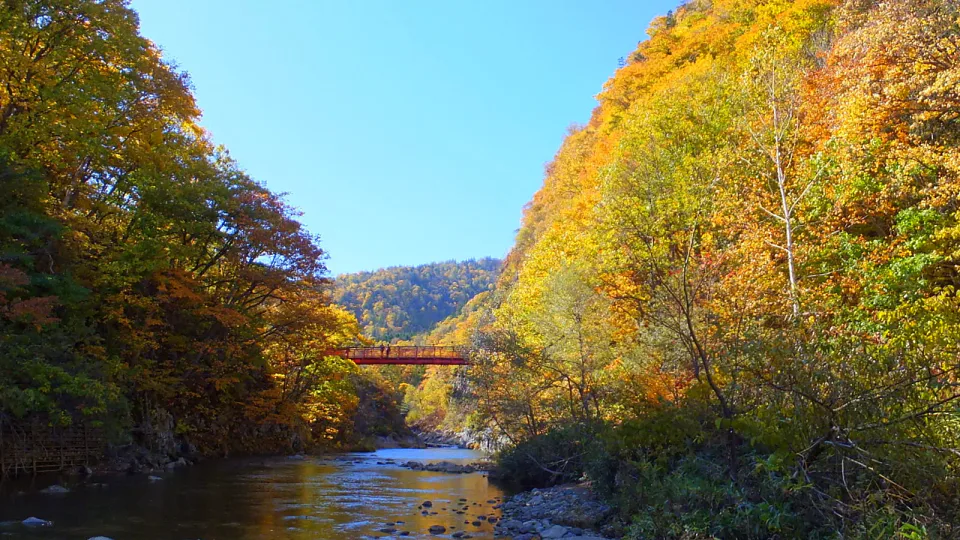
For a Hokkaido autumn-leaves trip, divide hotel nights into two jobs: gateway nights and scenery nights. Sapporo, Asahikawa and Hakodate are gateway bases: airports, trains, luggage, restaurants and weather recovery. Sounkyo, Asahidake Onsen, Jozankei and selected Furano-Biei stays are scenery bases: they deserve a hotel move only when the night unlocks a first service, second weather window, onsen dinner, dawn light or a long return journey you would otherwise repeat.
As of 25 August 2026, that distinction is already actionable for September. Asahidake has entered local alpine-watch status, and Ginsendai's 2026 access system is now published: the small summer climbing shuttle ends after 6 September, while 12–23 September uses a separate autumn-control reservation system from Sounkyo. A Sounkyo night in that period can therefore buy a very specific transport advantage; a generic “mountain hotel” night cannot.
↔ Scroll table left or right
Your trip problem | Start with | What the night buys | Do not choose it when… |
First Hokkaido trip, airport + city + weather flexibility | Sapporo | Transport resilience and lower-elevation fallbacks | You plan repeated Daisetsuzan mountain days |
Asahidake / Biei / Daisetsuzan with uncertain mountain weather | Asahikawa | A gateway that can swap mountain and lowland days | You need first-service mountain time or a fixed Sounkyo charter |
12–23 Sep Ginsendai or early Kurodake | Sounkyo | Reserved charter start, early ropeway and onsen fallback | Neither Ginsendai nor Kurodake is a primary objective |
Onsen dinner + slow valley day near Sapporo | Jozankei | An accommodation experience, not a transport shortcut | You only want one bridge/photo stop |
Photography / dispersed hill and foothill driving | Furano-Biei | Early/late light and reduced backtracking | You have no car and only one rural day |
Later southern foliage + open-jaw flight | Hakodate / Onuma | A directional southern segment | You are adding one night as a side trip from Sapporo |
The two-session test: a scenery hotel should unlock more than one useful hour
A gateway hotel earns its keep through options. If wind closes a ropeway, you can change the day without moving luggage. If rain arrives, restaurants, rail and indoor alternatives still exist.
A scenery hotel needs a higher burden of proof. I would add the hotel move when it unlocks at least two useful sessions that the gateway cannot reproduce:
first ropeway + onsen dinner;
reserved mountain charter + lower-gorge fallback;
afternoon ropeway + next-morning weather retry;
sunset/dinner + dawn landscape;
If the move only saves one bus ride, keep the gateway. “Closer to nature” is not a decision framework.
Asahikawa is the default Daisetsuzan gateway because bad weather has somewhere to go
Asahikawa is not the scenic winner. It is the base that lets Daisetsuzan fail gracefully. Asahidake, Biei, Higashikawa, city facilities, airport access, restaurants and rental cars all remain available without another checkout.
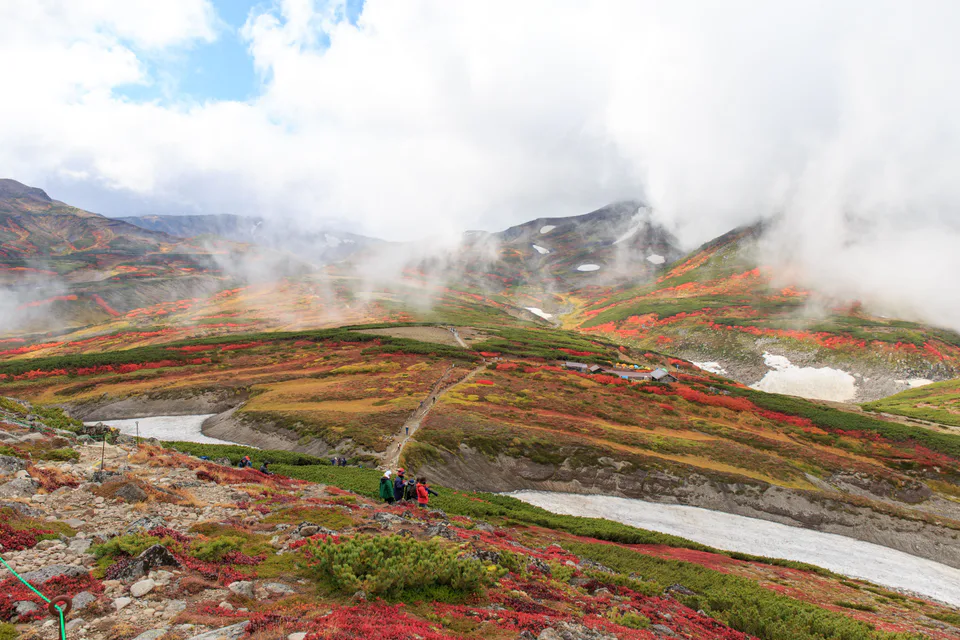
Asahidake is now worth watching more closely because its operator published a 19 August 2026 seasonal-transition update. But a local “entrance to autumn” signal does not make an Asahidake Onsen hotel mandatory. If the trip contains only one mountain attempt, Asahikawa usually remains the better purchase because the mountain day can be moved around the weather.
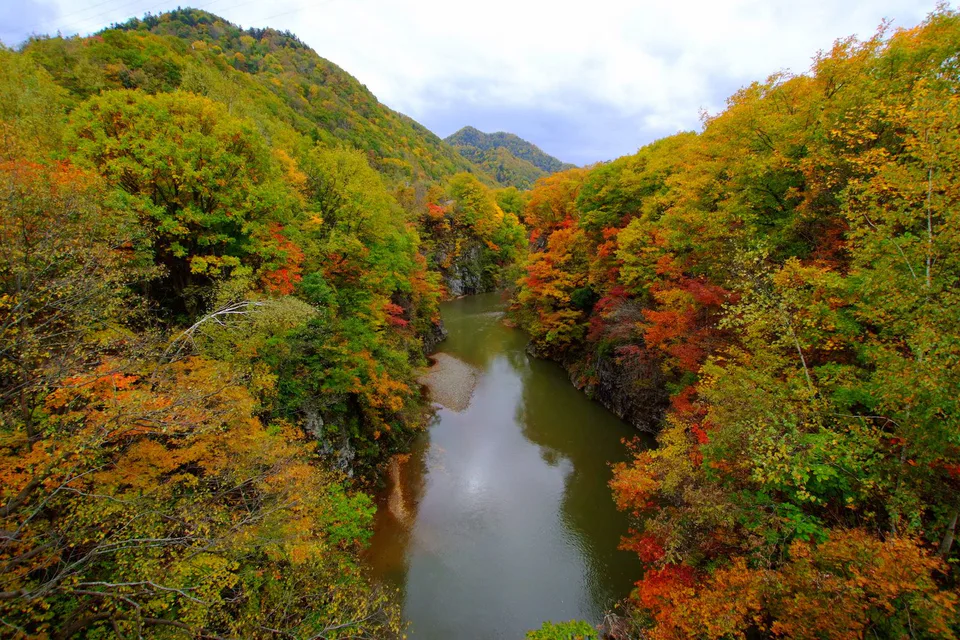
Choose Asahikawa when the itinerary needs a large-luggage base, one Asahidake attempt, one Biei/lowland day or a final night before the airport. Move away only when the scenery night adds time you genuinely intend to use.
Asahidake Onsen is worth one night when you want two mountain windows
An Asahidake Onsen overnight makes sense when the hotel allows an afternoon attempt after check-in plus another ropeway/weather window the next morning. That is a stronger reason than merely shortening the bus ride from Asahikawa.
The trade-off is reduced flexibility: dining is more hotel-dependent and the bus network is sparse compared with the city. If poor weather would make the mountain night feel wasted and you have several other Hokkaido priorities, stay in Asahikawa.
The key red-team question is: if the ropeway is poor this afternoon, do I value the onsen and tomorrow's retry enough to keep the night? If not, the city base is more resilient.
Sounkyo gets much stronger from 12–23 September if Ginsendai is real, not hypothetical
For 2026, Sounkyo has a concrete mid-September transport job. Ginsendai's autumn vehicle-control period runs from 12–23 September, and the official car-free product is a reserved charter from Sounkyo Information Center.
Published outbound services leave Sounkyo at 06:00 and 07:00, reaching Ginsendai at 07:00 and 08:00. Returns leave Ginsendai at 15:00 and 15:30. The published fare is JPY 2,500 one way / JPY 5,000 return, with a capacity of 40 per bus. Private cars use a separate reserved timed-access system during the control period.
That means a Sounkyo night can now perform three jobs in one short segment:
put you at the correct charter origin before 06:00/07:00;
give you Kurodake as a different mountain option;
turn a failed mountain day into gorge/onsen time rather than a wasted Asahikawa round trip.
This is a stronger justification than “Sounkyo is scenic.” But the answer reverses outside the relevant dates or when Ginsendai is not actually in the plan.
Use the Ginsendai access guide before booking: the small summer shuttle only runs through 6 September and 7–11 September is a transition period that should not be guessed from either system.
Kurodake creates another date boundary: the chairlift ends after 15 October
Kurodake Ropeway currently runs 06:00–18:00 through September, 07:00–17:00 from 1–15 October and 08:00–16:00 from 16 October to 8 November. The summer chairlift runs only through 15 October 2026.
So “stay in Sounkyo for Kurodake” changes meaning across the season. In early October, the night can buy first-ropeway access plus the chairlift. After 15 October, the chairlift is no longer part of the product and the ropeway day is shorter. Do not pay an early-October hotel premium for a late-October version of the attraction without reopening the comparison.
Sapporo is the lower-elevation flexibility base, not the universal Hokkaido base
Sapporo is excellent when the trip mixes city foliage, Otaru, Jozankei, food, shopping and New Chitose Airport. It has the deepest fallback network when weather is bad.
Its weakness is repeated northern mountain travel. If two or more days are built around Daisetsuzan, move the base north. One hotel is not inherently better than two hotels when the one-hotel strategy creates two long pre-dawn transfers and two late returns.
Within Sapporo, settle the district only after the city has earned the nights. Sapporo Station is stronger for JR and luggage; Susukino is stronger for late dining. The airport and day-trip geometry should decide the area, not the brand.
Jozankei is an experience night, not a shortcut
Jozankei is close enough to Sapporo that the hotel move usually does not pay for itself through transport alone. It earns the night when the ryokan dinner, bath, valley evening and slow morning are part of the trip.
If you only want Futami Suspension Bridge and a short foliage walk, day-trip from Sapporo. If you want half board, recovery time and a second morning, the hotel is a different product. The second-session test is especially useful here because the distance from Sapporo can otherwise make a one-night move look more “efficient” than it really is.
Furano-Biei is worth an overnight when the route itself moves there
Furano and Biei are dispersed destinations. An overnight is strongest for self-drivers and photographers who want early/late light or two consecutive rural days. It is weaker for a car-free traveller with one Biei excursion because the gateway benefit of Asahikawa remains useful.
Do not treat “Furano-Biei” as one hotel location. Biei Station, Shirogane Onsen, Furano Station and Kitanomine solve different routes. Only move the luggage when the next morning begins in the same rural corridor.
Hakodate and Onuma should be a directional southern segment
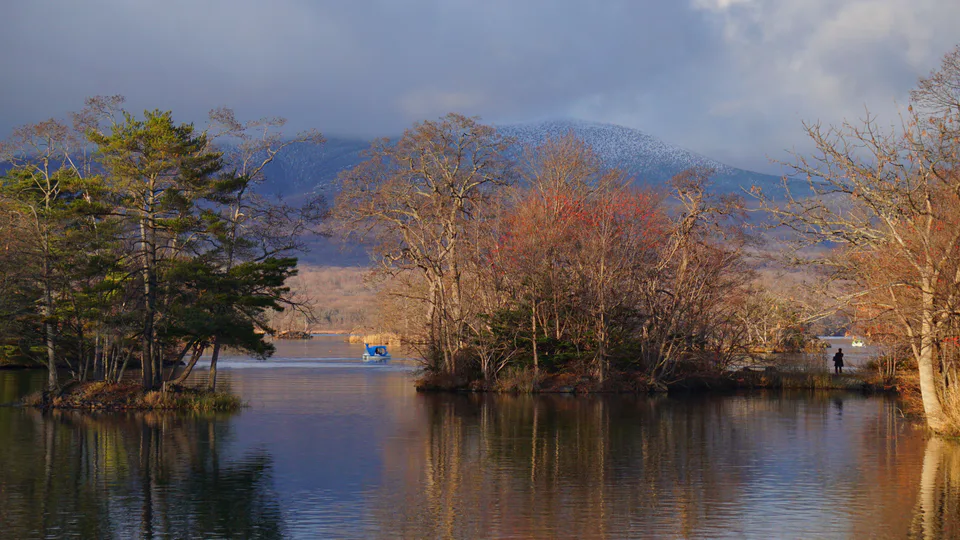
Hakodate and Onuma cover a later southern foliage window. They work best when the whole trip is already moving south, ideally with an open-jaw flight or onward route that avoids returning to Sapporo.
The weak pattern is Sapporo → one Hakodate night → Sapporo. You pay a major intercity transfer twice for one hotel night. Use Hakodate Station as the gateway base for city evenings and transport; choose Onuma only when dawn lake views, cycling or resort time are part of the purchase.
How many hotel bases? Count deleted round trips, not nights
Do not use a fixed formula such as “two bases for five nights.” A hotel move is strong when it removes both an outbound and return trip, or unlocks a first/last useful hour that matters.
Examples:
Five September nights focused on Daisetsuzan: Asahikawa + one Sounkyo or Asahidake scenery segment can be stronger than adding Sapporo immediately.
12–23 September with reserved Ginsendai: Sounkyo has a real transport job; one night may be too short if you also want Kurodake/weather retry.
Five mid-October nights: Sapporo + one Jozankei night can work when the ryokan evening matters.
Seven nights north-to-south: Asahikawa area + Sapporo + Hakodate can work when the flight plan is open-jaw and the route never backtracks.
The unit of value is the high-cost return journey or irreplaceable time window removed, not the number of place names collected.
Large luggage should stay at the gateway whenever possible
Leave the main suitcase at a returning gateway hotel where permitted, or forward it to the next major city and carry an overnight bag to the mountain/onsen segment. Keep passport, medication, warm layers, rain protection, devices and one change of clothing with you.
This matters in autumn because mountain transport can change quickly. A lighter traveller can switch from ropeway to city fallback far more easily than a group rerouting several large cases.
Final verdict
Use Asahikawa for Daisetsuzan flexibility, Sounkyo when Kurodake or the 12–23 September Ginsendai system gives the night a concrete job, Sapporo for lower-elevation and airport resilience, Jozankei for an onsen experience, Furano-Biei only when the rural route repeats, and Hakodate/Onuma as a directional southern segment.
A scenery hotel should unlock at least two useful sessions. Remove the first service, weather retry, dinner, onsen, dawn light and saved return journey from the booking. If you would still move hotels only for the address, keep the gateway base.
References and verification date
Asahidake Ropeway — current operation and seasonal updates · Kamikawa Town — 2026 Ginsendai autumn vehicle control · Kurodake Ropeway / chairlift — 2026 operating periods · Hokkaido Official Tourism Site — Jozankei. Checked 25 August 2026. Foliage, road, bus and ropeway conditions can change; verify the operating day before travel.