

A Hokkaido 7-day car rental does not need to cover the whole trip; for most routes, a partial rental protects flexibility without adding city parking and snow-driving friction.
Do you need a rental car for all 7 days in Hokkaido? If your route is New Chitose → Sapporo → Otaru → Furano/Biei → back to Sapporo or the airport, my default is a partial rental: use JR and city transit for Sapporo and Otaru, then pick up a car when you enter Furano, Biei, the hill roads and other spread-out rural stops. A full-trip rental starts to make sense when you leave Sapporo immediately after landing, travel with several people and heavy luggage, or spend most of the following days at rural hotels.
This is not simply a question of whether JR is cheaper than a car. The real question is whether the car has a job every day. Parking in Sapporo, city navigation, pickup and return procedures, insurance and winter-driving stress are all costs of keeping a car. In Biei’s hills, scattered farms and irregular photo stops, the same car can suddenly become a valuable time tool. On a 7-day trip, the most efficient answer is often neither “drive everywhere” nor “never rent”—it is to reserve the car for the days when public transport is weakest.
Hokkaido 7-day car rental: full trip or partial rental?
Sapporo for 2–3 nights, Otaru as a day trip, Furano/Biei for 2 nights: partial rental. Land at New Chitose and head straight into rural Hokkaido for several days: a full rental can work. Two adults traveling light with several Sapporo days: partial rental. Family of four with a stroller, several large suitcases and consecutive rural hotel changes: the value of keeping the car rises. First-time winter driver: shorten the rental period, or use JR and buses throughout. If Biei photography, cafes, farms and hill roads are the main point of the trip, save the car for the Furano–Biei segment.
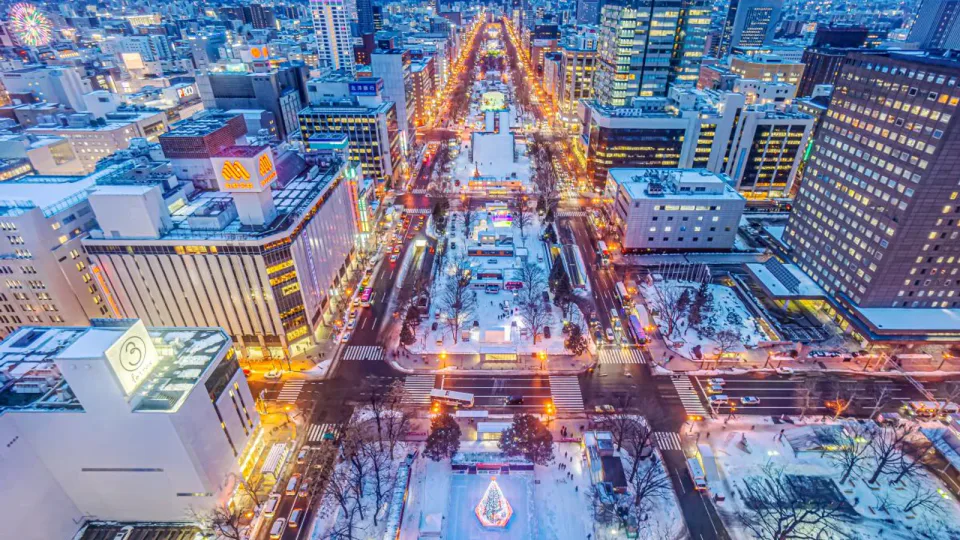
Skipping the car in Sapporo saves parking hassles and mental load
JR Hokkaido currently runs Airport trains between Sapporo and New Chitose Airport in roughly 33–37 minutes at the fastest, with frequent daytime service; some trains continue toward Otaru. If your first night is in Sapporo, the airport already has a mature rail alternative, so there is no need to deal with rental-car pickup, navigation and hotel parking immediately after a flight. The main hotel zones around Sapporo Station, Odori and Susukino are also easy to handle by JR, subway and walking.
If Days 1–2 are both in Sapporo, the most likely thing your car does is sit still while you continue paying for it. You may not drive after dinner if you drink, and the next day you still have to find parking while shopping. Those are the easiest “dead rental days” to eliminate with a partial-rental plan.
A standard Otaru day trip usually does not justify keeping the car either
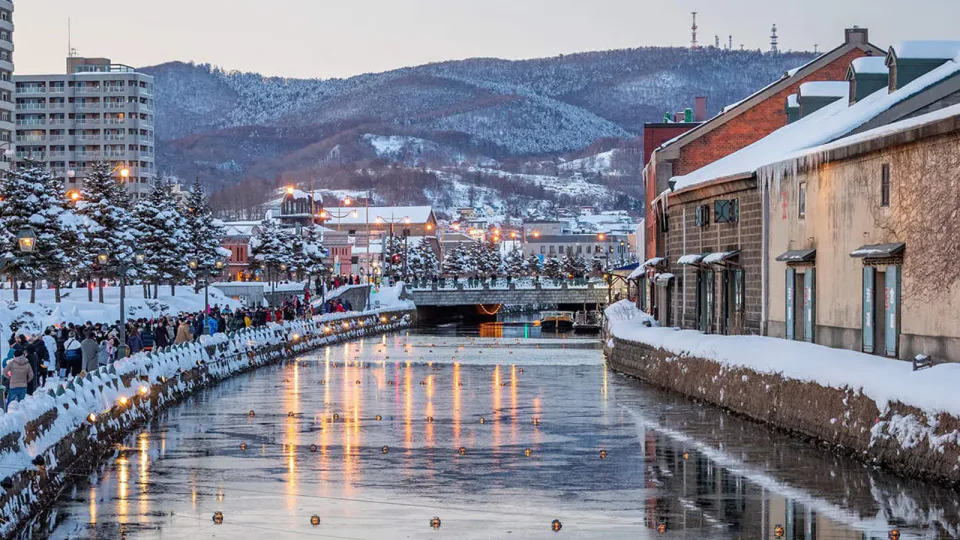
If your Otaru plan is the canal, Sakaimachi Street, desserts and a central-city walk, a JR round trip from Sapporo is already straightforward. Driving still means parking the car and walking, and busy periods can add a parking search. A car becomes more useful only when Otaru is followed by Shakotan, rural Yoichi, coastal stops or other dispersed destinations. If you are staying three nights in Sapporo and one day happens to be Otaru, there is little reason to keep a car from New Chitose just for that.
Furano and Biei are where the car starts earning its keep
In 2026, JR Hokkaido and the Biei tourism office provide a workable car-free backbone: Furano Lavender Express, the Furano Line, the Furano–Biei Norokko train and Biei’s sightseeing bus can connect the Blue Pond, Shirahige Falls and Shikisai no Oka. If those are your only priorities, public transport is absolutely viable. The real advantage of a car appears beyond the core list: Patchwork Road, Panorama Road, scattered hills, farms, cafes, photo stops and last-minute changes for weather. If the flower-field side is your priority, our Furano Lavender guide helps define which summer stops can stay on the rail-friendly route.
A sightseeing bus helps you complete the representative highlights efficiently. A rental car lets you decide how long to stay, what to visit first and what to replace when rain changes the plan. The moment your trip shifts from “I want to see the famous stops” to “the roads and small detours are part of the trip,” the value of the car rises quickly.
The biggest partial-rental mistake is often the pickup and return location, not the number of days
One common mistake is staying three nights in Sapporo but picking up at New Chitose on Day 1—the car has too little work for the first few days. Another is finishing Biei and then driving all the way back to the original airport or branch simply because the booking was set up as a same-location return, giving back some of the time you saved. A better order is to map the hotel bases first, then decide where the car should start and end.
For example, on Sapporo → Furano/Asahikawa → Sapporo/Chitose, the car may only need to handle the middle rural segment. If you fly into Asahikawa and out of New Chitose, you can put Furano and Biei first, return the car in Sapporo and use public transport afterward. Keeping the same car for the whole trip should not be the objective.
Why a family of four with big luggage can reverse the answer
For two adults traveling light, JR has very little friction. For a family of four with two children, a stroller and four suitcases, the car also becomes a moving luggage room. If you change hotel bases two or three times, it can take everyone and everything directly from Hotel A to Hotel B while still stopping at attractions along the way. That value is hard to compare using rental fees and train fares alone, and cost per person can also become more competitive in a larger group.
But family travel does not automatically mean a full-trip rental. If you stay three nights in Sapporo, the car can still spend most of that time idle. A better version is often to stay in Sapporo without a car, pick one up on checkout morning, drive through Furano, Biei and the rural section, then return it in Chitose, at the airport or in Sapporo. Decide the number of hotel bases first and the rental period usually becomes obvious.
In winter, driving ability is part of the cost
The biggest cost of a full-trip Hokkaido rental in winter may not be money—it may be attention. Snow, ice, early darkness, blizzards and changing road conditions add pressure for drivers without winter experience. A short distance on the map cannot simply be given a summer travel time. Without solid snow-driving experience, I would reduce the rental to sections with poor alternatives or switch to JR and buses entirely. Our Hokkaido winter driving guide covers snow roads, whiteouts, parking and emergency planning in more detail. In Sapporo and Otaru, where public transport is strong, there is no reason to drive just because you already paid for the car.
When does a full 7-day rental actually make sense?
If you arrive early on Day 1 and drive straight to a non-Sapporo base such as Noboribetsu, Tokachi, Furano or Lake Shikotsu; spend Days 2–6 moving between rural areas; and return the car at New Chitose on Day 7, a full rental is logical. It also works for groups with heavy luggage that change rural hotels almost every day, because the car is working from Day 1 for both people and bags. Finally, if the trip is built around eastern Hokkaido nature, remote onsen or a large number of photo stops, the car is the core tool. There is no need to force a split rental just because partial rentals sound more efficient in general.
Three practical 7-day versions
Version A: First Hokkaido trip—Sapporo, Otaru, Furano and Biei
Day 1: JR from New Chitose to Sapporo. Day 2: Sapporo. Day 3: Otaru. Day 4: Pick up a car in Sapporo and drive to Furano. Day 5: Furano and Biei. Day 6: Biei/Asahikawa toward Sapporo or Chitose. Day 7: Fly out. Public transport is strongest for the first three days, and the car finally has steady work for the rural segment—this is the classic partial-rental pattern.
Version B: Fly into Asahikawa, out of New Chitose
Day 1: Pick up near Asahikawa Airport and head to Biei/Furano. Day 2: Biei. Day 3: Furano, then return the car before Sapporo or continue south. Days 4–6: Sapporo and Otaru by public transport. Day 7: Depart New Chitose. The key is that Furano and Biei become the beginning of the route instead of a round trip from Sapporo.
Version C: Conservative winter plan
Days 1–3: Sapporo and Otaru by JR. Days 4–5: Rent only if the weather, your driving ability and the route all make sense; otherwise stay with JR and buses. Day 6: Return to Sapporo or Chitose. Day 7: Fly out. In winter, do not lock yourself into seven days of driving just because the rental started on Day 1.
Final verdict: do not choose the number of rental days first—decide when the car actually has work
Use public transport on days where rail is strong and parking is a nuisance—Sapporo, Otaru and airport transfers. Bring the car in for dispersed Furano/Biei stops, family luggage moves or consecutive rural hotel nights. For a first 7-day Sapporo + Otaru + Furano/Biei trip, I would still choose a partial rental. I would move to a full-trip rental only when the trip leaves the city immediately, carries heavy group luggage, or spends several consecutive days away from major cities. Set the hotel bases and each day’s main purpose first; the rental period usually reveals itself. If the route itself is still undecided, use the Hokkaido itinerary-by-region guide before booking the car.
Korankei Autumn Leaves Day Trip: Buses from Nagoya, Illumination and Traffic
Arashiyama Autumn Leaves Day Trip: Morning, Train and Temples


Sources
JR Hokkaido: Airport trains between New Chitose, Sapporo and Otaru; 2026 Furano/Biei rail information. Biei Tourism Association: 2026 summer sightseeing bus. Hokkaido official tourism information: rental-car and driving basics. Images: Sapporo, Otaru and Biei real-location photography used for this article. Information rechecked August 15, 2026. Train schedules, rental-car pricing, road rules, license-document requirements, one-way return conditions and facility operations can change; recheck before travel.