A Hokkaido summer 5 days itinerary needs a clear choice between a compact Sapporo–Otaru trip and a wider Furano–Biei route. With only five summer days in Hokkaido, should you keep the trip to Sapporo + Otaru or add Furano and Biei? First, break down what “five days” really means. If you arrive after noon on Day 1 and need to head to the airport around noon on Day 5, you may have only three fully usable sightseeing days. At that length, I would not treat Sapporo, Otaru, Furano and Biei as a standard package. For a first Hokkaido trip focused on food, shopping and lower transport friction, I would choose Sapporo + Otaru. I would promote Furano/Biei to the main route only when lavender, flower fields, hills and the Blue Pond are already the top reason for the trip—and then I would deliberately give up Sapporo time.
The most common five-day mistake is looking only at map distance and one-way travel time. Otaru is a natural day branch from Sapporo; Furano/Biei are another hotel and transport region. What you pay is not simply “two extra hours.” You pay in early starts, fixed departures, luggage storage, possibly a rental car, possibly another hotel base and one lost full Sapporo day. The real question is not whether you can go, but which segment deserves one-third of a very short trip’s full days.
If you are still choosing which Hokkaido regions belong in the same short trip, use the Hokkaido itinerary-by-region guide before booking hotels. A five-day route works better when the regional priority is decided before the day-by-day checklist.
Hokkaido summer 5 days: the 30-second decision
First Hokkaido trip, want food/shopping and do not want to rush: Sapporo + Otaru. July flower fields are the trip’s main point: add Furano/Biei. Only three full days and you do not want to move hotels: do not force them in. Willing to cut Sapporo to about 1–1.5 days and stay 1–2 nights in Furano/Biei: they can fit. No car: confirm actual seasonal train and sightseeing-bus operating dates first. Driving: cross-region efficiency improves, but that does not mean you need a car inside Sapporo. Families and older travelers: prioritize fewer hotel changes over more place names.
Sapporo + Otaru is not “doing less”—it is using all three full days
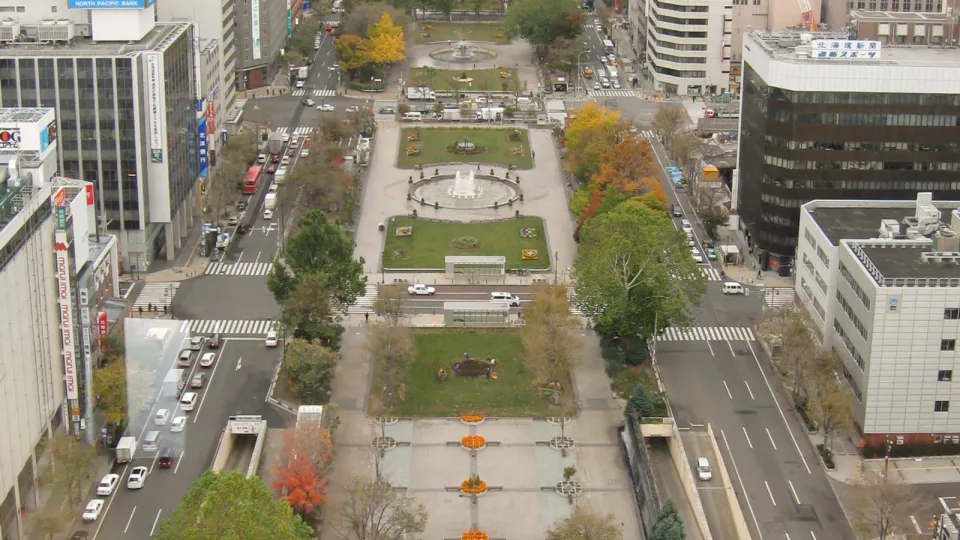
If a five-day/four-night trip gives you three complete sightseeing days, one day for Otaru and two for Sapporo is already a full itinerary. Sapporo itself can be divided among Sapporo Station, Odori, Susukino, Maruyama or the outer market, while evenings remain available for food and shopping. Otaru can be an easy morning-out/evening-back day without another hotel change. The gain is not “fewer sights”; it is not repacking every morning and not binding the whole trip to seasonal departures.
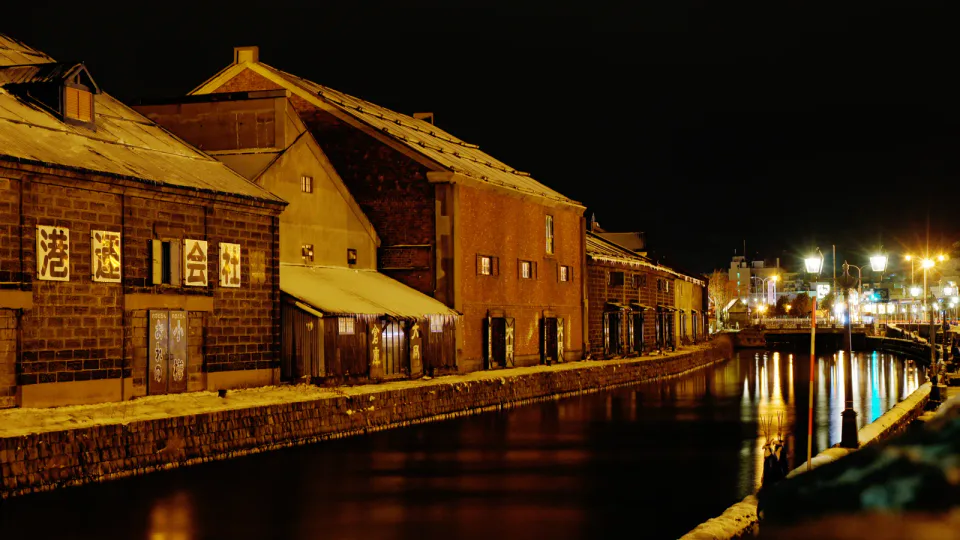
This version is especially strong for a first Hokkaido visit, heavy shopping, moderate group stamina or anyone who does not want more than one checkout during five days. If flower fields are only a “nice if convenient” interest, Sapporo + Otaru usually creates a more complete city trip instead of a vacation spent waiting for the next transfer.
When are Furano and Biei worth forcing into five days?
Three conditions. First, when you imagine Hokkaido in summer, your first image is lavender and rolling hills rather than Sapporo food. Second, you are willing to delete part of Sapporo instead of preserving two Sapporo days + one Otaru day. Third, you accept a second hotel base or at least dedicate one complete day to Furano/Biei. Only when all three are true do Furano and Biei stop being “one more far suburb” and become the main route.
If lavender itself is the deciding factor, check the Furano lavender guide before sacrificing a Sapporo day. The right bloom window can justify the regional move; a weak or mistimed flower day may not.
JR Hokkaido’s official 2026 Furano/Biei information still includes the Furano Lavender Express from Sapporo to Furano in about two hours and seasonal trains such as the Furano–Biei Norokko, but operating dates are not year-round. These options improve car-free feasibility and also create a warning: on a five-day trip, you cannot fill every day with attractions first and check the train dates afterward. If your travel date and the seasonal service do not match, the itinerary must change.
Seasonal trains make a day trip possible, not automatically comfortable
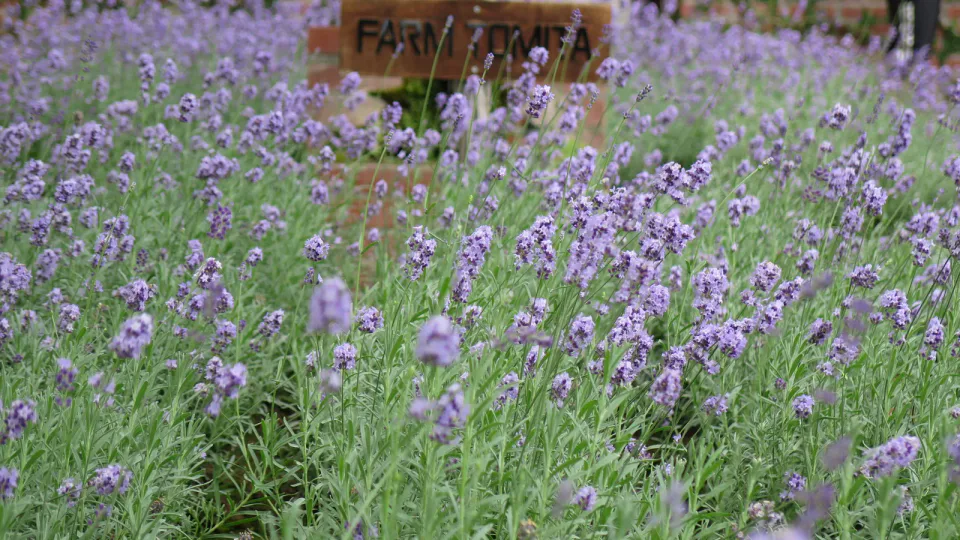
A direct Sapporo–Furano train proves that a same-day round trip is possible; “possible” and “the best use of a short trip” are different. If Farm Tomita is the only goal and you are happy to follow the timetable all day, the day trip can work. Add the Blue Pond, Biei hills, Shikisai no Oka and dispersed stops and waiting/connection time grows quickly. Without a car, more of the day becomes controlled by fixed departures.
If Furano/Biei genuinely matter, I prefer moving one night into the area so both the Day 1 afternoon and Day 2 morning become usable. That hotel night is not just another room bill; it buys less Sapporo backtracking, more early/late time and a chance to reorder the trip for weather.
A rental car is most valuable in Biei, not in Sapporo
Biei’s difficulty is the dispersed attractions. Driving cuts waiting time between hills, Blue Pond, Shirahige Falls, flower fields, cafes and small photo stops, and it lets you change order for weather. Driving and parking in Sapporo do not necessarily create the same value. Adding Furano/Biei to a five-day trip therefore does not mean renting for all five days. Use JR for Sapporo + Otaru, then pick up the car when you genuinely leave Sapporo if driving will improve the rural segment.
Short trips should be especially careful not to turn Sapporo into a driving city merely because “the car is already rented.”
If you add Furano/Biei, the second hotel base needs to do real work
More realistic versions are Sapporo 2 nights + Furano/Biei 2 nights, or Sapporo 3 nights + Furano 1 night. The first suits travelers for whom both flower fields and Biei matter; the second suits a focused Furano stop. The least useful version is Sapporo 1 night, Otaru 1, Furano 1, Biei 1. On a five-day/four-night trip, daily checkout means none of those hotels actually function as a base.
Before choosing that second base, compare Furano Station, Nakafurano, Asahikawa and Sapporo as places to stay. In a five-day trip, the hotel must shorten the next full day—not simply add another place name to the itinerary.
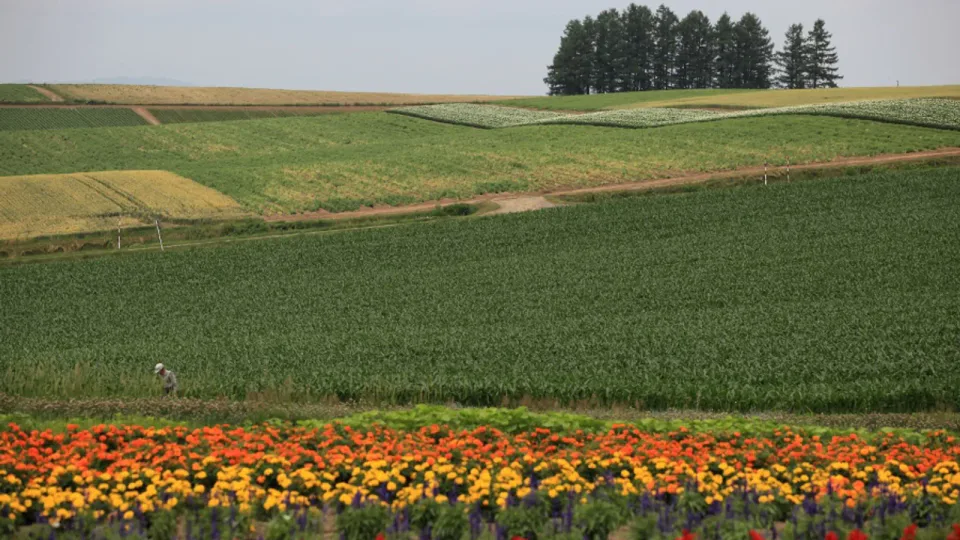
If both Furano and Biei matter, I lean toward two nights. The added full day lets you separate flower fields, Biei hills and the Blue Pond while keeping room to adjust for weather and transport.
Three five-day versions
Version A: first Hokkaido trip, low friction
Day 1 New Chitose → Sapporo. Day 2 Sapporo. Day 3 Otaru. Day 4 Sapporo. Day 5 New Chitose. One main hotel base, complete food/shopping time and the easiest first-trip structure.
Version B: flower fields first
Day 1 Sapporo. Day 2 Otaru or Sapporo. Day 3 move to Furano and stay. Day 4 Furano + Biei. Day 5 depart via Asahikawa/Sapporo/New Chitose depending on the flight. The price is clearly reduced Sapporo time.
Version C: Furano and Biei are the trip
If flights allow, consider entering through Asahikawa, spend Days 1–3 in Biei/Furano, Day 4 Sapporo and Day 5 out of New Chitose. This is no longer “Sapporo with a Furano add-on”; it is a short one-way Hokkaido route, and the geography becomes more efficient.
Families and older travelers: delete more, do not give every person another destination
Cross-region hidden costs grow with children and older travelers: early starts, toilets, naps, luggage, child seats and hotel check-in all use time. Wanting to “show grandma lavender once” may not justify breaking two Sapporo days apart. If the flower fields are a shared family priority, move the base decisively. A short trip should not try to be fair by giving every person one extra destination; that usually means everyone spends more time rushing.
Final verdict: in five days, choose the main story instead of collecting every place name
First Hokkaido trip, only three full days, food/shopping and pace matter: Sapporo + Otaru. Flower fields and hills are the reason for the trip: make Furano/Biei the main line and deliberately give up Sapporo time. Want both: use at least two bases—Sapporo plus Furano/Biei—instead of commuting from Sapporo every day. The real mistake is not skipping one place. It is spending three of five days managing transport.
Is Fukuoka Worth Visiting on a First Japan Trip? When to Add It—and When to Skip It
5-Day Hokkaido Autumn Leaves Itinerary: Driving, Public Transport and Where to Stay
Japan January Weather: What to Wear in Tokyo, Sapporo and Okinawa
Japan May Weather: Tokyo Warms Up, Kyoto Nears Summer, and Okinawa Turns Rainy
Sapporo Family Hotels: Four Beds, Snowy Walks and Laundry Matter More Than “Family-Friendly”
Sources
JR Hokkaido: 2026 Furano/Biei rail information, Furano Lavender Express and Furano–Biei Norokko seasonal operations. Biei Tourism Association. Images: Otaru Canal, Farm Tomita and Biei hills. Information rechecked August 15, 2026. Train operating dates, flower conditions, buses, hotels and road conditions can change; recheck before travel.