
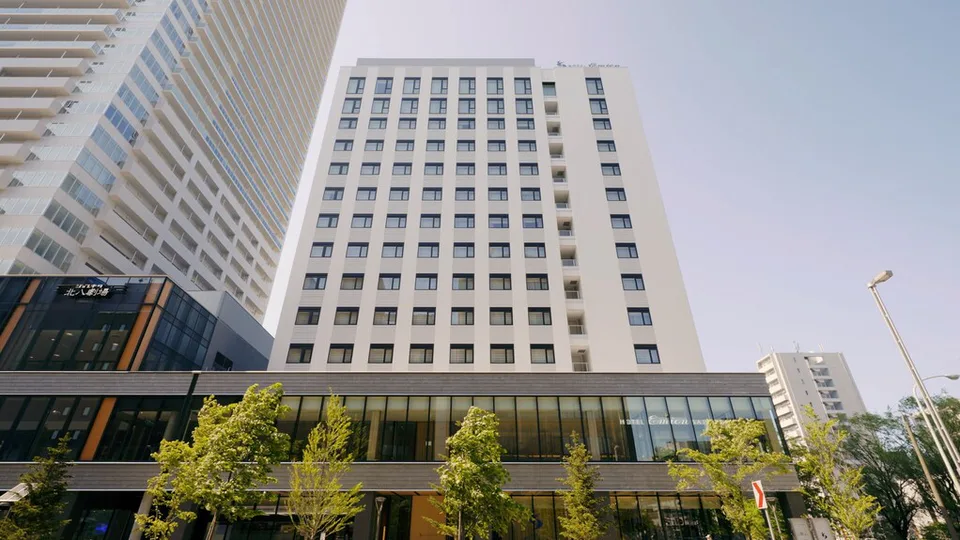
For most families of four visiting Sapporo in winter, I would choose the hotel that removes the most repeated work—not the hotel with the longest “family-friendly” amenity list. If everyone needs a separate sleeping space and several days begin on JR, Hotel Emion Sapporo’s four-person layout is the strongest starting point. If you are staying four to seven nights and wet clothes are the recurring problem, Tokyu Stay Sapporo Odori can be the better operational choice. If young children can genuinely bed-share, Vessel Inn Sapporo Nakajima Park can cut accommodation cost without forcing you into a long final walk.
The decision changes when your family rhythm changes. A Susukino hotel is useful if dinner really ends in Susukino; it is wasted location value if the children are finished by 20:00. A 49 m² room with a washer/dryer can outperform a station-side room on a week-long stay, but not necessarily on a two-night stop with two JR day trips. The useful question is therefore not “Which Sapporo hotel is best for families?” but which source of friction will repeat most often on your specific itinerary?
ValueNavi family decision table: choose the repeated problem first
↔ Scroll table left or right
Your real constraint | Start with | Why it solves that constraint | What can reverse the decision |
Two adults + two older children; all four need their own sleeping space | Hotel Emion Sapporo Standard Fourth | 43 m², three 120 cm fixed beds plus one 120 cm stacking bed, two washbasins | A long stay makes in-room laundry more valuable than station-side access |
Four to seven nights; snow clothes and base layers will be washed repeatedly | Tokyu Stay Sapporo Odori Stay Premier | 49 m², in-room washer/dryer, kitchenette, microwave, separate bath and toilet | Several early JR departures make the repeated Sapporo Station transfer annoying |
Toddlers or younger children can comfortably bed-share | Vessel Inn Sapporo Nakajima Park | Eligible children 18 and under can bed-share free; extensive baby/child items reduce packing | If either child needs a real bed, the apparent saving can disappear |
Family actually eats and stays out around Susukino | Vessel Hotel Campana Susukino | Superior and Deluxe rooms can accommodate four adults using two mattresses plus two futons | Early family evenings mean you are not using the location advantage you paid for |
Heavy arrival/departure day + repeated JR day trips | Sapporo Station area first, hotel second | You reduce the number of luggage-and-child transfers rather than optimizing one room feature | Most sightseeing is central Sapporo and you rarely use JR |
If you have not chosen a district yet, use Where to Stay in Sapporo: Station, Odori or Susukino? first. For a family, I would weight the final winter leg more heavily than for two adults. An extra transfer or uncovered walk is not just a few minutes when one adult has two suitcases and the other is managing tired children.
Choose the family base before the hotel
ValueNavi Family Friction Score: the same hotel can score differently for a different family
To make the trade-offs explicit, this guide uses a Family Friction Score. It is not a review score and it does not claim one hotel is universally better. For the baseline case below, I assume two adults + two children aged 7 and 10, four winter nights, no bed-sharing, two JR day trips, one central-Sapporo day and normal sightseeing rather than skiing every day.
The score weights six things that repeatedly consume family time: sleeping fit 25%, winter last-leg friction 20%, bathroom/morning throughput 15%, laundry utility 15%, transport fit 15%, and child-policy/packing relief 10%. A room can therefore lose despite being larger if its location adds repeated transfers, while a smaller room can lose if four people cannot actually sleep comfortably.
↔ Scroll table left or right
Option for this baseline family | ValueNavi fit | Where it wins | Main deduction |
Hotel Emion Standard Fourth | 8.5/10 | Four usable sleeping places, two washbasins, strong fit when JR is repeated | No in-room washer/dryer; the large four-person room may cost more than basic family configurations elsewhere |
Tokyu Stay Sapporo Odori Stay Premier | 8.1/10 | Excellent long-stay utility: washer/dryer, kitchenette, separate bath/toilet, 49 m² | Repeated JR days add a station leg that the room cannot remove |
Vessel Hotel Campana Susukino Deluxe | 7.3/10 | Four-adult capacity, separate bath/toilet, useful if evenings end locally | For an early-to-bed family, Susukino adds little route value |
Vessel Inn Nakajima Park with bed-sharing | Not comparable for this baseline | Can be excellent for younger children who truly bed-share | Our 7- and 10-year-old baseline requires independent sleeping space, so forcing bed-sharing would distort the score |
The last row is important. A proprietary score becomes useless if it forces unlike family setups into one ranking. For a family with a three-year-old and five-year-old who both sleep comfortably with parents, Vessel Inn’s economics and packing support improve sharply. In that scenario, I would recalculate rather than declaring Emion the permanent winner.
Four real beds vs “sleeps four”: solve this before comparing nightly rates
A room that accepts four guests does not necessarily give four people four equivalent sleeping surfaces. It can mean two beds plus bed-sharing, two beds plus sofa beds, or a rate that changes once the children are entered correctly. For school-age children who need their own sleeping space, I would reject unsuitable layouts before looking at breakfast, public baths or review scores.
Hotel Emion Sapporo’s official Standard Fourth specification is unusually clear: 43 m², capacity for two to four guests, three fixed 120 cm × 200 cm beds and one 120 cm × 185 cm stacking bed. It also has a bathroom with a washing area and two washbasins. For four people getting ready at once, those two basins are not cosmetic; they increase morning throughput even though the room still has one main bathroom.
The trade-off is that a purpose-built four-person room can cost more than a basic twin or a configuration that relies on bed-sharing. Do not compare only the headline room price. Compare the cost of the sleeping arrangement you will actually accept. If Emion and Keio Prelia are your shortlist, use the Emion vs Keio Prelia winter-luggage comparison because arrival friction can be more important than a small nightly difference.
The family “nightly workload” test: count tasks, not amenities
For a four-night stay, a feature is valuable when it deletes a task that would otherwise repeat. I would count these before booking:
Laundry trips: Will an adult need to leave the room, wait for a machine, return to move clothes, then collect them?
Bathroom queue: Can one person shower while another brushes teeth or dries hair?
Wet-gear management: Is there enough room to separate damp gloves, socks and outerwear from beds and luggage?
Food fallback: Can you heat or prepare something simple when a child is too tired to go back out?
Final transport leg: How many times will you repeat the station-to-hotel segment during the stay?
A hotel does not need to win all five. It should win the two or three that repeat in your itinerary. This is why “family-friendly” is too broad a filter: a stroller loan has huge value for one family and zero value for another, while a washer/dryer can quietly save an hour of attention every second evening.
For four to seven nights, Tokyu Stay Odori can beat a closer station hotel without being “better located”
Tokyu Stay Sapporo Odori’s official room page currently lists the Stay Premier at 49 m² for up to four guests, with an in-room washer/dryer, kitchenette, microwave and separate bath/toilet. Its Connecting Room is 42 m² for four. For a long family stay, the washer/dryer matters because it converts laundry from an outing into a background task.
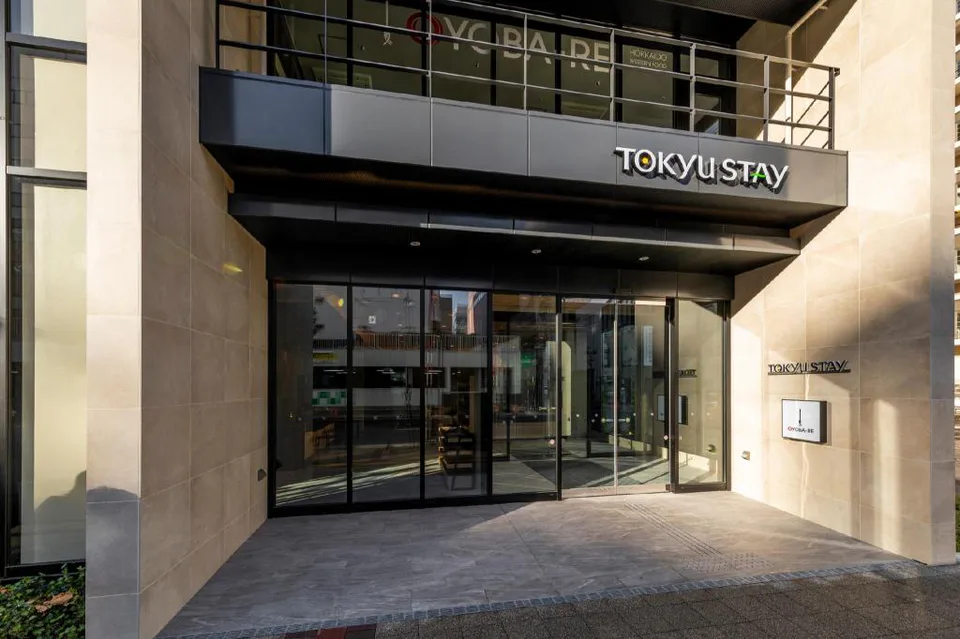
But the washer/dryer does not erase geography. If three of four mornings begin with JR, the extra leg to Sapporo Station becomes a repeated transport tax. If only one day uses JR and the rest are Odori, Tanukikoji and central-Sapporo days, that penalty shrinks. That is the boundary condition: Tokyu Stay becomes more attractive as the number of laundry nights rises and the number of JR-start mornings falls.
The Tokyu Stay Sapporo Odori room guide covers smaller rooms for two travellers; families should book from the actual four-person inventory rather than extrapolate from a 19–23 m² twin. For a four-night winter comparison, also see Tokyu Stay vs Solaria vs Granbell.
Compare long-stay utility against station access
Bed-sharing is a pricing tool only when the child is actually comfortable bed-sharing
Vessel Inn Sapporo Nakajima Park’s current official family policy allows children aged 18 and under to stay free when bed-sharing with a parent or grandparent, subject to the hotel’s booking conditions. If the child needs a separate bed, the hotel says to book them at the adult rate. That distinction prevents a common false saving: a rate looks cheaper because the booking engine assumes a sleeping arrangement your family will not use.
For genuinely young children, Vessel Inn offers meaningful packing relief: baby cots, bed guards, strollers, diapers, wipes, child toilet seats, bottle-sterilizing sets and other items are listed among its family services. That can reduce luggage volume in a way a generic “kids welcome” badge cannot quantify.
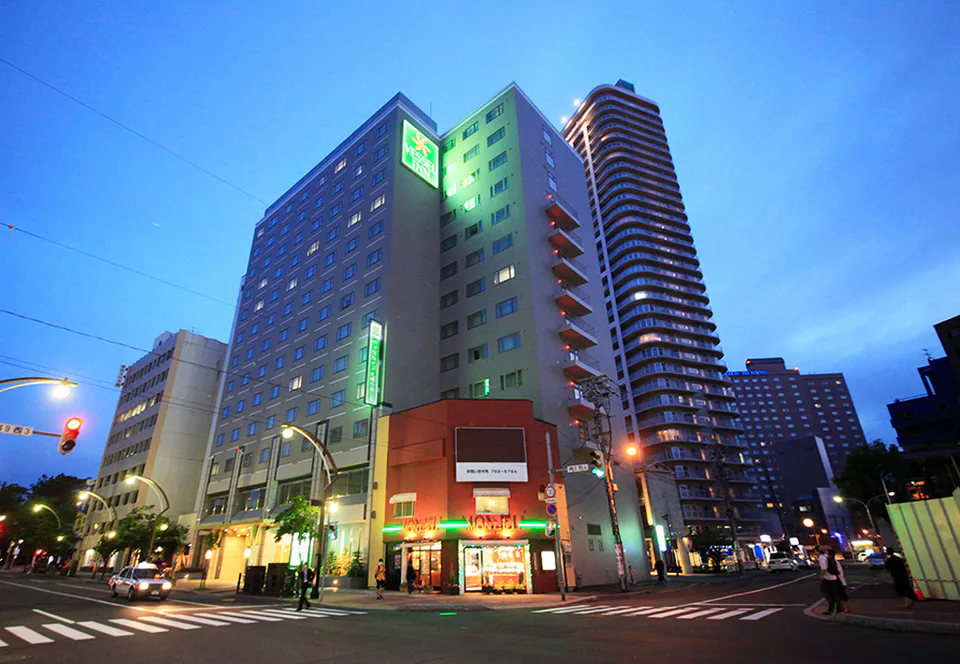
The current posted breakfast price for hotel guests is ¥2,500 (about US$15.70) for adults, ¥1,300 (about US$8.20) for ages 6–12, and free for children five and under. That means “breakfast included for the children” has very different value for a family with a four-year-old versus two 10-year-olds. JPY is the booking currency; USD conversions here use the August 27, 2026 reference rate and will move with exchange rates.
For the location trade-off, use the Vessel Inn Nakajima Park winter-luggage review. A short subway walk can be excellent for young families, but it is still not the same as sleeping beside JR Sapporo Station.
Vessel Campana Susukino: choose it for a family evening pattern, not because Susukino sounds central
Vessel Hotel Campana Susukino’s current official room specification gives families two useful four-person configurations. The 24.5 m² Superior Room accommodates two to four adults with two 120 cm mattress beds and, from the third adult, up to two 90 cm futons. The 36.9 m² Deluxe also accommodates two to four adults with the same basic two-bed-plus-two-futon pattern and adds a separate bath and toilet.
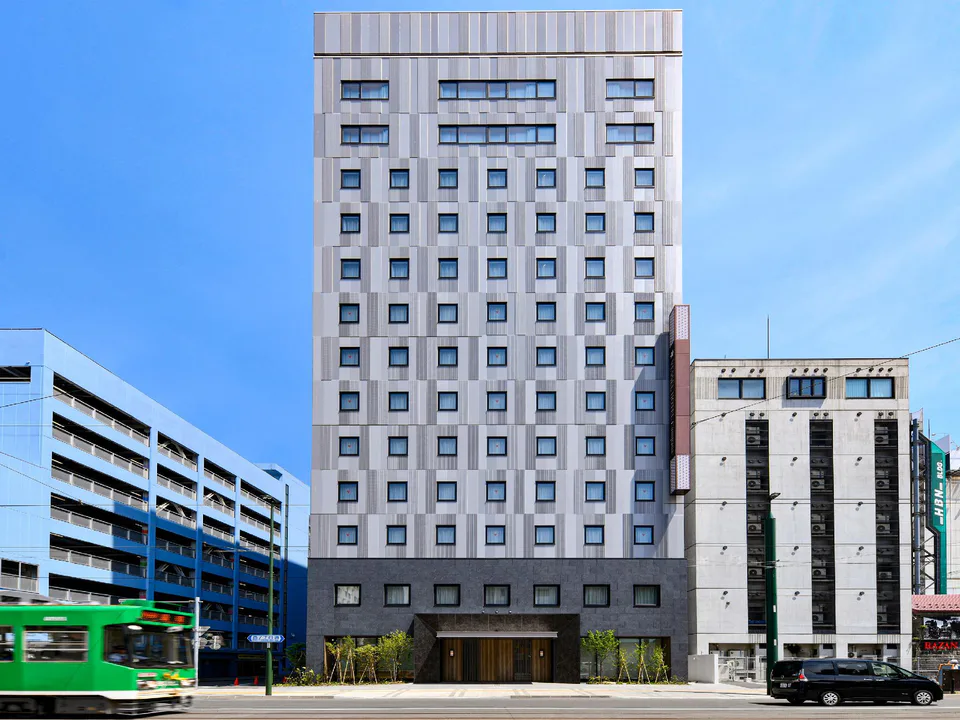
For four people, I would not treat Superior and Deluxe as the same decision. Once two futons are down, 24.5 m² has much less spare floor area for winter luggage and drying gear. The Deluxe costs more, but the extra 12.4 m² and separate bath/toilet can buy back morning and evening circulation. Whether that premium is worthwhile depends on the live room rate, which changes by date; compare the actual four-person rate rather than using a fixed “worth it” threshold.
The location has an equally strong boundary condition. If your children normally finish dinner early, being in Susukino does not remove much friction. If your family is comfortable eating later and you repeatedly finish evenings there, it can remove a final subway leg. Do not pay for late-night convenience your household will never use.
Sapporo Station vs Odori vs Nakajima Park vs Susukino: use a route-count, not a vibe
Instead of asking which district is “best,” count the number of days on which each location removes a transfer.
↔ Scroll table left or right
Trip pattern | Base I would favor | Reason |
Arrival with large luggage + two or more JR day trips | Sapporo Station | The station advantage repeats on multiple high-friction days |
Mostly central Sapporo + long stay + frequent laundry | Odori | Central routing plus long-stay room utility can outweigh JR adjacency |
Younger children + early evenings + low JR dependence | Nakajima Park | A short final subway/walk and family services can be more useful than nightlife |
Family genuinely spends evenings dining around Susukino | Susukino | The location saves the transfer at the time everyone is most tired |
This method also shows when an answer reverses. Add three JR day trips to an Odori itinerary and Sapporo Station gains value. Replace those rail days with Snow Festival, Odori Park and central shopping, and paying a station premium may stop making sense.
Ski days can invalidate an otherwise good family-hotel choice
Two ski mornings introduce gear, meeting points and stricter departure times. A hotel that is excellent for central sightseeing can become awkward if every ski day begins with an extra subway transfer while carrying children’s equipment. Before paying for a larger room, map the ski-day departure point.
If you are skiing from Sapporo, compare Sapporo Teine vs Sapporo Kokusai. If skiing is the main trip rather than a side trip, ask the bigger question with Sapporo or Niseko: where should you spend more nights?. The correct hotel cannot compensate for the wrong base city.
Two or more ski days? Recheck the base-city decision
Breakfast: calculate the morning it replaces, not only the buffet price
Hotel breakfast is most valuable when it removes a fragile morning: a toddler wakes early, snow is heavy outside, or the family has a fixed departure. It is less valuable when everyone naturally leaves early and is happy with a simple convenience-store breakfast. With four people, paying for breakfast every day can become a meaningful trip cost, so it should solve a real scheduling problem.
Vessel Inn demonstrates why child ages matter. At the current posted guest rates, two adults + two children aged 8 and 10 would be ¥7,600 (about US$47.70) for one breakfast if purchased at those individual rates: ¥2,500 × 2 + ¥1,300 × 2. A family with two children aged five or under would pay only the two adult rates, ¥5,000 (about US$31.40). Over four mornings, that age difference compounds. Recheck the live rate before travel because hotel breakfast prices can change.
This is a useful example of hidden cost: “children stay free” does not mean every component of the stay is free, and “breakfast available” does not mean breakfast is the best use of the family budget.
Failure modes: five ways a family hotel that looks good on paper becomes annoying
Booking “sleeps four” without checking bed count. Capacity is not the same as four acceptable sleeping surfaces.
Using bed-sharing to make the price work when older children no longer tolerate it. The savings disappear as soon as you need another bed or room.
Choosing Susukino for nightlife convenience with children who finish the day early. You pay for a location feature that does not match the household schedule.
Ignoring repeated station legs. A seven-minute inconvenience done once is trivial; done on arrival, two JR mornings and departure, it is part of the hotel cost.
Underestimating wet-clothing workload. In-room laundry has little value on a two-night summer stay and very high value on a six-night winter family stay. The same feature changes value with trip length and season.
My final call: which family should book which type?
Choose Hotel Emion Standard Fourth first if four people need independent sleeping space, you have a luggage-heavy arrival/departure, and JR appears repeatedly in the itinerary. The trade-off is paying for a larger dedicated four-person layout without the in-room laundry advantage of Tokyu Stay.
Choose Tokyu Stay Sapporo Odori Stay Premier first if four to seven nights create a real laundry cycle and most days are central-Sapporo days rather than JR departures. The trade-off is accepting the repeated journey to Sapporo Station when you do use JR.
Choose Vessel Inn Sapporo Nakajima Park first when the children are genuinely young enough to bed-share and the baby/child equipment meaningfully reduces what you carry. Avoid treating its bed-sharing policy as a discount if the children actually require their own beds.
Choose Vessel Hotel Campana Susukino first when your family really uses Susukino in the evening and you want a four-person room there. For four people with winter luggage, I would favor the Deluxe over the Superior when the live price gap is acceptable because 36.9 m² plus a separate bath/toilet addresses more family friction than 24.5 m².
If none of those descriptions sounds like your trip, go back one level and choose the district before the hotel. The winning family hotel is not the one with the most amenities; it is the one that deletes the largest number of repeated tasks from your itinerary.
If winter luggage is the main problem: compare Emion vs Keio Prelia
Okinawa Family Hotels: The Winner Changes Once You Add Bed-Sharing, Laundry and Pool Time
Fukuoka Shopping Hotels: Dropping Bags Midday Matters More Than Saving Two Minutes to the Subway
Sapporo Concert Hotels: PREMIST DOME, Makomanai and Zepp Send You Home on Different Routes
Lake Towada Oirase 2 Day Itinerary: Buses, Walks, Cruise and Hotels
Okinawa Honeymoon Hotels: Don’t Upgrade All Four Nights — Spend More on the Two You’ll Actually Use
Sources
Hotel Emion Sapporo official Standard Fourth room information: 43 m², capacity, fixed/stacking bed setup and two washbasins. Checked August 27, 2026.
Tokyu Stay Sapporo Odori official room information: Stay Premier and Connecting Room size/capacity, washer/dryer, kitchenette, microwave and bath layout. Checked August 27, 2026.
Vessel Inn Sapporo Nakajima Park official family information: bed-sharing conditions, child amenities and current breakfast rules. Checked August 27, 2026.
Vessel Hotel Campana Susukino official room information: Superior and Deluxe capacity, room size, bedding and bath layout. Checked August 27, 2026.
USD figures are approximate localization aids based on a reference rate of ¥1 = US$0.00627355 on August 27, 2026. Hotel charges are made in JPY and exchange rates move. Room inventory, rates and policies can change; verify the live hotel page before booking.