30-second answer | Upgrade the nights with the highest hotel-time capture
An Okinawa honeymoon does not need four luxury nights. The expensive night is easiest to justify when you can actually use four parts of it: the afternoon, sunset / pre-dinner period, evening, and the following morning. A premium ocean-view room after a 9 p.m. arrival is mostly an expensive bed. The same room with a 2:30 p.m. arrival, terrace sunset, dinner and slow breakfast becomes part of the honeymoon itself.
If your trip has a late arrival and an early flight home, I would usually keep the first and final nights functional and concentrate the resort budget in the middle. If your arrival is early and departure is late, three or even four resort nights can make sense because the edge nights are no longer being consumed by airport logistics.
If the base itself is still undecided, start with where to stay in Okinawa. If the only unresolved decision is the final night, use Onna vs Naha for your last night. This guide starts after that and asks a narrower question: which nights deserve the honeymoon upgrade?
↔ Scroll table left or right
Trip pattern | Best starting strategy | What the premium should buy | Common waste |
Late arrival + early flight home | Naha edge nights + 2 resort nights | One complete afternoon, sunset, evening and next morning | Peak ocean-view rate for a 9 p.m. check-in |
Early arrival + late departure | 3–4 resort nights can work | Less packing and more usable hotel blocks | Moving to Naha because a template says every trip should |
Sunset + room time are the honeymoon | Halekulani Okinawa | Terrace, view and quieter adult-oriented pool time | Leaving all day and returning after dark |
One active sightseeing day + one resort evening | Hyatt Regency Seragaki | Ocean-front room / Club services you are actually present to use | Club Access while missing the evening service window |
Classic beach-resort honeymoon | The Busena Terrace | Beach, pools and a deliberately slow resort rhythm | Booking the resort then spending both afternoons elsewhere |
Final night must be in Naha but should still feel special | The Naha Terrace / Southwest Grand | Good room, dinner access and usable city-hotel time | Paying luxury rates for pure airport sleep |
ValueNavi Honeymoon Hotel-Time Capture Score | Score each night, not the hotel name
For every night you are considering upgrading, give it one point for each hotel-time block you will genuinely use: afternoon (roughly 14:00–17:00), sunset / pre-dinner, evening, and the following morning. This is ValueNavi editorial analysis, not an official hotel score.
↔ Scroll table left or right
Score | Interpretation | Upgrade direction |
0–1 / 4 | The room is mainly doing sleep / transport work | Do not use your highest room category here |
2 / 4 | Some resort value is usable | Upgrade only for one feature you can name |
3 / 4 | Strong honeymoon night | Ocean view, Club or resort premium becomes easier to justify |
4 / 4 | You are actually living in the hotel across the stay cycle | This is where the biggest upgrade belongs |
The score makes a late-arrival night fail quickly. Check in at 21:30, sleep, then leave at 08:00 and the score is close to zero. Arrive at 14:30, use the pool, watch sunset from the terrace, stay for dinner and keep the next morning slow, and the same hotel can score four out of four. The nightly rate has not changed; your ability to consume the product has.
Upgrade nights, not the whole honeymoon by default
The biggest honeymoon-booking mistake is treating luxury as a trip-wide identity rather than a night-by-night decision. If two nights have a 4/4 Hotel-Time Capture Score and the other two score 0–1, concentrate the expensive room category in the middle. You are not downgrading the honeymoon. You are putting the premium where it can become shared time instead of a prettier booking confirmation.
The reverse matters too. If all four nights score three or four because the trip is intentionally slow, changing hotels just to “save” the final night can create unnecessary packing and dilute the resort rhythm. The right split comes from usable hotel time, not a fixed 2+2 formula.
Halekulani Okinawa | Pay for sunset and adult-oriented spaces only when you are there to use them
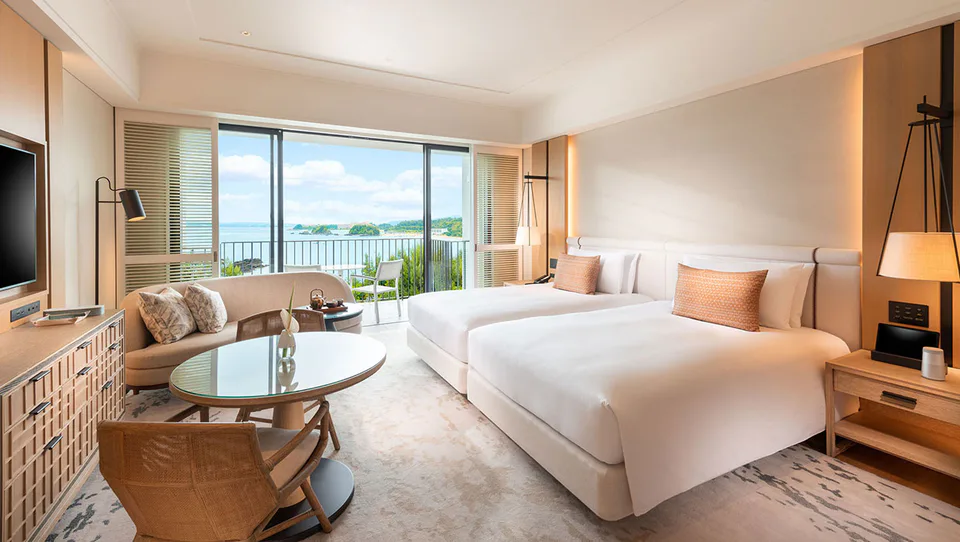
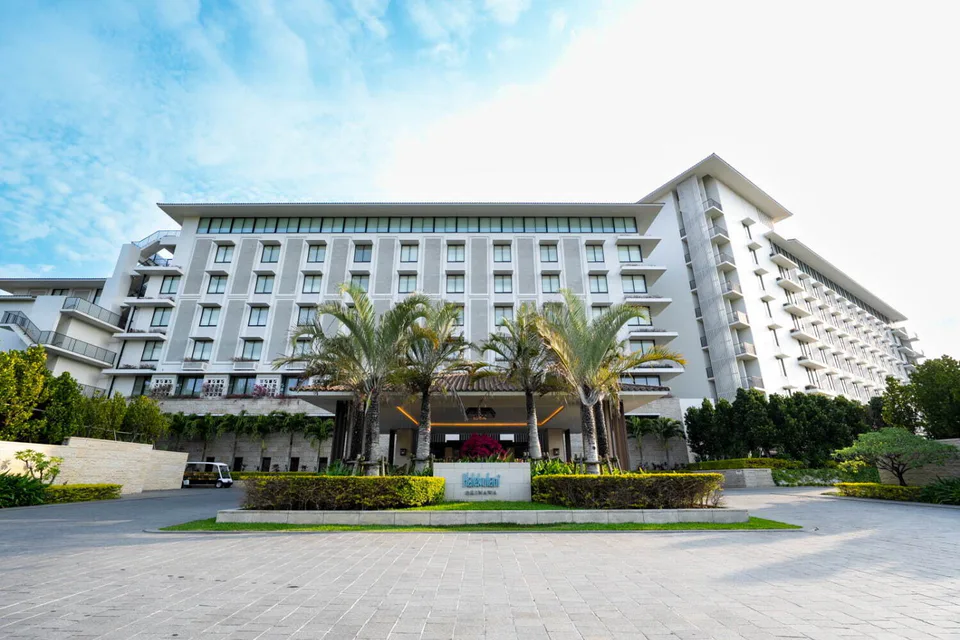
Halekulani Okinawa currently lists its standard rooms at 50 m² with a private terrace across the Beach Front Wing and Sunset Wing. That gives the room itself enough space to become part of the honeymoon rather than merely where you sleep. The Sunset Wing becomes especially logical when the sunset / terrace block is explicitly part of the day.
The current pool structure also creates a real two-adult use case. Quiet Pool and Ocean Terrace Pool do not admit guests under 16. Ocean Terrace Pool sits in the Sunset Wing and is positioned around sunset views. But these outdoor pools are seasonal, so a winter honeymoon should not price the hotel as if the summer pool experience exists automatically. The indoor pool remains a separate year-round facility with its own current operating conditions.
Use the Hotel-Time Capture Score before choosing the wing. If you will arrive after sunset and leave straight after breakfast, the view premium has little time to work. If you will be on the terrace for late afternoon and sunset, then continue with Halekulani Okinawa: Beach Front vs Sunset Wing and choose the room around the time you will actually spend there.
View Exposure Test | An ocean view only earns value during the blocks when you can see it
For every ocean-view or sunset-facing upgrade, count your expected daylight exposure from the room or terrace. A view you see for twenty minutes before breakfast is a different product from a terrace you use from 15:00 through sunset and again the next morning.
If the view is the main reason for upgrading, I would want at least two meaningful exposure blocks across that night: for example, late afternoon + sunset, or sunset + next morning. With only one short daylight block, compare whether the same budget would create more value through an extra resort night, dinner, spa treatment or another feature you can actually consume.
Hyatt Regency Seragaki | Strongest when one active day still returns in time for the resort evening
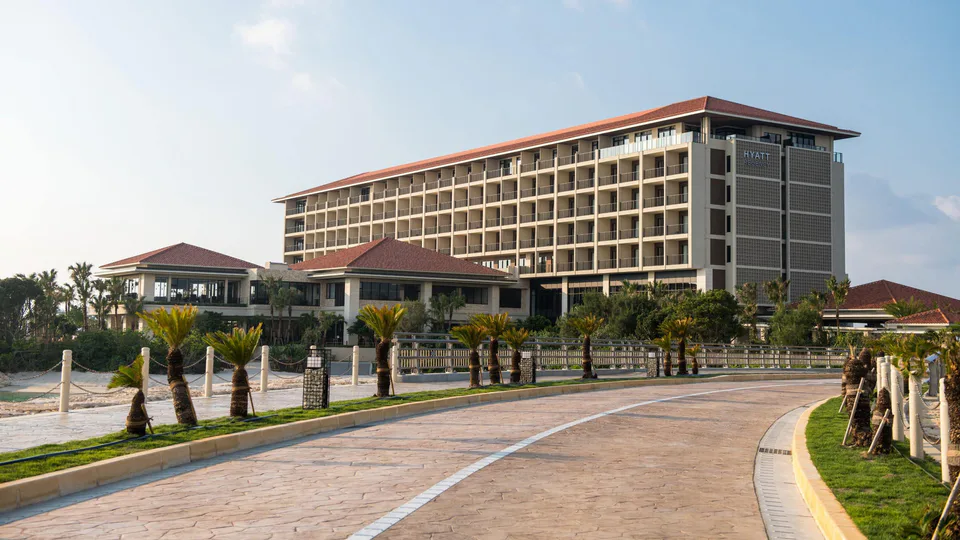
Hyatt Regency Seragaki currently lists its 1 King Bed Ocean Front View room at roughly 38 m², with a king bed, balcony and ocean-front view. Club-access ocean-front rooms add Regency Club privileges. The official room information includes breakfast, light refreshments and evening cocktails among the Club benefits.
The decision hinge is not whether Club Access sounds romantic. It is whether the itinerary returns you to the hotel while the benefit exists. If a Blue Cave activity, Cape Manzamo, cafés and dinner outside consume the entire day, you may pay for Club services while physically somewhere else. If you keep one main outing and return by mid-afternoon, the hotel can take over for the rest of the day and the premium becomes more coherent.
That makes Hyatt a strong compromise for couples who do not want to spend every resort day doing nothing. One active block plus one protected resort evening can work better than buying the Club label and then planning over it. See the Hyatt Regency Seragaki two-night guide for the timing decision.
Package Utilisation Test | Club, breakfast, pool and spa are four separate products
Do not bundle “luxury hotel benefits” into one imaginary value score. Test each feature separately. Club: will you be back during the service period? Breakfast: will you actually sit down rather than leave early? Pool: is it open on your dates, and is a pool block protected in the itinerary? Spa: is there an actual appointment or realistic treatment window?
↔ Scroll table left or right
Feature | Proof of value | Weak evidence |
Club Access | You will return before / during the evening service and stay at the hotel | “It is our honeymoon” |
Breakfast | At least two slow mornings at the hotel | Early tours both mornings |
Pool | Season / hours match your dates and an afternoon block is protected | Pool photographs with no pool time in the plan |
Spa | A bookable treatment window is already part of the day | Assuming you will somehow fit it in |
A hotel can offer all four and still be poor value if you use none. Conversely, one feature used well can justify a targeted upgrade without buying every package.
The Busena Terrace | Best when the resort itself is the day’s activity
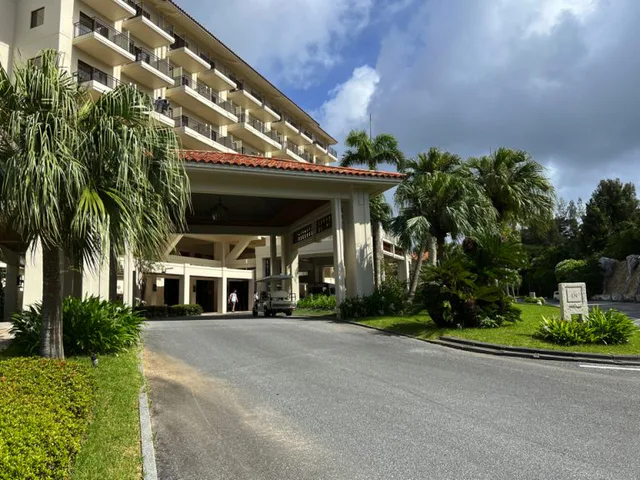
The Busena Terrace currently gives guests access to a beach of roughly 760 metres, seasonal outdoor pools and an indoor pool that operates year-round. The honeymoon value is not that the room is the newest or the most dramatic. It is that the beach, swim time, a slow afternoon and the resort grounds can collectively become the itinerary.
This makes the no-go case unusually clear. If you book two Busena nights but spend both afternoons driving elsewhere, the hotel is being used mainly as a sleep location. If one entire afternoon and evening belongs to the property, the resort starts earning the premium through time rather than reputation.
Use The Busena Terrace resort-time guide if the real question is whether two nights create enough slow time.
Late arrival or early departure | Separate honeymoon feel from transport function
If baggage claim pushes the first-night arrival beyond 20:00 or the final morning requires an early airport run, the edge night may score zero or one on the Hotel-Time Capture Score. A Naha night is not automatically a downgrade. It may simply be the correct tool for dinner, luggage, car return and airport access.
For a transport-heavy first or last night, use the RIHGA Royal Gran first / last-night guide or Onna vs Naha for the final night. Do not ask an expensive resort to perform an airport-hotel job and then feel pressured to “get value” from facilities you have no time to use.
A Naha final night can still feel like part of the honeymoon
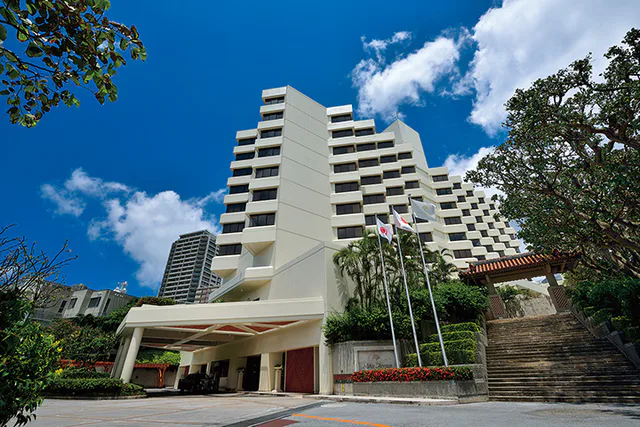
The Naha Terrace gives couples a quieter city-resort style. Its current Deluxe King is 35 m² with a king bed and occupancy for up to three. It is not a station-front airport hotel, so the move to Naha should still have a job: city dinner, a calmer final evening or less pressure on the final morning.
Southwest Grand Hotel takes a more urban approach. Its current Corner King is 45 m² for two guests with one 1800 × 2050 mm king bed, close to Kokusai-dori. The hotel’s current pool / sauna facilities operate from 06:00 to 22:00 for staying guests, so a couple can combine city dinner and shopping with some usable hotel time rather than treating the last night as pure airport sleep.
Choose between those two directions using The Naha Terrace guide and the Southwest Grand Hotel review. The point is not to recreate an Onna beachfront resort in Naha. It is to preserve one or two meaningful honeymoon blocks while improving departure logistics.
Four-night split patterns | The answer is not automatically 2+2
Late arrival + early departure: Naha first night → two high-capture resort nights → Naha final night is often clean because both edge nights are doing transport work.
Early arrival + early departure: one functional first or final night may be enough; three resort nights can score better than a forced 2+2 split.
Early arrival + late departure: three or four resort nights can make sense if the final transfer remains comfortable. Moving solely because “you should sleep in Naha before flying” can create packing without enough payoff.
Early-out / late-back sightseeing trip: one deliberately upgraded night may outperform four premium nights. Spend the rest on location, dinner, activities or the room features you actually use.
NO-GO | Skip the high-end resort when staying at the hotel is not what you want to do
If both of you naturally leave after breakfast and return after dinner because diving, cafés, road trips, attractions and izakaya are the actual honeymoon, a high-end resort can create guilt instead of pleasure. You start cutting short the day because the pool, lounge or terrace feels like something you “should” use.
In that itinerary, one 4/4 capture night can make more sense than four expensive 0–1/4 nights. A honeymoon does not need every booking confirmation to look luxurious. It needs the expensive parts to become actual shared memories.
Before payment | Settle these eight questions together
1. Which nights score 3–4 on the Hotel-Time Capture Score? 2. Do your dates fall inside the outdoor pool / beach operating season? 3. Is the room genuinely Ocean Front, Ocean View or Sunset-facing, or is the wording less specific? 4. How many daylight / sunset exposure blocks will you spend in the room or terrace? 5. Which Club, breakfast, pool or spa benefits will you physically be present to use? 6. Does moving to Naha materially improve car return, flight timing or dinner plans? 7. Are you comparing the same meals, view category and cancellation terms? 8. If you need anniversary setup, cake, dinner arrangements or another special request, has the hotel confirmed it rather than leaving it as an unguaranteed booking note?
Final verdict | The best honeymoon hotel is the one you have time to live in
With a limited four-night budget, I would place the highest room rate on the nights with the highest Hotel-Time Capture Score. Choose Halekulani when sunset, terrace time and quieter adult-oriented spaces are the memory you want. Choose Hyatt Seragaki when you still want one active outing but will return early enough to use the resort evening. Choose Busena when the classic beach-resort rhythm is itself the plan.
If flights consume the edges of the trip, let Naha perform the functional job. If you still want that last night to feel special, The Naha Terrace or Southwest Grand can preserve usable honeymoon time without pretending an airport-logistics night is a full resort day.
The rule is simple: do not upgrade every night because the trip is called a honeymoon. Upgrade the nights where the hotel is actually part of the honeymoon.
Okinawa Guys’ Trip Hotels: The Best Base Is Where You Can Stop Driving at Night
Fukuoka Shopping Hotels: Dropping Bags Midday Matters More Than Saving Two Minutes to the Subway
Miyakojima Diving: One Dive, Two Dives or Three? Your Flight Home Matters More Than the Upgrade
Hiroshima vs Fukuoka: Where Should You Spend the Extra 2–3 Nights?
Lotte Hotel Busan vs Arban Hotel: Is the Five-Star Premium Worth It in Seomyeon?
Sources
Facts rechecked on August 27, 2026. Room names, view labels, pool / beach seasons, Club services, restaurant arrangements and anniversary services can change by date or package; verify the exact stay dates and room category before payment.
Halekulani Okinawa | Official standard-room information
Halekulani Okinawa | Official pool and current operating conditions
Hyatt Regency Seragaki Island Okinawa | Official room and Club-access information
The Busena Terrace | Official beach and pool facilities
The Naha Terrace | Official Deluxe King information
Southwest Grand Hotel | Official Corner King information
Southwest Grand Hotel | Official pool and sauna operating information