
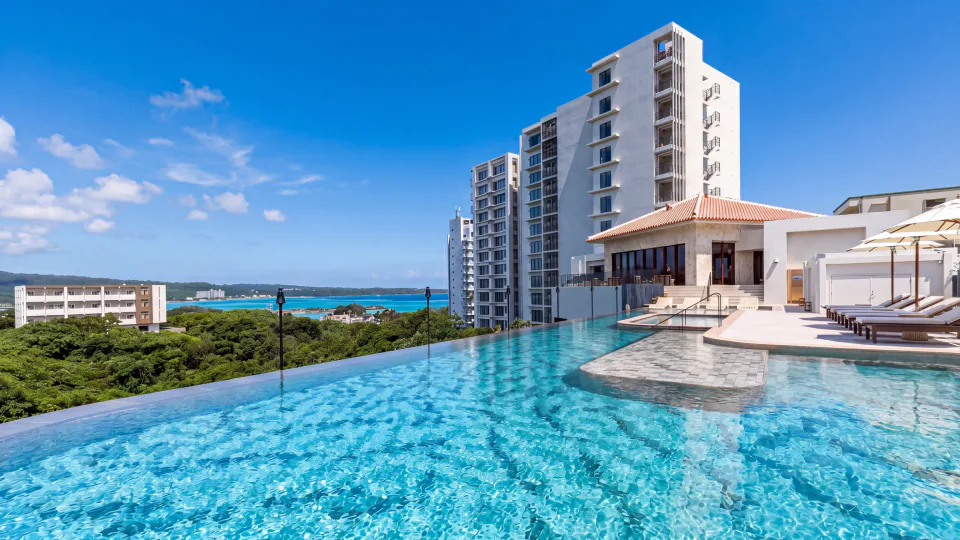
An Okinawa ocean-view upgrade is worth paying for only when the better view has a clear job in your itinerary. The room label is not enough. A late arrival followed by an early departure can turn an expensive ocean-front category into one short morning glance; a two-night resort stay with an arrival afternoon, sunset, slow morning and another protected hotel block can use the same premium repeatedly.
The useful question is therefore not “Do I want an ocean view?” It is “What exactly does this upgrade add over the cheaper room, and how many awake periods will I actually use that difference?” Halekulani, Hyatt Seragaki, Okinawa Prince and Hilton Chatan illustrate four different answers. Treating all four as the same “ocean-view upgrade” is how travellers overpay.
Fact-checked August 26, 2026. JPY remains the primary currency. Approximate USD examples use about ¥159 = US$1 as a working reference; exchange rates and live room prices move.
If you have not chosen the base yet, start with where to stay in Okinawa. If the driving pattern is still unclear, use the first-time Okinawa guide and car vs public transport guide first. A better view cannot rescue a base that creates the wrong route.
ValueNavi View-Premium Audit: first identify what the upgrade actually buys
“Ocean View,” “Ocean Front” and “Partial Ocean View” are hotel-specific commercial categories, not a universal grading scale. Before comparing prices, strip the room names away and identify the incremental product.
↔ Scroll table left or right
Hotel example | Cheaper / baseline product | Higher-view product | What the premium is mainly buying |
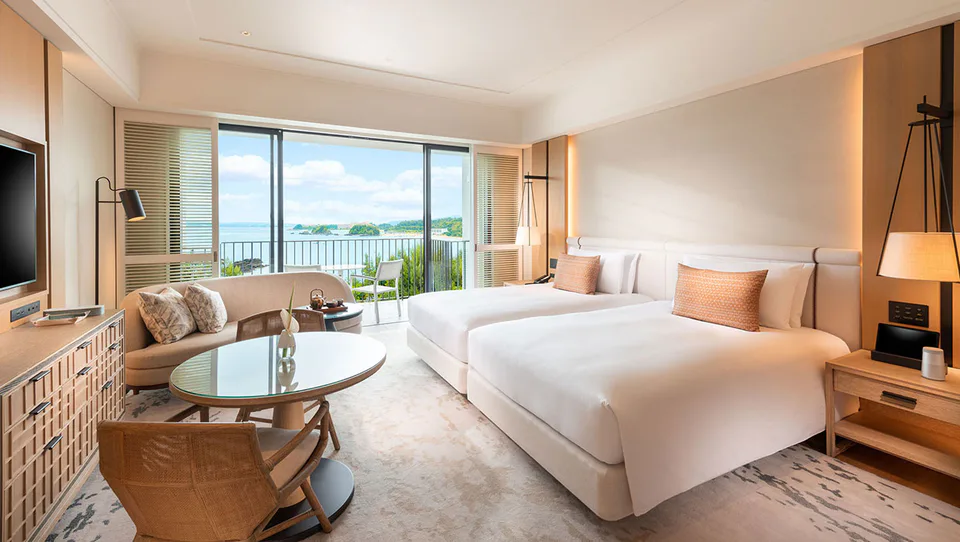
Halekulani Okinawa | Standard categories are 50m² with private terrace and sea-oriented views, including Partial Ocean View categories | Ocean View / Ocean Front categories remain around the same 50m² standard-room size | View openness, floor, wing and orientation—not extra floor area |
Hyatt Regency Seragaki | King Partial Ocean View about 38–39m² with balcony | King Ocean Front 38m² with balcony | Almost a pure view-quality upgrade |
Okinawa Prince Hotel Ocean View Ginowan | Every guest room already has a balcony and ocean view | Higher floors / Club categories | Floor, lounge/service or room-category differences—not the existence of an ocean view |
Hilton Okinawa Chatan Resort | Twin City View 35m² | Twin Ocean View 37m² with private balcony | Sea view + balcony + 2m², rather than a dramatic space jump |
This is the first ValueNavi rule: never pay an “ocean-view premium” until you can finish the sentence “the extra money buys me…” without repeating the room-category name.
The 30-second decision: count protected view windows, not hotel nights
↔ Scroll table left or right
Trip pattern | Ocean-view priority | Why |
Late arrival + early departure | Low | Most daylight room time disappears. |
Two resort nights with an arrival afternoon and slow morning | High | The view can be used repeatedly rather than once. |
Couple planning balcony / room time | Medium–high | The room itself is part of the experience. |
Family with an early-sleeping child | Potentially high | The room may become the adults’ evening venue. |
Sightseeing-heavy self-drive stay | Low | Return time, parking and route fit usually matter more. |
Base room already includes sea + balcony | Do not upgrade for “ocean view” alone | Price only the incremental floor, service, layout or view quality. |
A “view window” is a period when you are awake in the room, the view is actually visible, and you have enough uncommitted time to use it. Arrival afternoon, sunset, a slow morning and pre-checkout coffee can each be separate windows. “Maybe we will come back early” does not count.
ValueNavi View-Window Cost: turn a vague premium into a usable number
There is no responsible universal rule that says an Okinawa ocean-view room is worth ¥5,000 more but not ¥10,000 more. Live hotel prices vary too much by date, demand, cancellation terms and meal plan. A more stable calculation is:
Total view premium for the stay ÷ number of protected awake view windows = cost per view window.
Here is an illustrative example—not a live rate from any hotel. Suppose the same room conditions cost ¥8,000 more per night for the better view. Across two nights, the view premium is ¥16,000 (about US$100.65).
↔ Scroll table left or right
Real view windows | ¥16,000 stay premium spread across them | ValueNavi read |
1 | ¥16,000 ≈ US$100.65 per window | The entire upgrade is riding on one moment. |
2 | ¥8,000 ≈ US$50.30 per window | Still a meaningful experience purchase. |
4 | ¥4,000 ≈ US$25.15 per window | The premium is being used repeatedly. |
5 | ¥3,200 ≈ US$20.15 per window | Strong utilisation if those periods were already hotel time. |
This calculation does not tell you whether US$25 of private sea-view time is personally “worth it.” It does something more useful: it exposes whether you are paying for a repeated part of the stay or for a single optimistic sunset.
Halekulani Okinawa: the room size stays 50m², so the view has to justify itself
Halekulani’s current standard-room inventory makes the premium unusually easy to audit. The hotel describes standard rooms as 50m² with private terraces, while categories move through Partial Ocean View, Ocean View and Ocean Front positions across the Beach Front and Sunset Wings. For example, Deluxe Partial Ocean View Sunset Wing is listed on 4F–6F at 50m², while higher Ocean View / Ocean Front categories can remain 50m².
That means a higher category cannot be justified by saying “I also get a bigger standard room.” In many comparisons, you do not. You are paying for a stronger sightline, floor, wing and sometimes a more specific orientation. If that is exactly what you want for slow resort time, the upgrade is coherent. If the itinerary leaves the room at 08:00 and returns after dinner, the physical 50m² product is doing far more work than the view grade.
If the real decision is wing rather than generic view quality, use the dedicated Halekulani Beach Front vs Sunset Wing comparison.
You will keep sunset time at the hotel: compare Halekulani wings and room views
Hyatt Regency Seragaki: one of the cleanest “pure view premium” tests
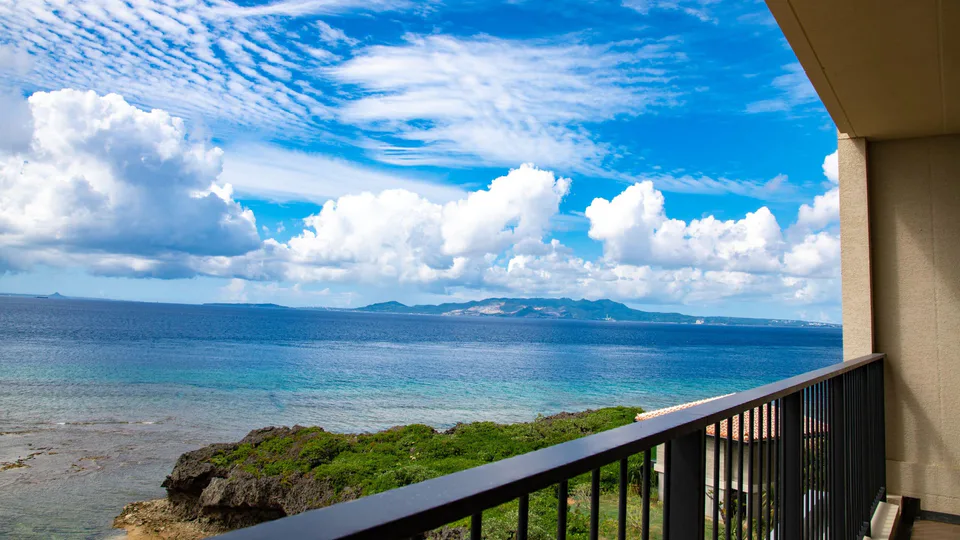
Hyatt currently lists a 1 King Bed room at roughly 38–39m² with Partial Ocean View and an open-air balcony. The 1 King Ocean Front is 38m² with an open-air balcony. Twin categories tell a similar story: Partial Ocean View is around 39m², while Ocean Front is 38m².
That is useful because it strips away one common excuse for upgrading. If bed setup and layout already work, Ocean Front is not a meaningful square-metre upgrade. The question becomes almost entirely whether a more direct oceanfront outlook deserves the premium during the hours you are actually there.
On a two-night stay, an afternoon committed to Cape Manzamo followed by an early departure can leave very few windows. A deliberate mid-afternoon return, resort dinner and slow next morning create several. Use the Hyatt Regency Seragaki two-night guide to decide whether the itinerary itself protects enough hotel time.
Two nights in Seragaki: decide whether Ocean Front gets enough usable time
Okinawa Prince: do not pay twice for a feature already included
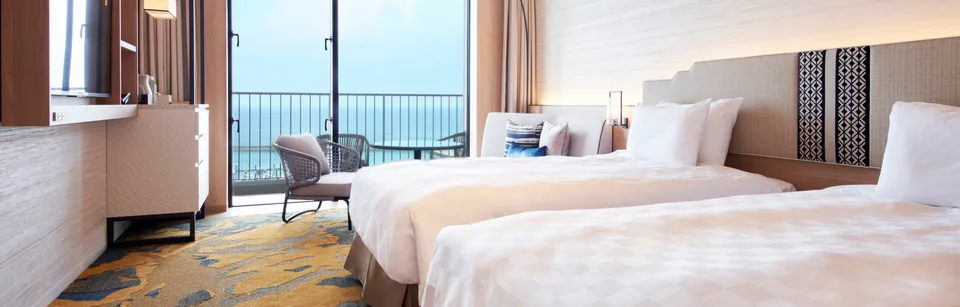
Okinawa Prince Hotel Ocean View Ginowan currently states that every guest room has a balcony and ocean view. Superior Floors are 3F–11F and Club Floors are 12F–14F. The hotel also operates a Club Lounge for eligible Club Floor guests.
This creates the opposite decision from Hyatt. The baseline already contains the feature many travellers are trying to buy. Moving higher should therefore be justified by what is genuinely incremental: floor, lounge access, service, room size or layout. “I want an ocean view” is not enough because you already had one in the base concept.
The hotel also notes that specific floor or orientation requests may be accepted but are not guaranteed, with actual room assignment confirmed at check-in. That is a useful reminder across Okinawa: a category name and representative photo are not a promise of the exact sightline you imagined.
If Ginowan itself is still under debate, use the Okinawa Prince two-night location trade-off before optimising the floor.
Hilton Chatan: the ocean room also buys a balcony, but American Village competes for the same hours
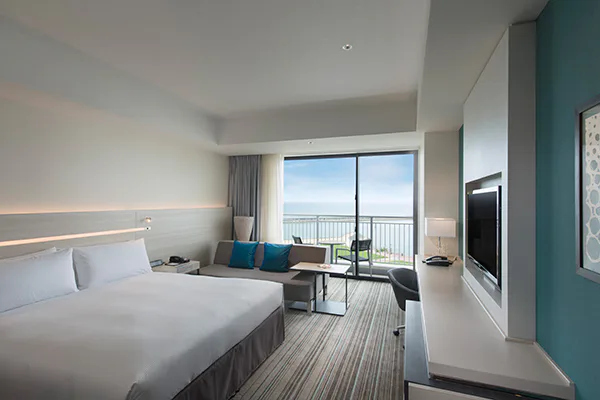
Hilton Okinawa Chatan Resort currently lists Twin City View at 35m² and Twin Ocean View at 37m². The Ocean View room also adds a private balcony. That is a real product difference, but it is still not a jump into a completely different space class: the core upgrade is sea + balcony + 2m².
The bigger issue is route conflict. American Village, restaurants and the waterfront sit close enough that the same late-afternoon and evening hours that make the balcony attractive also tempt you out of the hotel. This is why an Ocean View room can make more sense on a quiet resort afternoon than on a Chatan night packed with dinner, shopping and a long waterfront walk.
A clean sequence is hotel / pool / balcony first, American Village second. That gives the private view a protected job before the neighbourhood takes over. If you head out before sunset and return at 22:00, the ocean premium may be reduced to the next morning.
Use the Hilton Okinawa Chatan Resort review for the wider pool-and-location decision.
ValueNavi Duplicate View Test: are you buying privacy, or buying the same sea twice?
Many Okinawa resorts already give you the ocean from a beach, pool deck, lobby, restaurant or public terrace. That does not make a room view worthless. It changes what the private view has to accomplish.
↔ Scroll table left or right
If the sea is already available from... | The room view still adds value when... | The upgrade is weaker when... |
Beach / pool deck | You want the same openness without changing clothes, carrying belongings or staying in public space. | You spend all daylight hours outside anyway and return only to shower and sleep. |
Restaurant / lobby | You want unstructured private time rather than a meal or shared lounge. | The room is mostly a sleeping base. |
Base room already has some ocean view | The higher category materially improves openness, direction or balcony use. | The difference is mainly a more impressive room name. |
The ValueNavi question is simple: what can I do with the upgraded private view that I cannot already do comfortably with the sea elsewhere in the hotel? If the answer is “sit privately while a child sleeps,” “have coffee on my own terrace,” or “watch the water without leaving the room,” the purchase has a distinct job. If the answer is only “see the same sea again,” it may be a duplicate purchase.
Families can value the view more than couples when bedtime traps the adults in the room
An early-sleeping child creates one important reversal. A couple without children may happily spend the evening at restaurants or bars. Parents whose child is asleep by 20:30 or 21:00 may be room-bound for the rest of the night. In that case, balcony access and a view can turn dead hotel time into usable adult time.
Do not assume the benefit automatically exists. If curtains must stay closed, balcony use is impractical, the child is a light sleeper or the adults also go to bed immediately, the window disappears. The decision is not “families like views.” It is “does the room become the adults’ evening venue?”
For wider family planning, compare Okinawa with Kids before paying for a premium that competes with the attractions your family actually wants.
The trip-edge penalty: first and last nights are the easiest place to waste a view premium
A late flight into Okinawa can leave the first night with darkness, dinner and sleep. An early airport departure can remove the final morning. Those are poor conditions for an expensive view category because the trip edge consumes exactly the awake daylight you need to justify it.
The stronger allocation is often to put transport efficiency first on the arrival/departure edge and concentrate the resort budget in the middle block where afternoon, sunset and morning are protected. That does not mean switching room categories every night inside the same hotel. A room move creates its own packing, checkout, key-change and availability friction. Only split room categories when the hotel can handle it cleanly and the savings are meaningful; otherwise keep one room category and solve the trip-edge issue at the itinerary or hotel-block level.
For the airport side of the decision, use Late Arrival or Early Flight in Okinawa.
Weather risk: an ocean-view room is not a sunset guarantee
A higher category can improve orientation and openness, but it cannot guarantee a dramatic sunset, blue water or clear horizon. Cloud, haze and rain can reduce the visual payoff on the exact evening you planned around. That is why I would not justify a large premium with one weather-dependent moment.
A resilient upgrade has at least one second job: private balcony time, morning coffee, room-bound family time, a slow afternoon, or simply a stronger sense of space while resting. If the only reason to pay more is “we want one perfect sunset photo,” the booking is carrying unnecessary Weather Risk.
Use the Okinawa rainy-day and typhoon guide if weather is shaping more than the room decision.
ValueNavi room-view matrix: where the recommendation flips
↔ Scroll table left or right
Factor | Pushes toward paying for the view | Pushes toward the cheaper room |
Awake room time | Two or more protected daylight / sunset / morning windows | Late arrival, early departure, out all day |
Incremental product | Meaningfully better sightline, balcony, orientation or privacy | Base room already has essentially the same sea experience |
Route fit | Hotel is already where the itinerary wants to be | You are moving farther from attractions just to obtain the view |
Family use | Adults remain awake in the room after a child sleeps | Everyone sleeps at the same time |
Weather dependence | View has value even without perfect sunset conditions | Entire premium depends on one forecast-sensitive moment |
Price premium | Low cost per protected view window | One expensive window carries the whole premium |
Before booking, compare these seven things—not just the room name
First, compare the exact same dates, guest count, bed type, meals, taxes and cancellation rules. Second, confirm whether the cheaper room already has a partial or full sea view. Third, identify the published floor range and orientation. Fourth, check whether a balcony or terrace is actually part of the room product. Fifth, treat official photos as examples unless the hotel guarantees an exact sightline. Sixth, count your protected awake view windows. Seventh, divide the total premium by those windows and decide whether that experience cost fits your priorities.
At Okinawa Prince, specific floor/orientation requests are not guaranteed. Halekulani also notes that room layouts and representative imagery can vary. These are not reasons to avoid the hotels; they are reasons not to pay a large premium based on an imagined exact frame that the room category does not promise.
NO-GO: remove ocean view from the must-have list in these cases
Late-arrival one-night stay: the useful daylight is too limited. Early-departure final night: the last morning may vanish into airport logistics. Long-distance road-trip base: if you leave early and return after dinner every day, parking, bathroom layout and route fit deserve the budget first. Base room already has a strong sea view: only upgrade if the incremental floor, orientation, balcony or service has a job. Perfect-sunset-only logic: weather risk is too concentrated.
At a property such as Hilton Okinawa Sesoko Resort, the same principle applies: a better room view cannot rescue a stay whose island/resort location you barely have time to use.
Final verdict: buy private view time, not the words “Ocean View”
I would pay for an Okinawa ocean-view upgrade when three conditions line up: the higher category adds something physically clear, the itinerary protects multiple awake view windows, and the hotel location already fits the route. That is strongest on slow resort stays, for couples who deliberately use the balcony, and for families whose adults remain in the room after a child sleeps.
I would choose the cheaper room when the view premium is concentrated into one short window, when sightseeing removes most hotel daylight, or when the base room already provides the sea and the higher category does not add enough else. Halekulani and Hyatt show how little floor area can change while the view grade rises; Okinawa Prince shows why the ocean itself may already be included; Hilton Chatan shows how a strong neighbourhood can steal the same evening hours the room view needs.
The ValueNavi red-team question is: if the same sea were available from the pool deck for free, and clouds removed the perfect sunset, would I still want this view privately from my room? If yes, the upgrade has a real use case. If no, price it as a fragile visual bonus rather than a must-have.
If you still have not settled on the base, go back to the Okinawa hotel decision guide before spending more on a room category.
Sources and what to recheck before booking
Halekulani Okinawa — official standard rooms · Hyatt Regency Seragaki Island Okinawa — official rooms · Okinawa Prince Hotel Ocean View Ginowan — official guest rooms · Hilton Okinawa Chatan Resort — Twin City View · Hilton Okinawa Chatan Resort — Twin Ocean View
Room names, floor assignments, representative views, club benefits, rates and exact room allocation can change. Recheck the exact category and booking conditions for your dates before paying.
Okinawa Split Stays: Change Hotels Only If You Remove Two Long Backtracks
BEB5 Mojiko Just Opened: Is the Kanmon Strait View Worth an Overnight Stay?
Okinawa Without a Car? Leave Naha Only If the Second Base Fixes Your Evenings
Oriental Hotel Okinawa Resort & Spa Review: Is the 170m Pool Worth a 7-Minute Beach Walk?
THE LUIGANS Spa & Resort Fukuoka: Is a 33m² Sea-View Room Worth Leaving Hakata for One Night?