
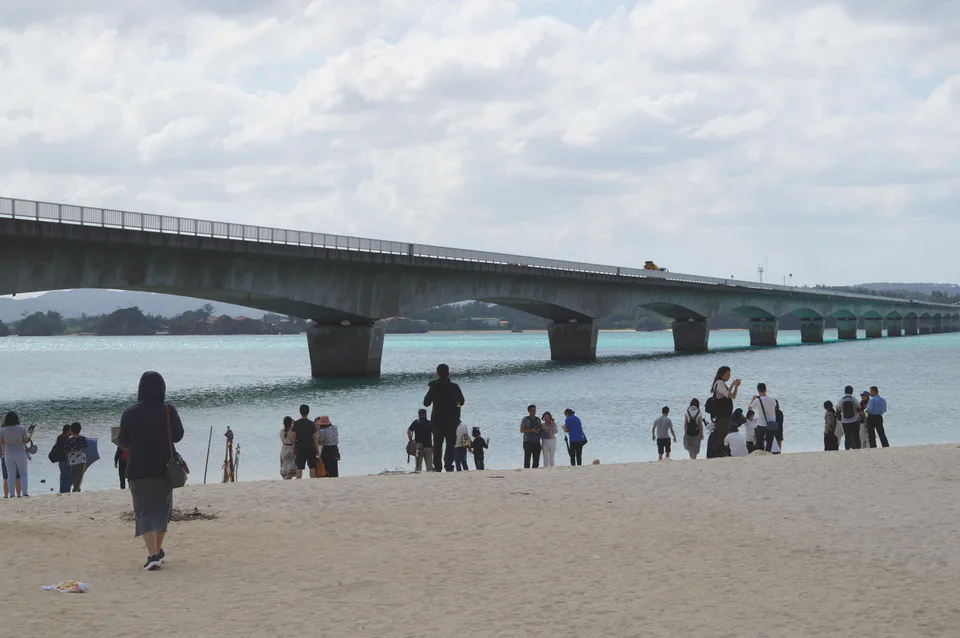
Do not choose an Okinawa hotel until you know where your nights naturally end. For a first trip without a full-time rental car, Naha is still the safest default. Chatan becomes rational when American Village owns at least two evenings. Onna earns its resort premium only when you protect real beach/pool/hotel time. Motobu or Nago becomes a second base when northern Okinawa repeats across two days — not because Churaumi Aquarium appears once on the map.
The mistake this guide is designed to prevent is booking a beautiful hotel that creates a transport problem every day. Okinawa Main Island stretches more than 100 km north to south, while Yui Rail itself is a 19-station urban system from Naha Airport to Tedako-Uranishi. The hotel decision therefore begins with base geometry, not star rating.
The five questions that eliminate the wrong base
↔ Scroll table left or right
Question | What it decides | Red flag |
1. Where does each day end? | Naha, Chatan, Onna or north should win repeated evening gravity. | Choosing a base because one daytime attraction is far away. |
2. How often will you return to the room? | Families, shoppers and slow resort stays need a different location from sleep-only trips. | Paying for a location you only see at midnight. |
3. How many times will the car move each day? | Tests whether a “free parking” hotel still creates meal and evening driving. | The car becomes a shuttle between room, dinner and shopping. |
4. Does a hotel move remove at least two repeated costs? | Tests whether a second base really pays back packing/check-in friction. | Moving luggage for one aquarium or one sunset. |
5. What happens on the final night? | Airport, car return, packing and early-flight risk can pull the base back toward Naha. | Keeping a northern hotel for one final sight and concentrating risk on flight day. |
ValueNavi Night-End Gravity Model
This is the fastest way to turn an itinerary into a base decision. For every night, assign points to the area that the itinerary naturally wants to finish in:
2 points to the area where the final meal/activity ends; +1 point if a realistic midday room return, nap, bag drop or change of clothes is expected; +1 point if that area removes a difficult late transfer for children, older parents or a no-car traveller. On the final night, give +2 Naha resilience points when an early flight, rental-car return or airport-sensitive departure makes northern positioning materially riskier.
This is not an official tourism score. It is a ValueNavi itinerary model. The area with the highest gravity should become the default base unless moving there creates more luggage/check-in cost than the repeated travel it removes.
↔ Scroll table left or right
Example trip pattern | Gravity signal | What I would do |
3 Naha evenings, no car, one Churaumi day tour | Naha dominates | Keep one Naha base; do not move north for one day. |
2 American Village evenings + one central-Okinawa day | Chatan gains repeated night-end points | Chatan becomes a legitimate base rather than a sightseeing stop. |
2 Onna nights with one full resort afternoon | Onna gains hotel-time points as well as night-end points | Resort premium can be rational. |
Churaumi/Bise day + Kouri/Nago day | North repeats across two days | Motobu/Nago second base becomes worth testing. |
Final night north + 08:30 flight | Naha gets strong final-night resilience | Move back south unless there is an unusually strong reason not to. |
ValueNavi Base Fit Score
For trips that still have two plausible areas after the Night-End Gravity test, use a six-factor score. Rate each base from 0 to 10 for the actual itinerary, then apply: night-end fit 30%, transport/car dependency 20%, room-return usefulness 15%, luggage/base-change burden 15%, final-night resilience 10%, and weather/backup flexibility 10%. This is a scenario score, not a permanent score for Naha, Chatan, Onna or Motobu.
Scenario | Illustrative ValueNavi score | Reason |
|---|---|---|
Naha: first trip, no full-time car, 3 city-centred evenings | Strong transit, night-end fit and bad-weather flexibility. | |
Chatan: 2 American Village nights, car parked after afternoon | The evening district and room-return loop repeat. | |
Onna: 2 nights but both days 08:00–20:00 sightseeing | Resort value is mostly unused and the base adds car dependency. | |
Motobu: 2 consecutive northern days | Repeated north-south travel is removed. | |
Motobu: one aquarium day only | A hotel move adds luggage friction without enough repeated payoff. |
ValueNavi Base-Change Payback Test: when is moving hotels actually worth it?
A hotel move has a real cost even when no extra ticket is purchased. It creates packing, checkout, an interim luggage period, another check-in, another unpacking cycle and often a period when neither room is usable. The simplest rule is:
base-change payback = repeated long backtracks removed + major constraints solved − move-cost blocks added
I use a conservative threshold: do not change Okinawa bases unless the move removes at least two meaningful long backtracks, or solves two major constraints at once. Examples of a two-constraint win include moving north for two consecutive northern days, or returning to Naha because it simultaneously simplifies rental-car return and protects an early flight.
A single Churaumi day usually fails this test. A two-day Churaumi–Bise–Kouri–Nago cluster can pass it. “I want to experience three hotels” is a valid personal preference, but it is not a transport-efficiency argument.
Naha: default when flexibility matters more than resort atmosphere
Yui Rail currently runs through 19 stations from Naha Airport to Tedako-Uranishi; the published end-to-end ride is about 37 minutes. That does not make Naha the best base for every Okinawa trip, but it gives first-time and no-car travellers a transport system that does not depend on driving for every meal, shopping stop and airport movement.
Naha is strongest when the itinerary is still flexible, evenings are urban, weather could change the plan, or the first/final night needs airport resilience. It weakens when most full days are in Onna, Motobu or farther north and you keep doing long out-and-back drives.
Once Naha survives the base test, compare hotel-level friction rather than restarting from generic rankings. The RIHGA Royal Gran vs JR Kyushu Hotel Blossom Naha comparison separates airport/transfer convenience from repeated Kokusai-dori convenience.
Chatan: its real advantage appears after sunset
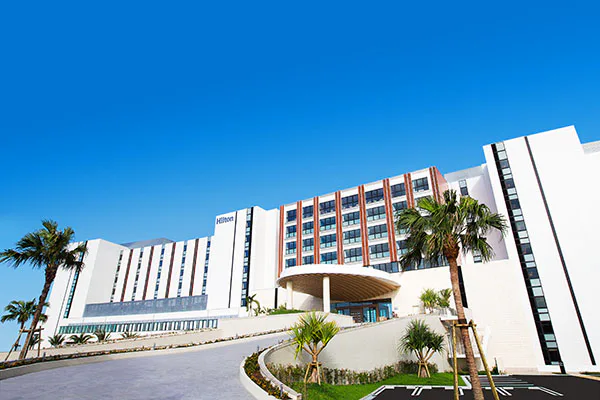
Okinawa’s official tourism guide describes Chatan as a concentration of seafront dining, shopping, beaches, entertainment and sunsets. It also gives a broad airport planning reference of about 40 minutes by car or around 60 minutes by bus. The useful part is not that Chatan sits in the middle of the map; it is that the evening itself can become walkable after the car is parked.
My threshold is two nights ending around American Village. One dinner does not justify moving the hotel. Two or more evenings can: shopping bags go back to the room, dinner happens nearby, people can split up without rebuilding the car plan, and the final walk becomes part of the hotel benefit.
If Chatan passes that threshold, use the Hilton vs Vessel Campana vs LeQu comparison to decide whether those nights should be resort-led, low-friction or hot-spring-led.
Onna: pay resort rates only when the resort gets daylight
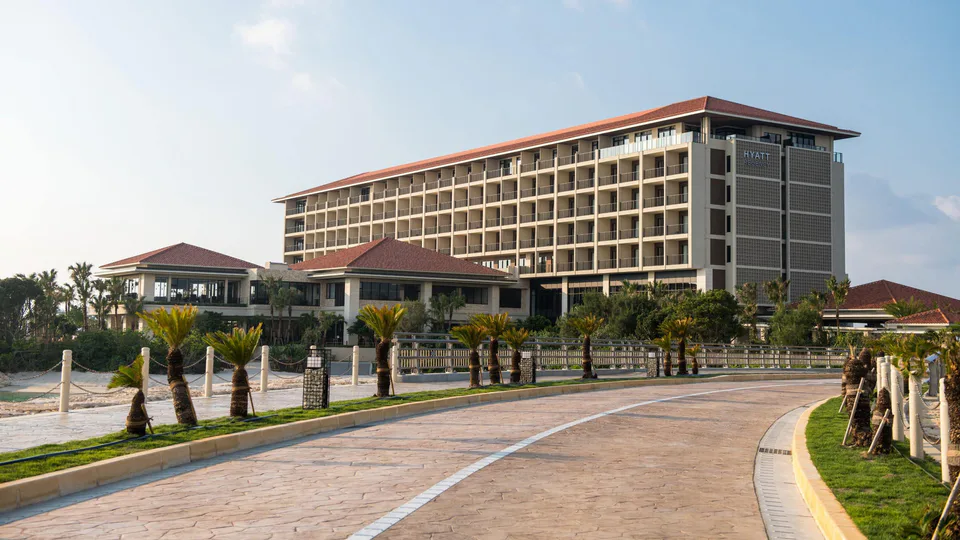
VISIT OKINAWA JAPAN calls the Onna Coast Okinawa’s premier beach resort destination, with major resort hotels, beaches and leisure facilities along Route 58. The same official guide gives about one hour by car and around 75 minutes by bus from Naha Airport as broad planning references.
That premium is rational when the resort is part of the itinerary. My ValueNavi boundary is: for every two Onna nights, protect at least one meaningful afternoon or equivalent multi-hour hotel/beach block. If both days start early and finish after dinner, the resort is functioning as an expensive sleep base.
Start with Okinawa Resort Hotels: If You’re Out All Day. Only after the hotel-time test passes should you compare individual Onna resorts.
Motobu / Nago: move north because the north repeats, not because it exists

Northern Okinawa clusters Churaumi, the Motobu Peninsula, Kouri, Sesoko, Nago and Yambaru. That can justify a second base, but only when the north owns more than one day. A single aquarium day is usually easier to absorb as a day trip than as a new check-out/check-in cycle with luggage.
The stronger case is two consecutive northern days. Then a Motobu/Nago hotel can remove the same southbound return and northbound restart twice. This is exactly the kind of repeated backtrack that passes the Base-Change Payback Test.
Having a rental car does not erase base friction
A car widens the map; it does not make every hotel equally convenient. Count how many times the car leaves the parking space after the sightseeing day. If the answer is “again for dinner, again for shopping, again to collect someone,” the hotel area may be creating a nightly coordination problem.
A good self-drive base lets the car stop being essential after it is parked. Chatan can do this around American Village. Naha can do this around walkable/Yui Rail areas. Many Onna resorts do it only if the hotel itself is the evening. The car should solve remote sightseeing, not become your private shuttle for every meal.
Families and older parents: multiply the last 10 minutes by how often it repeats
A ten-minute final walk once is not the same as that walk after breakfast, after dinner, with a stroller, with shopping, in rain and again with luggage on departure. Families with toddlers also create midday room returns, nap windows, laundry and early baths. Older parents may value removing one transfer more than adding one more attraction.
That is why the Night-End Gravity model gives extra weight to realistic room returns. If a toddler will nap at the hotel on two afternoons, the accommodation zone has become part of the daytime itinerary. The hotel should be evaluated as infrastructure, not as a night-only bed.
Four adults and friend groups: a walkable night can be worth more than a larger room
Four adults create four suitcases, more bathroom contention and different late-night preferences. A base that forces everyone to reunite around the rental car can turn a cheaper room into a coordination tax. If one person wants to return, two want another drink and one wants to keep shopping, a walkable evening district has measurable group value.
Verify formal beds first; “sleeps four” is not the same as four equal beds. Then compare bathroom flow and whether the group can split after dinner without stranding anyone.
The final night has its own score
The final night should often be evaluated separately from the middle of the trip. Add up: airport departure time, car-return requirement, packing, shopping bags and whether a late-night highway/traffic issue would create flight anxiety. A northern hotel that was perfect on nights two and three can become the wrong hotel on night five.
Returning to Naha is especially powerful when it solves two constraints at once — for example, returning the rental car and positioning for an early flight. That is a genuine Base-Change Payback win rather than an arbitrary extra hotel.
Five NO-GO signals
↔ Scroll table left or right
NO-GO signal | Why it fails |
Move north for one aquarium day | One long day is being traded for a full packing/check-in cycle. |
Book Onna with zero protected resort time | You are paying for facilities outside your usable timetable. |
Choose Chatan because it “looks central” but no evening ends there | The strongest Chatan advantage never enters the trip. |
Use three or four hotels in five or six nights | Move-cost blocks can consume more useful time than the route saves. |
Lock non-refundable hotel rates while the base is undecided | A room-rate saving can make a later itinerary correction expensive. |
Final decision: one base or two?
For five or six nights, start with one base and make the second base prove itself. Add a second hotel only when the Night-End Gravity model shows a real cluster and the Base-Change Payback Test removes at least two repeated backtracks or solves two major constraints. A third base should be exceptional, not the default.
For a first trip with no full-time car, start from Naha. Add Chatan when at least two evenings naturally belong there. Add Onna when you can protect resort daylight. Add Motobu/Nago when the north repeats across two days. Then choose the individual hotel.
Related decision layers
Area first: Where to Stay in Okinawa — Naha, Chatan, Onna, Nago or Motobu
Transport first: Do You Need a Car in Okinawa?
Chatan hotel layer: Hilton vs Vessel Campana vs LeQu
Naha hotel layer: RIHGA Royal Gran vs JR Kyushu Hotel Blossom Naha
Route layer: Okinawa 5-Day Self-Drive Itinerary
Sources
Okinawa Urban Monorail — Yui Rail Route Map | VISIT OKINAWA JAPAN — Chatan | VISIT OKINAWA JAPAN — Onna Coast | VISIT OKINAWA JAPAN — Northern Okinawa Main Island
Transport times, hotel facilities, parking, room rules and schedules can change. The official transport/destination facts used here were rechecked on 26 August 2026. ValueNavi scores and thresholds are editorial planning models derived from those public facts, not official tourism ratings.