
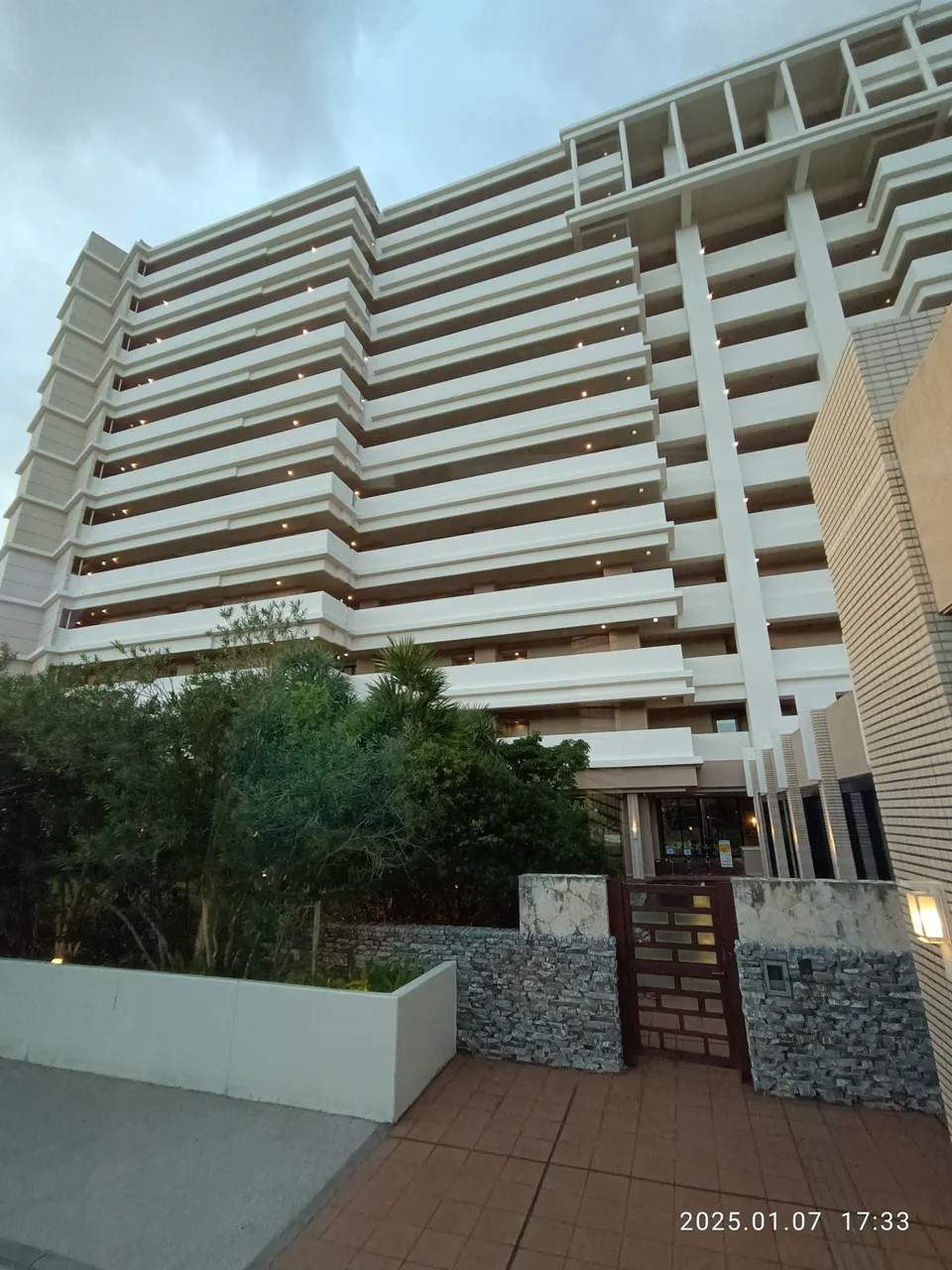
Most first-time Okinawa trips do not need the same transport choice every day. If your itinerary includes a Naha day, a Kerama ferry day and only two or three dispersed days around Onna, Motobu or northern Okinawa, a partial rental is often the strongest default: use Yui Rail, buses, ferries and taxis when a car would sit idle, then rent only for the days when driving actually removes multiple transport constraints. A full-trip rental becomes rational when most of your days are genuine road-trip days rather than city, ferry or resort days.
The mistake is asking “Do I need a car in Okinawa?” as though the whole trip needs one answer. The more useful question is: which individual days become materially better with a car? This guide uses a ValueNavi “car-day test” to decide between no rental, partial rental and full rental. It is an editorial planning framework, not an official transport rule.
↔ Scroll table left or right
Your actual day | Default | Why |
Naha city: Kokusai Street, Makishi, Shuri, central restaurants | No car | Yui Rail, walking and short taxi/bus legs usually remove more friction than a rental creates |
Churaumi Aquarium as the main northern destination | No car is viable | Scheduled buses and the Okinawa Airport Shuttle make an aquarium-focused day possible without driving |
Churaumi + Bise + Nakijin + Kouri + remote meal | Car | Several dispersed stops make timetable waiting the dominant cost |
Kerama / Tokashiki / Zamami ferry day | No mainland rental car | A mainland rental normally sits parked while you are offshore |
One Onna resort + fixed transfers | Conditional | Airport/resort buses and activity transfers may be enough |
Onna + beaches + cafés + Yomitan / Chatan / multiple activity meeting points | Car | The car deletes repeated local hand-offs and fixed departure times |
Yanbaru / Cape Hedo / remote northern coast | Car strongly preferred | Official Okinawa tourism guidance notes that public transport is infrequent and driving gives the most freedom |
Four- or five-day trip with only two dispersed northern days | Partial rental | You pay for useful rental days instead of parking days |
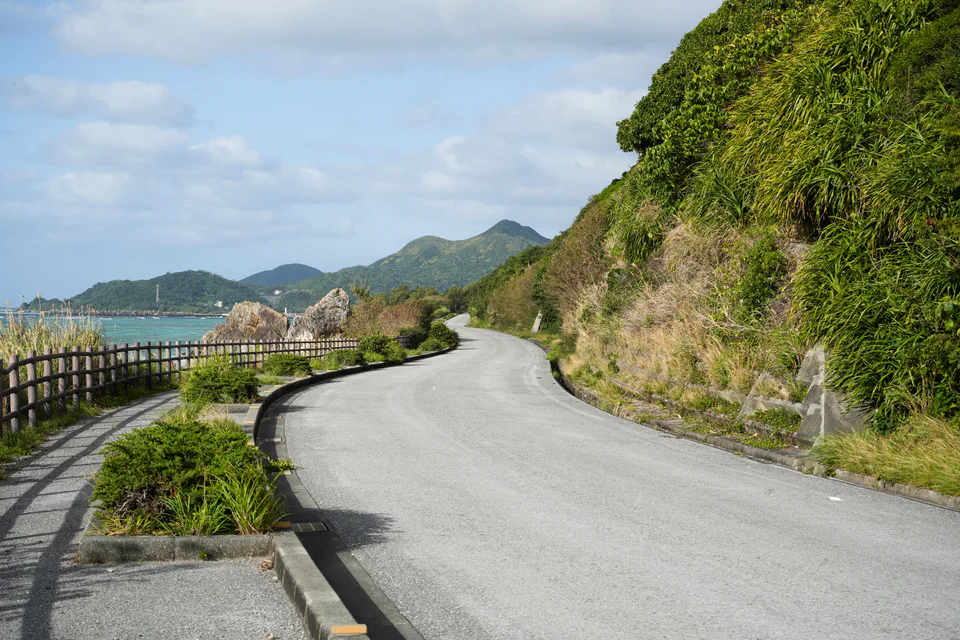
The ValueNavi car-day test: decide the rental period one day at a time
Mark a day as a car-win day when at least two of the following are true:
You want two or more dispersed stops outside central Naha rather than one destination on a simple bus corridor.
Your hotel, beach, restaurant or activity meeting point is not aligned with one convenient scheduled-transport route.
Sunset, a late dinner or a flexible return time matters enough that you do not want the last useful bus to define the day.
A stroller, child seat, beach equipment or several large bags makes each bus/taxi hand-off materially harder.
Weather may force you to swap beaches, indoor stops or sightseeing order during the day.
Yanbaru, remote northern roads, scattered coastlines or small rural stops are the reason for the day.
Then count the result across the trip. As a ValueNavi planning threshold rather than an operator rule, I would use:
0–1 car-win days in a four- or five-day trip: stay car-free or rent for one isolated day.
2–3 car-win days: partial rental is usually the first option to price.
4 or more car-win days: a full rental becomes much easier to justify.
This framework catches a common false economy. A five-day rental can look cheap per day, but if day one is Naha, day three is a Kerama ferry and day five is another Naha/airport day, only two of the five paid days may be doing meaningful work. The relevant metric is paid rental days versus useful rental days, not the advertised daily rate.
Naha is the clearest no-car day
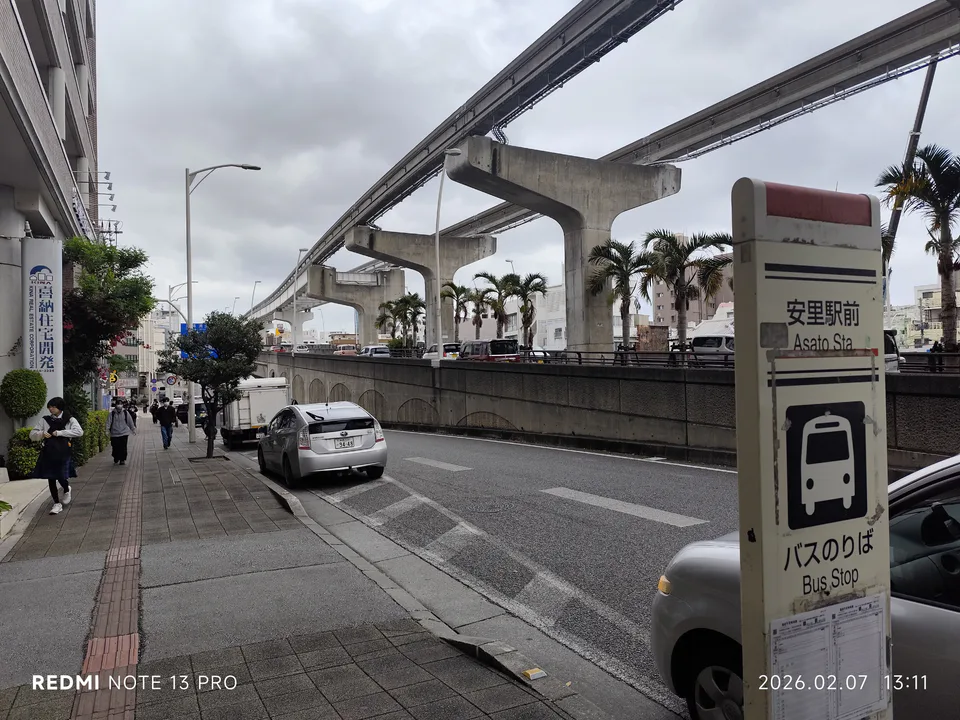
Yui Rail currently runs from Naha Airport through the city to Tedako-Uranishi with 19 stations. The operator’s fare table puts the full Naha Airport–Tedako-Uranishi run at 37 minutes. Central stops include Asahibashi, Prefectural Office, Miebashi, Makishi and Omoromachi, while Shuri and the eastern extension remain on the same line.
That does not make every Naha attraction rail-adjacent. It does mean a typical central-Naha day already has a transport spine. Kokusai Street, Makishi, Tsuboya, central restaurants and much of the Shuri side can be combined with rail, walking and occasional short bus or taxi legs. The two-day Naha no-car itinerary is the better planning page if most of your trip looks like this.
A rental car can actively make this day worse. You add collection paperwork, the first unfamiliar left-side drive, hotel or city parking, navigation through urban traffic and the responsibility of not drinking if the evening includes awamori or cocktails. If the car then spends most of the day in one paid car park, the rental has not created mobility; it has created inventory you are paying to store.
This is why a first night in Naha often pairs well with airport → Yui Rail/taxi → hotel, followed by rental collection the next morning. If your flight is late, the case for delaying the rental becomes stronger because you also avoid learning an unfamiliar car, branch exit and road system while tired. The late-arrival and early-flight Naha guide handles that first/last-night problem in more detail.
Churaumi Aquarium does not, by itself, prove that you need a car
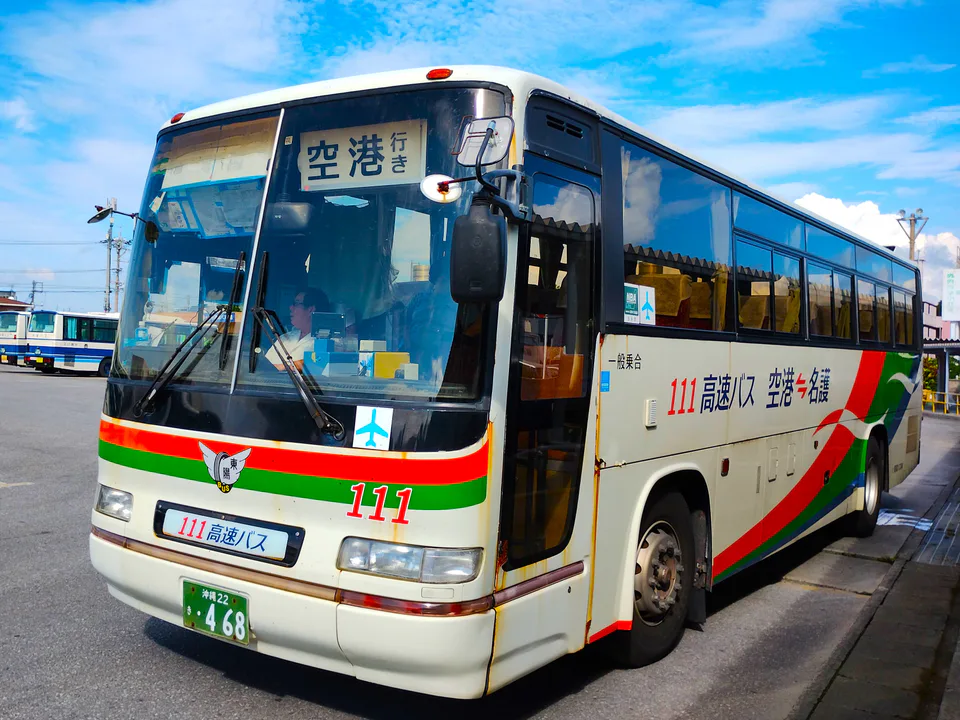
This is one of the most useful corrections for first-time visitors. Okinawa Churaumi Aquarium is far from Naha, but “far” and “car-required” are not the same thing. The Okinawa Airport Shuttle currently advertises 22 buses per day and a fastest Naha Airport–Churaumi journey of about two hours. Official Okinawa tourism information also lists shuttle-bus coverage of Onna, Nago, Motobu and Churaumi.
If the day has one dominant job—reach Churaumi, spend several hours there, perhaps walk around Ocean Expo Park, then return—scheduled transport can be a rational choice. A couple that dislikes driving may prefer two long bus rides to a rental pickup, motorway driving, parking and return procedure.
The answer reverses when Churaumi is only one node in a northern loop. Add Bise Fukugi Tree Road, Nakijin Castle, Kouri Island, a beach and a restaurant that is not beside a bus stop, and the day now fails the “single corridor” test. Each extra scheduled leg introduces waiting time, and every missed connection steals time from the next stop.
Nakijin Castle is a useful example of this boundary. Official Okinawa tourism information says it is reachable by the Yanbaru Express, but the entrance is about a 20-minute walk from the relevant bus stop. That is perfectly possible for a focused visit; it becomes awkward when you are trying to chain several northern places before sunset.
So use this rule: Churaumi-only is a transport choice; Churaumi-plus-four-scattered-stops is a road-trip choice. If the latter is your plan, use the five-day self-drive itinerary to keep the route geographically coherent instead of collecting attractions.
Kerama ferry days are usually the easiest rental days to delete
Naha’s Tomari Wharf is a gateway to the Kerama Islands. Official Okinawa tourism information lists regular high-speed and passenger-ferry services from Tomari to islands such as Zamami, Aka and Tokashiki. Zamami can be reached in about 50 minutes by high-speed ferry; Tokashiki’s high-speed service takes about 35 minutes; Aka is about 50 minutes by high-speed ferry.
If you are taking a normal passenger day trip, the mainland rental car normally does nothing during the hours you are offshore. You are paying rental, protection and possibly parking for a vehicle that is not participating in the itinerary. Unless you have deliberately built a separate plan around taking a vehicle on a car ferry, treat a Kerama day as a no-mainland-rental day.
This matters most in a four- or five-day trip. Suppose Day 1 is Naha, Day 2 is Kerama, Days 3–4 are Onna/Motobu and Day 5 returns to Naha Airport. Paying for five rental days to obtain two genuinely useful driving days is weak economics even if the headline daily rate looks attractive.
For the island day itself, use the Kerama day-trip guide and check the live ferry or tour operating status. Ferry schedules can change with weather, and a prepaid rental car should never pressure you into preserving a marine-day plan when sea conditions force a change.
Onna can be car-free or car-dependent depending on how you use the resort
Onna is where blanket advice fails most often. A traveller spending three nights in one resort, eating on site, taking an airport/resort shuttle and joining activities that include pickup may need very little independent transport. In that version of Onna, a full rental can become an expensive car park reservation.
Change the itinerary to two beaches, Yomitan, Cape Zanpa, local cafés, several dinner reservations and different dive or snorkelling meeting points, and the answer flips. The hotel is now only one node in a dispersed network. A car removes repeated taxi bookings, waiting and “we need to leave now because this is the last practical bus” constraints.
Use your evenings as the tie-breaker. If you deliberately chose an Onna resort to slow down, eat nearby and spend time at the property, staying car-free can reinforce the trip design. If you expect to leave the resort for dinner every night and keep adding coastal stops, the resort is no longer functioning as a self-contained base and the car becomes much more useful.
Families should apply the same logic rather than defaulting automatically to driving. A stroller, spare clothes and beach gear increase the value of having one private storage space all day. But a family staying at one resort with included transfers may still prefer not to make one adult the permanent driver. The family road-trip guide is the better next step once you know which days are car-win days.
Yanbaru is the strongest case for a car
Official Okinawa tourism guidance is unusually direct here: travelling in Yanbaru by car gives visitors the most freedom, and although public transportation exists, infrequent service makes renting a car the better option for most visitors. The same guidance puts Naha to Cape Hedo at roughly two hours and 30 minutes by road.
The geography explains why. Yanbaru is not one attraction beside one station. It is a region of forest, coastline, villages, waterfalls, mangroves, trailheads and small activity bases. A public-transport itinerary can still be built, but the schedule starts determining which combinations are possible. A car lets weather, daylight and trail conditions determine the order instead.
This is also where sleeping north can matter more than the rental-company choice. If one driver spends a long day around Cape Hedo, forest trails or the east coast and then has to return all the way to Naha at night, the itinerary may be technically possible but operationally poor. A Nago, Motobu or Yanbaru stay can reduce fatigue and turn the car from a commuting tool into a route tool.
Red-team the recommendation if nobody in the group is comfortable driving narrow, winding or wet roads. A private driver or organised excursion can be safer than assigning an unwilling traveller a rental car simply because Yanbaru is easier by road.
Partial rental is often the best first-trip default
The most useful Okinawa rental strategy is frequently neither “never rent” nor “rent from airport arrival to airport departure.” It is rent for the geographic middle of the trip.
A common five-day structure looks like this:
Day 1 — Naha: airport → Yui Rail/taxi → city hotel. No car.
Day 2 — collect car: Chatan/Yomitan → Onna. The first paid rental day immediately performs useful transport.
Day 3 — northern loop: Motobu/Churaumi/Bise/Nakijin/Kouri. Strong car-win day.
Day 4 — flexible central/northern day: beach, activity, café or weather-adjusted route. Car remains useful; return it in the evening if the final day is urban.
Day 5 — Naha / airport: no rental if the final hours are city shopping, Kokusai Street or a straightforward airport transfer.
In that example, a three-day rental can perform almost the same useful work as a five-day rental. The two deleted days are not “lost flexibility”; they are days when the car had little work to do.
Partial rental is weaker when almost every night is outside Naha and every day is geographically dispersed. If the trip is airport → Onna → Motobu → Yanbaru → south coast → airport, the administrative cost of collecting and returning mid-trip may exceed the saving. That is when a full rental becomes the cleaner product.
Airport pickup should be decided by where the first useful rental day begins
Do not treat Naha Airport pickup as the default merely because you landed there. Airport-area rental usually involves baggage claim, shuttle-stop navigation, waiting, a transfer to the rental office, paperwork, vehicle explanation and then the first drive.
Airport pickup is strong when you are driving directly to Onna, Nago, Motobu or another non-Naha base and the car will start earning its cost immediately.
Next-morning city pickup is stronger when the first night is in Naha, especially after an afternoon or evening flight. You avoid one rental day, airport-rental queue friction and a tired first drive. You can also have dinner without assigning someone the driver role on the first night.
The same logic works in reverse. If your final night is in Naha and the rental no longer has a job, returning it the previous evening can remove fuel, inspection, shuttle and branch-buffer risk from flight morning.
Once the rental period is fixed, compare OTS, Toyota and ORIX using the same branch, times, protection level, ETC needs, child seats and vehicle class in the Okinawa rental-company comparison. Provider choice comes after rental-day choice, not before it.
Families and older travellers: count hand-offs, not just kilometres
A car’s strongest family advantage is often not speed. It is eliminating repeated transfers. A stroller, two children, beach bags and spare clothes can move from hotel to vehicle once and stay there rather than being loaded onto a bus, unloaded at a stop, carried through an attraction and rebuilt for the next leg.
That advantage should still be measured against the burdens the driver inherits: child-seat fitting, parking, navigation, fuel, keeping everyone safe while tired and being unable to drink. Japanese rules require a child restraint for children under six, so the child seat also changes the usable cabin and luggage geometry.
For older travellers, one private vehicle can reduce standing and walking between stops. But long hours getting in and out of a low vehicle, long northern drives and an exhausted family member acting as both driver and carer can reverse the benefit. In that case, a private charter on one complex day can be a better purchase than a five-day rental.
This is why “three or four people can split the rental cost” is not enough reasoning. Cost per person may fall while fatigue per driver rises.
There are days when you should not drive even if the car is already paid for
A prepaid rental is a sunk cost. It should not dictate the safest or most enjoyable plan.
Drinking night: if alcohol is part of dinner, park the car and use another way home. The driver does not get an exception because the restaurant is remote.
Kerama ferry day: avoid paying for a mainland car that spends the day stationary when you can structure the rental around the ferry day.
Naha-only day: Yui Rail, walking and taxis may be simpler than moving and parking the car repeatedly.
Jet-lagged first evening: if the first drive feels harder than expected, do not force it merely because pickup was booked.
Typhoon, flooding, strong wind or poor visibility: official safety and operating information overrides the sightseeing plan. Use the Okinawa rainy-day and typhoon guide to rebuild the day rather than defending a road-trip schedule.
That final point is part of the rental decision itself. A flexible car can help you reorder normal rainy-weather stops, but it does not make unsafe weather safe. “We paid for the car” is never a reason to drive through conditions you would otherwise avoid.
Four common itinerary shapes
1. Three nights based entirely in Naha
Default: no car. Use Yui Rail and walking for Naha, then choose one coach tour, scheduled northern bus or taxi/transfer day if you want one major destination outside the city. A one-day rental only becomes compelling if that outside day contains several scattered stops.
2. Four days: Naha + one Churaumi day
Default: no car or one rental day. If Churaumi is the only northern goal, scheduled transport is viable. If the real day is Churaumi + Bise + Nakijin + Kouri, rent for that day. Do not turn one northern itinerary into four paid rental days.
3. Five days: Naha + Onna/Motobu middle
Default: partial rental. Keep the first Naha day car-free, drive the two or three dispersed middle days, then return the car when the trip becomes urban or airport-focused again. This is the strongest first-time use case for the car-day framework.
4. Six or seven days: multiple northern bases + Yanbaru
Default: full rental becomes rational. If most days include remote stops, hotel changes, northern coastlines and flexible route order, the vehicle is continuously useful. Delete only the days when it will clearly sit unused, such as a ferry excursion, if the rental contract and branch logistics make that worthwhile.
Final verdict: rent for the days that need freedom, not for the days that merely happen in Okinawa
Naha does not require a car. Churaumi Aquarium alone does not require a car. A Kerama ferry day usually does not need a mainland rental. One self-contained Onna resort can work without one. Yanbaru and multi-stop northern loops are where driving becomes most valuable.
For a typical four- or five-day first trip with Naha at one end and two or three dispersed northern days in the middle, start by pricing a partial rental. Upgrade to a full rental only when most days pass the car-day test. Downgrade to no rental when only one day does.
The decision is successful when every paid rental day has a clear job. If you cannot say what the car deletes—two bus constraints, a difficult last mile, a fixed return time, repeated luggage hand-offs or an inaccessible rural route—you probably do not need to pay for it that day.
Compare Okinawa rental-car options after fixing your rental days
Continue planning
Okinawa for First-Time Visitors · Okinawa 4-Day Itinerary · OTS vs Toyota vs ORIX Rental Comparison · Naha Without a Car · Okinawa Family Road Trip
References
Okinawa Urban Monorail — route map, fares and timetables · Okinawa Airport Shuttle — current timetable and Churaumi access · VISIT OKINAWA JAPAN — shuttle buses · VISIT OKINAWA JAPAN — Yanbaru access · VISIT OKINAWA JAPAN — Zamami access · VISIT OKINAWA JAPAN — Tokashiki access. Checked August 25, 2026. Timetables, weather operations and ferry services can change; recheck the exact travel date.