
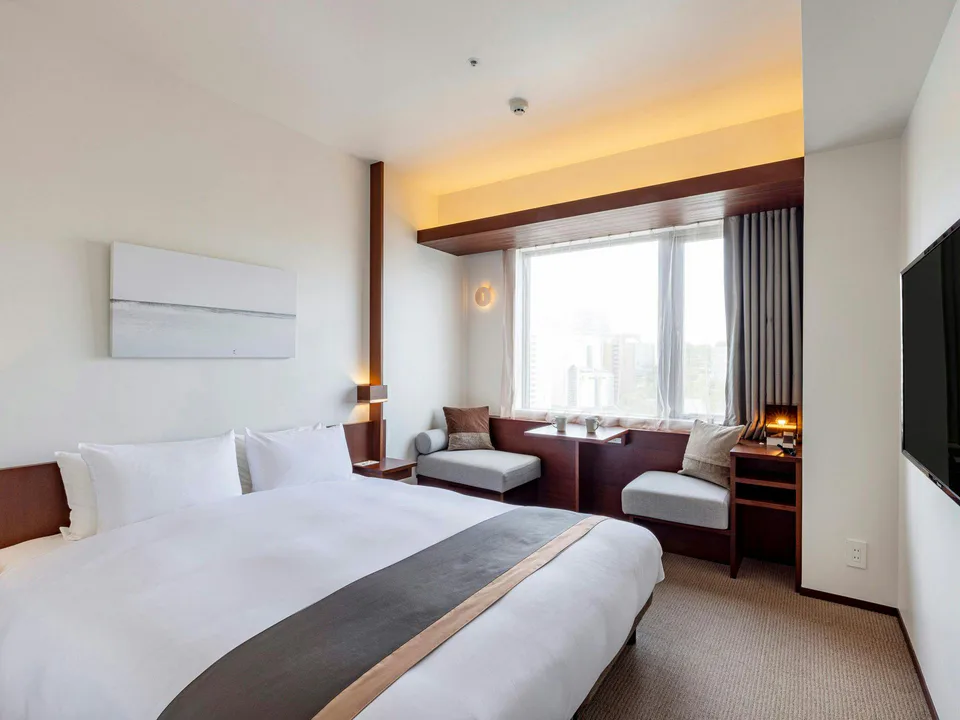
This is not a hotel ranking: every answer should remove options
Fukuoka is easy to over-research because many hotels look defensible on paper. A selector works better in reverse: do not ask which hotel is best; ask which mistake would annoy you most. Each answer below removes an area, room type or feature that does not fit the way your trip actually repeats. If six or seven hotels survive at the end, your constraints are still too vague.
If this is your first visit, start with the first-time Fukuoka hotel guide. If your itinerary is already fairly clear, go straight through the eight questions. The goal is not to discover more hotels. It is to make your shortlist smaller.
↔ Scroll table left or right
If this sounds like you | Eliminate first | Read this persona next |
First visit or uncertain itinerary | Hotels that only work for one isolated plan | First-time visitor |
Family or parents | Rooms that technically fit but create daily friction | Family / parents |
Two nights only | Split stays and one-off location optimisations | Two-night stay |
Two or more hard day-trip mornings | Bases that add a transfer to those mornings | Day-trip base |
Shopping, food or late nights dominate | Hotels that add one last transfer every evening | Shopping / food |
Long stay or feature-heavy shortlist | Facilities you will not use repeatedly | Long stay / public bath |
Start with the first-time hotel decision
Question 1: Who are you travelling with? Eliminate rooms that fit on paper but fail in real life
Your companions change what “close” and “spacious” mean. With children, midday room returns, real beds, laundry and bathroom flow usually matter more than a prettier view; use the family hotel guide. With parents, focus on repeated walking, elevators, bathroom setup and luggage rather than trying to remove every step from the trip; that is the logic in Fukuoka hotels with parents.
Two-person trips split again. Couples should first decide whether evenings belong in Tenjin, Nakasu or the hotel itself; see the couples guide. Girls’ trips and guys’ trips can both run into the “four people technically fit” trap, but the friction is different: twins, getting-ready flow and shopping bags for girls’ trips; real beds, late returns and bath or sauna use for guys’ trips. Solo travellers should test late-night comfort, small-room tolerance and whether they will actually use shared spaces in the solo hotel guide.
Question 2: Are you staying two nights, or four nights and longer? Eliminate moves that solve a theoretical problem
With only two nights, most travellers overestimate the return from changing hotels. Checkout, luggage storage, finding a new exit and checking in again consume the very full day you came to Fukuoka to use; start with the two-night hotel guide. Once you reach four or five nights, laundry, storage, breakfast rhythm and where you return every day become much more important; that is when the long-stay guide starts to matter.
This question removes two common mistakes at once: do not split a short stay for one dinner or one attraction, and do not judge a five-night stay only by what felt acceptable on night one. Problems such as laundry, suitcase space and repeated walking often appear on day four or five, not at check-in.
Question 3: How many high-friction mornings do you have? Two or more can change the base
Not all day trips start the same way. JR-heavy departures toward Yufuin or other intercity rail routes, Nishitetsu-heavy outings, and bus-tour meeting points create different morning friction. Do not count destinations; circle the two hardest mornings and use the day-trip-base hotel guide. If Yufuin is one of them, confirm the transport logic separately in the Fukuoka–Yufuin transport guide.
If your two hardest mornings repeatedly start from the Hakata side, Hakata earns value more than once. If you only have one flexible excursion but three full city days around Tenjin, that one early start should not dictate a four-night hotel. At that point, use Hakata vs Tenjin as the area-level tie-breaker rather than a generic “best area” list.
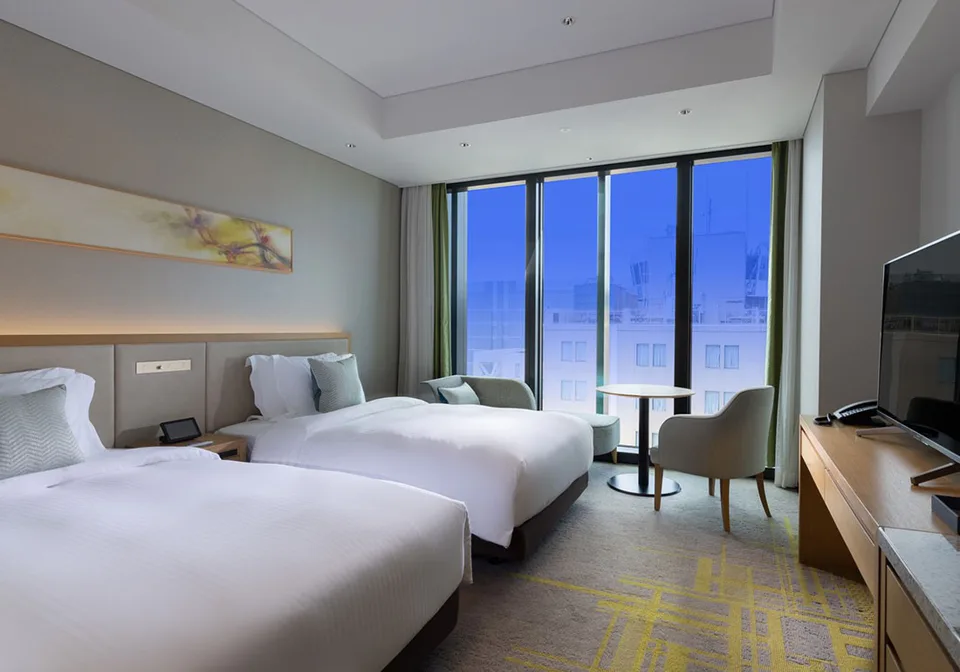
Compare Hakata and Tenjin by repeated friction
Question 4: Where do your evenings usually end? Eliminate the hotel that adds one last transfer every night
For shopping trips, the key is not how many malls sit near the hotel but whether you will want to drop bags and go back out; that is why the shopping hotel guide treats room returns as part of the itinerary. Food-focused trips should ask where dinner, yatai and drinks actually finish, not just how many breakfast places appear on a map; use the food-trip hotel guide, then check the yatai guide if street-food nights are a real priority.
If three evenings repeatedly finish in Tenjin, staying in Hakata may add an unnecessary final move every night. But if you only want one Nakasu dinner, moving your entire four-night base to Nakasu can be the opposite mistake. This question exists to stop one memorable evening from controlling the whole trip.
Question 5: Do you arrive late or leave early? Eliminate hotels that demand decisions when you are tired
Late arrival makes navigation costlier than it looks on a map. Dragging luggage through an unfamiliar exit at 22:30 is different from doing the same walk at 14:00. If the first night is hard, read the late-arrival hotel guide. If the final morning is early, cross-check Hakata or Tenjin for an early flight. First-time travellers should combine both ends of the trip with the full days in between, which is exactly what the first-time guide is designed to do.
This step often removes the “beautiful but one more walk” option temporarily. You can add it back later only if the next three days clearly earn back that extra friction. A selector is useful because an eliminated hotel should need a reason to return, not just a better photo.
Question 6: Rain, public bath, lounge, laundry — how many times will you really use the feature?
Features make shortlists explode because they are easy to compare and hard to value. If weather is unstable, read the rainy-day hotel guide because the final 300 metres, underground access and room-return route suddenly matter more. If a public bath is the temptation, use the public-bath and spa guide and count opening hours against the time you actually expect to return.
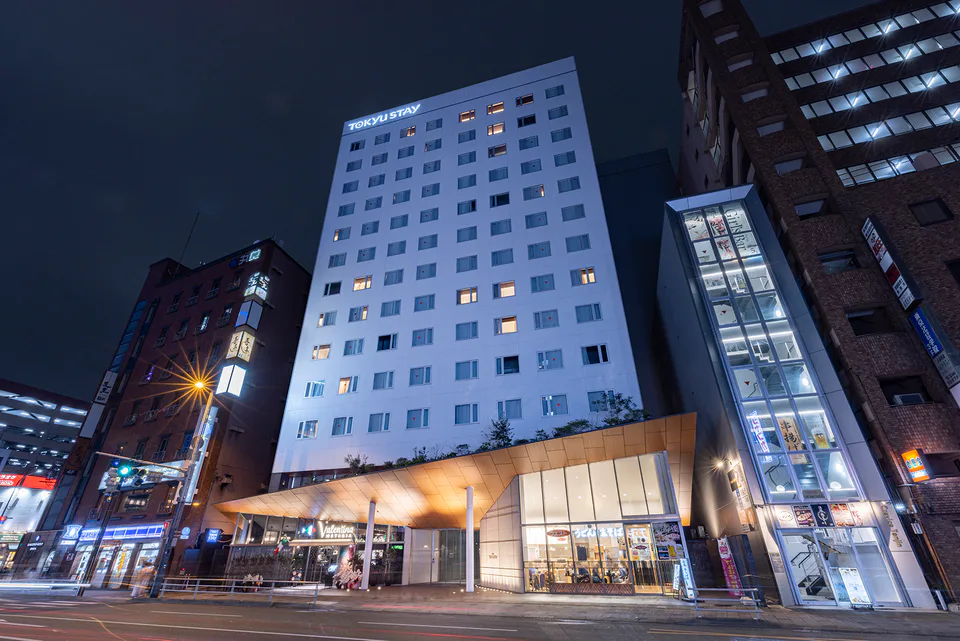
The rule is simple: if you might use a feature once over four nights, it is a bonus. If you expect to use it every day, it can legitimately change your area or price decision. Laundry works the same way on longer stays, which is why Tokyu Stay Fukuoka Tenjin can make much more sense for a four- or five-night stay than for a quick weekend.
Question 7: Are you driving, or travelling for PayPay Dome / Marine Messe? Isolate the special movement first
For self-drive trips, do not start with “which hotel has parking?” Start with which nights genuinely need the car and when you will return it; use the self-drive hotel guide. Concert trips also should not simply choose the nearest hotel to the venue. The post-show return hub, next-morning airport or JR plan, and how the crowd disperses can matter more; see the concert hotel guide.
Special-purpose days often hijack the other three nights. The cleanest test is to separate that day and ask whether it deserves to control the whole stay. If the answer is not a clear yes, keep the special transport solution local to that day and choose the hotel around the repeated pattern.
Question 8: Is your budget constraint the room rate, the room type, or the time you keep paying every day?
Cheap is not the same as lowest nightly rate. A hotel can look cheaper until you add extra transport, a second room, a room upgrade for real beds, or the time cost of a poor base. Start with the budget hotel guide. For three or four adults, go directly to the 3–4 adults room guide before comparing double-room prices that are not solving the same sleeping problem.
After this question, eliminate every comparison where the room conditions are not genuinely equivalent. Dates, number of guests, formal beds, breakfast, cancellation terms and payment conditions should match before a price difference means anything.
First-round result: most trips fall into four base roles
↔ Scroll table left or right
Base role | Usually survives when | What should lose |
Hakata Launchpad | Rail mornings, late arrival, airport/transport friction, luggage | Hotels that add a transfer without giving something you use daily |
Tenjin Urban Base | Shopping, city returns, Nishitetsu-heavy days, repeated evenings | Hakata options kept only because they feel “safer” |
Nakasu / Gion Trade-off Base | Nightlife, public bath, room size or old-town routing has a clear purpose | Vague “middle location” choices with no repeated benefit |
Group / Function Base | Real beds, bathroom flow, laundry or multi-person layout dominates | Area rankings that ignore room mechanics |
If you land on a Hakata Launchpad: stop comparing twenty hotels and decide what you are willing to trade
Use the Hakata Station hotel comparison to separate walking distance from room trade-offs. If you will pay for direct connection and repeated transport certainty, read Miyako Hotel Hakata. If you want a practical room very close to the station, read JR Kyushu Hotel Blossom Hakata Chuo. For a late arrival where the shortest walk matters more than room size, compare HOTEL FORZA. If you accept a smaller room in exchange for the bus terminal and bath access, look at Nishitetsu Hotel CROOM Hakata.
At this stage, do not pull every Tenjin luxury hotel back into the shortlist unless you discover your evenings really do belong in Tenjin. The point of elimination is that an option does not come back just because its photos are appealing.
If you land on a Tenjin Urban Base: decide whether you are buying location or hotel time
Start with the Tenjin / Nakasu hotel comparison to separate late-night convenience, laundry and Daimyo-style atmosphere. For central Tenjin and Nishitetsu convenience, read Solaria Nishitetsu Hotel Fukuoka. If you are paying more because you genuinely want to spend time in the property, read ONE FUKUOKA HOTEL. If a larger room around Akasaka matters more than being directly at Tenjin Station, look at Hotel JAL City Fukuoka Tenjin. For a four- or five-night stay where in-room laundry is a hard requirement, Tokyu Stay Fukuoka Tenjin becomes much easier to justify.
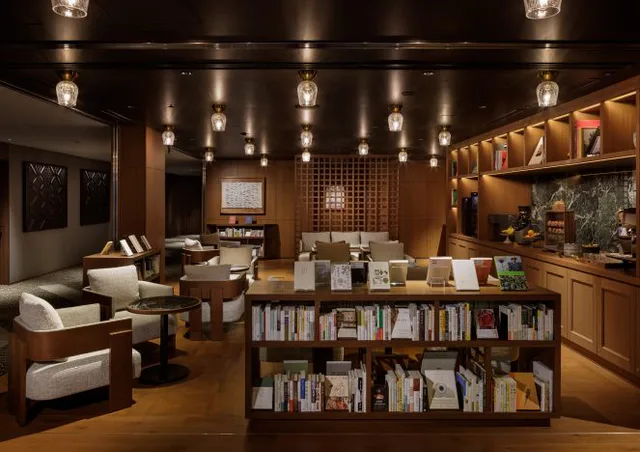
If you land on a Nakasu / Gion Trade-off Base: you should be able to explain why you left the station core
For Nakasu-Kawabata access plus a later public-bath window, compare HOTEL RESOL TRINITY HAKATA. If your evenings genuinely stay around Nakasu and Haruyoshi, HOTEL IL PALAZZO has a clearer job. If you are willing to leave Hakata Station for a 23 m² twin, public bath and Gion atmosphere, use Hotel Torifito Hakata Gion. If you are willing to walk farther from Hakata in exchange for a 30 m² twin and bath, read THE BLOSSOM HAKATA Premier.
The most common mistake in this group is treating “between Hakata and Tenjin” as automatically balanced. A middle position only works when you repeatedly use the nightlife, room size, bath or Gion route that justifies it. Otherwise it can simply create a small, vague cost every day.
If you land on a Group / Function Base: pause the area ranking
For three adults, Mitsui Garden Hotel Fukuoka Gion is useful because the formal triple-room question can matter more than whether Tenjin is livelier. Also compare Mitsui Garden Gion vs THE BLOSSOM Premier for three adults and Mitsui Garden Gion vs Solaria for three adults when you need to price space against location. Once the group reaches three or four adults, beds, bathroom access, suitcase spread and whether you need one room or two usually outrank the neighbourhood leaderboard.
Second-round elimination: keep only two to four hotels with genuinely different reasons
↔ Scroll table left or right
Keep one candidate because… | Good example | Do not keep a second hotel for… |
It minimises transport friction | Miyako / FORZA / Blossom Hakata Chuo | The same transport advantage with no new benefit |
It protects evening or city-centre returns | Solaria / JAL City | A nearly identical Tenjin option just because the rate is close |
It solves a room or group problem | Mitsui Garden Gion / BLOSSOM Premier | A prettier room that fails the bed requirement |
It solves a repeated feature need | Tokyu Stay laundry / CROOM bath | A feature you expect to use once |
Open the Hakata Station comparison
If six hotels still remain, Fukuoka is probably not the problem — your hard constraints are still vague
Three hard constraints are usually enough. For example: “two 28-inch suitcases, two formal beds, arrival after 22:00.” Or: “four nights, most evenings in Tenjin, in-room laundry at least twice.” Once the constraints become specific, many attractive hotels remove themselves.
Views, breakfast style, lounge, public bath and design can still add value, but they should not displace the hard constraints. That is the key difference between a diagnostic selector and a recommendation ranking: the objective is not to choose the highest-scoring hotel, but to remove the hotels that make you pay repeated friction for benefits you do not use.
Before booking, compare the same conditions once — do not restart the entire hotel search
Once only two to four hotels remain, recheck price under the same dates, guest count, formal beds, breakfast, cancellation terms and payment conditions. If a rate difference does not compensate for repeated transport, room-layout or feature losses, choose the lower-friction option. For the final verification layer, use the relevant single-hotel review or direct comparison rather than opening a fresh city-wide search.
Check Fukuoka stays with the same dates and party size
When two personas are both true, break the tie with what repeats every day
Most travellers are not one persona. You can be a first-time couple, a shopping trip with two day trips, or a parents trip that also arrives late. Do not average four persona answers. Ask which friction repeats most across the stay. One late arrival affects one night; three Tenjin dinners affect three evenings; two time-sensitive rail mornings may outweigh one shopping afternoon.
Use three levels. First come high-risk hard constraints such as real beds, parent walking pace and late-arrival luggage. Second come repeated frictions such as the station you use every morning or the district where every evening ends. Third come bonus features such as view, lounge or bath. Once that order is clear, multiple personas usually make the decision easier rather than harder.
Case 1: first visit + two nights + late arrival — why the distinctive hotel often gets eliminated first
Imagine landing after 22:00, having only one full day, and leaving on the third afternoon. Your scarce resource is usable trip time, not hotel novelty. First remove options that add another transfer or a confusing final walk on night one. Then remove the idea of changing hotels for a single evening. A more distinctive Nakasu or Daimyo property can still win, but only if you will genuinely use that location more than once. Otherwise the first-time, two-night and late-arrival personas all point toward the same low-friction choice.
Case 2: four nights + two day trips + three Tenjin evenings — how to choose without intuition
This is a genuine tie. Draw four mornings and four evenings instead of counting destinations. If two mornings are fixed-time or otherwise high-friction departures while the three evenings only require a simple ride back, Hakata can still win. If the day trips are flexible but three evenings include shopping, bag drops and going back out, Tenjin creates more repeated value. There is no universal “Hakata is more convenient” answer here; the question is which friction is harder to replace.
Case 3: three adults + public bath — solve beds before facilities
Start with the beds. If one hotel offers a proper triple layout while another relies on a weaker extra-bed arrangement, that room difference happens every night. A public bath may only be used once or twice depending on return time. Only after both hotels pass the bed and space test should the bath become a tie-breaker. That is why group and function personas sit above area rankings in this selector.
When should you ignore the selector? When you understand the cost and still want the preference
If you know Tenjin will make two rail mornings slightly harder but you still want every evening there, that is not a mistake. If you know Miyako carries a direct-access premium but you are travelling with parents and willingly pay for predictable lower-friction movement, that is also a valid answer. The selector is not designed to erase preference; it is designed to make the price of that preference visible.
The choice to avoid is the opposite: paying for an advantage you do not actually care about because a ranking, a photograph or “everyone stays there” made it feel compulsory. Elimination simply removes that unconscious premium first.
Osaka Girls Trip Hotels: Count Beds, Sinks and Shower Queues Before Square Metres
Sapporo Concert Hotels: PREMIST DOME, Makomanai and Zepp Send You Home on Different Routes
Dazaifu vs Itoshima: Which Fukuoka Day Trip Should You Choose?
How to Plan a Trip to Japan: Fix These 4 Decisions Before You Pick Attractions
Sources
This selector synthesises ValueNavi’s existing Fukuoka hotel reviews, hotel comparisons, persona guides and transport decision articles. Recheck current transport timetables with JR Kyushu and Nishitetsu before travel, and verify hotel facilities, room types, opening hours and cancellation conditions on the hotel or booking page for your exact dates.