
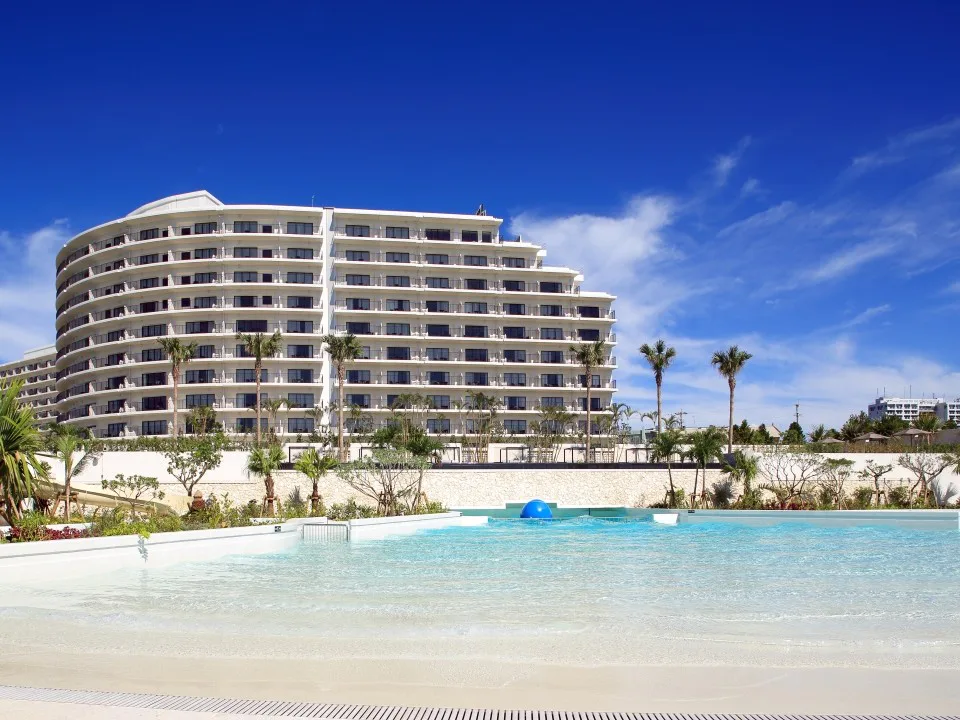
If you leave before 8:00 a.m. and return after 8:00 p.m. most days, Okinawa resort hotels should usually move down your priority list. The premium is not just buying a nicer bed. It is buying usable daytime pool hours, beach time, sunset, on-site dining and the freedom to stop driving for a while. If your schedule never leaves room for those things, the most expensive part of the resort may be the afternoon you never use.
If you are already comparing Onna properties, start with our two-night Onna resort comparison. This guide answers the earlier question: does your itinerary need a resort at all?
30-second decision: check your usable hotel hours before you check the star rating
↔ Scroll table left or right
Your actual itinerary | Resort value | What should lead the hotel decision |
Out before 8:00 a.m. and back after 8:00 p.m. for 2–3 days | Low | Location, parking, beds and bathroom flow |
At least one block from about 2:00 p.m. through the next morning stays free | High | The resort can become part of the itinerary |
Family trip, usually back around 4:00 p.m. | Medium to high | Pool, beach and dinner logistics start to matter |
You mainly want the room view, bath or lounge at night | Depends on the room | Pay for the in-room experience, not automatically for the full resort package |
Final night includes car return or an early flight | Usually low | Shorten the airport chain first |
Write down three times for every day: when the last attraction ends, when you realistically get back to the hotel, and when you leave the next morning. If two nights look like “8:30 p.m. room, shower, sleep, 7:30 a.m. departure,” you need an efficient base more than a full resort. If one block can run from mid-afternoon through sunset, dinner and a slow next morning, the resort premium finally has a chance to turn into something you actually use.
Okinawa resort hotels are selling two different things: better sleep and time spent at the hotel
A high-end resort can absolutely give you a better room, but room quality and resort time are not the same purchase. Bed comfort, sound insulation, bathroom layout, room size and parking convenience are “sleep value.” Pools, beach access, cabanas, afternoon drinks, sunset spaces, restaurants and marine activities are “stay value.” A sightseeing-heavy traveler may still rationally pay for a larger room or a better bath. That does not mean the same traveler should also pay for a portfolio of daytime facilities that sit unused.
This is why HIYORI Ocean Resort Okinawa can still make sense for a late-return trip for reasons such as room space, kitchen functions and in-room laundry. That is a different decision from paying because you expect to spend every afternoon by a resort pool.
Halekulani makes the problem obvious: arrive at 8:00 p.m. and most headline outdoor facilities are already done
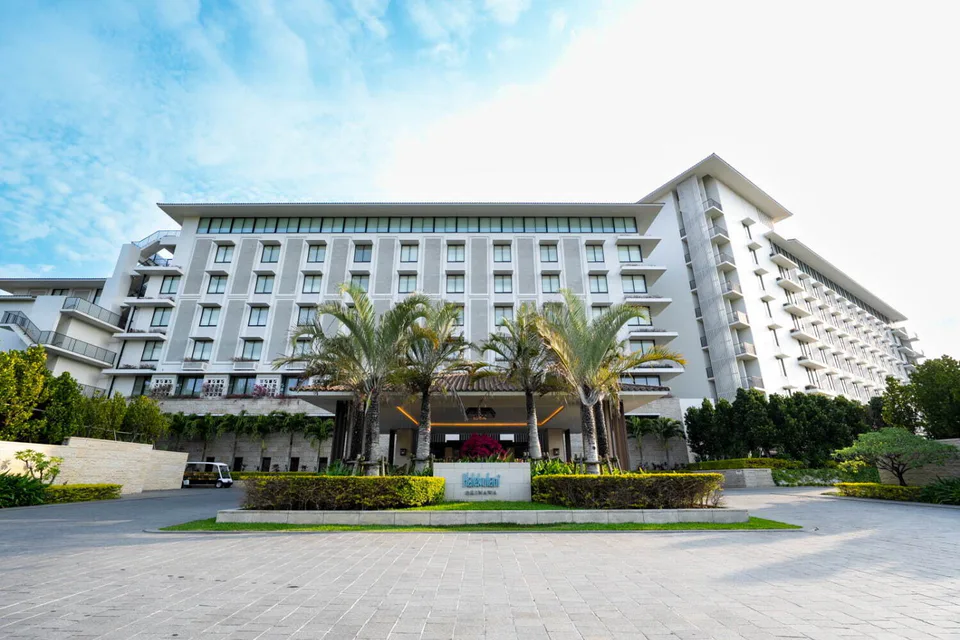
For the 2026–27 operating calendar, Halekulani Okinawa lists the Orchid Pool until 7:00 p.m. from June through September, the Quiet Pool until 7:00 p.m. in the same period, and the Ocean Terrace Pool until sunset. The beach closes for swimming at 6:00 p.m. in summer. The indoor pool can run until 9:00 p.m. from July through October, so a late return does not leave you with nothing—but it does leave you without many of the outdoor experiences that dominate the resort’s visual appeal.
Only after you know you will keep at least one afternoon or morning free does it make sense to obsess over Halekulani Beach Front vs Sunset Wing. Otherwise, you are mostly comparing rooms, not buying the full resort experience.
The Busena Terrace tells the same story: the beach and outdoor pools are daytime assets
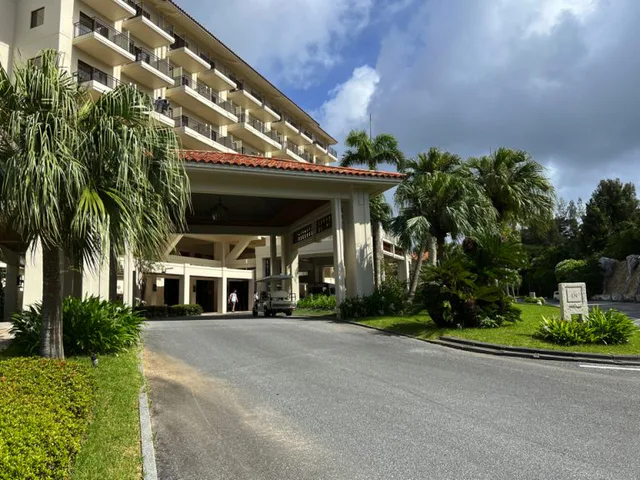
The Busena Terrace currently lists beach swimming until 6:00 p.m. in July through September. In July and August, the Lower Pool runs until 7:00 p.m. and the Upper Pool until 5:00 p.m.; the indoor pool runs year-round from 9:00 a.m. to 9:00 p.m. That distinction matters. “The hotel has multiple pools” is not the same as “the pools you care about are usable when you get back.”
If Nago is already in your plan, use the separate Busena two-night resort-time guide to decide whether that property deserves two nights. Here, the point is one step earlier: whether your itinerary can support this kind of hotel in the first place.
You do not need a full resort day — one protected half-day can be enough
The opposite mistake is assuming a resort only pays off if you never leave the property. It does not. A much more realistic pattern is to return around 2:00 p.m. on one day and stop driving: pool or beach, sunset, dinner on site, then a slow breakfast and morning the next day. That single block connects the pool, view, dining, room and public spaces into one coherent experience.
For a two-night Onna stay, this is exactly why the question in our Hyatt Regency Seragaki two-night guide is not “how many facilities does the hotel have?” but “are you willing to give the hotel one afternoon?”
Hyatt is the important counterexample: returning late does not automatically make every resort a bad deal
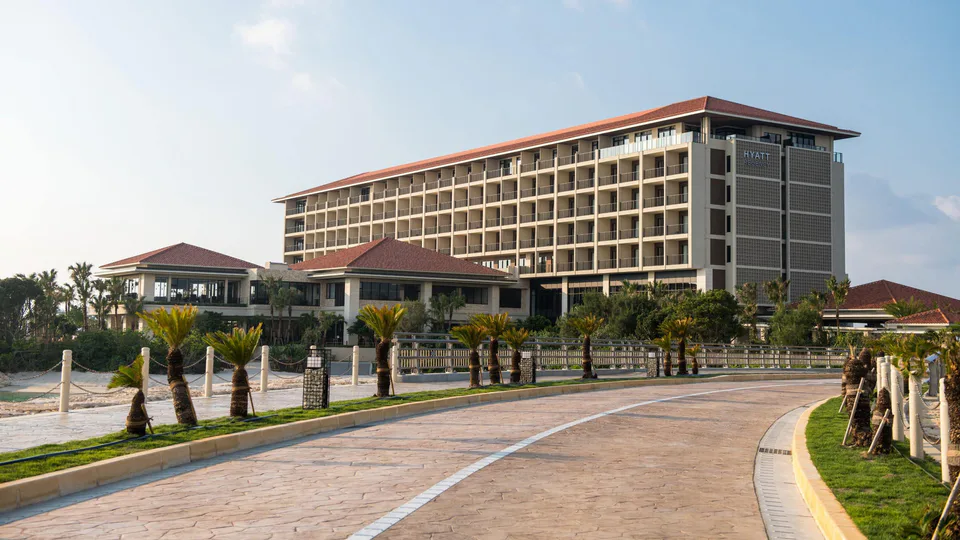
The rule cannot be “late return equals wasted resort.” Hyatt Regency Seragaki Island Okinawa is a clean exception in 2026: Seragaki Night Pool runs from June 19 through October 12, from 6:00 p.m. to 9:00 p.m. If you are back in Onna by 6:30 p.m. and have no evening outing planned, the resort can push usable pool time later than a conventional daytime schedule.
But that exception proves the larger rule. You must match the facility to your actual date and clock time. A seasonal night pool is not a year-round promise, and weather or operations can still change. Before paying a resort premium, check the exact facility calendar for your stay instead of treating “pool” as a static amenity.
Families often get more value from a resort because the day may naturally end at 4:00 p.m.
Family itineraries often have a constraint that adult sightseeing trips do not: children may simply be finished by late afternoon. If you already expect to return between about 3:30 and 4:30 p.m., let the kids swim, shower, eat and wind down, the resort is not adding one optional amenity. It is absorbing the entire second half of the day. In that pattern, a hotel with a usable pool, beach access and easy room-to-dinner flow can be more valuable than forcing one more attraction into the schedule.
The reverse is also true. If your family itinerary regularly stays out through dinner and only returns after the children are ready for bed, a dramatic pool photo should not be the main reason to pay more. Use the actual return time, not the family label, to decide.
Couples and honeymoon trips may only need one deliberately empty sunset
A couple does not need to spend every day at the resort for the premium to work. One deliberately empty afternoon can be enough: return early, use the room or pool, watch sunset, have a drink or dinner and stop treating the hotel as a place to sleep. This is why two premium resort nights can create more value than upgrading all four nights of a trip.
If all four nights are still built around early starts and late returns, put the budget into the room features you will actually use—bed, bath, space and location—instead of spreading luxury evenly across nights where the resort itself stays mostly untouched.
Self-drive travelers misread the cost most often: having a car does not make hotel location free
A rental car creates flexibility, but it also hides friction. Every extra resort-to-attraction round trip means parking, loading the car, driving, arriving and repeating the process at night. If each day points in a different direction, the hotel should reduce unnecessary travel rather than merely giving you a beautiful room after another long drive.
This matters most at the end of the trip. If you are deciding whether to keep Onna through the last night, compare the logic in Onna vs Naha for the final night. First-night and last-night hotels have a different job from the resort nights in the middle of the trip.
The final night is usually the worst night to defend a resort — unless your flight is genuinely late
When the next morning includes a rental-car return, checked baggage and an early flight, the job of the last hotel is to shorten the airport chain and remove failure points. Coming back to a resort after dinner and leaving again at dawn gives very little time to recover the value of expensive facilities. The main exception is a late departure when your final day is already based in central or northern Okinawa.
For a functional first or last night, compare RIHGA Royal Gran Okinawa for arrival and departure nights or the RIHGA vs JR Kyushu Hotel Blossom Naha comparison. Those choices are about reducing the final transport chain, not replicating a mid-trip beach resort.
Chatan is a different answer: you can skip the hotel pool and still get value from staying there
Low resort-use value does not automatically mean “move to Naha.” Chatan can earn its place through the neighborhood rather than through the hotel grounds. Park the car, walk to dinner, browse American Village and stay out for the evening without creating a second driving trip. That is a different value model from a self-contained Onna resort.
If your evenings matter more than the pool, use the Hilton vs Vessel Campana vs LeQu Chatan comparison to decide which hotel fits that walkable-night pattern. If you are still choosing the region itself, start with where to stay in Okinawa.
NO-GO: do not make “resort atmosphere” the main booking reason in these three schedules
First: you leave around breakfast time for two or three consecutive days and return only after dinner. Second: you arrive late, leave early, and the only full day in between is packed with sightseeing. Third: you keep your final night in central or northern Okinawa before an early flight simply because “an Okinawa trip should include a beach resort.” None of these schedules makes a resort impossible. They simply make resort facilities a weak reason to pay more.
Before you pay, write down these seven times
1) Which day has the earliest departure before 8:00 a.m.? 2) How many nights do you return after 8:00 p.m.? 3) Is there at least one day when you can be back before 3:00 p.m.? 4) Will you have one evening when you stay for hotel dinner, sunset or room time? 5) Can the next morning remain free of an early first attraction? 6) What time do the exact pool, beach, lounge or restaurant you care about close on your dates? 7) If you switch to a more conveniently located functional hotel, how many unnecessary drives disappear?
If questions 3–5 are all “no” while questions 1–2 happen repeatedly, a full resort package is usually a poor place to spend extra budget. If you can protect at least one afternoon plus one morning, then it is worth comparing which resort fits the trip.
Compare Onna resorts for a two-night stay
Final verdict: schedule the resort before you budget for the resort
Okinawa resort hotels are not a mandatory checkbox for an Okinawa trip. For travelers who spend every day sightseeing from early morning until late evening, location, parking, beds, bathrooms and an efficient return to the room usually matter more than one more unused pool. For families, honeymooners and anyone willing to protect a real afternoon, the hotel can stop being “nice accommodation” and become part of the itinerary itself.
The simplest test is to draw a blank block on your itinerary from about 2:00 p.m. to 10:00 a.m. the next day. If you refuse to leave that much space, do not pay a resort premium first. If you are happy to protect it, then compare Onna, Nago and Chatan based on what you actually want to do with those hours.
If your evening is still active, compare Chatan instead
If the final night is about car return and a flight, move the decision south
If you still have not settled on your base, go back to the Okinawa hotel decision guide and re-run the choice by your last stop, driving frequency and travel party.
Sources and what to re-check before booking
Halekulani Okinawa — 2026–27 Pool & Beach Operating Hours: seasonal pool and beach schedules, including the indoor pool evening hours.
Hyatt Regency Seragaki Island Okinawa — Seragaki Night Pool 2026: June 19–October 12, 2026, 18:00–21:00.
The Busena Terrace — Facilities: current beach, outdoor-pool and indoor-pool operating periods and hours.
Pool, beach, night-pool, restaurant and activity hours can change with season, weather, maintenance or hotel operations. Re-check the official calendar for your exact stay before paying extra because of a specific facility.
Okinawa Family Hotels: The Winner Changes Once You Add Bed-Sharing, Laundry and Pool Time
Fukuoka Hotels: Stop Ranking Properties—Choose by Trip Shape, Area and Who You Travel With
Tokyo Honeymoon Hotels: Don’t Pay for the View Until You Pick the Night You’ll Stay In
Osaka Hotels for Kyoto and Kobe Day Trips: When 3–5 Minutes to the Station Matter Twice a Day
Okinawa Split Stays: Change Hotels Only If You Remove Two Long Backtracks